

That musty smell in your Lathrup Village ranch is not coming from old furniture or a dirty carpet. It is coming from beneath your feet. Slab-on-grade foundations in this area have a moisture problem that gets worse every spring, and most homeowners do not recognize it until the damage is already done.
Lathrup Village sits on a corridor of mid-century ranch homes built primarily between the late 1940s and the 1970s. Many of these homes were built fast, built flat, and built directly on poured concrete slabs with minimal vapor barriers by today’s standards. The soil underneath them is Detroit lacustrine clay, some of the most moisture-retentive soil in the Great Lakes region. When snowmelt hits that clay in March and April, the ground swells, pressure builds, and water starts wicking up through your floor.
This is not a small problem. Left alone, slab moisture leads to mold, structural damage, and real estate headaches. Here is exactly what is happening and what you can do about it.
What Makes Lathrup Village Slab Homes Especially Vulnerable
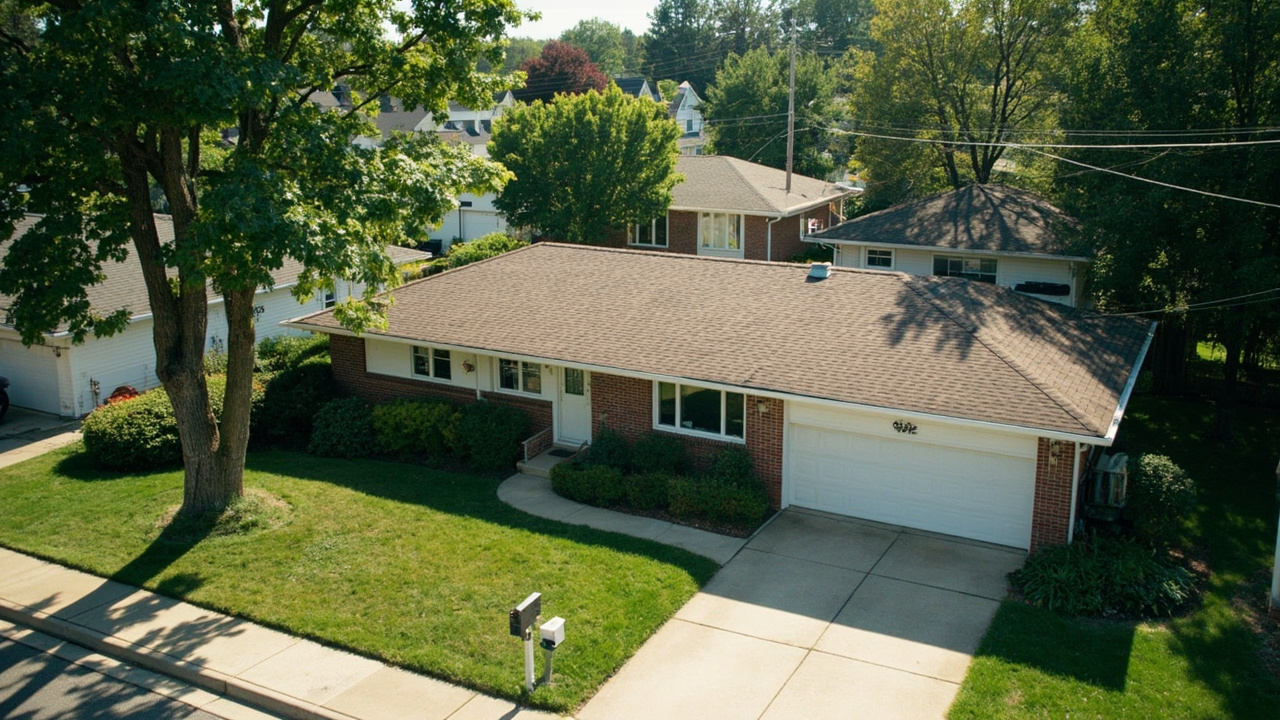
Lathrup Village is a small, tight-knit city surrounded by Southfield to the west and Beverly Hills to the north. Its housing stock is almost entirely single-story ranch construction. These homes share a few structural traits that make slab moisture a recurring issue.
First, most slabs in this area were poured without a proper drainage layer beneath them. Modern construction places gravel or crushed stone under a slab to interrupt capillary action. Older Lathrup Village homes often sit directly on compacted clay with minimal or degraded polyethylene sheeting underneath.
Second, the lots in this area are relatively flat. Water does not run away from the foundation efficiently. During a typical Michigan freeze-thaw cycle, which can repeat a dozen or more times between January and April, the clay soil repeatedly expands and contracts. This creates micro-fractures in the concrete slab over decades.
Third, the water table in southeast Michigan, particularly in Oakland County areas like Lathrup Village, sits relatively high. The combination of high clay content, a high water table, and an aging slab is exactly how you end up with a home that smells like a damp basement even though it has no basement at all.
The Science Behind the Smell
Capillary Action Through Concrete
Concrete is porous. Under the right conditions, water moves through it the same way it moves up a paper towel. This process is called capillary action. The fine pores in aging concrete draw moisture upward from the soil, through the slab, and into your living space. You cannot see this moisture with your eyes, but your nose will find it immediately.
Once that moisture reaches the surface of your slab, it evaporates into the air in your home. Relative humidity inside the house climbs. Southeast Michigan already averages around 70 to 75 percent relative humidity in spring and summer. Add slab evaporation on top of that and you create ideal conditions for mold spore germination, which requires humidity above 60 percent to take hold.
Hydrostatic Pressure and What It Does to Concrete
Hydrostatic pressure is the force that saturated soil exerts on a concrete surface. In Detroit lacustrine clay, this pressure increases dramatically after heavy rain or snowmelt because clay absorbs water slowly and holds it for a long time. The pressure pushes groundwater upward into any crack, gap, or permeable section in your slab.
According to the U.S. Environmental Protection Agency’s guidance on mold and moisture, controlling moisture at the source is the only effective long-term strategy for preventing mold growth. Dehumidifiers manage symptoms. They do not stop hydrostatic pressure from pushing water through your floor.

5 Signs Your Lathrup Village Slab Has a Moisture Problem
- Musty odor that intensifies in spring — If the smell peaks between February and May, you are almost certainly dealing with snowmelt-driven hydrostatic pressure pushing moisture through the slab.
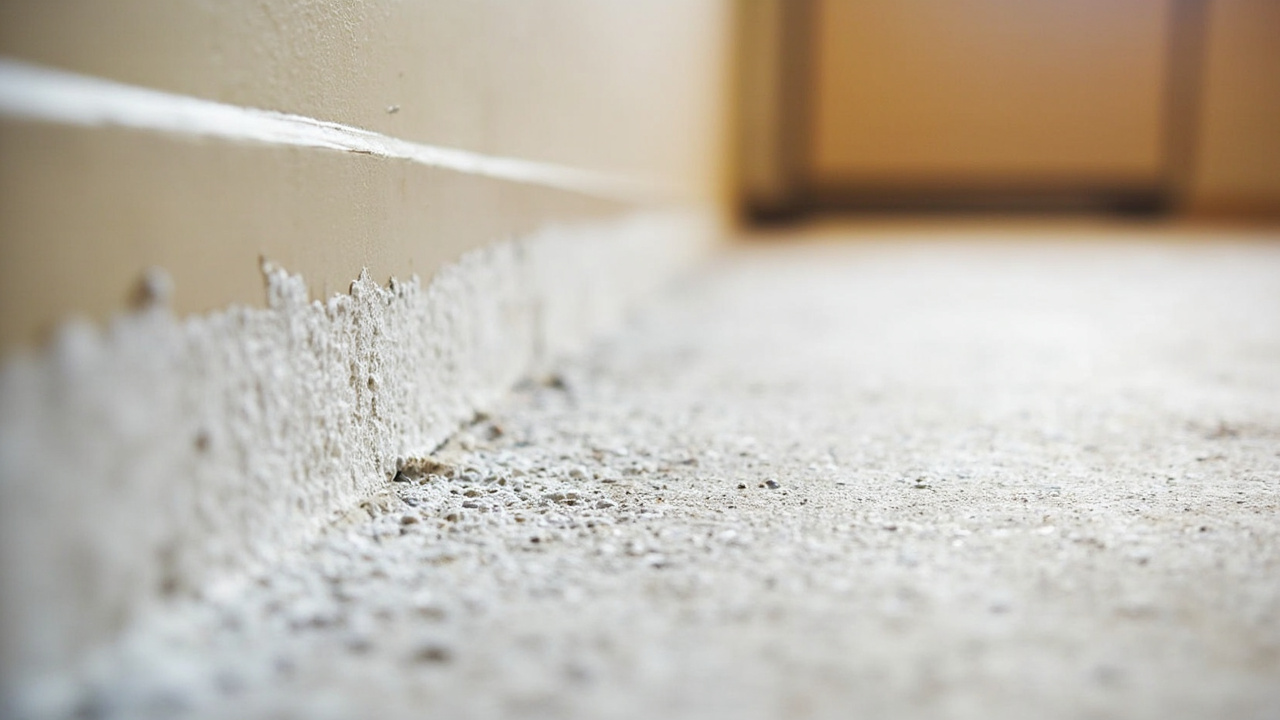
- Efflorescence on the floor — White or grayish powder on your concrete, tile grout, or at the base of walls is a mineral deposit left behind when water evaporates. It is a direct indicator of active moisture migration.
- Damp or cold spots on flooring — Touch your flooring in multiple spots on a warm day. Cold or damp patches indicate moisture below the surface, especially under carpet or vinyl plank.
- Warping or buckling floors — Hardwood and engineered wood floors expand when they absorb moisture from below. If your floors feel springy, uneven, or show gaps and ridges, slab moisture is often the culprit. Read more about protecting wood flooring in our guide on how to save hardwood floors after a water leak.
- Mold at the baseboard level — Ground-level mold growth is a classic sign of slab-sourced moisture. It appears first at baseboards, under furniture, and beneath area rugs. If you have tried cleaning it with bleach and it keeps returning, the source is below the surface. Bleach does not address slab moisture, and our article on why bleach won’t fix recurring mold explains exactly why.
Comparing Moisture Entry Points in Slab Homes
| Entry Point | Common Cause | Visible Sign | Urgency Level |
|---|---|---|---|
| Slab surface pores | Capillary action through aging concrete | Musty odor, efflorescence | Moderate |
| Slab cracks | Freeze-thaw expansion, soil settlement | Visible cracks, damp lines on floor | High |
| Pipe penetrations | Slab leak or failed pipe sleeve seal | Warm spots on floor, water meter spinning | Critical |
| Slab perimeter edge | Landscaping grade slopes toward house | Moisture at wall base, staining near exterior walls | Moderate to High |
| Degraded vapor barrier | Original barrier failed or was never installed | Widespread floor dampness, no localized source | High |
Why Michigan’s Freeze-Thaw Cycle Makes This Worse Every Year
Detroit and its surrounding suburbs, including Lathrup Village, Southfield, Royal Oak, and Berkley, typically see between 25 and 40 freeze-thaw cycles per winter season. Each cycle causes the clay soil around and beneath your slab to expand as it freezes and contract as it thaws.
Over time, this movement widens existing cracks in the slab and can shift the slab itself. Newer cracks allow more water in. More water means more pressure. More pressure means more moisture intrusion. This is a compounding problem, not a stable one.
Many homeowners in Lathrup Village notice the smell starts getting worse after a particularly wet winter or a fast snowmelt event. That is because the clay soil becomes saturated faster than it can drain, and the hydrostatic pressure spikes significantly. Properties near the Rouge River corridor are especially prone to this pattern.
Health and Structural Risks of Ignoring Slab Moisture
Mold Growth Inside a Slab Home
Mold in a slab home behaves differently than mold in a basement. Without a basement to contain it, mold growth from a slab source spreads laterally through the living space. It colonizes carpet padding, subfloor materials, drywall at ground level, and HVAC ductwork that runs along the floor in many ranch-style homes.
Stachybotrys chartarum, commonly called black mold, thrives in the cellulose materials found in older Lathrup Village home construction. It needs sustained moisture and a food source. Slab-sourced humidity provides both when it saturates carpet backing or wood subfloor panels.
Prolonged mold exposure causes respiratory irritation, chronic sinus issues, and more serious health effects in people with compromised immune systems or existing lung conditions. If anyone in your household is experiencing unexplained respiratory symptoms, a mold inspection should happen before the medical appointments pile up.
Structural Integrity of the Slab
Water that moves through the slab does not just evaporate. Some of it dissolves the calcium compounds in the concrete itself. This process, called concrete carbonation and leaching, weakens the slab over time. Rebar inside the slab can also begin to rust when moisture reaches it, and rust expands, which causes the concrete above it to crack and spall further.
A compromised slab is not just a water damage issue. It becomes a structural issue that can affect your home’s load-bearing capacity and its value on the Oakland County real estate market.
DIY Measures vs. What Actually Requires a Professional
There are things you can do on your own to reduce slab moisture, and there are things that genuinely require a certified restoration professional. Knowing the difference saves you time and money.
| Situation | DIY Appropriate? | Professional Needed? | Reason |
|---|---|---|---|
| Mild seasonal humidity increase | Yes, use a dehumidifier | No, unless persistent | Dehumidifier manages ambient humidity effectively for mild cases |
| Efflorescence on floor or walls | Partial, surface cleaning only | Yes, source must be identified | Efflorescence signals active moisture migration, not a surface issue |
| Mold at baseboard level | No | Yes, IICRC-certified remediation | Surface cleaning won’t address moisture source or hidden colonies |
| Visible slab cracks with moisture | Temporary crack filler only | Yes, full assessment required | Crack pattern indicates structural movement or pipe leak |
| Warm spots on floor, high water bill | No | Yes, emergency slab leak detection | Active slab leak requires thermal imaging and pressure testing |
| Warped or buckling hardwood floors | No | Yes, moisture mapping needed | Floor materials must be assessed and the slab dried before reinstallation |
A dehumidifier is a legitimate tool for managing indoor relative humidity in a slab home. Running one in the spring and early summer in southeast Michigan makes sense. But a dehumidifier does not stop hydrostatic pressure from pushing water through your floor. It just processes the moisture after it has already entered your home. If the source is active, you are fighting a losing battle with a dehumidifier alone.
The Professional Remediation Process for Slab Moisture
Step 1 — Moisture Mapping and Inspection
A certified restoration professional starts with a full moisture assessment using calibrated meters and thermal imaging cameras. This identifies where moisture is entering, how far it has spread through flooring and wall materials, and whether a slab leak is contributing to the problem. Guessing skips this step. Guessing leads to incomplete repairs.
The IICRC S500 Standard for Professional Water Damage Restoration governs how this inspection should be conducted. Look for a contractor who follows this standard and can reference it directly.
Step 2 — Source Identification and Containment
If a slab leak is present, it must be addressed before any drying begins. A slab leak is a pipe failure beneath the concrete, and it requires a licensed plumber in addition to the restoration crew. If the source is purely hydrostatic pressure or capillary action, the remediation team establishes containment to prevent mold spores from spreading to unaffected areas of the home.
Step 3 — Affected Material Removal
Wet carpet, padding, and compromised subflooring come out. This is non-negotiable. Wet organic materials sitting on a damp slab will grow mold within 24 to 48 hours. Attempting to dry carpet in place over a damp concrete slab traps the moisture and accelerates mold colonization. If you are dealing with carpet decisions after water exposure, the breakdown in our guide on whether wet carpet can be saved or needs to go is worth reviewing before you make any decisions.
Step 4 — Structural Drying of the Slab
Industrial desiccant dehumidifiers and air movers are positioned according to a psychrometric drying plan. Concrete slabs hold significantly more moisture than wood materials and take longer to dry. A properly dried slab in Michigan conditions typically requires a minimum of three to five days of continuous drying with daily moisture readings to confirm progress.
Step 5 — Vapor Barrier Installation and Sealing
Once the slab is dry, a quality restoration includes either a chemical slab sealer or the installation of a new vapor barrier system before any new flooring goes down. This step is often skipped by contractors who are not restoration specialists. Skipping it means you are putting new flooring on top of the same problem.
For ongoing issues driven by poor site drainage, solutions like a French drain system around the perimeter of the home or improvements to the grading of the landscaping address the hydrostatic pressure at its source rather than just managing it at the slab surface.
Insurance Coverage for Slab Moisture Damage in Michigan
Whether your homeowner’s insurance covers slab moisture damage depends heavily on the cause. Sudden and accidental damage from a slab leak is typically covered. Gradual moisture intrusion from soil conditions, poor drainage, or a degraded vapor barrier is almost always excluded as a maintenance issue.
Getting your insurance company to pay out on water damage claims requires documentation, timing, and specific language in your claim. Our full walkthrough on how to get your Detroit home insurance to actually pay for water restoration covers the practical steps for making that process work in your favor. For those dealing with a specific water event, the guidance on filing a successful water damage insurance claim walks through the documentation requirements in detail.
What Lathrup Village Homeowners Can Do Right Now
Start with a physical inspection of your home. Walk the perimeter and check that soil grades away from the foundation on all sides. Water should not pool within several feet of your exterior walls after rain. Check your gutters and downspouts. Downspouts that discharge close to the foundation direct water directly into the soil surrounding your slab.
Inside, lift area rugs and check concrete surfaces for efflorescence, damp spots, or discoloration. Check baseboards in every room, especially in rooms on the north and northeast sides of the home where moisture issues tend to present first in Michigan properties.
If you find any of the warning signs listed above, act before the next freeze-thaw season compounds the damage. Slab moisture problems in Lathrup Village ranch homes are solvable. The cost of early-stage intervention is a fraction of what full mold remediation plus floor replacement costs after a problem has been allowed to develop for multiple seasons.
We serve homeowners across Wayne, Oakland, and Macomb counties, including Lathrup Village, Southfield, Royal Oak, Ferndale, and throughout the greater Detroit metro. If you are smelling something you cannot explain in your slab home, call us for a moisture assessment before it becomes something you cannot ignore.
{
“@context”: “https://schema.org”,
“@type”: “BlogPosting”,
“headline”: “Why Your Mid-Century Modern Slab Home in Lathrup Village Is Suddenly Smelling Musty”,
“description”: “Musty smells in your Lathrup Village slab home signal a real moisture problem. Learn why it happens and what to do before mold takes hold.”,
“wordCount”: 2316,
“datePublished”: “2026-07-11T04:17:00.000Z”,
“dateModified”: “2026-07-11T04:17:00.000Z”,
“inLanguage”: “en-US”,
“mainEntityOfPage”: {
“@type”: “WebPage”,
“@id”: “https://ironwoodwaterdamagerestorationdetroit.com”
},
“publisher”: {
“@type”: “LocalBusiness”,
“name”: “Ironwood Water Damage Restoration Detroit”,
“url”: “https://ironwoodwaterdamagerestorationdetroit.com”
},
“author”: {
“@type”: “Organization”,
“name”: “Ironwood Water Damage Restoration Detroit”,
“url”: “https://ironwoodwaterdamagerestorationdetroit.com”
},
“image”: {
“@type”: “ImageObject”,
“url”: “https://ironwoodwaterdamagerestorationdetroit.com/wp-content/uploads/2026/03/why-your-mid-century-modern-slab-home-in-lathrup-v-1.jpg”
}
}
{
“@context”: “https://schema.org”,
“@type”: “LocalBusiness”,
“name”: “Ironwood Water Damage Restoration Detroit”,
“url”: “https://ironwoodwaterdamagerestorationdetroit.com”,
“address”: {
“@type”: “PostalAddress”,
“addressLocality”: “Detroit”
},
“areaServed”: {
“@type”: “City”,
“name”: “Detroit”
}
}
{
“@context”: “https://schema.org”,
“@type”: “BreadcrumbList”,
“itemListElement”: [
{
“@type”: “ListItem”,
“position”: 1,
“name”: “Home”,
“item”: “https://ironwoodwaterdamagerestorationdetroit.com”
},
{
“@type”: “ListItem”,
“position”: 2,
“name”: “Blog”,
“item”: “https://ironwoodwaterdamagerestorationdetroit.com/blog”
},
{
“@type”: “ListItem”,
“position”: 3,
“name”: “Why Your Mid-Century Modern Slab Home in Lathrup Village Is Suddenly Smelling Musty”
}
]
}
{
“@context”: “https://schema.org”,
“@type”: “Service”,
“serviceType”: “Water Damage Restoration”,
“provider”: {
“@type”: “LocalBusiness”,
“name”: “Ironwood Water Damage Restoration Detroit”,
“url”: “https://ironwoodwaterdamagerestorationdetroit.com”
},
“areaServed”: {
“@type”: “City”,
“name”: “Detroit”
},
“description”: “Musty smells in your Lathrup Village slab home signal a real moisture problem. Learn why it happens and what to do before mold takes hold.”
}