
The Gutter Guard Paradox Playing Out Across Dearborn Basements
You installed gutter guards to protect your home. Now your basement smells like a wet dog and there’s a white powdery crust forming on your foundation walls. What went wrong?
This is one of the most common calls we get from Dearborn homeowners. The gutter guard installation was clean. The product looked solid. But the water damage showed up anyway, sometimes worse than before. There’s a specific reason this happens, and it starts with physics, not product quality.
If your home sits anywhere near Michigan Avenue, west of the Lodge, or in one of Dearborn’s older residential grids, you need to read this before assuming your gutters are doing their job.
The 3 Mechanical Failures That Turn Gutter Guards Into a Foundation Risk
Water Overshoot During Heavy Rain Events
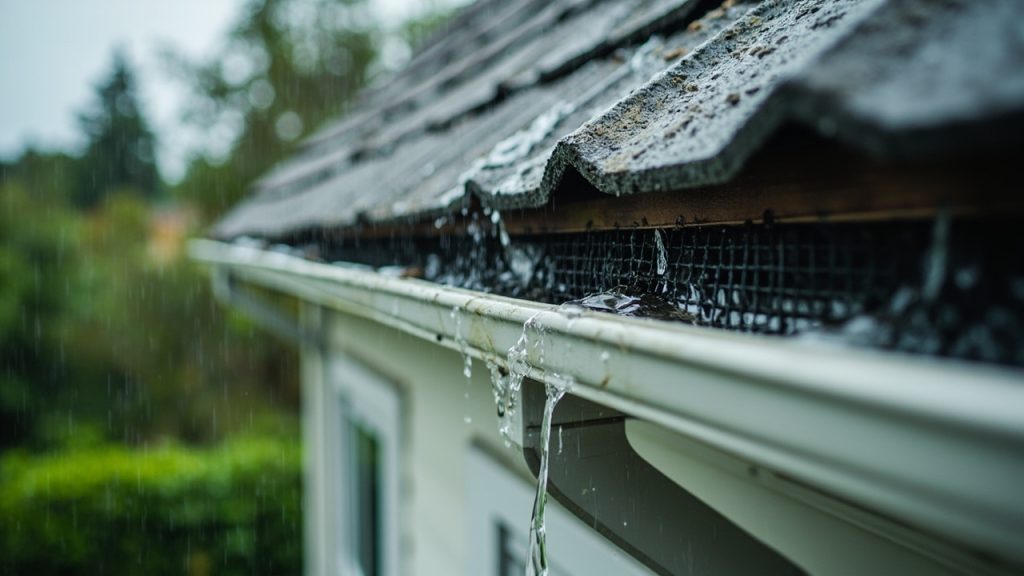
Most gutter guards work on surface tension. Water from your roof is supposed to cling to the curved top of the guard and drop down into the gutter channel. This works fine in a light drizzle.
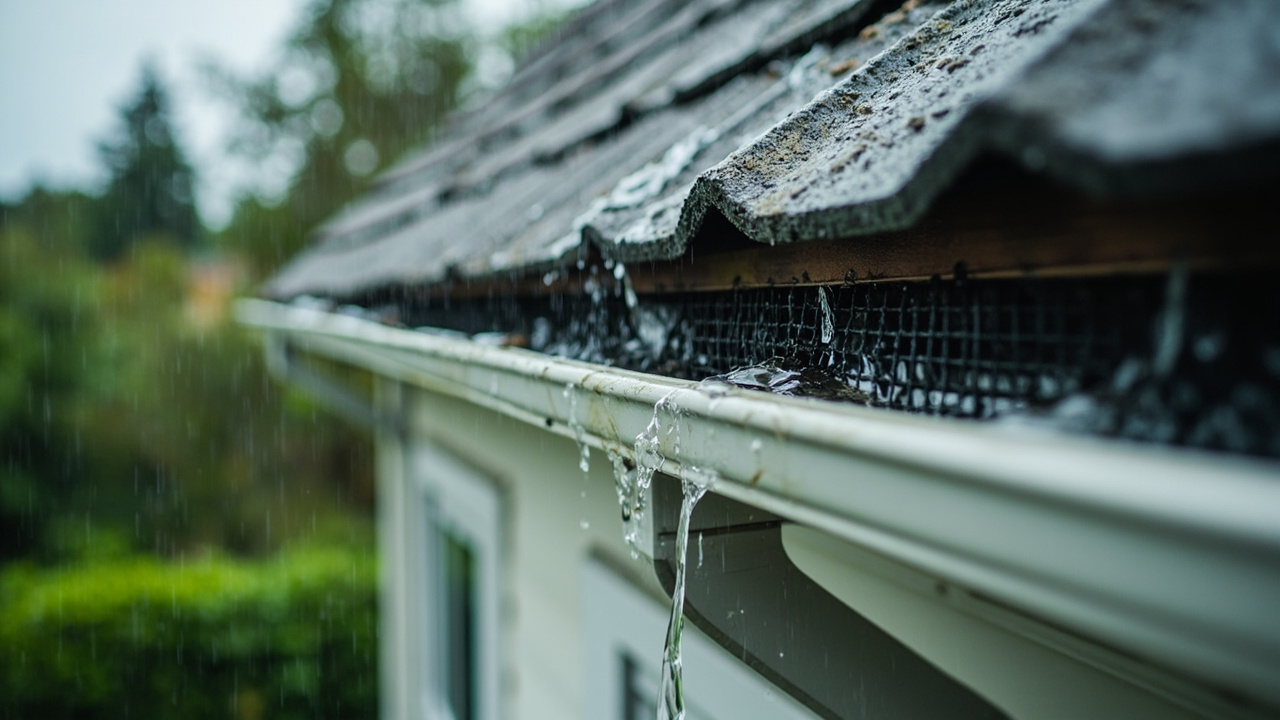
During a Southeast Michigan downpour, the water volume overwhelms that surface tension effect entirely. The water shoots straight off the roof edge, over the guard, and lands directly against your foundation. This is called overshoot, and it deposits a concentrated stream of water exactly where you don’t want it.
A standard 1,500 square foot roof sheds roughly 900 gallons of water during a single one-inch rainstorm. When overshoot redirects even a fraction of that volume against your foundation perimeter, the soil gets saturated fast.
Under-Guard Clogging From Silt and Fine Debris
Mesh-style gutter guards are marketed as maintenance-free. They are not. In the Detroit metro, cottonwood seeds in spring and fine silt from road runoff create a paste-like buildup on and beneath the mesh. This paste doesn’t wash away. It compacts.
Once the mesh is clogged, water backs up behind the fascia board. From there it wicks into the soffit, saturates the fascia, and eventually finds its way down the exterior wall toward your foundation footing. By the time you see damage, the moisture has been tracking that path for months.
Ice Damming Specific to Michigan Winters
This failure mode is particularly damaging in Dearborn’s older housing stock. When snow melts on a warm roof and hits the colder eave line, it refreezes. Gutter guards accelerate this process by giving water a horizontal surface to pool on at the roof edge.
The resulting ice dam forces meltwater backward under your shingles. That water then enters the attic or wall cavity and works its way down. By the time it reaches your basement floor or cove joint, it looks like a plumbing leak, not a gutter problem.
The National Weather Service Detroit office tracks Southeast Michigan’s freeze-thaw cycles, and in a typical winter, Dearborn sees multiple temperature swings through the 32-degree threshold. Each cycle is another opportunity for ice dam formation behind a guard-covered gutter.
Why Detroit’s Clay Soil Makes This Worse Than Anywhere Else
Southeast Michigan sits on a thick layer of glacial clay. Drive a shovel into almost any backyard in Dearborn or neighboring communities like Lincoln Park or Melvindale and you’ll hit dense clay within a foot or two of the surface. That clay doesn’t drain. It holds water like a sponge.
When gutter overshoot drops concentrated water against your home’s perimeter, that clay around your foundation becomes saturated. Saturated clay expands. Expanding clay exerts lateral pressure against your foundation walls. This is called hydrostatic pressure, and it doesn’t require a flood to do serious damage.
Hydrostatic pressure forces water through hairline cracks in poured concrete, through the cove joint (the seam where your basement floor meets the wall), and through block mortar joints. The water that shows up on your basement floor isn’t coming through a dramatic breach. It’s seeping through pressure-driven infiltration caused by soil that has nowhere to drain.

Reading the Warning Signs Before the Damage Gets Serious
Catching gutter-related foundation infiltration early saves significant money and structural headache. These are the signs that the water is already moving against your home.
- Efflorescence on basement walls. That chalky white powder isn’t harmless. It’s mineral salt left behind when water pushes through concrete and evaporates. It confirms active moisture migration through your foundation.
- Musty odor concentrated near the perimeter walls. This indicates persistent moisture and early mold growth, usually behind drywall or in the sill plate area.
- Cove joint seepage after rain events. If water appears at the floor-wall seam specifically during or after rain (not after a pipe issue), your gutters are almost certainly involved.
- Soil erosion or settled mulch near the foundation. Overshoot impact zones show visible ground disturbance. Check your downspout corners and any section where roof slope concentrates flow.
- Staining or rot on soffit and fascia boards. Under-guard clog buildup shows up as discoloration, paint bubbling, or soft wood on the fascia before basement symptoms appear.
- Horizontal cracks in block foundation walls. These are a sign of lateral soil pressure. They need professional evaluation immediately.
How Much Water Volume We’re Actually Talking About
Homeowners often underestimate how much water a roof moves during a storm. The math is straightforward and the numbers are significant.
| Roof Size (sq ft) | Rainfall (inches) | Total Water Volume (gallons) | Weight of Water (lbs) |
|---|---|---|---|
| 1,000 | 1 | 623 | 5,200 |
| 1,500 | 1 | 935 | 7,800 |
| 2,000 | 1 | 1,247 | 10,400 |
| 1,500 | 2 | 1,870 | 15,600 |
| 2,000 | 2 | 2,494 | 20,800 |
Southeast Michigan averages roughly 33 inches of annual precipitation. That volume, concentrated through roofline drainage points, represents a serious and ongoing hydraulic load against your foundation perimeter across every storm season.
Gutter Guard Types and Their Specific Failure Risks
Not all guards fail the same way. Knowing which type you have tells you which failure mode to watch for first.
| Guard Type | How It Works | Primary Failure Mode | Michigan-Specific Risk |
|---|---|---|---|
| Micro-mesh | Fine mesh filters debris | Silt clogging, mesh compaction | High (cottonwood, road silt) |
| Surface tension (reverse curve) | Water curves into channel | High-volume overshoot | High (heavy storm events) |
| Foam insert | Porous foam fills gutter | Debris and moss growth in foam | Moderate (freeze-thaw degrades foam) |
| Brush insert | Bristles catch debris on top | Debris catches in bristles | Moderate to High |
| Screen or perforated cover | Holes allow water through | Holes clog with fine debris | High (ice formation in holes) |
What a Restoration Technician Actually Finds on These Jobs
When we respond to a Dearborn basement water call, the first thing we do is check the gutters before we touch anything inside. Roughly half the time, the homeowner has gutter guards installed and genuinely believes the gutters are clean and functional.
On inspection, we find one of two things. Either the mesh is so loaded with fine debris that water is backing up behind the fascia, or the downspout extension is too short and terminating within three feet of the foundation. Both situations funnel concentrated water directly into the soil saturation zone.
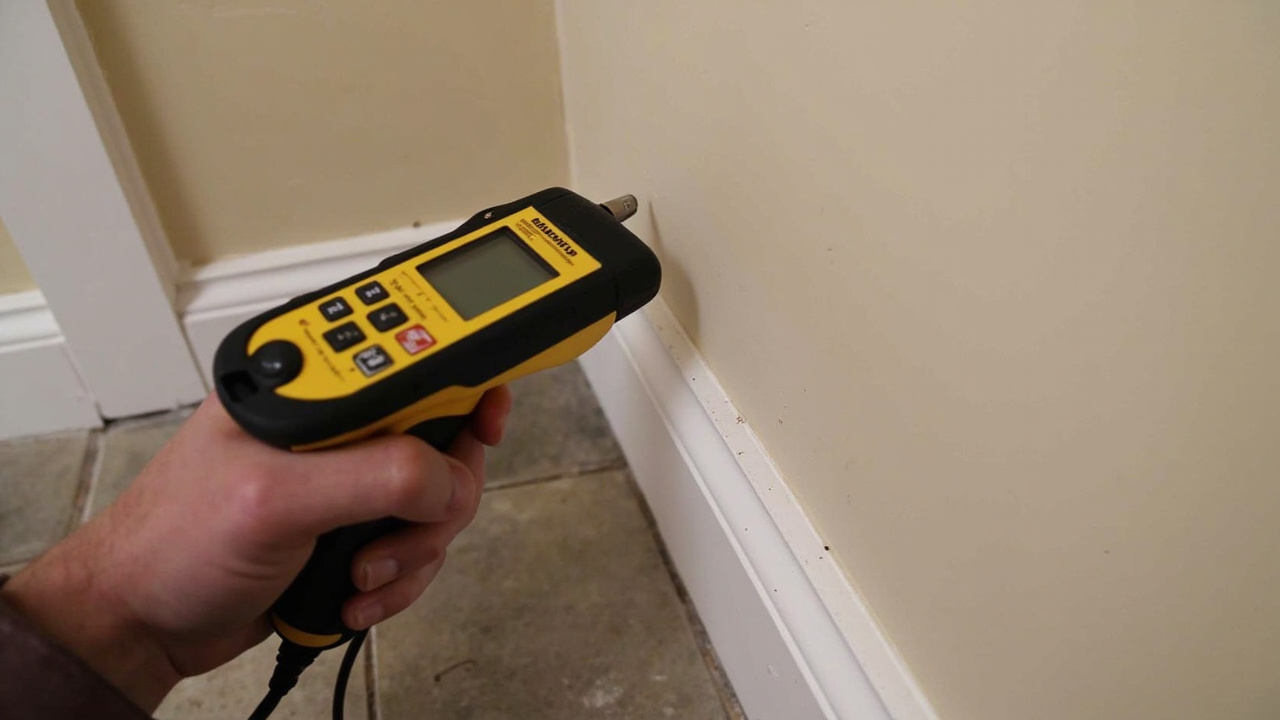
We document moisture levels in the wall cavity, floor slab, and any organic material (wood framing, drywall paper) using a calibrated moisture meter. This tells us whether we’re dealing with a fresh infiltration event or chronic moisture that has already fed mold colony growth. If we find mold, the remediation scope changes significantly. You can read more about why surface treatments alone won’t solve that problem in our article on why bleach won’t fix your Ferndale basement mold.
The IICRC (Institute of Inspection Cleaning and Restoration Certification) sets the standards our team follows for water damage classification and structural drying. When foundation water intrusion is involved, the drying protocols are more involved than a simple burst pipe scenario because the moisture source is ongoing until the exterior drainage issue is corrected.
The Fixes That Actually Address the Root Cause
Exterior Drainage Corrections
Extending downspouts a minimum of six feet from the foundation is the single most effective fix most homeowners can make without hiring a contractor. Splash blocks are not sufficient. A rigid or flexible downspout extension that terminates at a slope away from the house is what controls overshoot and clog-related overflow.
Check your yard grade as well. The ground should slope away from your foundation at roughly one inch per foot for the first ten feet. If it slopes toward the house, you are collecting water from every storm regardless of gutter condition.
Guard Removal and Seasonal Gutter Maintenance
For many Dearborn homes with mature trees nearby, removal of the guard and twice-yearly cleaning (late spring and late fall) outperforms any guard product on the market. The labor cost of cleaning is almost always lower than the restoration cost from a single foundation infiltration event.
If you keep the guards, inspect them specifically in February and March when ice dam risk is highest, and again in late May when cottonwood shedding peaks.
Interior Waterproofing When the Damage Is Already Done
If hydrostatic pressure has already forced water through your cove joint or foundation wall, exterior drainage correction alone won’t stop the seepage immediately. The soil around an older Dearborn home takes time to dry out and re-compress. In the meantime, interior waterproofing measures, including drainage channels and sump systems, manage the water that does get through.
If water damage has already reached your finished basement materials, the restoration scope depends on how long the moisture has been present. Early-stage infiltration may affect only the lower wall sections. Chronic moisture can saturate the full wall cavity and floor system. Getting a professional moisture assessment before you start tearing out drywall saves you from doing it twice.
For homes where the water damage has already moved to finished flooring, our guide on saving hardwood floors after a water leak walks through what’s salvageable and what isn’t.
Dearborn’s Specific Housing Stock Adds Another Layer of Risk
A large portion of Dearborn’s residential housing was built between the 1940s and 1960s. These homes commonly used poured concrete or concrete block foundations without the waterproofing membranes applied to modern construction. The original mortar in block foundations has often carbonated and lost density over decades, making it more porous.
That porosity means the threshold for pressure-driven infiltration is lower than in a newer home. A newer build in Allen Park or a subdivided area farther west might tolerate marginal gutter overshoot for a season before showing symptoms. An older Dearborn block foundation on dense clay may show active seepage within weeks of gutter guard installation during a wet fall.
Historic neighborhoods and older residential corridors throughout the greater Detroit metro share this characteristic. Our team has worked in homes from West Village to Westland, and the pattern repeats consistently. Age of construction and soil composition are more predictive of foundation water vulnerability than the size or price of the home.
If you’re dealing with water damage and have questions about working with your insurance carrier on the claim, our coverage breakdown on getting your Detroit home insurance to pay for water restoration covers what adjusters look for and where claims commonly get denied. You can also review our guide on filing a successful water damage insurance claim for your Corktown home for specific documentation steps.
When to Stop Troubleshooting and Call for an Inspection
You’ve checked the gutters. You extended the downspouts. The grading looks acceptable. And water is still getting in.
At that point, you are past DIY troubleshooting territory. The moisture may be tracking through pathways that aren’t visible from the surface. Cove joint infiltration, foundation tie holes, and deteriorated block mortar all require hands-on evaluation with moisture detection equipment to accurately map.
Calling a water damage restoration professional at this stage, before you start finishing the basement or painting over the efflorescence, is the decision that prevents a small moisture problem from becoming a significant structural and microbial issue. If the water has already been present long enough to support mold growth, a gutter fix and a shop vac won’t resolve it.
If you have wet carpet or flooring from a recent infiltration event, timing matters for salvageability. Our breakdown on whether wet carpet can be saved or needs to go gives you a clear decision framework based on the type of water involved and how many hours have passed.
Our team provides foundation and water damage inspections for Dearborn and throughout the Detroit metro. If you’re seeing any of the warning signs covered here, reach out for an assessment before the next rain event adds to the damage that’s already in progress.
{
“@context”: “https://schema.org”,
“@type”: “BlogPosting”,
“headline”: “Why Your New Gutter Guards Are Flooding Your Foundation in Dearborn (What No One Tells You)”,
“description”: “Dearborn homeowners installing gutter guards are seeing more basement flooding, not less. A Detroit restoration expert explains exactly why this happens.”,
“wordCount”: 2070,
“datePublished”: “2026-06-10T08:37:00.000Z”,
“dateModified”: “2026-06-10T08:37:00.000Z”,
“inLanguage”: “en-US”,
“mainEntityOfPage”: {
“@type”: “WebPage”,
“@id”: “https://ironwoodwaterdamagerestorationdetroit.com”
},
“publisher”: {
“@type”: “LocalBusiness”,
“name”: “Ironwood Water Damage Restoration Detroit”,
“url”: “https://ironwoodwaterdamagerestorationdetroit.com”
},
“author”: {
“@type”: “Organization”,
“name”: “Ironwood Water Damage Restoration Detroit”,
“url”: “https://ironwoodwaterdamagerestorationdetroit.com”
},
“image”: {
“@type”: “ImageObject”,
“url”: “https://ironwoodwaterdamagerestorationdetroit.com/wp-content/uploads/2026/03/the-surprising-reason-your-new-gutter-guards-are-f-1.jpg”
}
}
{
“@context”: “https://schema.org”,
“@type”: “LocalBusiness”,
“name”: “Ironwood Water Damage Restoration Detroit”,
“url”: “https://ironwoodwaterdamagerestorationdetroit.com”,
“address”: {
“@type”: “PostalAddress”,
“addressLocality”: “Detroit”
},
“areaServed”: {
“@type”: “City”,
“name”: “Detroit”
}
}
{
“@context”: “https://schema.org”,
“@type”: “BreadcrumbList”,
“itemListElement”: [
{
“@type”: “ListItem”,
“position”: 1,
“name”: “Home”,
“item”: “https://ironwoodwaterdamagerestorationdetroit.com”
},
{
“@type”: “ListItem”,
“position”: 2,
“name”: “Blog”,
“item”: “https://ironwoodwaterdamagerestorationdetroit.com/blog”
},
{
“@type”: “ListItem”,
“position”: 3,
“name”: “Why Your New Gutter Guards Are Flooding Your Foundation in Dearborn (What No One Tells You)”
}
]
}
{
“@context”: “https://schema.org”,
“@type”: “Service”,
“serviceType”: “Water Damage Restoration”,
“provider”: {
“@type”: “LocalBusiness”,
“name”: “Ironwood Water Damage Restoration Detroit”,
“url”: “https://ironwoodwaterdamagerestorationdetroit.com”
},
“areaServed”: {
“@type”: “City”,
“name”: “Detroit”
},
“description”: “Dearborn homeowners installing gutter guards are seeing more basement flooding, not less. A Detroit restoration expert explains exactly why this happens.”
}