

Your new patio looks great. The concrete is smooth, the pavers are level, and the backyard finally feels finished. But three weeks after installation, you notice a damp smell in the basement. Then a water stain appears near the floor-wall joint. Then a puddle shows up after every heavy rain.
The patio is the problem. And this situation plays out constantly across Royal Oak, Berkley, and Clawson neighborhoods where homeowners invest in outdoor renovations without realizing they have fundamentally changed how water moves around their home.
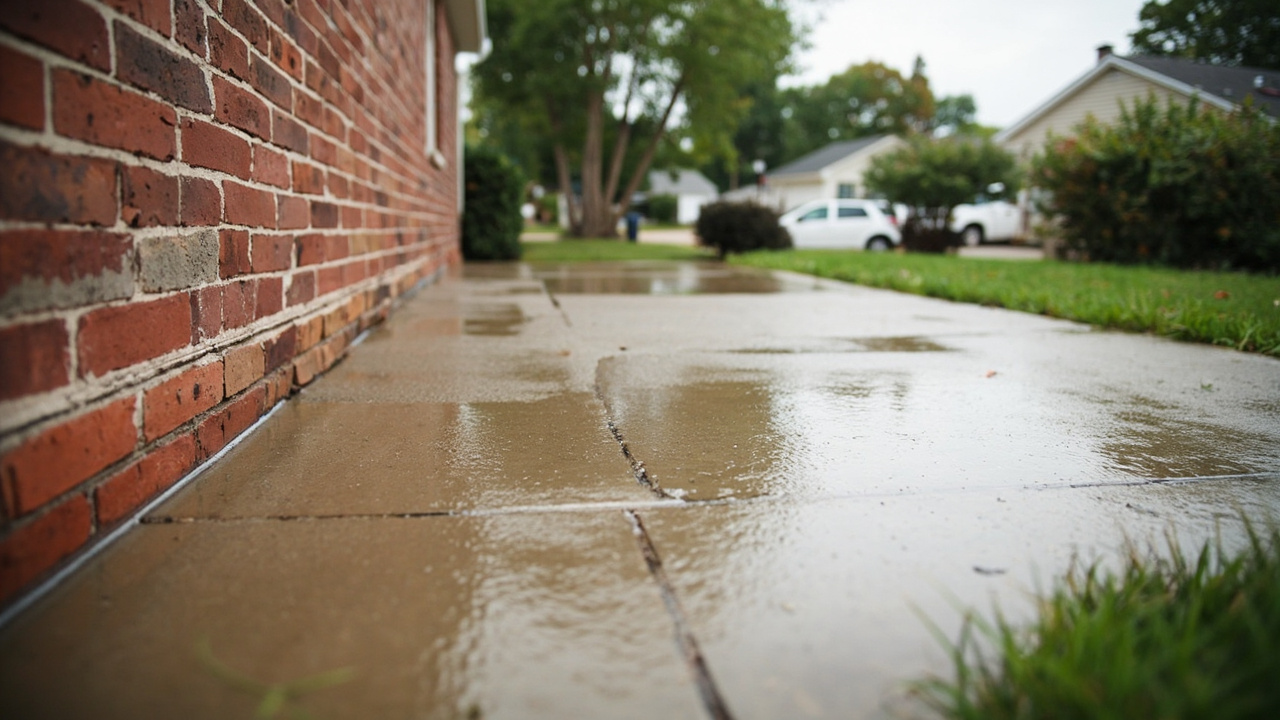
How Negative Grading Turns Your Patio Into a Water Funnel
Every surface around your home needs to direct water away from the foundation. The Michigan Building Code and industry standard practice both require a minimum slope of 1 inch of drop for every 1 foot of horizontal distance, measured over at least 6 to 10 feet away from the structure.
When a patio is installed without this slope, or worse, when it tilts slightly toward the house, you have what professionals call negative grading. Water does not flow away from the foundation. It flows toward it.
Even a 1-degree tilt in the wrong direction is enough. During a typical Southeast Michigan spring rainstorm, which can drop 2 to 3 inches of rain in a matter of hours, a 300-square-foot patio with negative grading can redirect hundreds of gallons of water directly against your foundation wall.
That water then does something predictable. It sits against the foundation, builds pressure, and finds any crack, gap, or porous section to push through. This force is called hydrostatic pressure, and it is one of the primary causes of basement flooding in older Royal Oak homes.
The Detroit Clay Soil Problem Nobody Tells You About
Southeast Michigan sits on some of the most unforgiving soil in the Midwest. Heavy clay content dominates the subsurface throughout Oakland County and Wayne County. Clay does not drain water. It holds it.
When water pools against your foundation on clay-heavy soil, the clay acts like a saturated sponge pressed against your foundation wall. The water has nowhere to go down into the earth, so it goes sideways, straight through the cove joint at the base of your foundation or through micro-cracks in the block or poured concrete.
This effect gets dramatically worse during Detroit’s freeze-thaw cycles. Water saturates the clay in fall and early winter. That water freezes and expands, physically pushing against your foundation wall with enormous force. When it thaws in late winter and spring, the now-compromised foundation absorbs the melt water even faster than before.
A patio that was installed in late summer may show no problems at all until the first serious freeze-thaw season hits. By then, the damage inside the wall cavity may already be significant.
Signs Your Royal Oak Basement Has Grading-Related Water Damage
Not every wet basement looks like a flood. Grading problems often create chronic, low-level moisture intrusion that homeowners misattribute to humidity or old windows. Here is what to look for specifically.
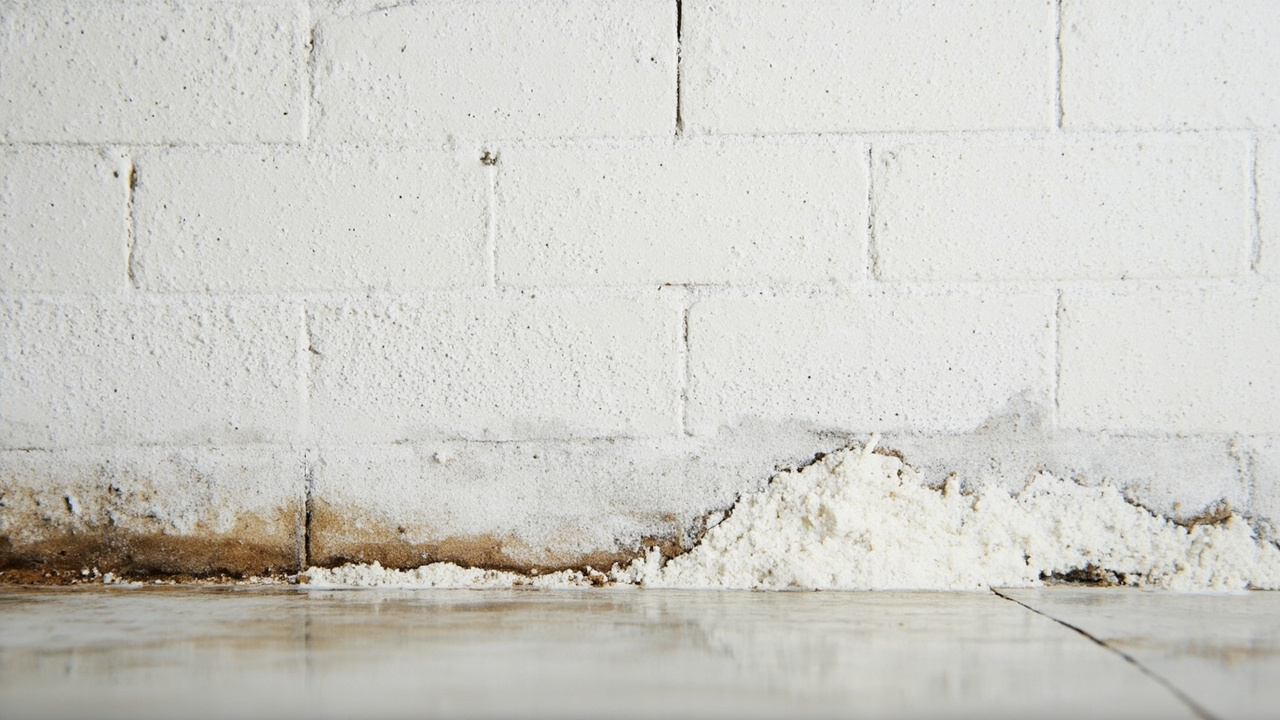
- Efflorescence on block walls. That white, chalky powder on your cinder block or poured concrete walls is crystallized mineral salt left behind when water migrates through the wall and evaporates on the surface. It is a direct indicator of water movement through the foundation.
- Moisture at the cove joint. The cove joint is where the floor slab meets the foundation wall. This is structurally the weakest point. Water staining, dampness, or active seeping at this joint almost always points to hydrostatic pressure from outside.
- Mold growth at the floor-wall junction. Mold requires sustained moisture. If you see mold growth specifically at the base of your basement walls, the source is almost certainly groundwater intrusion, not interior humidity. Surface-level cleaning will not fix this. Read more about why surface treatments fail in our article on why bleach won’t fix your Ferndale basement mold.
- Dampness specifically after snowmelt or heavy rain. If your basement is dry all winter but gets wet in March when the snow melts, negative grading is almost certainly the cause. The melt water has nowhere to go except toward your foundation.
- Bowing or staining on drywall in finished basements. If your basement is finished, you may not see the foundation wall directly. Warped drywall, bubbling paint, or musty odor concentrated near the exterior walls are the warning signs here.
The 10-Foot Rule and Why Most Patios Ignore It
The industry standard, referenced in IICRC S500 guidance and reinforced by foundation engineers across Michigan, is clear. Water must be directed at least 10 feet away from the foundation. This means the slope does not end at the edge of your patio. It continues into the yard.
Most patio installations focus on making the surface level enough to feel flat underfoot. The contractor grades away from the house at the required 1 inch per foot, but the slope ends at the patio edge. If your yard then flattens out or, common in older Royal Oak lots, dips back toward the house, you have created a collection basin.
The water flows off the patio in the right direction, then pools in the low spot in your yard, which happens to be right next to your foundation. The EPA’s WaterSense program emphasizes proper site drainage as a core factor in both water conservation and structural protection, and the principle is the same whether you are in Royal Oak or anywhere else with heavy seasonal rainfall.
Comparing Water Intrusion Sources So You Know What You Are Actually Dealing With
| Intrusion Source | Primary Symptom | Location in Basement | Seasonal Pattern |
|---|---|---|---|
| Negative patio grading | Efflorescence, cove joint seeping | Wall closest to patio | After rain and snowmelt |
| Failed window well drain | Water below window, wet drywall | Below window openings | Heavy rain events |
| Overflowing gutters | Staining near corners and downspouts | Corners, near downspout walls | During or immediately after rain |
| High water table | Seeping across entire floor slab | Entire floor, all walls | Spring, wet seasons |
| Sump pump failure | Sudden flooding, no prior warning | Lowest floor point | During or after heavy rain |
Immediate Steps You Can Take Before Calling Anyone
If you are seeing active water intrusion right now, there are a few things you can do to limit ongoing damage while you arrange for a proper assessment.
First, extend your downspouts. If your gutters are discharging water within 4 to 5 feet of the foundation, that water is adding to the problem. Downspout extensions that carry water at least 10 feet from the house cost very little and can reduce water volume against the foundation immediately.
Second, if you have a sump pump, confirm it is running. A failed sump pump during a heavy rain event can turn a manageable seepage problem into a finished-basement flood in under an hour. Test the float by pouring water into the pit.
Third, move any belongings away from the affected wall. Cardboard boxes, stored furniture, and drywall framing all absorb and hold moisture. Getting them away from the wet zone limits how much secondary damage spreads while you wait.
Fourth, do not attempt to seal cracks from the inside with hydraulic cement or epoxy injection as a permanent fix. These methods stop visible water temporarily but do not address hydrostatic pressure. The water will find another path, often somewhere harder to see.
What Professional Restoration Actually Involves (And Why Grading Correction Comes First)
There is an important distinction between fixing the cause and fixing the damage. These are two separate scopes of work, and confusing them is expensive.
Grading correction is a landscaping and civil drainage problem. A qualified landscaper or foundation drainage contractor reslopes the soil around the patio, installs a French drain system to intercept water before it reaches the foundation, or reworks the patio itself with a positive slope. This is the cause-side fix.
Water damage restoration addresses what happened to the structure and materials inside the foundation as a result of the intrusion. This includes water extraction, structural drying using commercial dehumidifiers and air movers per IICRC S500 Standards, mold assessment and remediation if moisture has been present long enough to support growth, and repair or replacement of damaged drywall, insulation, and flooring.
If you fix the drainage and skip the restoration work, you have trapped moisture inside your wall cavities and floor assembly. That moisture feeds mold growth behind walls for months before you smell it. If you fix the interior damage without correcting the grading, water returns and destroys the repairs.
Both fixes have to happen, in the right order. Correct the grading source first. Then dry and restore the interior damage.

Timeline and Scope Comparison for Common Grading-Related Damage Scenarios
| Damage Scenario | Typical Drying Timeline | Remediation Scope | Insurance Coverage Likelihood |
|---|---|---|---|
| Minor seepage, unfinished basement, caught early | 3 to 5 days | Drying only, possible efflorescence treatment | Low, often maintenance exclusion |
| Chronic seepage, finished basement, mold present | 7 to 14 days | Mold remediation, drywall removal, drying, rebuild | Moderate, depends on policy and cause documentation |
| Active flood event, sump failure during storm | 5 to 10 days | Extraction, full structural drying, content evaluation | Higher with sewer backup or flood endorsement |
| Long-term intrusion, bowing walls, structural concern | 10 to 21 days | Structural engineer assessment required before restoration | Complex, typically requires adjuster involvement |
Case Study from a Royal Oak Adjacent Neighborhood
A homeowner in the Woodward Corridor area near Royal Oak contacted us after noticing a persistent musty smell in their finished basement approximately six weeks after a paver patio installation. The patio ran the full length of the back of the house.
Initial assessment confirmed negative grading toward the foundation along approximately 18 linear feet of the rear wall. The clay soil directly behind the foundation was saturated. Moisture readings in the lower 24 inches of the basement drywall showed elevated moisture content well above acceptable drying targets. Mold colonies were confirmed behind the drywall along two sections of the exterior wall.
The remediation scope included removal of affected drywall and insulation in those sections, treatment of the exposed foundation wall per IICRC S500 protocols, structural drying over an 11-day period, and mold remediation including air scrubbing and surface treatment. The homeowner coordinated separately with a drainage contractor who resloped the patio with a positive grade and installed a channel drain along the perimeter to intercept surface runoff.
The homeowner filed an insurance claim for the interior damage. For guidance on navigating that process in Michigan, see our detailed walkthrough on how to get your Detroit home insurance to actually pay for water restoration.
The finished basement was fully rebuilt and dried within three weeks of the initial call. The corrected grading has held through two full freeze-thaw cycles with no recurrence.
When a Wet Basement Also Means Damaged Floors and Carpet
Grading-related flooding does not stop at the walls. If your finished basement has carpet or hardwood flooring, water intrusion creates a secondary damage problem that requires its own assessment. Carpet absorbs and holds contaminated groundwater, and the padding underneath becomes a mold substrate within 24 to 48 hours if not extracted and dried properly.
We have covered the carpet decision specifically in our guide to deciding whether your wet carpet can be saved or needs to go. For finished basements with hardwood flooring, the process is different and time-sensitive, as explained in our article on how to save your hardwood floors after a significant water leak.
What the Michigan Building Code Actually Says About Grading
The Michigan Department of Licensing and Regulatory Affairs references grading requirements in the Michigan Residential Code, which mirrors the International Residential Code grading standards. The code requires that the finish grade slope away from the foundation a minimum of 6 inches within the first 10 feet.
This code applies to new construction and permitted renovation work. Many patio installations are done without permits, which means no inspector ever checks the slope. That gap between permitted work and actual installation practices is where the damage happens.
If your patio was installed without a permit and the grading is now causing foundation water intrusion, that fact can complicate your insurance claim. Documenting the grading problem with photos and a professional assessment before filing is critical.
Getting Your Drainage Right the First Time Saves Significant Structural Cost
Catching a grading problem early, before it progresses to mold, structural damage, or efflorescence deep in the wall, makes a substantial difference in restoration scope and cost. A minor seepage situation caught in the first season is a short drying job. The same problem left through two or three freeze-thaw cycles can involve significant mold remediation, possible structural evaluation, and a full interior rebuild.
If you have recently installed a patio in Royal Oak, Berkley, Ferndale, or anywhere in the greater Detroit metro and you are now seeing any of the symptoms listed above, do not wait for the problem to define itself further. Have the grading assessed and have a water damage professional evaluate whether moisture has already entered your wall system.
Call a qualified water damage restoration team to walk through the affected areas with moisture meters before you start patching, painting, or assuming the problem will dry on its own. The earlier the assessment, the more options you have.