
The Drain System Nobody Checks Until the Floor Is Underwater
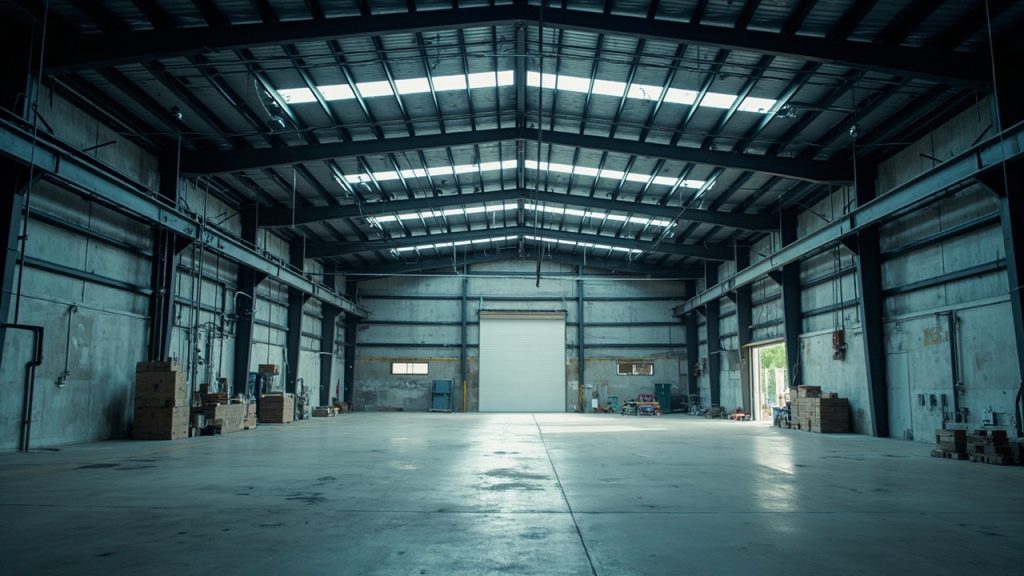
Detroit’s North End warehouse corridor runs from East Grand Boulevard up through the Seven Mile industrial pocket, and it is packed with flat-roofed commercial buildings that were built for a different era of weather. Those roofs are draining into internal downspout systems that most property managers have never physically inspected. When one of those drains fails, the water does not run down the exterior wall. It backs up, pools on the membrane, finds the weakest penetration point, and drops straight through your ceiling into your inventory, your equipment, or your concrete floor.
This is not a roofing problem in isolation. It is a water damage event waiting for the right storm.

What Detroit’s Climate Does to a Warehouse Roof Drain System
The freeze-thaw cycle in Southeast Michigan is one of the most mechanically destructive forces acting on any flat commercial roof. Detroit averages around 43 inches of annual precipitation, with a significant portion arriving as freezing rain, snow, and ice between late fall and early spring. When that moisture sits on a membrane and then refreezes in the drain sump, it expands and contracts with enough force to crack the sump flashing, lift the dome strainer, and separate the drain collar from the roof membrane.
TPO and EPDM membranes are both common on North End warehouses. Both are vulnerable in the same way. The membrane around the drain sump is where the most movement happens. Each freeze-thaw cycle widens the gap between the membrane termination and the drain body. Over multiple seasons, that gap becomes a direct path for water intrusion, bypassing the drain entirely and going through the roof deck.
Built-up roofing systems, which are still present on many of the older warehouse buildings near the Dequindre Cut area, develop a condition called alligatoring around the drain sumps. The surface asphalt dries out and cracks in a pattern that looks exactly like reptile skin. Once alligatoring appears around a drain collar, water infiltration underneath the membrane is almost guaranteed.
The Anatomy of a Commercial Warehouse Drainage System
Understanding the system is the first step to knowing where it fails. A typical flat warehouse roof in Detroit uses one of three drainage configurations, and each has its own failure points.
Internal Roof Drains and Conductor Heads
Most mid-century and post-war warehouses in Detroit use interior drains. The drain body is set into the roof deck, typically 18 to 24 inches from the parapet wall. A dome-shaped strainer sits over the opening to catch debris. Below the drain body, a conductor head connects to a vertical downspout that runs inside the building, often concealed inside a wall or column chase, and ties into the storm sewer at grade.
This configuration is completely hidden from the ground. When the conductor pipe corrodes, disconnects at a joint, or gets blocked by debris that passed through the strainer, the water has nowhere to go. It backs up into the pipe and eventually overflows at the roof level, or it leaks at the pipe joint inside the wall cavity and shows up as a ceiling stain or floor seepage weeks later.
Secondary Overflow Scuppers and Parapet Walls
Detroit’s Detroit Buildings, Safety Engineering and Environmental Department requires secondary drainage for flat commercial roofs. That secondary system is typically an overflow scupper, which is a through-wall opening in the parapet set about two inches above the primary drain level. If your primary drains are blocked, the water should rise to the scupper height and exit through the parapet wall to the exterior.
The problem is that scuppers get sealed over during re-roofing projects. Workers apply new membrane material and accidentally or intentionally close off the scupper opening. Now you have no secondary drainage. One clogged primary drain and a two-inch rainstorm, and you have standing water ponding on the roof with nowhere to exit.
Standing water weighs approximately 5 pounds per square foot for every inch of depth. A 10,000-square-foot roof with three inches of standing water is carrying 150,000 pounds of unplanned load. Older roof decks in the North End were not engineered for that scenario.

The Bi-Annual Maintenance Checklist for Detroit Warehouses
The correct inspection schedule for this region is twice per year. Once before freeze season, typically late September through October, and once after thaw, typically late March through April. Each inspection should cover the following items systematically.
- Dome strainer and sump inspection. Remove each dome strainer physically. Check for cracks in the dome body and corrosion at the attachment collar. Clean out all organic debris from the sump. Check that the strainer seats flush with no gaps that would allow large debris to pass into the drain body.
- Membrane condition around the drain collar. Look for alligatoring, blistering, or any separation between the membrane and the drain flange. Any visible gap at this joint needs immediate attention. It is the single most common entry point for water on a flat warehouse roof.
- Flow testing each drain. Run a hose into each drain sump and time the drainage rate. A properly functioning drain should clear a steady stream of water without backing up. Slow drainage indicates a partial blockage in the conductor pipe or a debris accumulation further down the system.
- Scupper inspection. Walk the parapet and physically verify that every overflow scupper is open, unobstructed, and properly flashed. Look for fresh membrane material that may have been applied over the scupper opening during recent re-roofing work.
- Conductor pipe inspection from below. Access the internal downspout locations from inside the building. Check for rust staining on walls near the pipe chase, which indicates a slow leak at a pipe joint. Check floor drains at the base of conductor pipes for evidence of overflow.
- Parapet coping and flashing inspection. Check coping cap joints for open seams. Check counter flashing at parapet walls for separation. Both are secondary water entry points that direct water toward the roof drain area and compound drainage problems.
Winter-Specific Protocols for Freeze Season
Ice dams on a flat commercial roof behave differently than on a residential sloped roof. On a warehouse, ice forms inside the drain sump and inside the top section of the conductor pipe. When temperatures drop below 20 degrees Fahrenheit, which happens multiple times each winter in Detroit, that ice plug completely blocks drainage. Any subsequent melt water from sun exposure on the membrane has nowhere to go and begins to pond.
Self-regulating heat tape installed inside the drain sump and extending into the top 18 inches of the conductor pipe is the correct mechanical solution. It draws power only when ambient temperature requires it, and it prevents ice plug formation without requiring manual intervention. If your building does not have heat tape on roof drains, it needs to be on your capital budget for this season.
Salt-based ice melt products should never be placed on TPO or EPDM membranes. The chemical reaction degrades the membrane material and accelerates the same alligatoring condition around drain sumps that the freeze-thaw cycle creates. Calcium magnesium acetate is the membrane-safe alternative if you need to address ice accumulation on the roof surface itself.
| Failure Type | Primary Cause | Interior Damage Risk | Detection Method |
|---|---|---|---|
| Ice plug in conductor pipe | Freeze-thaw cycle, no heat tape | High. Roof ponding leads to membrane breach. | Visible ponding after temperature fluctuation |
| Membrane separation at drain collar | Repeated freeze-thaw expansion | Immediate. Water bypasses drain body entirely. | Interior ceiling staining directly below drain location |
| Scupper sealed during re-roofing | Installation error | Catastrophic during heavy rainfall events | No exterior water flow during rain; roof ponding observed |
| Corroded conductor pipe joint | Age and galvanic corrosion | Moderate to high. Slow leak into wall cavity. | Wall staining near pipe chase; floor seepage at grade |
| Blocked dome strainer | Debris accumulation, no maintenance | Moderate. Water backs up to secondary system. | Slow drain rate during flow test |
Reading the Signs Inside Your Warehouse
By the time water appears on your interior floor, the roof drain system has been failing for longer than you think. The interior evidence usually tells you how far along the damage is.
Ceiling and Deck Staining
A yellow or brown ring stain on a ceiling panel directly corresponds to a water entry point above. The ring forms at the perimeter of a recurring wet spot that dried and left mineral deposits behind. One stain ring means it has happened at least once. Multiple rings, one inside the other, mean it is a recurring event tied to rain cycles, and the insulation above that point is likely saturated.
Saturated insulation, whether it is rigid ISO board on a commercial roof deck or batt insulation in a cavity wall, does not dry on its own. It holds moisture for months and becomes a substrate for mold growth inside the assembly. By the time visible mold appears on the interior ceiling surface, the concealed growth is typically 60 to 90 days older than the visible sign.
Floor Seepage and Hydrostatic Pressure
Water appearing on a concrete warehouse floor without a visible overhead source usually indicates that a conductor pipe is leaking at grade level or below, and water is migrating through the concrete slab under hydrostatic pressure. This is particularly common in North End warehouses near the Detroit River drainage basin, where soil saturation levels are high during spring thaw.
Hydrostatic pressure pushes water through any crack or joint in a below-grade concrete assembly. A failed conductor pipe connection at the storm sewer tie-in point can saturate the surrounding soil and drive water back up through the slab. This is frequently misdiagnosed as a foundation problem when the actual source is the roof drainage system above.

Maintenance Cost vs. Emergency Restoration Cost
The financial case for routine drain maintenance is straightforward when you compare the two scenarios side by side.
| Scenario | Scope | Typical Timeline | Business Disruption |
|---|---|---|---|
| Bi-annual drain inspection and cleaning | All drains, scuppers, conductor pipe check | Half day per visit | Minimal. Roof access only. |
| Emergency water extraction after drain failure | Water removal, structural drying, content management | 3 to 7 days for extraction and drying | Partial or full shutdown depending on affected area |
| Mold remediation following undetected slow leak | Concealed growth in wall/ceiling assemblies | 5 to 14 days plus rebuild time | Affected zones closed. Possible full shutdown. |
| Structural roof deck replacement from ponding damage | Deck replacement, membrane, insulation, drains | Weeks to months | Extended disruption. Potential lease violations. |
Emergency commercial water extraction follows the IICRC S500 Standard for Professional Water Damage Restoration, which governs how quickly affected materials must be dried to prevent secondary mold amplification. For a commercial warehouse environment, that window is typically 48 to 72 hours from initial water contact. Missing that window changes the scope from a drying project to a remediation project, and the cost difference is significant.
If your warehouse has experienced any of the interior signs described above, the documentation and insurance claim process matters as much as the restoration work itself. Understanding how commercial water damage claims are structured can protect your business from under-settlement. The same principles that apply to residential claims in Detroit apply at the commercial level, and you can find a detailed walkthrough of the claim process in this guide on getting your Detroit insurance to pay for water restoration.
When Mold Is Already in the Picture
A warehouse roof drain failure that has been leaking slowly for two or more months almost always produces concealed mold growth. The dark, enclosed space inside a wall cavity or above a drop ceiling is the ideal environment for amplification. Good air circulation does not reach it. Temperatures stay moderate. Moisture is sustained.
Surface cleaning is not a viable remediation method for mold inside a building assembly. Bleach applied to a visible surface stain does nothing to the growth inside the wall system. The physical material must be removed, the source moisture controlled, and the cavity dried and treated before any rebuild begins. A more detailed explanation of why surface treatments fail is available in this breakdown on why bleach won’t fix concealed mold growth.
What a Professional Roof Drain Inspection Should Cover
If you are bringing in a water damage restoration contractor to assess a suspected roof drain failure, their inspection should go beyond the visible ceiling staining. A qualified commercial inspector working under IICRC standards will use moisture meters and thermal imaging to locate the full boundary of saturation inside wall and ceiling assemblies.
They should document drain locations relative to interior staining, assess conductor pipe condition from accessible points, and provide a scope that distinguishes between active water intrusion and residual moisture from a past event. That distinction matters for your insurance claim, your repair contractor, and your ongoing maintenance plan.
If your warehouse has experienced water on the floor from any overhead source, a restoration assessment should happen before any structural repairs are initiated. Repairing the roof without drying the assembly below it traps moisture inside the building envelope, which accelerates structural deterioration and feeds mold amplification regardless of surface repairs above.
Take Action Before the Next Rain Event
Detroit’s weather does not give you a long warning window. A system moving in off Lake Erie can drop an inch of rain in under an hour, and if your primary drains are blocked and your overflow scuppers are sealed, that water has one place to go. Your floor.
Schedule a physical roof drain inspection before the next freeze season begins. If you have visible interior staining, ceiling irregularities, or unexplained floor moisture anywhere in your warehouse, contact a commercial water damage restoration team to assess what is already inside the assembly. The longer that assessment waits, the larger the scope becomes.
Our team has inspected and restored commercial warehouses across Detroit’s North End, Eastern Market district, and the industrial corridors along Gratiot and East Jefferson. Call us to schedule a site assessment, and bring your maintenance records if you have them. If you do not have them, that tells us what we need to know.
{
“@context”: “https://schema.org”,
“@type”: “BlogPosting”,
“headline”: “Why Your North End Warehouse Roof Drains Are Probably Flooding Your Interior Floor”,
“description”: “Detroit warehouse owners: learn why internal roof drains fail, what to inspect, and how to stop interior flooding before it costs you a full shutdown.”,
“wordCount”: 2350,
“datePublished”: “2026-05-29T11:28:00.000Z”,
“dateModified”: “2026-05-29T11:28:00.000Z”,
“inLanguage”: “en-US”,
“mainEntityOfPage”: {
“@type”: “WebPage”,
“@id”: “https://ironwoodwaterdamagerestorationdetroit.com”
},
“publisher”: {
“@type”: “LocalBusiness”,
“name”: “Ironwood Water Damage Restoration Detroit”,
“url”: “https://ironwoodwaterdamagerestorationdetroit.com”
},
“author”: {
“@type”: “Organization”,
“name”: “Ironwood Water Damage Restoration Detroit”,
“url”: “https://ironwoodwaterdamagerestorationdetroit.com”
},
“image”: {
“@type”: “ImageObject”,
“url”: “https://ironwoodwaterdamagerestorationdetroit.com/wp-content/uploads/2026/03/why-your-north-end-warehouse-roof-drains-might-be-1.jpg”
}
}
{
“@context”: “https://schema.org”,
“@type”: “LocalBusiness”,
“name”: “Ironwood Water Damage Restoration Detroit”,
“url”: “https://ironwoodwaterdamagerestorationdetroit.com”,
“address”: {
“@type”: “PostalAddress”,
“addressLocality”: “Detroit”
},
“areaServed”: {
“@type”: “City”,
“name”: “Detroit”
}
}
{
“@context”: “https://schema.org”,
“@type”: “BreadcrumbList”,
“itemListElement”: [
{
“@type”: “ListItem”,
“position”: 1,
“name”: “Home”,
“item”: “https://ironwoodwaterdamagerestorationdetroit.com”
},
{
“@type”: “ListItem”,
“position”: 2,
“name”: “Blog”,
“item”: “https://ironwoodwaterdamagerestorationdetroit.com/blog”
},
{
“@type”: “ListItem”,
“position”: 3,
“name”: “Why Your North End Warehouse Roof Drains Are Probably Flooding Your Interior Floor”
}
]
}
{
“@context”: “https://schema.org”,
“@type”: “Service”,
“serviceType”: “Water Damage Restoration”,
“provider”: {
“@type”: “LocalBusiness”,
“name”: “Ironwood Water Damage Restoration Detroit”,
“url”: “https://ironwoodwaterdamagerestorationdetroit.com”
},
“areaServed”: {
“@type”: “City”,
“name”: “Detroit”
},
“description”: “Detroit warehouse owners: learn why internal roof drains fail, what to inspect, and how to stop interior flooding before it costs you a full shutdown.”
}