
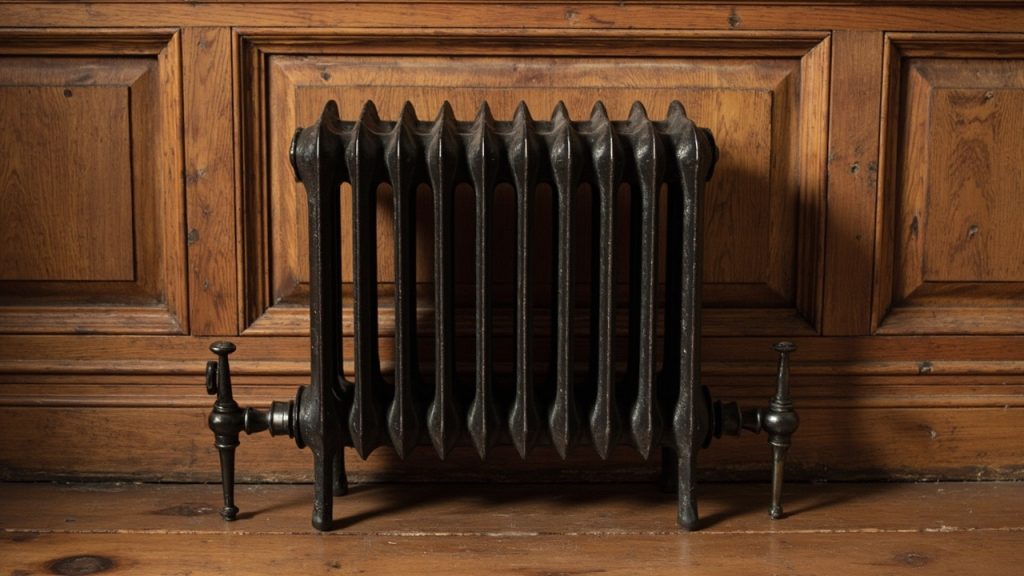
Radiator Leak Water Damage Restoration in Detroit’s Indian Village
If you own a historic home in Indian Village, you already know the trade-off. Those original cast iron radiators look beautiful. They heat evenly. And they can also fail quietly for months before you ever see visible damage. By the time you notice a damp baseboard or a soft spot in your hardwood floor, water has already been doing work you can’t see.
This guide explains exactly what happens when a steam or hot water radiator leaks in a historic Detroit home, why the damage is worse than a standard plumbing leak, and what a proper restoration actually looks like from start to finish.
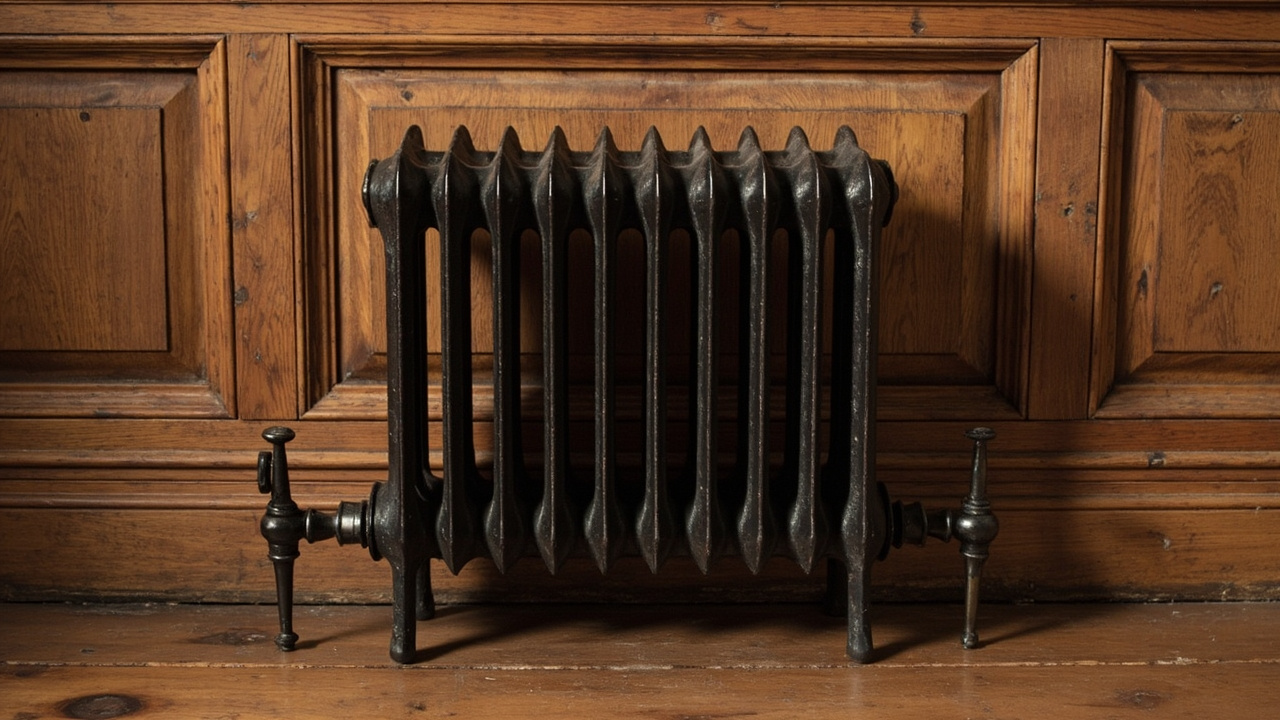
How Radiator Leaks Hide in Historic Detroit Homes
Indian Village, along with East English Village and Boston-Edison, sits on some of Detroit’s most architecturally significant housing stock. Most of these homes were built between the early 1900s and the 1940s. That means original lath and plaster walls, old-growth hardwood floors, and boiler systems that have been patched and repaired over decades.. Read more about Why Your Bamboo Floors in Berkley Might Be Bubbling After a Minor Spill.
Radiator leaks tend to start at the supply valve, the packing nut, or at a threaded union near the floor. The water doesn’t always spray. More often, it seeps. It follows the path of least resistance, which in a 100-year-old home usually means behind the baseboard trim, down into the subfloor assembly, and then into the floor joists below.
Because the leak is warm or hot, it dries partially on its own. That cycle of wetting and drying is what makes radiator leaks so destructive. Wood absorbs moisture, partially dries, swells, and contracts. Over weeks or months, that movement breaks down the structural integrity of the subfloor and joists without ever pooling enough water to catch your attention.
Warning Signs You Should Not Ignore
- Soft or spongy floor near a radiator, even if the floor surface looks fine
- Paint bubbling or peeling on walls near the baseboard
- A faint metallic or mineral smell near the radiator during heating season
- Rust stains on the baseboard trim or the floor finish
- Increased boiler pressure drops between cycles
- Mold growth appearing at the base of the wall, often gray or black
- Discoloration or warping in hardwood flooring near the heat source
The Hidden Dangers of Radiator Leaks in Older Detroit Housing Stock
Water damage from a burst pipe is obvious. You see it, you respond. Radiator leaks operate differently, and the damage compounds in ways that standard flooding does not.
First, consider the water itself. Boiler system water is not clean municipal tap water. It contains rust particles, mineral deposits, and often chemical additives like inhibitors used to prevent corrosion inside the boiler. When that water soaks into plaster, subfloor decking, or old-growth Douglas fir joists, it leaves behind a chemical residue that accelerates wood decay and creates conditions where certain mold species establish faster than they would with clean water.
Second, steam systems operate at elevated temperatures. When 200-degree water contacts the cold air near an exterior wall in January in Detroit, condensation forms on every cold surface. That ambient moisture affects far more square footage than just the area directly under the radiator.
Third, many radiator pipe runs in pre-1960 Detroit homes were wrapped in asbestos-containing insulation. If the leak has compromised that pipe insulation, any remediation work has to stop until a licensed asbestos abatement contractor assesses and, if needed, removes the material. Skipping that step creates serious liability and health risk. The EPA’s asbestos guidance is clear that disturbing asbestos-containing materials without proper containment and removal protocols is a federal violation, not just a local code issue.
Why Radiator Water Damage Is Different From Standard Flooding
| Damage Type | Water Source | Contamination Level | Structural Risk | Mold Risk Timeline |
|---|---|---|---|---|
| Radiator or boiler leak | Hot, chemically treated water with rust | Category 2 (Gray Water) | High (repeated wetting cycles damage joists and subfloor) | 24 to 48 hours in concealed spaces |
| Standard pipe burst | Clean supply water | Category 1 (Clean Water) | Moderate to High (depends on duration) | 48 to 72 hours in open areas |
| Sump pump failure | Groundwater and surface water | Category 2 to 3 | High (foundation and basement framing) | 24 to 36 hours |
| Roof leak | Rainwater, sometimes with debris | Category 1 to 2 | Moderate (attic framing, ceiling assemblies) | 48 to 72 hours |
The contamination category matters because it dictates the decontamination and disposal protocols. A Category 2 water loss from a boiler system means porous materials like carpet, drywall, and insulation typically cannot be dried in place. They have to come out. In a historic plaster-and-lath home, that changes the scope of the work considerably.
The 5-Step Water Extraction and Drying Process for Historic Detroit Homes
Restoration work in Indian Village or Palmer Woods is not the same as drying out a 1990s ranch house in Warren. The materials are different, the structural systems are different, and the drying targets require more careful monitoring. Here is what a proper remediation looks like when a radiator leak has been present for any significant period of time.
Step 1. Moisture Mapping and Inspection
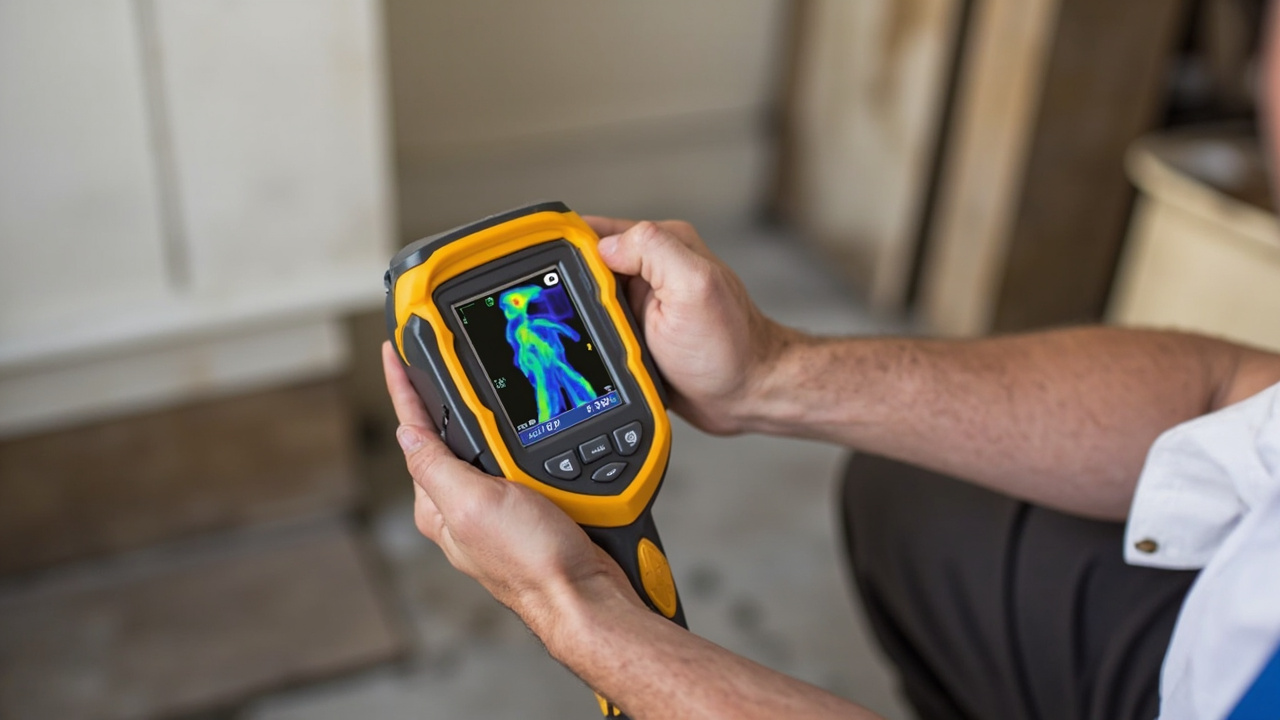
Before any equipment goes in, a certified technician uses thermal imaging cameras and non-invasive moisture meters to map exactly where water has traveled. In a historic home with plaster walls, moisture migrates unpredictably. The actual wet zone is often two to three times larger than the visible damage area. Accurate mapping prevents callbacks and prevents mold from establishing in areas that were missed.
Step 2. Controlled Water Removal
Truck-mounted extraction units remove standing or pooled water first. In a radiator leak scenario, there is usually no standing water, but saturated materials still need extraction. Weighted extraction tools applied directly to hardwood floors pull moisture out of the wood cells without requiring the floor to come up, in many cases. That matters enormously in a home with original quarter-sawn oak floors.
Step 3. Industrial Dehumidification and Psychrometric Monitoring
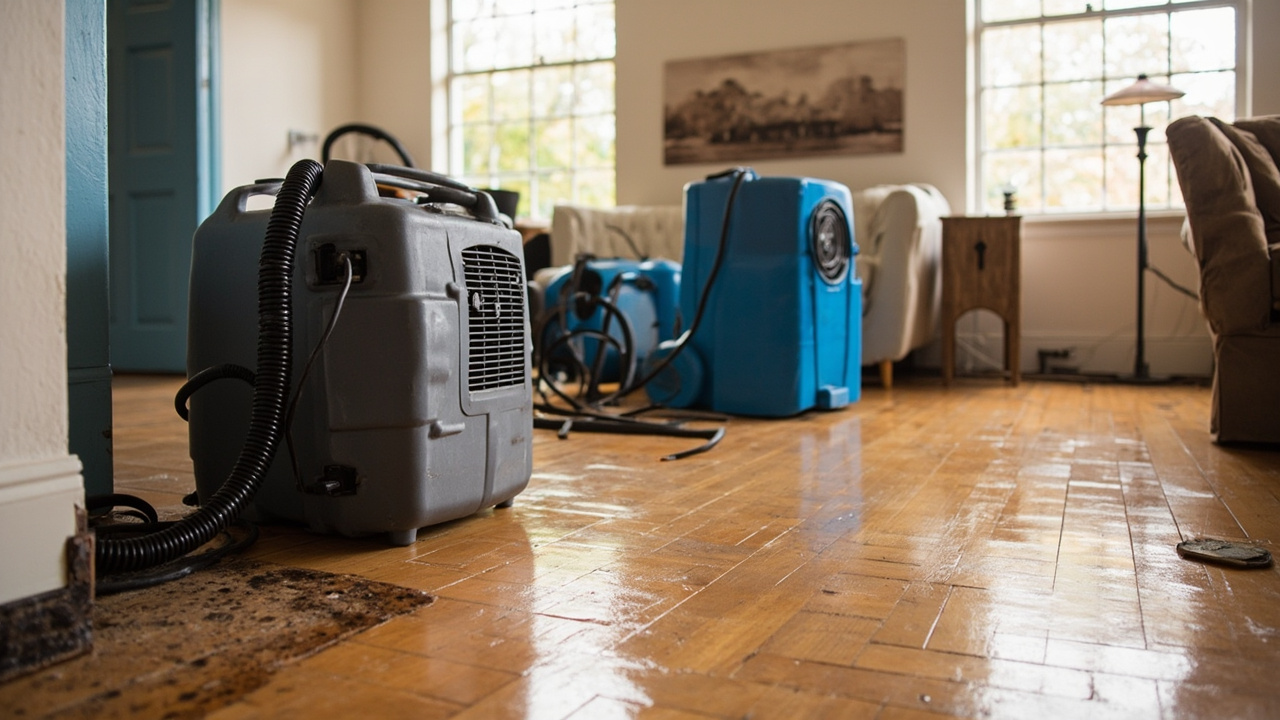
Low-grain refrigerant (LGR) dehumidifiers and high-velocity air movers work in combination to drop the ambient relative humidity and accelerate evaporation from building materials. Technicians use psychrometry, the science of measuring air moisture content, to calculate the right number of units per square foot of affected area and to track drying progress daily. Drying logs are maintained throughout this phase. The IICRC S500 Standard governs the scientific protocols for this process, and working with a certified firm means your project follows that standard, which also matters when you file an insurance claim.
Step 4. Antimicrobial Treatment and Cleaning
Because boiler water is Category 2, all affected structural surfaces receive antimicrobial treatment after drying. In a plaster-and-lath assembly, this means getting product into the wall cavity through controlled access points. Any materials that cannot be adequately cleaned and dried, including saturated insulation or compromised subfloor sections, are removed and properly disposed of.
Step 5. Structural Assessment and Restoration
Once the structure reaches documented drying goals, the restoration phase begins. In historic Detroit homes, this often includes lath and plaster repair, hardwood floor refinishing or replacement of damaged boards, and subfloor repair where joist damage has occurred. If you need guidance on protecting your hardwood floors through a water event, this detailed breakdown on saving hardwood floors after a significant water leak covers what is salvageable and what is not.
Steam vs. Hot Water Radiators and Why It Changes the Damage Profile
| System Type | Operating Pressure | Water Temperature | Leak Behavior | Structural Impact |
|---|---|---|---|---|
| One-pipe steam | Very low (under 2 PSI) | 212°F at the boiler | Slow seep at air vent or packing; condensate drains back | Repeated moisture cycling; high mold and rot risk |
| Two-pipe steam | Low to moderate | 212°F at the boiler | Leaks at steam traps or return lines; can be significant volume | Larger water volume per event; faster structural saturation |
| Hot water (hydronic) | 12 to 25 PSI | 160°F to 180°F | Valve or union failure; steady drip or trickle | Consistent moisture source; deep subfloor penetration |
One-pipe steam systems are extremely common in Indian Village homes built before 1930. The leak behavior on these systems is deceptive. Because the system pressure is so low, leaks rarely spray. They drip. That slow, consistent drip over a heating season from October through March can deposit significant water volume behind your baseboard before you ever notice.
Mold Risk in Post-Radiator-Leak Detroit Homes
Mold establishes in concealed wall cavities within 24 to 48 hours under the right conditions. The space behind a baseboard near a radiator is almost always the right conditions. Warm temperatures, moisture, and the cellulose in old wood framing are exactly what common mold species need to colonize.
A visual inspection from the outside of the wall tells you almost nothing. The mold colony is on the back side of the plaster, on the face of the stud, or inside the insulation cavity. This is why a proper investigation requires moisture metering and, in some cases, controlled exploratory openings to assess what is actually happening in the wall assembly.
If you are dealing with a mold situation that has already taken hold, be cautious about DIY approaches. Surface-level treatments with household products do not reach mold growth in a wall cavity. For a direct look at why those approaches fail, read this explanation of why bleach does not fix structural mold and when professional remediation is necessary.
Insurance Claims for Radiator Leak Damage in Wayne County
Radiator leaks fall into an interesting gray area for homeowners insurance. Most policies cover sudden and accidental discharge. A slow leak that developed over a heating season may be treated differently by an adjuster than a valve that failed overnight.
Documentation is everything. When a restoration team arrives, they generate a detailed scope of work, moisture readings with time stamps, and photo documentation of all affected areas before anything is moved or removed. That documentation package is what your adjuster uses to approve or deny the claim. Without it, you are negotiating from a weak position.
If you are in the early stages of dealing with an insurance response to water damage, this article on how to get your Detroit home insurance to actually pay for water restoration covers the specific tactics that work with Michigan adjusters. And if you are in a Corktown property or another historic neighborhood with a similar housing profile, the guide on filing a successful water damage insurance claim for a Corktown home is directly applicable to your situation.
What to Do Right Now While You Wait for the Restoration Team
If you have identified a radiator leak or suspect one, these steps reduce further damage while you wait for professional help.
- Shut off the supply valve to the leaking radiator if it is accessible and safe to do so
- Do not attempt to open the wall or baseboard if you suspect asbestos pipe insulation is nearby
- Place towels or absorbent materials to capture any dripping but do not press them against the wall cavity
- Take clear photos of every visible sign of damage, including the radiator connection point, the baseboard, and the floor
- Call your boiler technician to isolate the system if the leak is ongoing and cannot be controlled at the radiator valve
- Do not run fans on a suspected mold situation. Moving air without proper containment spreads spores
- Call your restoration company and document the time and date of your call for insurance purposes
Emergency Response Times and Why Speed Matters in Historic Homes
Every hour that passes after a radiator leak is identified adds moisture penetration depth. In a 100-year-old home with old-growth framing, those materials are dense and slow to dry but fast to absorb. A response within the first few hours can mean the difference between drying a floor in place and tearing it out.
For Detroit residents in ZIP codes like 48214 (Indian Village), 48201, and 48226, an on-site response within 60 minutes or less is the standard you should expect from any emergency restoration company you call. If the company cannot commit to that response window for your neighborhood, keep calling.
If you are managing a flooring decision in a related water event, the guide on deciding whether wet flooring can be saved or needs replacement walks through the assessment criteria restoration technicians use on-site.
Protecting a Historic Indian Village Home Means Getting This Right
The homes in Indian Village along Iroquois Avenue, Burns Avenue, and Seminole Street represent irreplaceable Detroit architecture. A radiator leak handled incorrectly, or handled too slowly, can cause damage to original materials that cannot be replicated. Old-growth hardwood, original plaster finishes, and handcrafted millwork are not things you pull from a box at a lumber yard.
Getting a certified team on-site fast, using proper drying protocols for the specific materials in your home, and documenting everything for your insurance claim is how you protect the investment and the history your home represents.
If you are dealing with a radiator leak right now or have found signs of past water damage near a radiator or baseboard, call for an emergency assessment. Do not wait to see if it dries on its own. In Indian Village homes, it almost never does.
{
“@context”: “https://schema.org”,
“@type”: “BlogPosting”,
“headline”: “Why Your Old Radiator in an Indian Village Home Might Be Leaking Behind the Baseboards”,
“description”: “Old radiators in Detroit’s Indian Village homes can leak silently behind baseboards. Learn the warning signs, risks, and what restoration looks like.”,
“wordCount”: 2175,
“datePublished”: “2026-08-11T09:36:00.000Z”,
“dateModified”: “2026-08-11T09:36:00.000Z”,
“inLanguage”: “en-US”,
“mainEntityOfPage”: {
“@type”: “WebPage”,
“@id”: “https://ironwoodwaterdamagerestorationdetroit.com”
},
“publisher”: {
“@type”: “LocalBusiness”,
“name”: “Ironwood Water Damage Restoration Detroit”,
“url”: “https://ironwoodwaterdamagerestorationdetroit.com”
},
“author”: {
“@type”: “Organization”,
“name”: “Ironwood Water Damage Restoration Detroit”,
“url”: “https://ironwoodwaterdamagerestorationdetroit.com”
},
“image”: {
“@type”: “ImageObject”,
“url”: “https://ironwoodwaterdamagerestorationdetroit.com/wp-content/uploads/2026/03/why-your-old-radiator-in-an-indian-village-home-mi-1.jpg”
}
}
{
“@context”: “https://schema.org”,
“@type”: “LocalBusiness”,
“name”: “Ironwood Water Damage Restoration Detroit”,
“url”: “https://ironwoodwaterdamagerestorationdetroit.com”,
“address”: {
“@type”: “PostalAddress”,
“addressLocality”: “Detroit”
},
“areaServed”: {
“@type”: “City”,
“name”: “Detroit”
}
}
{
“@context”: “https://schema.org”,
“@type”: “BreadcrumbList”,
“itemListElement”: [
{
“@type”: “ListItem”,
“position”: 1,
“name”: “Home”,
“item”: “https://ironwoodwaterdamagerestorationdetroit.com”
},
{
“@type”: “ListItem”,
“position”: 2,
“name”: “Blog”,
“item”: “https://ironwoodwaterdamagerestorationdetroit.com/blog”
},
{
“@type”: “ListItem”,
“position”: 3,
“name”: “Why Your Old Radiator in an Indian Village Home Might Be Leaking Behind the Baseboards”
}
]
}
{
“@context”: “https://schema.org”,
“@type”: “Service”,
“serviceType”: “Water Damage Restoration”,
“provider”: {
“@type”: “LocalBusiness”,
“name”: “Ironwood Water Damage Restoration Detroit”,
“url”: “https://ironwoodwaterdamagerestorationdetroit.com”
},
“areaServed”: {
“@type”: “City”,
“name”: “Detroit”
},
“description”: “Old radiators in Detroit’s Indian Village homes can leak silently behind baseboards. Learn the warning signs, risks, and what restoration looks like.”
}