
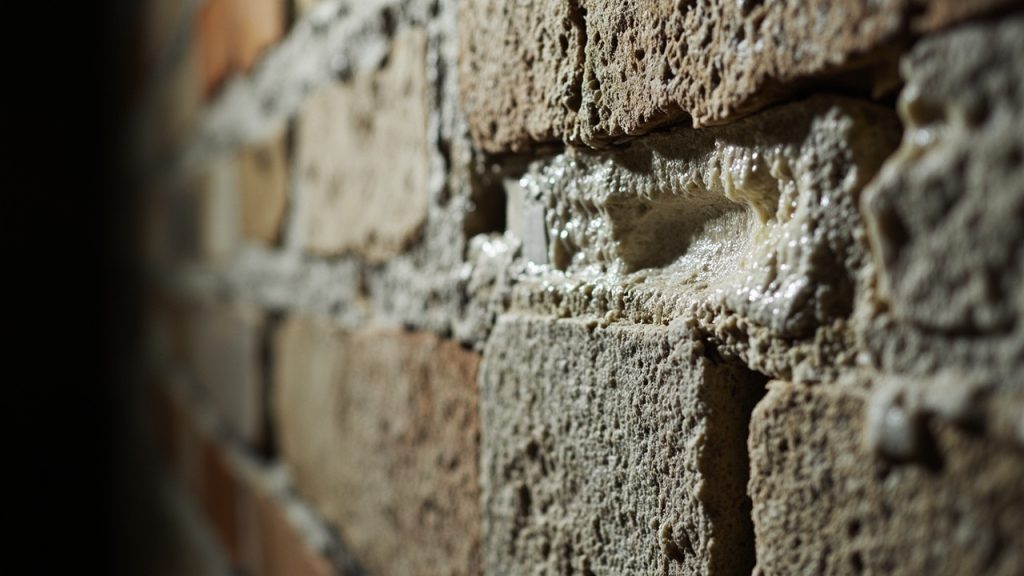
If you own an older home in Detroit’s North End, Poletown, or Virginia Park, you already know the routine. Spring arrives, the ground thaws, and your basement smells like wet earth and old stone. You run a fan. You set out a dehumidifier. The smell goes away for a few weeks. Then it comes back.
This is not a coincidence. It is not bad luck. Your basement is damp because of a combination of structural history, regional geology, and aging infrastructure that is almost unique to southeast Michigan. Understanding why it happens is the first step toward actually fixing it.
What a Michigan Basement Actually Is
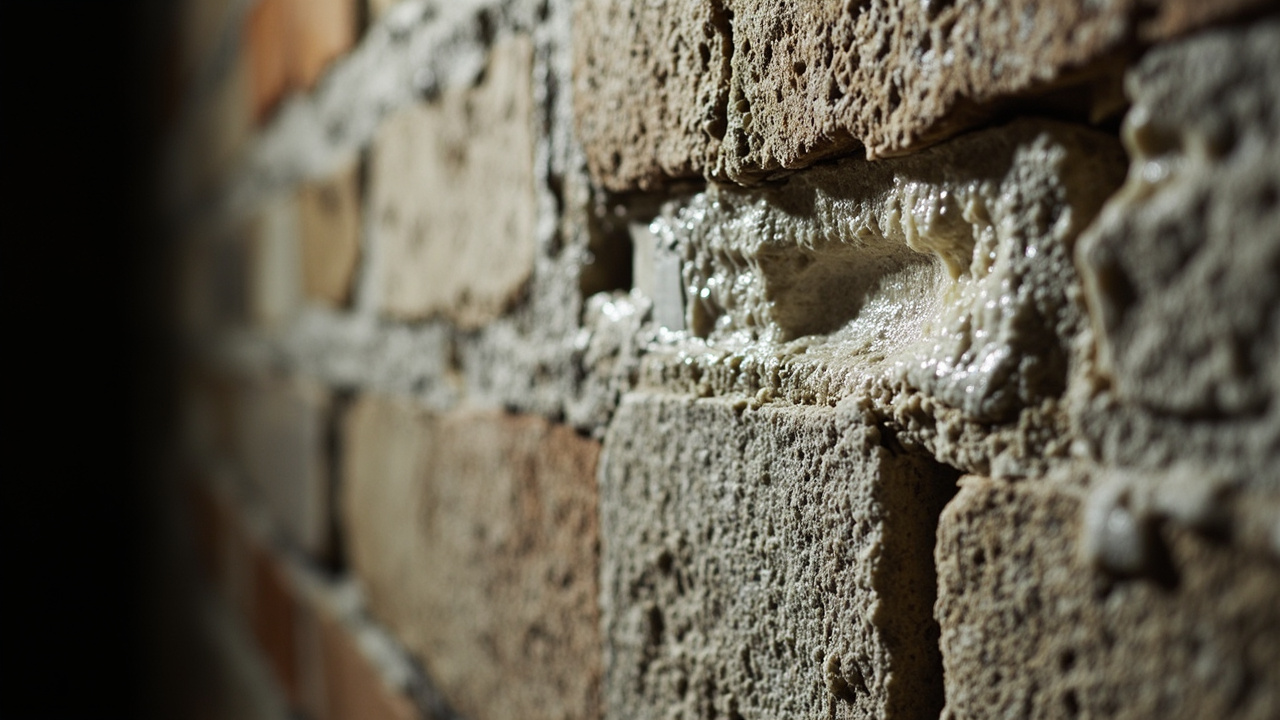
The term gets used loosely, but a true Michigan basement refers to a below-grade space that was not originally built as a finished living area. Most of the homes in Detroit’s North End, Islandview, and East English Village neighborhoods were constructed between the 1890s and the 1940s. Builders at that time dug shallow foundations using fieldstone, brick, or early poured concrete.
These spaces were designed for coal storage, root cellars, and utility access. They were never meant to be dry. The walls are porous by design. The floors in many of these homes are still compacted dirt or a thin, crumbling layer of old concrete poured directly on grade. There is no waterproofing membrane beneath them. There was no vapor barrier installed. The concept did not exist in residential construction at that time.
When you walk into one of these spaces and feel the humidity, you are feeling exactly what the original builders expected you to feel. The problem is that you are living in 2026, not 1920, and your home’s mechanicals, HVAC system, and stored belongings are not designed for a perpetually damp environment.
Detroit’s Clay Soil Is Working Against You Every Single Day
Southeast Michigan sits on a thick layer of glacial clay. Unlike sandy soils that drain quickly, clay expands when it absorbs water and contracts when it dries out. This constant movement exerts hydrostatic pressure against your foundation walls year-round.
Hydrostatic pressure is exactly what it sounds like. Water-saturated soil is heavy. That weight pushes laterally against your fieldstone or brick foundation. Over decades, mortar joints crack. Stones shift. Gaps open up. Water finds those gaps the way it always does, which is by taking the path of least resistance directly into your basement.
Detroit also averages roughly 33 inches of precipitation annually, with a significant portion falling during freeze-thaw cycles between late fall and early spring. Each freeze-thaw cycle expands existing cracks in your foundation by forcing ice into those gaps. By the time March arrives, those cracks are measurably wider than they were the previous October. The National Weather Service Detroit office tracks these precipitation patterns, and current data confirms southeast Michigan’s clay belt receives consistent ground saturation pressure throughout the year.
The Water Table Beneath the North End
Detroit’s proximity to the Detroit River and Lake St. Clair keeps the regional water table persistently high. In neighborhoods like the North End, Brightmoor, and areas near the Conner Creek drainage system, the water table can sit just four to six feet below grade during wet seasons. For a Michigan basement with a floor depth of only five or six feet, that means the water table is essentially at your floor level during peak saturation periods.
This is why your sump pit fills up overnight even when it has not rained. The water is not coming from the surface. It is wicking upward and pushing inward from the saturated clay surrounding your foundation.
Signs Your Michigan Basement Has an Active Water Problem
Not all of these will be dramatic. Many North End homeowners ignore early warning signs for years because the symptoms seem minor. By the time water is visibly pooling, significant structural damage has often already occurred.
- Efflorescence on walls. Those white, chalky deposits are mineral salts left behind as water evaporates through your masonry. They are direct evidence that water is actively moving through your walls.
- Musty or earthy odor. This is microbial off-gassing from mold and mildew colonies growing in your floor joists, on the back of your subfloor, or on organic material stored in the space.
- Bowing or leaning foundation walls. Hydrostatic pressure causes inward deflection in brick and block walls. A wall that bows more than one inch requires immediate structural evaluation.
- Visible staining at the base of walls. A dark tideline at the junction of your wall and floor indicates repeated water intrusion episodes.
- Spalling or flaking masonry. When water freezes inside porous brick or stone, the expansion breaks the surface material apart from the inside.
- Floor joist deterioration. Soft, punky wood at the sill plate or floor joist ends is a sign of prolonged moisture exposure and is a serious structural concern.
- Rust on any metal components. HVAC equipment, water heaters, or metal storage shelving showing rust indicates sustained high humidity levels.
Why DIY Solutions Keep Failing
Most homeowners in Detroit’s older neighborhoods have tried the standard DIY fixes. Hydraulic cement in the cracks. Waterproofing paint on the walls. A bigger dehumidifier. These are not useless, but they treat symptoms without addressing the source of pressure.
Waterproofing paint, for example, has a tensile strength of roughly 200 to 400 pounds per square inch. Hydrostatic pressure from saturated clay can exceed 1,200 pounds per square inch in peak conditions. The paint loses. Every time. The crack fills back in with water within one to two seasons.
Hydraulic cement stops active seepage in the short term but does nothing to relieve the pressure driving water through the wall. The water simply finds a new path.
Proven Waterproofing Approaches That Work in Detroit Basements
There is no single fix that works for every Michigan basement. The right approach depends on the severity of intrusion, the condition of your foundation, and whether your primary problem is wall seepage, floor seepage, or both. Here is how each major solution works and when it applies.
Interior Drainage Systems
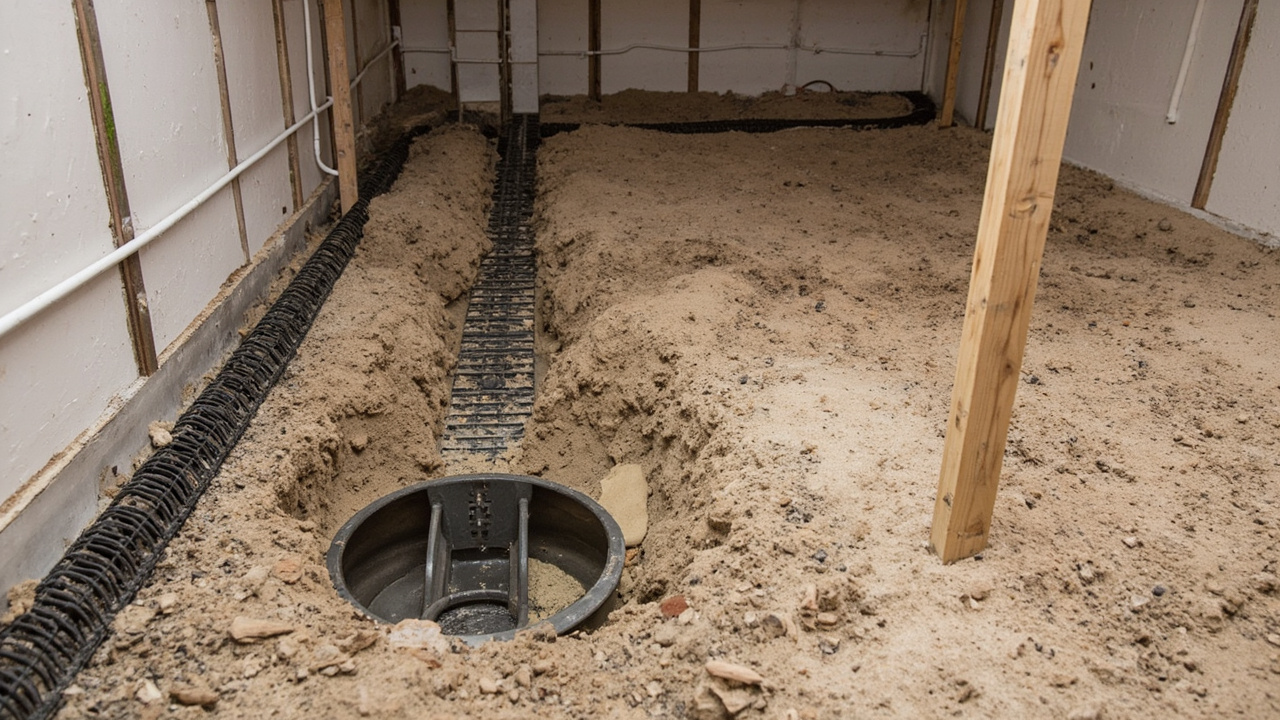
An interior drainage system, often called a French drain or interior perimeter drain, is typically the most cost-effective solution for Michigan basements dealing with hydrostatic wall seepage. A channel is cut into the perimeter of the concrete or dirt floor. A perforated pipe is installed in a bed of washed gravel. The pipe routes water to a sump pit where a pump discharges it away from the foundation.
This approach does not stop water from entering the wall. It intercepts it before it reaches the floor. For North End homes with fieldstone or brick walls, this is often the most realistic long-term solution because full exterior excavation is prohibitively expensive and often not practical on lots with tight clearances or mature trees.
Sump Pump Installation and Battery Backup
A sump pump is the last line of defense in any interior drainage system. In Detroit, where spring storms and aging municipal sewer infrastructure can cause power outages and combined sewer overflows simultaneously, a battery backup sump pump is not optional. It is essential.
Primary sump pumps fail. Power goes out. Storms that overwhelm your drain tile are also the storms most likely to knock out your electricity. A battery backup unit that activates automatically when the primary pump fails or loses power can prevent thousands of dollars in damage during a single storm event.
Exterior Waterproofing and Foundation Repair
Exterior waterproofing involves excavating the soil around your foundation down to the footing, cleaning the foundation wall, applying a waterproofing membrane, and installing a drainage board and exterior drain tile before backfilling. This is the most comprehensive solution because it addresses hydrostatic pressure at its source.
For Indian Village and Boston-Edison homes with ornamental landscaping and mature trees, exterior excavation requires careful planning. Root systems can be disrupted. Historic plantings may be at risk. The cost is substantially higher than interior solutions, but for foundations showing significant bowing or active crack seepage in multiple locations, it is often the correct long-term investment.
Vapor Barriers on Dirt Floors
For Michigan basements that still have dirt floors, a heavy-duty polyethylene vapor barrier is one of the highest-return improvements you can make. A minimum 20-mil barrier, sealed at the edges and overlapped at seams, dramatically reduces ground moisture evaporation into the basement air. This directly lowers relative humidity, slows mold growth, and reduces the load on your dehumidifier.
The EPA’s guidance on mold and moisture control specifically identifies vapor barriers as a primary mitigation strategy in crawlspace and below-grade environments. That guidance applies directly to Detroit’s unfinished Michigan basements.
Comparing Waterproofing Solutions for Michigan Basements
| Solution | Best For | Relative Cost | Disruption Level | Typical Lifespan |
|---|---|---|---|---|
| Interior Drain Tile System | Wall seepage, high water table | Moderate | Interior only, 1-3 days | 20-30 years with maintenance |
| Sump Pump with Battery Backup | All Michigan basements | Low to moderate | Minimal, 4-8 hours | 7-12 years (pump mechanism) |
| Exterior Waterproofing Membrane | Active foundation cracks, severe seepage | High | Exterior excavation, 3-7 days | 25+ years |
| Vapor Barrier on Dirt Floor | Unfinished Michigan basements | Low | Minimal, 1 day | 10-20 years |
| Foundation Crack Injection | Isolated poured concrete cracks | Low to moderate | Minimal, hours | Permanent if done correctly |
The Health Consequences of Ignoring a Damp Michigan Basement
A damp basement is not just a storage problem. It is an air quality problem for your entire home. Air inside your house moves upward through a process called the stack effect. Warm air rises and exits through upper floors and the roof. That warm air is replaced by air drawn in from below, including your basement.
This means the air in your Michigan basement circulates through your living spaces constantly. If that air carries mold spores, volatile organic compounds from mold colonies, or high humidity, your family is breathing it in the kitchen and bedrooms. Stachybotrys chartarum, commonly called black mold, thrives in the persistent moisture conditions present in unaddressed Michigan basements. If you see dark, slimy patches on wood framing or on a dirt floor, those require professional remediation, not bleach and a sponge.
If you have already found active mold growth, read about why bleach won’t fix basement mold before attempting to clean it yourself. The short version is that bleach does not penetrate porous surfaces and leaves the root structures of mold colonies intact.
Structural Risks That Build Quietly Over Time
Moisture damage to your foundation is not always visible until it becomes serious. Floor joists that sit on a wet sill plate absorb moisture over years. The wood fibers degrade. Fungal rot sets in. By the time you notice a soft spot in your kitchen floor or a door that will not close properly, the structural deterioration below has been progressing for a decade or more.
Bowing walls are the other critical warning sign. In Detroit’s older brick and block foundations, inward deflection greater than two inches is often a signal that wall reinforcement or full reconstruction is needed. Wall reinforcement using carbon fiber straps or steel bracing can stabilize a bowing wall that has not yet exceeded structural tolerances. Once a wall reaches critical deflection, those options close and excavation becomes necessary.
Michigan Basement Warning Signs and Response Timeline
| Warning Sign | Severity Level | Recommended Response Time | Professional Action Needed |
|---|---|---|---|
| Efflorescence on walls | Early warning | Within the season | Drainage assessment |
| Musty odor throughout home | Moderate | Within 30 days | Mold inspection, humidity control |
| Active water seepage during rain | Moderate to high | Within 2 weeks | Interior drainage system evaluation |
| Standing water on floor | High | Immediate | Water extraction, pump installation |
| Bowing wall (under 1 inch) | High | Within 2 weeks | Structural assessment, wall anchors |
| Bowing wall (over 1 inch) | Critical | Immediate | Structural engineer evaluation |
| Soft or sagging floor above basement | Critical | Immediate | Structural assessment, joist repair |

Insurance Coverage for Michigan Basement Water Damage
Here is where many Detroit homeowners get a difficult surprise. Standard homeowner’s insurance policies in Michigan typically exclude groundwater intrusion. Hydrostatic pressure, water table rise, and seepage through foundation walls are classified as flooding, which requires separate flood insurance coverage through the National Flood Insurance Program or a private flood policy.
If your water damage came from a sudden plumbing failure or a roof leak that allowed water into the basement, that may be covered under a standard policy. If it came from the ground, it almost certainly is not covered without a separate rider or flood policy.
Before you make any assumptions about what your policy covers, read through how to get your Detroit home insurance to actually pay for water restoration. Understanding the exact language in your policy before you file a claim makes a significant difference in outcomes.
For homeowners who have already experienced water damage and are working through the claims process, the details on filing a successful water damage insurance claim walk through the documentation and communication steps that affect claim approval.
What IICRC Certification Means When You Hire a Contractor
The Institute of Inspection Cleaning and Restoration Certification, known as the IICRC, sets the industry standards for water damage restoration and mold remediation. Their S500 standard covers water damage restoration protocols. Their S520 standard governs mold remediation procedures.
When you hire a restoration contractor for your Michigan basement, ask specifically whether the technicians performing the work hold current IICRC certifications. Certified technicians follow documented protocols for moisture measurement, drying validation, and mold containment. These are not optional best practices. They are the difference between a remediation that works and one that leaves moisture pockets behind that generate mold regrowth within a season.
Any contractor who cannot produce documentation of current IICRC certification is not someone you want working on a structure as sensitive as an aging Detroit fieldstone foundation.
Practical Steps North End Homeowners Can Take Right Now
While you are evaluating your options for professional remediation, there are meaningful steps you can take immediately to reduce moisture intrusion and limit damage.
- Grade your landscaping so the ground slopes away from your foundation at a minimum slope of one inch per foot for the first six feet. Flat or negative grading pushes surface water directly toward your foundation.
- Extend your downspouts at least six feet from the foundation. Downspout discharge at the foundation wall is one of the most common and preventable causes of basement water intrusion in North End homes.
- Check your window wells. Clogged or improperly sealed window wells collect and concentrate water at the exact point where your foundation meets grade.
- Run a dehumidifier in the basement year-round and empty or drain it consistently. Maintaining relative humidity below 60 percent significantly slows mold growth.
- Do not store cardboard, wood, fabric, or organic materials directly on a dirt floor or against a masonry wall. These materials absorb moisture and provide mold with an easy food source.
Getting an Honest Assessment of Your Specific Situation
A Michigan basement in a 1920s North End home is a fundamentally different problem than a poured concrete basement in a 1970s ranch in Warren. The solutions are different. The costs are different. The priorities are different. Any contractor who quotes you a waterproofing system over the phone without inspecting your foundation is guessing.
A proper assessment walks your perimeter, checks for wall deflection, measures moisture levels in the floor joists and sill plate, inspects your sump pit and pump, and identifies where water is entering. That information drives a solution that actually works for your specific home, on your specific lot, in your specific neighborhood.
If you have found water damage beyond the basement, such as warped hardwood floors above grade, the information on saving hardwood floors after a water leak covers what is salvageable and what is not. And if you are dealing with wet carpet in an above-grade space, the guide on deciding whether wet carpet can be saved gives you the criteria restoration professionals use to make that call.
Your Michigan basement has been damp for years, possibly decades. The good news is that the problem is diagnosable, the solutions are proven, and getting it right once is far less expensive than dealing with recurring damage and mold remediation cycles every few years. If your basement smells like it always has, that is not normal. It is a problem with a fix. Get an assessment from a certified restoration professional who knows Detroit’s housing stock and has worked in these neighborhoods before.
{
“@context”: “https://schema.org”,
“@type”: “BlogPosting”,
“headline”: “Why Your Older North End Home Still Has a Damp Michigan Basement (And What To Do About It)”,
“description”: “Detroit’s North End homes hide a secret beneath them. Learn why Michigan basements stay damp and what actually works to fix them for good.”,
“wordCount”: 2712,
“datePublished”: “2026-06-12T12:50:00.000Z”,
“dateModified”: “2026-06-12T12:50:00.000Z”,
“inLanguage”: “en-US”,
“mainEntityOfPage”: {
“@type”: “WebPage”,
“@id”: “https://ironwoodwaterdamagerestorationdetroit.com”
},
“publisher”: {
“@type”: “LocalBusiness”,
“name”: “Ironwood Water Damage Restoration Detroit”,
“url”: “https://ironwoodwaterdamagerestorationdetroit.com”
},
“author”: {
“@type”: “Organization”,
“name”: “Ironwood Water Damage Restoration Detroit”,
“url”: “https://ironwoodwaterdamagerestorationdetroit.com”
},
“image”: {
“@type”: “ImageObject”,
“url”: “https://ironwoodwaterdamagerestorationdetroit.com/wp-content/uploads/2026/03/why-your-older-home-in-the-north-end-still-has-a-d-1.jpg”
}
}
{
“@context”: “https://schema.org”,
“@type”: “LocalBusiness”,
“name”: “Ironwood Water Damage Restoration Detroit”,
“url”: “https://ironwoodwaterdamagerestorationdetroit.com”,
“address”: {
“@type”: “PostalAddress”,
“addressLocality”: “Detroit”
},
“areaServed”: {
“@type”: “City”,
“name”: “Detroit”
}
}
{
“@context”: “https://schema.org”,
“@type”: “BreadcrumbList”,
“itemListElement”: [
{
“@type”: “ListItem”,
“position”: 1,
“name”: “Home”,
“item”: “https://ironwoodwaterdamagerestorationdetroit.com”
},
{
“@type”: “ListItem”,
“position”: 2,
“name”: “Blog”,
“item”: “https://ironwoodwaterdamagerestorationdetroit.com/blog”
},
{
“@type”: “ListItem”,
“position”: 3,
“name”: “Why Your Older North End Home Still Has a Damp Michigan Basement (And What To Do About It)”
}
]
}
{
“@context”: “https://schema.org”,
“@type”: “Service”,
“serviceType”: “Water Damage Restoration”,
“provider”: {
“@type”: “LocalBusiness”,
“name”: “Ironwood Water Damage Restoration Detroit”,
“url”: “https://ironwoodwaterdamagerestorationdetroit.com”
},
“areaServed”: {
“@type”: “City”,
“name”: “Detroit”
},
“description”: “Detroit’s North End homes hide a secret beneath them. Learn why Michigan basements stay damp and what actually works to fix them for good.”
}