
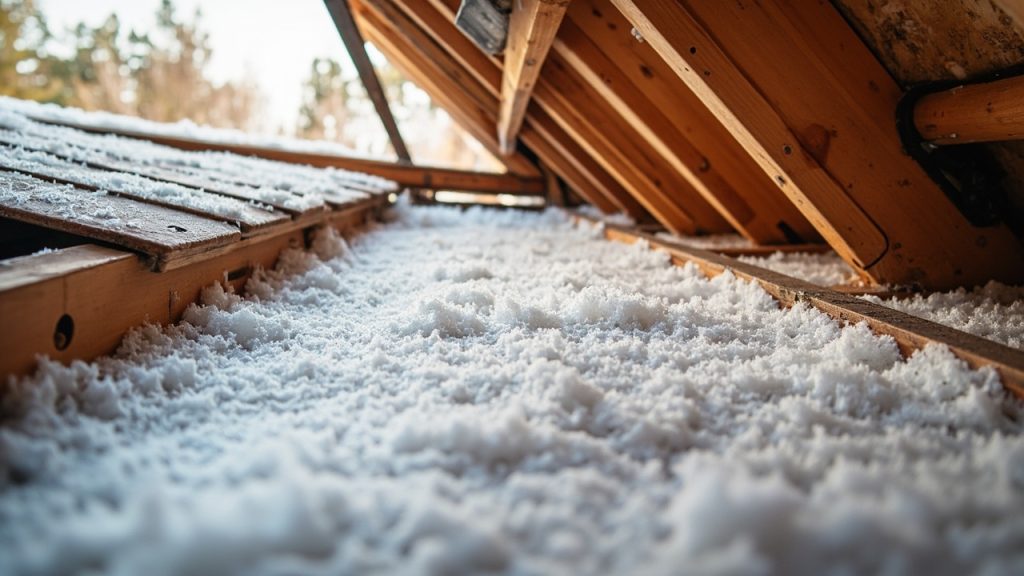
You walk into your upstairs hallway and notice a wet spot on the ceiling. You check outside. It is not raining. The roof looks fine from the ground. So why is water dripping from your attic ceiling in the middle of a Michigan winter?
This is one of the most common calls we get from Roseville homeowners, and from residents across Metro Detroit from Grosse Pointe to Sterling Heights to Warren. The answer almost always comes down to one thing: attic condensation. Not a roof leak. Not a burst pipe. Warm, humid air from inside your home is sneaking into a cold attic and turning into liquid water on your roof deck.
This guide walks you through exactly why it happens, how to tell it apart from a real roof leak, and what you can do about it before the damage gets serious.
Immediate Triage: Roof Leak or Attic Condensation?
Before you call a roofer, run through this quick checklist. The answer changes everything about who you call and what gets fixed.
- Is it dripping even when it has not rained or snowed recently? That points to condensation, not a roof leak.
- Is the wet spot on the ceiling directly below a roof penetration like a vent stack or skylight? That is more likely a flashing failure or ice dam situation.
- Does the dripping get worse in the morning? Condensation typically peaks after overnight cold when the attic temperatures drop the furthest.
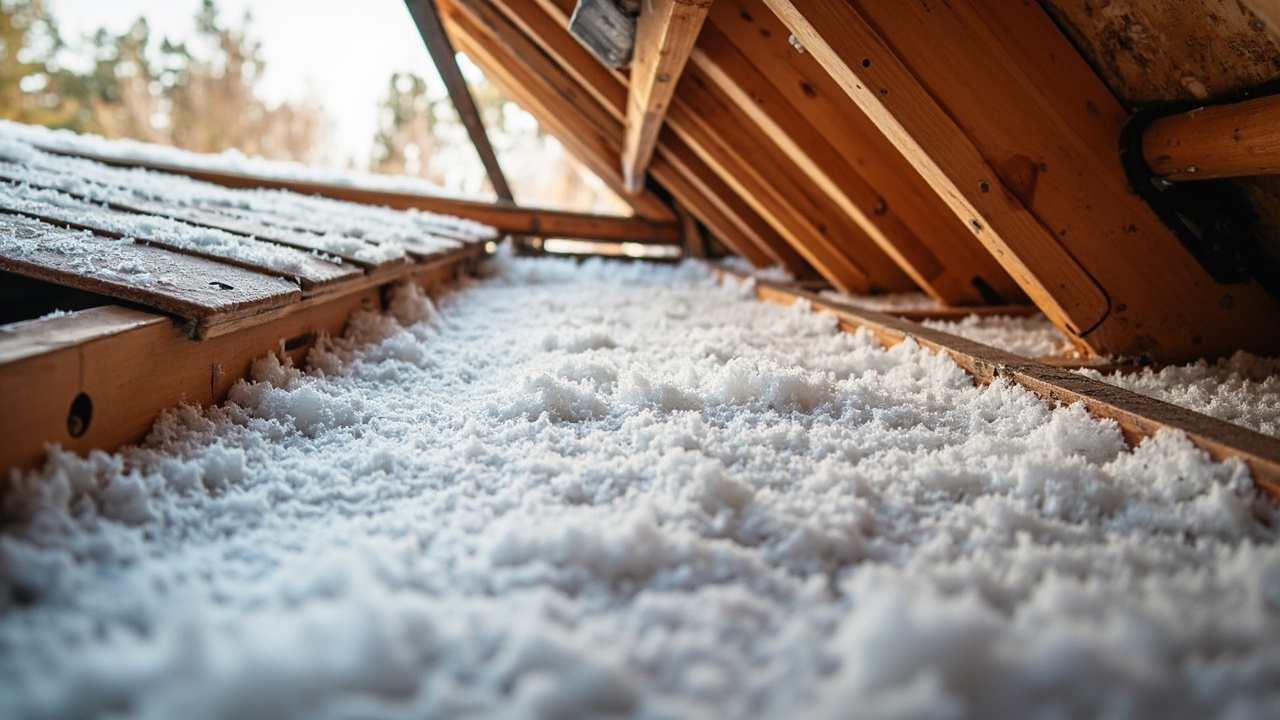
- Do you see frost on the underside of the roof deck when you go into the attic? That is a clear condensation signature. Frost builds up overnight and melts into drips during the warmer part of the day.
- Is the wet area stained brown or yellow? Old staining often means a past leak that may have already dried. Fresh, clear wet spots in cold weather lean toward condensation.
- Is the dripping widespread across a large area of the ceiling? Roof leaks tend to track from a single entry point. Condensation can affect a broad area of the roof deck at once.
If most of your answers point to condensation, keep reading. If you are seeing brown staining from a specific penetration point after a rainstorm, a roofer is your first call. Many Roseville and East Side Detroit homes deal with both problems at once, which is why a thorough attic inspection matters.
Why Detroit Homes Experience Attic Rain in Winter
Michigan winters are brutal. Detroit regularly sees overnight lows that drop well below 20°F while indoor relative humidity in occupied homes runs between 30% and 50%. That gap between warm inside air and a frozen attic space is what creates the problem.
Here is the basic science. Warm air holds moisture. When that warm, moist air from your living space migrates into a cold attic through gaps, cracks, and bypasses, it hits surfaces that are far below the dew point. The moisture in the air converts directly to liquid water or frost on the roof deck, rafters, and insulation. This process is called condensation, and the physics behind it is called psychrometrics, the study of air and its moisture content.
Detroit sits in a climate zone that makes this especially severe. The city and its suburbs experience freeze-thaw cycling throughout winter, meaning attic temperatures swing dramatically from sub-zero overnight to above freezing on a sunny afternoon in January or February. Every thaw cycle melts whatever frost has built up on your roof deck. That melt water soaks into sheathing, drips through insulation, and eventually appears as a wet ceiling stain.
The Stack Effect and Why It Matters in Older Roseville Homes
Older housing stock in Roseville, East Pointe, and the near-east suburbs of Detroit was built before modern air sealing standards existed. These homes rely on what engineers call the stack effect to explain air movement. Warm air rises inside the home, pressurizing the upper floors and pushing air out through any gap it can find. The attic is at the top of the stack, which makes it the primary exit point for all that moisture-laden air.
A 1960s ranch in Roseville with an uninsulated attic hatch, old can lights, and a bathroom exhaust fan that terminates inside the attic instead of through the roof is sending enormous amounts of moisture into that cold space every single day during winter. Multiply that by months of a Detroit winter and you get saturated sheathing, mold on the rafters, and soggy insulation that has lost most of its R-value.

The Three Main Culprits Behind Attic Condensation
Blocked or Inadequate Soffit Vents
Attic ventilation is designed to continuously flush cold, dry outside air through the attic space. This keeps the roof deck cold enough to match outside temperatures, which limits frost buildup and prevents ice dams. Soffit vents at the eaves bring in cold air. Ridge vents or gable vents let it out.
In most older Roseville homes, those soffit vents are either completely blocked by insulation that was blown in without baffles, or they were never properly sized to handle the attic’s square footage. When ventilation fails, moisture has nowhere to go.
The standard calculation is 1 square foot of net free vent area for every 150 square feet of attic floor space, split evenly between low and high vents. Many homes we inspect in Macomb County and on the east side of Detroit fall well short of this.
Insulation Below Michigan Code Requirements
Michigan falls in Climate Zone 5, which means current energy codes call for attic insulation at R-49 to R-60. Many homes in Roseville and the surrounding communities were built with R-19 or R-30 at best. Some older homes have less than that.
When insulation is undersized, the ceiling surface in living areas gets colder. That cold ceiling creates what is called thermal bridging, where cold from the roof deck conducts through framing members and into the ceiling below. Cold ceiling surfaces in a humid home attract condensation from below, making the moisture problem attack from both directions.
| Climate Zone | Minimum Attic R-Value (2026 Code) | Recommended for Existing Homes |
|---|---|---|
| Zone 4 (Southern MI border) | R-38 | R-49 |
| Zone 5 (Detroit, Roseville, Warren) | R-49 | R-60 |
| Zone 6 (Northern Lower MI) | R-49 | R-60 to R-70 |
Air Bypasses Around Recessed Lighting and Other Penetrations
This is the most underestimated source of attic moisture in Metro Detroit homes. Recessed can lights installed in the ceiling below the attic floor are essentially open holes into your living space. Older non-airtight (NAT) can lights allow continuous airflow from the conditioned living area directly into the attic. A single can light can leak as much air as leaving a window cracked open an inch.
Other common bypasses include attic hatches without weatherstripping, plumbing chases around drain stacks, gaps around furnace flues and chimney chases, and unsealed top plates where interior walls meet the attic floor. In a Roseville home with a full complement of these bypasses, you can be moving hundreds of cubic feet of moist air into the attic every hour.
Bathroom exhaust fans are a particular problem. Many installers over the years simply vented them into the attic space. Every hot shower sends warm, saturated air straight onto the cold roof deck. This single issue causes more visible attic condensation damage than almost any other factor we see on the job.
Hidden Dangers: Mold Growth and Structural Rot
Wet wood and organic materials in an attic create conditions that mold spores love. Stachybotrys, Cladosporium, and Penicillium species are all common attic mold findings in Detroit-area homes. The timeline is faster than most homeowners expect.
Under the right temperature and moisture conditions, mold colonies can establish visible growth on roof sheathing within 24 to 48 hours of sustained wetting. In a Michigan winter attic that cycles between freezing and thawing, you may not see growth mid-winter. But as temperatures warm in late winter and early spring, any wet sheathing that experienced repeated frost cycles becomes prime mold territory.
Structural rot follows a longer timeline but is far more costly. OSB sheathing that has been repeatedly wetted and dried loses its structural integrity. Rafters develop fungal decay. Ridge boards soften. We have inspected attics in older neighborhoods like East Warren, 9 Mile corridors, and Centerline where sheathing replacement was necessary across the entire roof surface, a project that costs significantly more than air sealing and insulation ever would have.
If you are dealing with mold damage that has already spread into living areas, check out our guide on why bleach will not fix your mold problem and when professional remediation is the right call.
| Damage Stage | Timeline | Typical Scope | DIY Viable? |
|---|---|---|---|
| Initial Frost Buildup | First cold season | Surface moisture, no structural damage | Yes, with proper air sealing |
| Surface Mold on Sheathing | 1 to 2 cold seasons | Mold colonies on OSB or plywood, insulation saturation | Borderline, professional assessment advised |
| Deep Mold Penetration | 2 to 3 seasons | Mold through sheathing, staining on rafters | No, requires professional remediation |
| Structural Decay | 3 or more seasons | Soft sheathing, compromised rafters, potential ceiling collapse risk | No, structural repairs required |
Professional Solutions and Prevention Strategies
Air Sealing First, Insulation Second
The most common mistake homeowners and even some contractors make is adding insulation without air sealing first. Adding more insulation over a leaky ceiling does not stop the moisture migration. It just buries the problem and can actually make it worse by keeping the roof deck even colder.
Proper air sealing means getting into the attic and physically sealing every bypass with foam, caulk, or rigid blocking. Can lights get sealed with airtight covers from the attic side. Top plates get foamed. Attic hatches get weatherstripped and insulated. Exhaust fans get re-routed to terminate through the roof or a gable wall, never into the attic space.
This work is not glamorous, but it is the single highest-return investment you can make in a Metro Detroit home for both comfort and moisture control.
Upgrading Insulation to R-49 or Higher
Once air sealing is complete, bringing attic insulation up to R-49 or R-60 makes a dramatic difference. For most Roseville homes, this means adding blown-in cellulose or fiberglass over whatever exists. Cellulose tends to perform better in Michigan climates because it handles moderate moisture cycling without losing R-value as rapidly as fiberglass batts do when wetted.
Before any insulation is added, baffles must be installed at every rafter bay near the eaves. Baffles maintain an airflow channel from the soffit vents to the attic space above the insulation. Without them, you end up with blocked soffits and a new ventilation problem on top of the old one.
Correcting Ventilation Deficiencies
If your attic is consistently humid even after air sealing, mechanical ventilation options exist. Powered attic ventilators can be installed, though they need to be sized carefully to avoid depressurizing the attic and pulling even more conditioned air from below. In some cases, simply increasing passive ventilation by adding more soffit vent area or upgrading to a continuous ridge vent system resolves the issue without any mechanical components.
Vapor Barriers in the Right Places
Vapor barriers are often misunderstood and misapplied in attic spaces. In a cold climate like Detroit, a vapor retarder belongs on the warm side of the insulation, which is the ceiling below the attic floor. It does not belong on the cold side (the roof deck). Installing a vapor barrier on the roof deck in a cold climate traps moisture in the sheathing, which is the opposite of what you want.
Many older Roseville homes have no vapor retarder at all on the ceiling plane. This is addressable during a ceiling renovation or can be partially compensated for with proper air sealing and adequate ventilation.
What to Expect from a Professional Attic Assessment
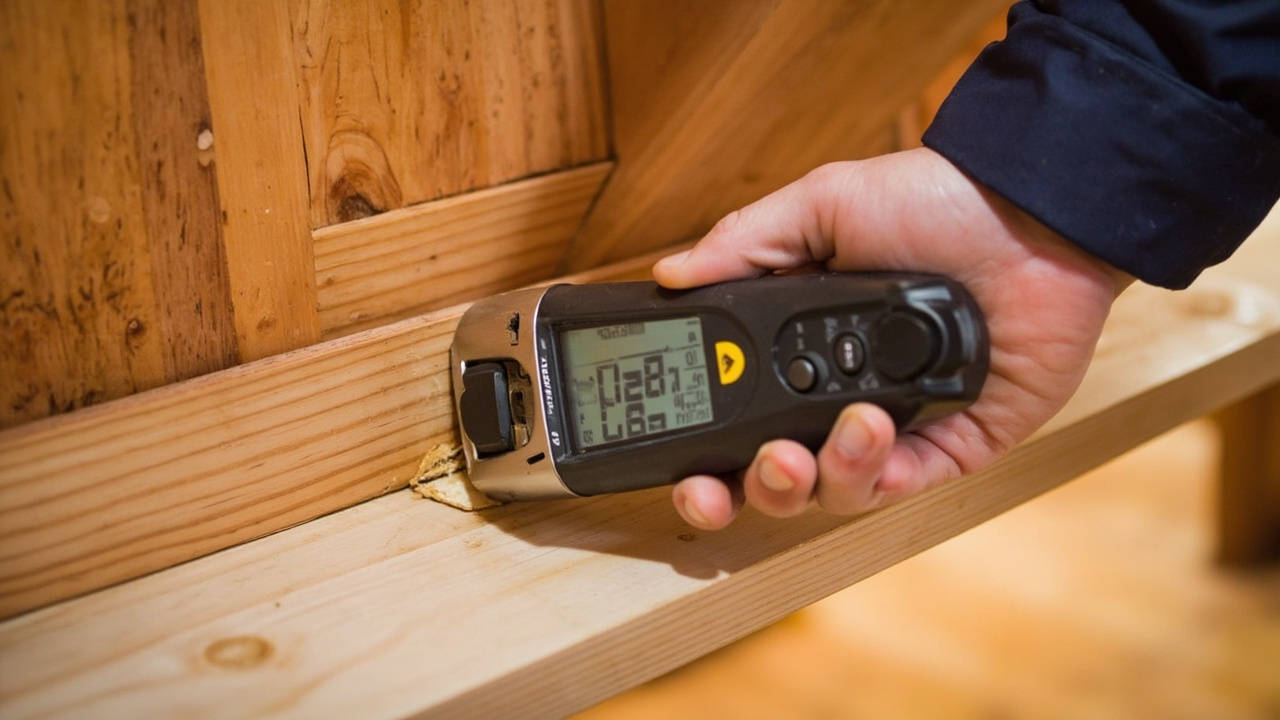
A proper attic moisture assessment by an IICRC-certified restoration professional goes beyond what a roofer or a general contractor will typically check. Moisture meters measure the moisture content of sheathing and framing at multiple points. Thermal imaging cameras can identify air leak pathways and cold spots that are invisible to the naked eye. Ambient humidity readings inside the attic are compared against outdoor conditions to calculate the dew point differential.
If mold is present, air sampling can determine species and spore counts, which drives the remediation scope. If structural damage has occurred, a restoration professional coordinates with structural contractors to address sheathing or framing repairs alongside the moisture source correction.
Insurance coverage for attic condensation damage is complicated. Most standard homeowner policies treat condensation as a maintenance issue rather than a sudden and accidental loss. There are exceptions, especially when a specific event like a failed exhaust fan or a damaged vent cap created the moisture pathway. If you are navigating an insurance claim around attic moisture or any water damage, our guide on getting your Detroit home insurance to actually pay for water restoration is worth reading before you file.
For homeowners who have already experienced water migration from the attic into living spaces, the damage often extends beyond ceilings. If your hardwood floors have been affected, see our resource on saving hardwood floors after a water event. If carpeting on upper floors shows moisture, our guide on wet carpet assessment in Sterling Heights walks through what can be saved versus what needs to go.
Steps You Can Take Right Now
If you are seeing active dripping or wet spots on your ceiling today, here is where to start before a professional arrives.
- Place towels or containers under active drip points to protect flooring and prevent secondary damage.
- Do not cut open the ceiling. A small wet spot will dry. Creating an opening invites more problems.
- Turn on bathroom exhaust fans and kitchen range hoods to reduce indoor humidity while you assess.
- If safe to do so, access the attic and look for visible frost on the underside of the roof deck. Photograph everything.
- Check that all bathroom and kitchen exhaust fan terminations exit through the exterior of the home, not into the attic space.
- Note whether the dripping gets worse in the afternoon on sunny days. That freeze-thaw pattern confirms condensation rather than an active roof leak.
Attic condensation damage in Metro Detroit homes is correctable. The science is well understood. The fix exists. What matters is catching it before one or two wet seasons become five years of hidden rot and a mold colony that has taken over your roof structure.
If you are in Roseville, Warren, St. Clair Shores, or anywhere across Macomb County and you want a straight answer on what is happening in your attic, call us for a free attic health inspection. We will show you exactly what is causing the moisture, what the damage scope looks like right now, and what it takes to fix it for good.