
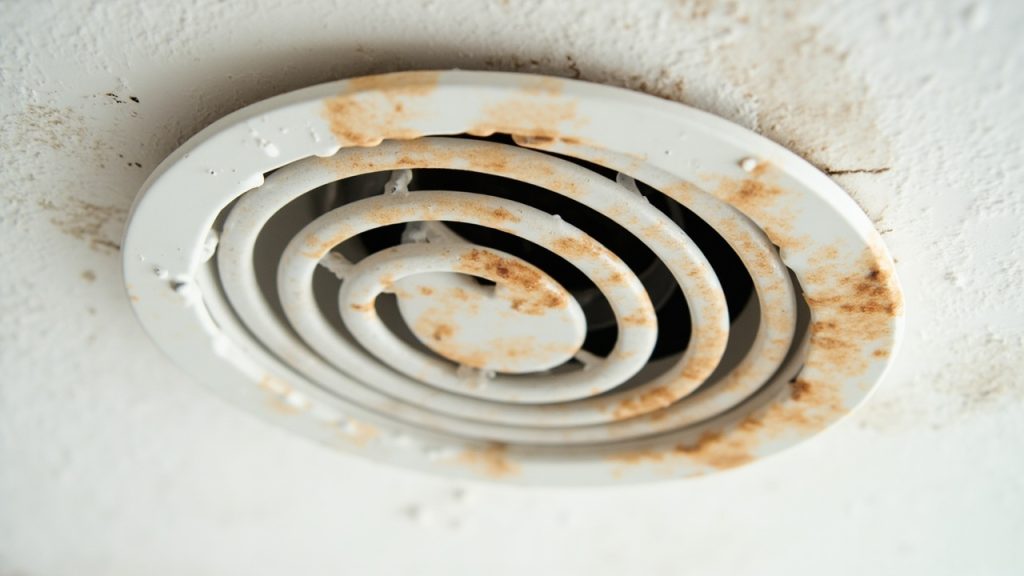
Water dripping from your bathroom vent fan is one of those problems that looks minor until it isn’t. One morning it’s a few drops on the tile. Two weeks later, your ceiling drywall is soft, your attic smells musty, and you’re looking at a mold remediation bill. If you’re in Royal Oak or anywhere in Metro Detroit, this is a common cold-weather problem — and it almost always has one of three causes. Let’s get you to an answer fast.
Turn Off the Power Before You Do Anything Else
Water and electricity are a dangerous combination. Your bathroom vent fan is wired into a circuit, and if water has been pooling inside the housing, there’s a real risk of a short or even a fire. Before you start poking around, go to your breaker panel and kill the circuit for the bathroom. If you’re not sure which breaker controls it, turn off the whole bathroom circuit.
Do not stand on a wet floor while doing this. Use a dry mat or step stool. Once the power is off, place a bucket under the drip and lay down old towels to protect the floor. This stops secondary damage while you figure out what you’re dealing with.
If the ceiling around the vent feels soft or spongy when you press on it, drywall saturation has already begun. Saturated drywall loses structural integrity fast and becomes a food source for mold within 24 to 48 hours. That’s when this stops being a DIY situation.
Diagnosing the Source — Roof Leak, Plumbing Leak, or Condensation
This is the most important step. Treating condensation like a roof leak wastes money. Missing an actual roof leak because you assumed it was condensation causes serious structural damage. Here’s how to tell them apart in a Southeast Michigan home.
The Weather Pattern Test
Pay attention to when the dripping happens. If water appears after a rainstorm or during snowmelt, you’re likely dealing with a roof leak or flashing failure around the vent boot. If the dripping happens on cold, dry mornings — especially after someone showers — condensation is almost certainly the cause.
Royal Oak sits in Oakland County, and Metro Detroit’s winters create extreme temperature differentials. Indoor air in a heated bathroom can reach 70°F with 80%+ relative humidity during a shower. Your attic in January might be 10°F or colder. When warm, moisture-laden air travels up the vent duct and hits that cold surface, it condenses into liquid water — just like a cold glass on a summer day.
The Attic Inspection
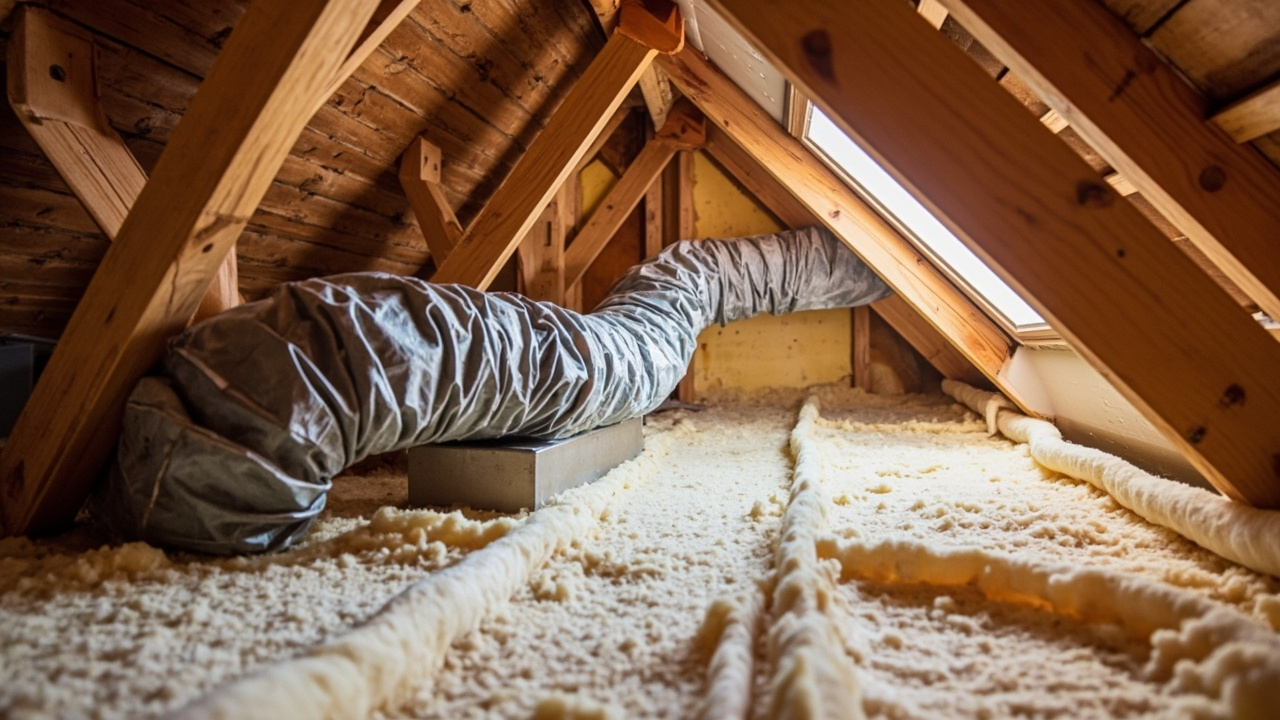
If you can safely access your attic, grab a flashlight and look at the vent duct. On older Royal Oak bungalows and ranch homes, the duct is often bare, uninsulated flexible tubing running through the attic space. In winter, that uninsulated duct is essentially a cold pipe. Moisture condenses on the inside wall, collects, and drains back down through the fan housing — right onto your ceiling.
Also check whether the duct actually terminates at a roof vent or soffit vent. A surprising number of older homes in the Detroit area vent bathroom fans directly into the attic. That dumps warm, humid air into an enclosed space and causes widespread moisture problems including mold growth on the roof decking and rafters.
Signs of a Plumbing Leak vs. Condensation
| Symptom | Likely Cause |
|---|---|
| Drips only after showers, worse in winter | Condensation in vent duct |
| Drips after rain or snow, regardless of bathroom use | Roof leak or failed flashing |
| Constant drip or staining in one spot, not tied to weather or showers | Plumbing leak from above (pipe, toilet wax ring) |
| Drips from fan housing plus rust stains on fan grille | Chronic condensation, backdraft damper failure |
| Water stain that spreads outward from a central point | Roof leak — water tracking along decking |
| Multiple ceiling areas affected after heavy rain | Roof leak, possible multiple penetration failures |
Why Detroit Winters Make Condensation So Much Worse
The physics of condensation depend on dew point. When warm, humid air cools below its dew point temperature, water vapor converts to liquid water. Detroit’s winters are severe enough that ductwork in an uninsulated attic can sit well below freezing for weeks at a time. That makes every shower a condensation event.
According to the U.S. Department of Energy, attic insulation in Michigan’s climate zone should meet R-49 to R-60 to properly separate living space temperatures from attic temperatures. Many Royal Oak homes built before the Michigan Residential Code was updated fall far short of that standard. Low insulation values mean a colder attic, which means a colder duct, which means more condensation dripping back into your fan.
Homes in older Royal Oak neighborhoods near Woodward Avenue or south of 13 Mile Road frequently have original attic insulation that has settled, shifted, or been disturbed by previous owners. When that insulation no longer covers the vent duct run, you get the exact conditions that cause this problem.
The Backdraft Damper — A Small Part That Causes Big Problems
Every bathroom exhaust fan is supposed to have a backdraft damper. It’s a small flap inside the fan housing or at the roof cap that allows air to exit but prevents cold outside air from flowing back in when the fan is off. When that damper fails — and they do fail, especially on fans that are 10 or more years old — cold outside air flows back down the duct into the fan housing every time the fan is off.
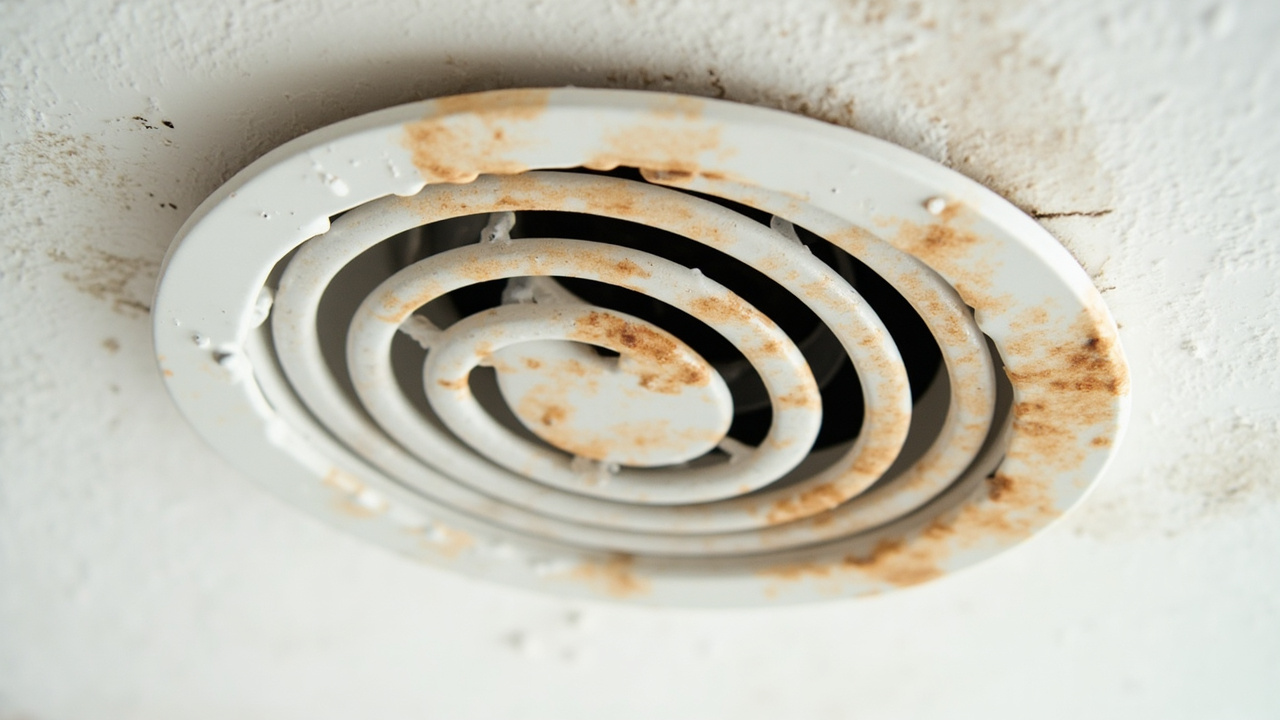
That cold air meeting warm bathroom humidity creates condensation inside the fan housing itself. You’ll see this as rust staining on the metal grille or drops falling directly from the center of the fan, not from the ceiling around it.
A failed backdraft damper is a fixable problem. You can replace just the damper on some fan models, or replace the entire fan unit for a more reliable fix. The key is catching it before the moisture has migrated into the ceiling cavity and started damaging the drywall and framing above.
DIY Fixes for Minor Condensation Issues
If your diagnosis points to condensation and the damage is limited to occasional drips with no visible ceiling staining or soft drywall, there are fixes you can attempt yourself.
- Insulate the duct run. Replace bare flexible duct with insulated flex duct rated for your climate zone (R-6 minimum for Michigan). Wrap any exposed sections with duct insulation sleeve. This is the single most effective fix for condensation drips.
- Check the duct termination. Make sure the duct exits through the roof or a gable vent — not into the attic space. If it terminates in the attic, that’s a Michigan Residential Code violation and must be corrected.
- Clean or replace the fan. A slow, weak fan allows air to linger in the duct longer, giving it more time to cool and condense. Clean the grille and blades. If the fan is undersized or worn out, replace it with one rated for your bathroom’s square footage.
- Inspect and replace the damper. Check the damper at the roof cap while the fan is running — it should open fully. When the fan is off, it should close completely. A stuck or missing damper needs replacement.
- Run the fan longer. Run your bathroom fan for 20 to 30 minutes after showering, not just during. This clears humid air before it has time to condense in the duct.
When DIY Stops Being Enough — Signs of Real Water Damage
There’s a clear line between a ventilation maintenance issue and an active water damage situation. Cross that line and you need a professional water damage restoration company, not a YouTube tutorial.
| Condition | What It Means | Action Required |
|---|---|---|
| Soft or sagging ceiling drywall | Drywall saturation, structural compromise | Professional assessment, likely drywall removal |
| Visible mold on ceiling or fan housing | Active mold colonization, possible spread into framing | IICRC-certified mold remediation |
| Musty odor that persists after bathroom dries | Mold growth inside wall or ceiling cavity | Moisture mapping, professional remediation |
| Staining that spreads beyond the fan area | Water tracking along joists or decking | Roofer plus water damage assessment |
| Dripping accompanied by electrical sparking or burning smell | Electrical short, fire hazard | Call 911, evacuate, then call restoration |
How Trapped Moisture Turns Into a Mold and Rot Problem
Moisture that gets into your ceiling cavity doesn’t evaporate on its own. The space between your bathroom ceiling and the attic floor is typically dark, warm enough to support biological growth, and has wood framing that absorbs water readily. Within 24 to 48 hours of saturation, mold spores that are always present in the air begin to colonize wet surfaces.
Within a week or two, you can have active mold colonies spreading across your ceiling joists. Left longer, wood rot sets in, which weakens the structural members supporting your roof. What started as a dripping vent fan is now a structural repair job.
If you’ve found mold in your attic or ceiling cavity, bleach is not an effective solution. It doesn’t penetrate porous materials like wood, which means it kills surface mold while leaving the root structure intact. For the facts on why surface treatments fail, read our article on why bleach won’t fix your Ferndale basement mold — the same principles apply to ceiling mold in Royal Oak homes.
Proper remediation by an IICRC-certified technician involves containment, removal of affected materials, HEPA air filtration, and antimicrobial treatment of structural wood. It’s not a fast process, but it’s the only process that actually works.
What to Do About Your Insurance Coverage
Whether your insurer will cover a bathroom vent water damage claim depends entirely on the cause and how quickly you reported it. Sudden, accidental damage (like a roof leak after a storm) is typically covered. Long-term condensation damage caused by a lack of maintenance is usually denied as a neglect claim.
Documentation matters enormously. Take photos the moment you notice the problem. Write down dates. If you had the fan inspected or the duct cleaned, keep those records. If you’re dealing with a roof leak that caused the moisture event, that’s a stronger insurance argument. Our guide on how to get your Detroit home insurance to actually pay for water restoration walks through the documentation steps that actually move claims forward.
If you’re in the Corktown, Midtown, or downtown Detroit area and facing a water damage claim, our guide to filing a successful water damage insurance claim covers the specific steps for homeowners in older Detroit homes where these issues are most common.
Other Materials That Get Damaged When a Vent Drips Long-Term
The ceiling isn’t the only thing at risk. Water that seeps down from the vent housing can reach the floor below if the subfloor above is saturated. If your bathroom has hardwood floors or the room below has finished flooring, water damage to those surfaces can happen faster than you expect. Our article on how to save your hardwood floors after a water leak is relevant if you’re seeing floor damage alongside your ceiling issue.
Carpet in adjacent rooms or hallways can also absorb moisture that migrates through walls. If carpeting feels damp or smells musty, get it assessed before assuming it just needs to dry. Our resource on whether wet carpet can be saved or needs to be replaced gives you a clear decision framework.
Royal Oak and Metro Detroit Homes Have Specific Risk Factors
Royal Oak’s housing stock is heavily concentrated in bungalows and ranch homes built between the 1940s and 1970s. These homes share several traits that increase the risk of bathroom vent condensation problems. Shallow attic pitches limit air circulation. Original single-layer insulation has often compressed over decades. Ductwork was frequently installed without regard to condensation risk because building science standards were different when these homes were built.
Neighborhoods closer to Coolidge Highway and north toward Clawson tend to have homes with modified or added bathrooms where vent duct routing was done as an afterthought. Duct runs in those homes are often longer than the 25-foot maximum recommended under current standards, which means more surface area to collect condensation before the air exits.
If you live south of 11 Mile Road in Royal Oak or in the older sections of Berkley or Huntington Woods, it’s worth having your attic and vent ductwork inspected proactively — especially before each heating season.
Get a Professional Moisture Assessment Before the Problem Gets Larger
A dripping bathroom vent is your house telling you something is wrong with its ventilation system. It’s not a dramatic emergency in most cases, but it is a time-sensitive one. Moisture damage compounds quickly in Michigan winters because heated indoor air keeps pushing humidity into the same cold attic space day after day.
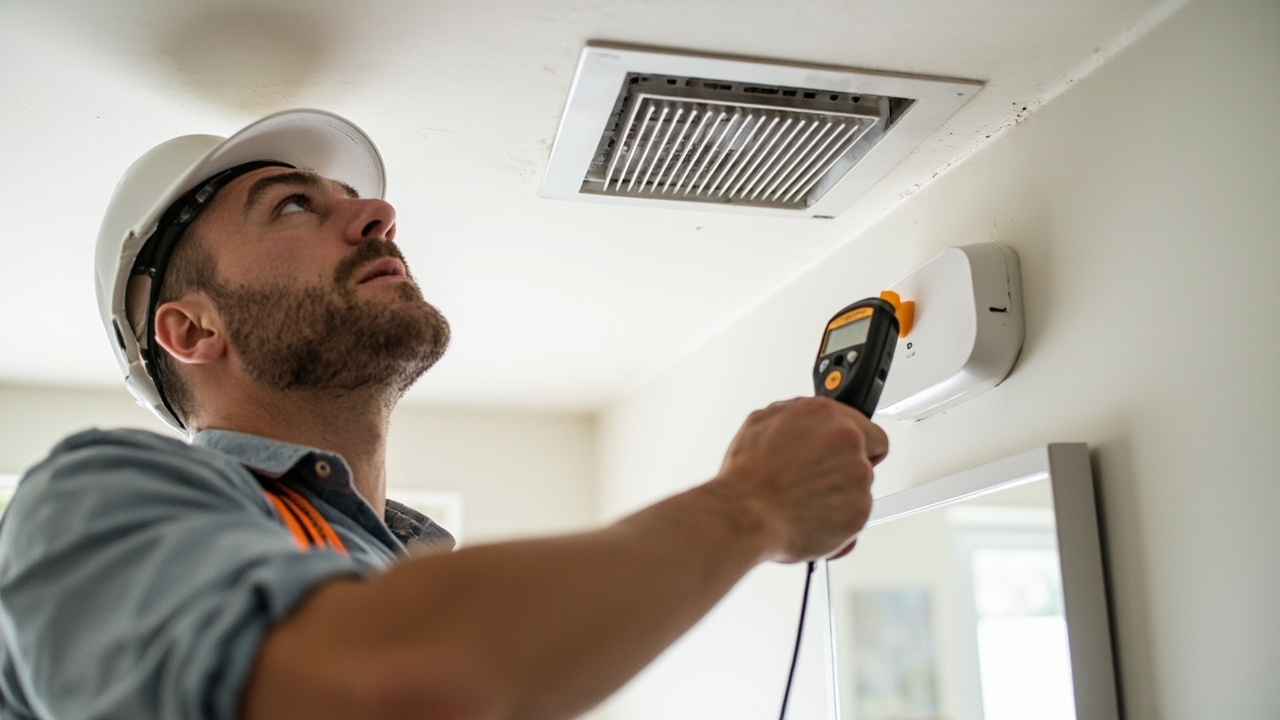
If your ceiling feels soft, you see any discoloration spreading beyond the vent, or the problem has been going on for more than a few days without a clear fix, call a water damage restoration company before you call a handyman. A professional moisture assessment uses thermal imaging and moisture meters to map exactly how far the water has traveled — information you need before you start tearing out drywall or making insurance calls.
Our team serves Royal Oak, Birmingham, Ferndale, Berkley, and the full Wayne and Oakland County area. We offer 24/7 emergency response for active water damage situations. If you’re not sure whether your situation is an emergency or a scheduled repair, call us and describe what you’re seeing. We’ll tell you straight.
{
“@context”: “https://schema.org”,
“@type”: “BlogPosting”,
“headline”: “Why Your Royal Oak Bathroom Vent Is Dripping Water from the Ceiling (And What It Means for Your Home)”,
“description”: “Bathroom fan dripping water in Royal Oak? Learn if it’s condensation, a roof leak, or something worse — and when to call a Detroit restoration pro.”,
“wordCount”: 2244,
“datePublished”: “2026-06-08T07:15:00.000Z”,
“dateModified”: “2026-06-08T07:15:00.000Z”,
“inLanguage”: “en-US”,
“mainEntityOfPage”: {
“@type”: “WebPage”,
“@id”: “https://ironwoodwaterdamagerestorationdetroit.com”
},
“publisher”: {
“@type”: “LocalBusiness”,
“name”: “Ironwood Water Damage Restoration Detroit”,
“url”: “https://ironwoodwaterdamagerestorationdetroit.com”
},
“author”: {
“@type”: “Organization”,
“name”: “Ironwood Water Damage Restoration Detroit”,
“url”: “https://ironwoodwaterdamagerestorationdetroit.com”
},
“image”: {
“@type”: “ImageObject”,
“url”: “https://ironwoodwaterdamagerestorationdetroit.com/wp-content/uploads/2026/03/why-your-royal-oak-bathroom-vent-is-dripping-water-1.jpg”
}
}
{
“@context”: “https://schema.org”,
“@type”: “LocalBusiness”,
“name”: “Ironwood Water Damage Restoration Detroit”,
“url”: “https://ironwoodwaterdamagerestorationdetroit.com”,
“address”: {
“@type”: “PostalAddress”,
“addressLocality”: “Detroit”
},
“areaServed”: {
“@type”: “City”,
“name”: “Detroit”
}
}
{
“@context”: “https://schema.org”,
“@type”: “BreadcrumbList”,
“itemListElement”: [
{
“@type”: “ListItem”,
“position”: 1,
“name”: “Home”,
“item”: “https://ironwoodwaterdamagerestorationdetroit.com”
},
{
“@type”: “ListItem”,
“position”: 2,
“name”: “Blog”,
“item”: “https://ironwoodwaterdamagerestorationdetroit.com/blog”
},
{
“@type”: “ListItem”,
“position”: 3,
“name”: “Why Your Royal Oak Bathroom Vent Is Dripping Water from the Ceiling (And What It Means for Your Home)”
}
]
}
{
“@context”: “https://schema.org”,
“@type”: “Service”,
“serviceType”: “Water Damage Restoration”,
“provider”: {
“@type”: “LocalBusiness”,
“name”: “Ironwood Water Damage Restoration Detroit”,
“url”: “https://ironwoodwaterdamagerestorationdetroit.com”
},
“areaServed”: {
“@type”: “City”,
“name”: “Detroit”
},
“description”: “Bathroom fan dripping water in Royal Oak? Learn if it’s condensation, a roof leak, or something worse — and when to call a Detroit restoration pro.”
}