
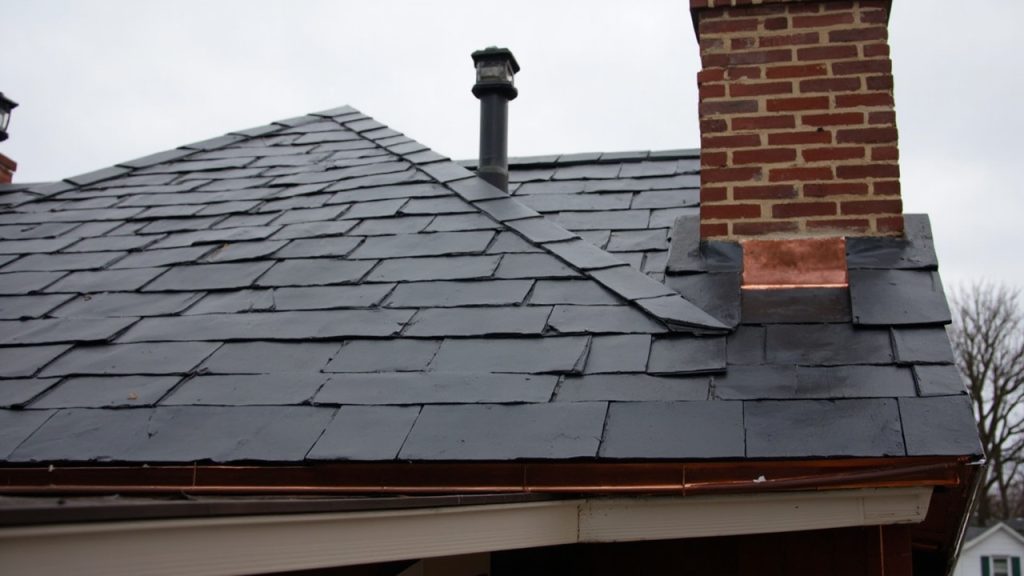
A hard windstorm rolls through Sherwood Forest and the next morning you notice a water stain spreading across your plaster ceiling. Your slate roof has stood for eighty years. You assumed it would stand for eighty more. So why is water getting inside now?
Slate is one of the most durable roofing materials ever put on a Detroit home. But wind does not care about durability. It exploits every weak point in a roof system, and on a slate roof, those weak points are very specific. If you know what to look for, you can move fast enough to stop a small leak from becoming a major restoration project.
How Wind Actually Damages a Slate Roof
Most people assume wind breaks slate tiles. That does happen, but it is rarely the first failure point. Wind damage on a slate roof typically starts with the system around the slate, not the slate itself.
Here is what actually fails first during a Detroit windstorm.
Copper Flashing Separation
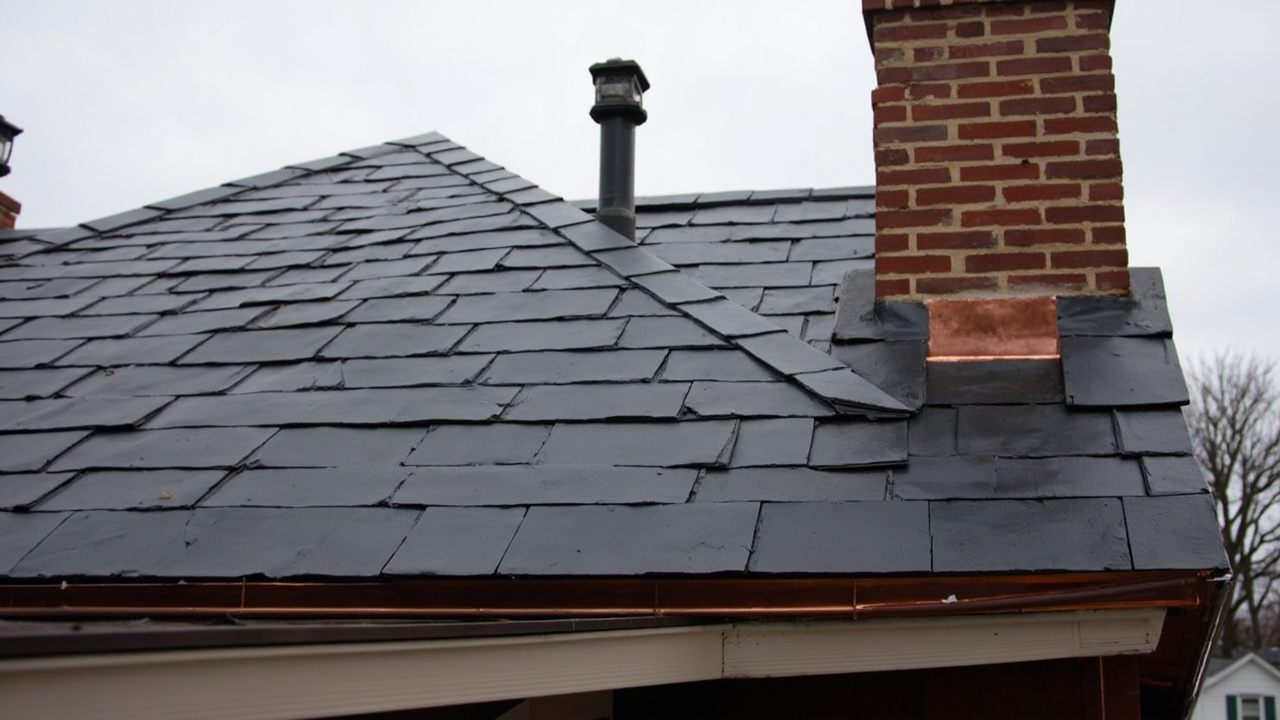
The flashing at your chimney, dormers, and valleys is what keeps water from seeping behind and under the slate field. Most historic Sherwood Forest homes use copper flashing, which is excellent material. The problem is that high-wind events create positive and negative pressure cycles on the roof surface. That repeated flexing pulls the flashing away from the mortar bed or the step joints over time.
One major storm can finish the job on flashing that was already starting to separate. The slate above it looks perfect. The water travels sideways under the field for several feet before dropping onto your ceiling. This is why the stain on your ceiling is rarely directly below the actual entry point.
Nail Sickness and Lifted Slates
Nail sickness is the industry term for when the original square nails holding slate tiles begin to corrode and fail. On Detroit homes built in the early to mid twentieth century, this is an active problem right now. When a nail fails, the slate is held only by friction and gravity.
A windstorm creates uplift. A nail-sick slate lifts, water gets underneath, and the tile may or may not settle back down flat. From the ground, the roof looks fine. From inside, you have a slow drip every time it rains.
Ridge Cap Displacement
The mortar-set ridge cap at the peak of your roof takes the most direct wind loading. Sustained winds above 45 miles per hour can crack or shift ridge cap sections. When the cap shifts, the gap beneath it becomes an open water channel that feeds straight down into your attic framing.
Delamination from Freeze-Thaw Stress
Detroit’s freeze-thaw cycle is aggressive. We average over 130 freeze-thaw events per year, and the Great Lakes moisture amplifies the effect. When water gets into a micro-crack in a slate tile and freezes, it expands. That expansion causes delamination, where the slate splits along its natural grain. A delaminated tile may still look solid from below, but it now allows water infiltration with every rain event.
A windstorm that follows a freeze-thaw period is especially damaging because it stresses slate tiles that are already compromised at the microscopic level.
Why Sherwood Forest Homes Face a Specific Risk Profile
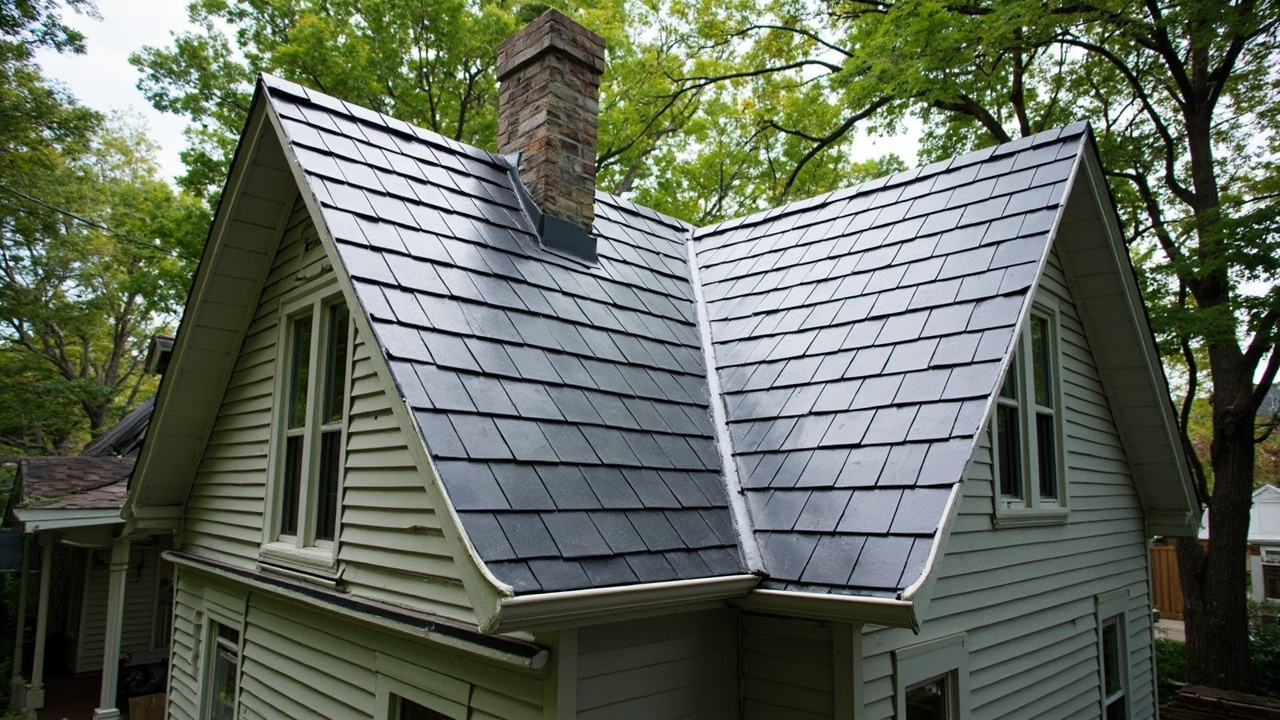
Sherwood Forest is a historic neighborhood in northwest Detroit, developed primarily in the 1920s and 1930s. The homes here are architecturally significant, with Tudor Revival and Colonial Revival styles that use steeply pitched roofs. Those steep pitches actually shed water very efficiently under normal conditions. But steep pitch also means greater wind exposure and a larger surface area for wind uplift.
The slate on these roofs is predominantly Pennsylvania blue-black or Vermont unfading green, both of which are dense, hard slates with long lifespans. The issue is not the quality of the slate. The issue is that the underlayment, flashings, and fasteners beneath and around the slate were installed a very long time ago.
Neighboring historic districts like Palmer Woods and Indian Village face identical conditions. If you live in any of these neighborhoods and you had a significant windstorm pass through, a post-storm roof inspection is not optional. It is overdue.
Comparing Slate to Asphalt for Wind Damage Risk
| Factor | Slate Roof | Asphalt Shingle Roof |
|---|---|---|
| Wind Damage Pattern | Flashing failure, nail sickness, delamination | Tab blow-off, granule loss, cracking |
| Visibility of Damage from Ground | Often not visible without inspection | Usually visible as missing or curled tabs |
| Water Entry Timeline After Storm | Can be immediate or delayed by days | Usually immediate |
| DIY Repair Risk | High. Improper work causes additional breakage | Moderate. Simpler material to work with |
| Typical Lifespan If Maintained | 100 to 150 years | 20 to 30 years |
| Secondary Water Damage Speed | Can be slow and hidden for weeks | Typically fast and obvious |
The key takeaway from this comparison is that slate roof leaks are frequently hidden leaks. The slow, concealed nature of slate water infiltration means mold growth can begin well before you see a ceiling stain. According to the EPA’s mold guidelines, mold can begin colonizing wet organic materials within 24 to 48 hours. Your attic framing and plaster substrate are exactly the kind of organic material mold favors.
Non-Destructive Leak Detection for Historic Slate
The worst thing you can do with a slate roof is walk on it without proper equipment and training. Slate tiles crack under improper foot loading, and a cracked tile becomes the next leak point. This is why professional leak detection on historic slate uses non-destructive methods.
Infrared Thermography
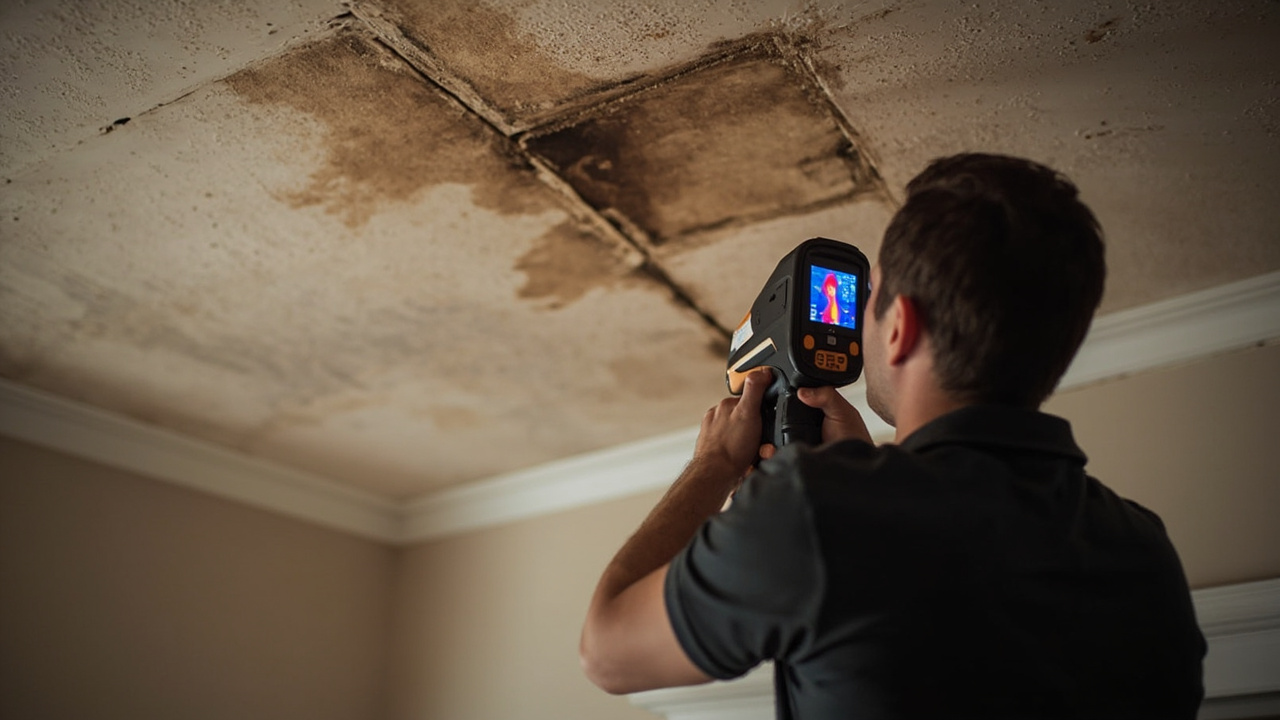
Thermal imaging cameras detect temperature differences in roof surfaces and interior ceilings. Wet materials retain heat differently than dry materials. An infrared scan of your attic and upper floor ceilings will map moisture that is invisible to the naked eye.
For best results, infrared scans are performed at dusk after a sunny day. The roof surface cools faster than any trapped moisture beneath it. That temperature differential shows up on the thermal camera as a distinct pattern. We use this method in Palmer Woods and Indian Village regularly because of the plaster construction these homes share with Sherwood Forest properties.
Electronic Leak Detection for Flat or Low-Slope Sections
Some Sherwood Forest homes have low-slope sections above attached garages or rear additions. Electronic leak detection (ELD) uses a low-voltage electrical field across the roof membrane surface. Any breach in the membrane completes a circuit and pinpoints the exact entry location. This method works well when combined with moisture mapping of the interior.
Moisture Mapping with Calibrated Probes
Calibrated moisture probes inserted into your attic framing, ceiling plaster, and wall cavities give us a full picture of how far water has traveled. Water does not stay where it enters. It follows framing members, runs along lath, and collects in cavities that are not directly below the leak source.
Moisture mapping tells us two things. First, where the structural and material damage has already occurred. Second, where the hidden moisture is right now that will cause mold if not extracted and dried.
What Happens to Your Home’s Interior After a Slate Roof Leak
A slate roof leak is not just a roofing problem. Once water is inside your home, it becomes a water damage restoration problem. The two issues require two separate but coordinated responses.
Here is the typical damage sequence inside a historic Detroit home after a windstorm leak.
- Water enters through compromised flashing, a nail-sick tile, or a shifted ridge cap.
- Water saturates the original rosin paper or felt underlayment and begins running down rafters.
- Saturated rafters transfer moisture into the top plates of exterior walls and the ceiling joist bays.
- Plaster ceilings absorb water and begin to sag or show brown staining and efflorescence.
- Hardwood floors on the upper level can cup and buckle if water reaches the subfloor. If you are seeing this, our guide on saving hardwood floors after a water leak covers the critical response window.
- If moisture reaches insulation, especially old vermiculite or horsehair insulation common in Sherwood Forest homes, drying times increase significantly and remediation becomes more complex.
- Mold begins colonizing within 24 to 48 hours in any area that stays above 60% relative humidity.
The restoration scope depends almost entirely on how fast you respond. A leak caught within 24 hours of a windstorm might require only targeted drying and minor plaster repair. The same leak left for a week requires mold remediation, framing treatment, full plaster removal, and potentially structural assessment.
Response Time and Drying Timelines for Historic Homes
| Time Since Water Entry | Typical Damage Level | Estimated Drying Time | Mold Risk |
|---|---|---|---|
| Under 24 hours | Surface saturation, minimal structural impact | 3 to 5 days with commercial drying equipment | Low if extraction begins immediately |
| 24 to 72 hours | Deep saturation, plaster softening, possible cupping | 5 to 10 days | Moderate. Mold may be starting in concealed cavities |
| 3 to 7 days | Structural moisture in framing, visible mold likely | 10 to 21 days with remediation | High. Professional mold assessment required |
| Over 7 days | Active mold colonies, possible framing compromise | Varies based on scope | Severe. Full remediation protocol required |
These timelines apply across Wayne County historic districts. Response speed is the single biggest factor in controlling total restoration cost. If mold is already present or you suspect hidden growth, avoid the common mistake of treating it with bleach. That approach does not work on porous materials and can make the situation worse. Our breakdown on why bleach fails on mold in historic homes explains the chemistry behind that.
The Insurance Question for Slate Roof Water Damage
Filing a claim for wind-driven water damage on a historic slate roof is more complicated than a standard shingle roof claim. Insurance adjusters often classify slate repairs under different coverage categories, and the documented cause of loss matters enormously.
Your claim documentation needs to establish a clear chain from the windstorm to the specific failure point to the interior damage. Thermal imaging reports, moisture maps, and a written assessment from a qualified restoration professional all support your claim. Without them, adjusters have discretion to classify the damage as gradual deterioration rather than a sudden storm event, which typically affects coverage.
If you have questions about how to document and present your claim, our detailed guide on getting your Detroit home insurance to pay for water restoration covers the documentation steps in full. For homes in specific neighborhoods, our article on filing a successful water damage insurance claim walks through the process with Detroit-specific context.
What to Do in the First Hour After You Suspect a Leak
Do not wait for more rain to confirm the leak. If you see a ceiling stain, soft plaster, or any moisture after a windstorm, treat it as active water damage from that moment forward.
Here is the right sequence of immediate actions.
- Photograph everything. Timestamp your photos. This is insurance documentation.
- Place buckets or towels to contain drips and prevent water spread to adjacent rooms or lower floors.
- Move any furniture, rugs, or personal property away from the wet area.
- Do not attempt to walk the slate roof yourself. You will break tiles and create additional leak points.
- Call a water damage restoration company with slate roof and historic home experience. Ask specifically whether they use thermal imaging for leak detection.
- Contact your insurance company to report the loss and open a claim. Document this call.
The restoration team handles the interior. A qualified slate roofer handles the exterior repair. These two should be coordinated from the start, not sequential. Starting interior drying while the roof entry point remains open is pointless.
Serving Detroit’s Historic Neighborhoods for Slate Roof Water Damage
We work with homeowners across Wayne, Oakland, and Macomb Counties who own historic properties with specialized roofing materials. Sherwood Forest, Palmer Woods, Indian Village, Boston-Edison, and the University District all have significant concentrations of slate-roofed homes. We understand the construction methods, the material characteristics, and the specific failure patterns that affect these homes.
Our approach follows the Secretary of the Interior’s Standards for the Treatment of Historic Properties, which matters when you are working on a home in a designated historic district. Restoration work on these properties needs to be done with an understanding of original materials and methods, not just with generic restoration practices.
If water got into your home after the last windstorm, the window for low-cost remediation is closing. Contact us for a same-day moisture assessment. We will tell you exactly what is wet, how far the water traveled, and what it takes to get your home dry and protected before the next storm season.
{
“@context”: “https://schema.org”,
“@type”: “BlogPosting”,
“headline”: “Why Your Sherwood Forest Slate Roof Might Be Leaking After a Heavy Windstorm”,
“description”: “Detroit slate roof leaking after a windstorm? Learn the real causes, detection methods, and restoration steps for historic homes in Sherwood Forest and beyond.”,
“wordCount”: 2084,
“datePublished”: “2026-08-17T13:03:00.000Z”,
“dateModified”: “2026-08-17T13:03:00.000Z”,
“inLanguage”: “en-US”,
“mainEntityOfPage”: {
“@type”: “WebPage”,
“@id”: “https://ironwoodwaterdamagerestorationdetroit.com”
},
“publisher”: {
“@type”: “LocalBusiness”,
“name”: “Ironwood Water Damage Restoration Detroit”,
“url”: “https://ironwoodwaterdamagerestorationdetroit.com”
},
“author”: {
“@type”: “Organization”,
“name”: “Ironwood Water Damage Restoration Detroit”,
“url”: “https://ironwoodwaterdamagerestorationdetroit.com”
},
“image”: {
“@type”: “ImageObject”,
“url”: “https://ironwoodwaterdamagerestorationdetroit.com/wp-content/uploads/2026/03/why-your-sherwood-forest-slate-roof-might-be-leaki-1.jpg”
}
}
{
“@context”: “https://schema.org”,
“@type”: “LocalBusiness”,
“name”: “Ironwood Water Damage Restoration Detroit”,
“url”: “https://ironwoodwaterdamagerestorationdetroit.com”,
“address”: {
“@type”: “PostalAddress”,
“addressLocality”: “Detroit”
},
“areaServed”: {
“@type”: “City”,
“name”: “Detroit”
}
}
{
“@context”: “https://schema.org”,
“@type”: “BreadcrumbList”,
“itemListElement”: [
{
“@type”: “ListItem”,
“position”: 1,
“name”: “Home”,
“item”: “https://ironwoodwaterdamagerestorationdetroit.com”
},
{
“@type”: “ListItem”,
“position”: 2,
“name”: “Blog”,
“item”: “https://ironwoodwaterdamagerestorationdetroit.com/blog”
},
{
“@type”: “ListItem”,
“position”: 3,
“name”: “Why Your Sherwood Forest Slate Roof Might Be Leaking After a Heavy Windstorm”
}
]
}
{
“@context”: “https://schema.org”,
“@type”: “Service”,
“serviceType”: “Water Damage Restoration”,
“provider”: {
“@type”: “LocalBusiness”,
“name”: “Ironwood Water Damage Restoration Detroit”,
“url”: “https://ironwoodwaterdamagerestorationdetroit.com”
},
“areaServed”: {
“@type”: “City”,
“name”: “Detroit”
},
“description”: “Detroit slate roof leaking after a windstorm? Learn the real causes, detection methods, and restoration steps for historic homes in Sherwood Forest and beyond.”
}