

Your brick paver patio looks great. But if it slopes even slightly toward your house, it is quietly pushing hundreds of gallons of water against your foundation every time it rains. For homeowners in Livonia, Dearborn Heights, and Westland, this is one of the most overlooked causes of recurring basement flooding. The patio gets the blame last, long after the sump pump and the window wells have already been checked.
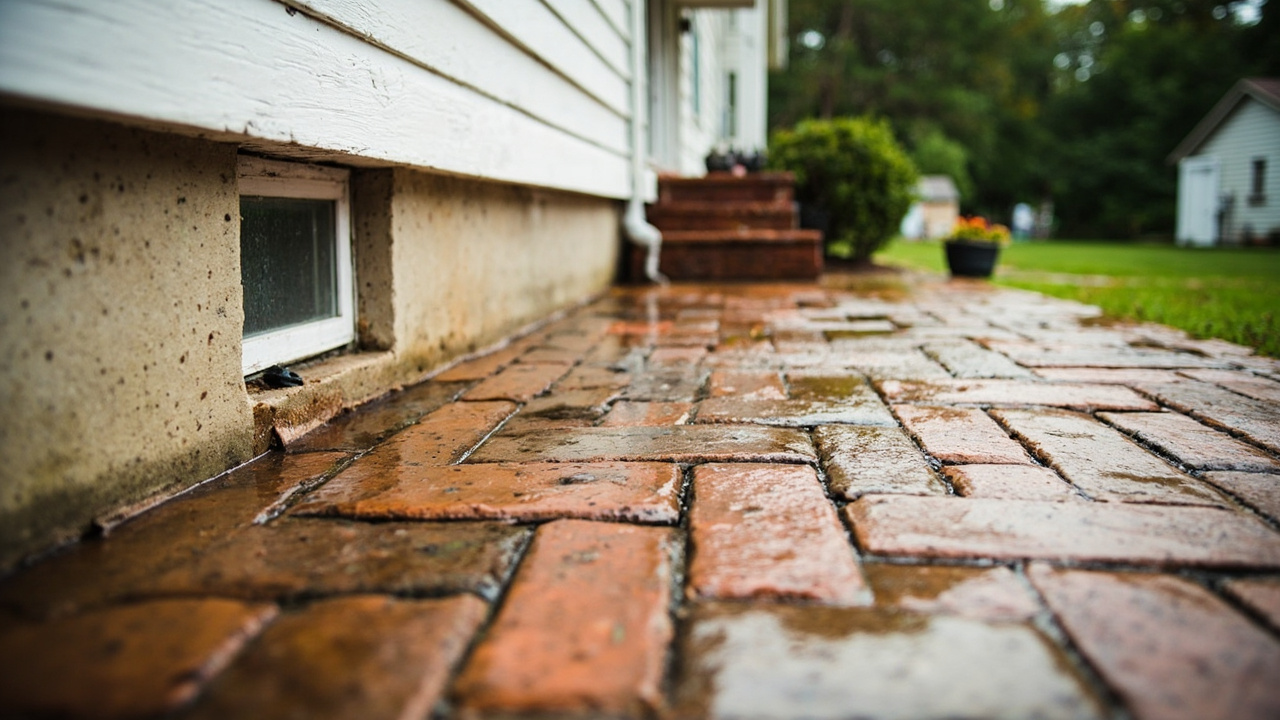
Why Brick Paver Patios Become a Water Funnel
A well-installed brick paver patio should slope away from your home at a grade of at least 1 inch per 8 feet. That is the standard. What actually happens over time in the metro Detroit area is a different story entirely.
Michigan’s freeze-thaw cycle is brutal on sub-base materials. When moisture gets into the compacted gravel and stone dust bed beneath your pavers, it freezes and expands. Then it thaws. Then it freezes again. Each cycle shifts the pavers a fraction of an inch. After a few winters, a patio that once drained toward the yard now drains toward your foundation wall.
Detroit’s clay-heavy soil compounds this problem significantly. Clay does not absorb water the way sandy loam does. When saturated, clay becomes nearly impermeable. Water that would normally percolate down through the soil instead pools on the surface and follows gravity. If your patio now slopes inward, that pooling water has one destination, your basement wall.
The Freeze-Thaw Cycle and Sub-Base Compaction Failure
The Michigan frost line sits at approximately 42 inches. That means the ground freezes solid nearly four feet deep during a hard winter. A patio sub-base installed at the standard 6-to-8-inch depth sits well above that frost line. Every winter, the freeze-thaw cycle works on the sub-base without mercy.
Sub-base compaction failure is what you see when individual pavers start to rock, sink, or form low spots near the house. Those low spots collect water. That water saturates the ground around your foundation. Hydrostatic pressure builds up against the basement wall. Eventually, the water finds a crack, a mortar joint, or a cold seam in the concrete block, and it comes inside.
For homes in older Livonia subdivisions built in the 1960s and 1970s, this is a pattern we see constantly. The original grading around the foundation was often done with minimal topsoil over that dense Detroit-area clay. A patio added later, even one installed correctly at first, can reverse the drainage slope in as few as five to seven winters.
How to Tell If Your Patio Is the Source of Your Basement Flooding
You do not need specialized tools to spot the warning signs. Walk out to your patio during or right after a heavy rain. Here is what to look for.
- Standing water pooling near the house-side edge of the patio after rain stops
- Efflorescence, which is the white powdery mineral deposit, appearing on your basement wall directly inside the patio area
- Pavers that rock or feel soft underfoot, especially in the first four feet from the foundation
- Moss or mildew growth between pavers near the house, indicating chronic moisture
- Basement dampness or water intrusion that occurs only after rain, not after snowmelt or pipe issues
- A visible inward slope when you set a long level across the patio surface
- Soil settlement or low spots in the lawn immediately adjacent to the patio edge
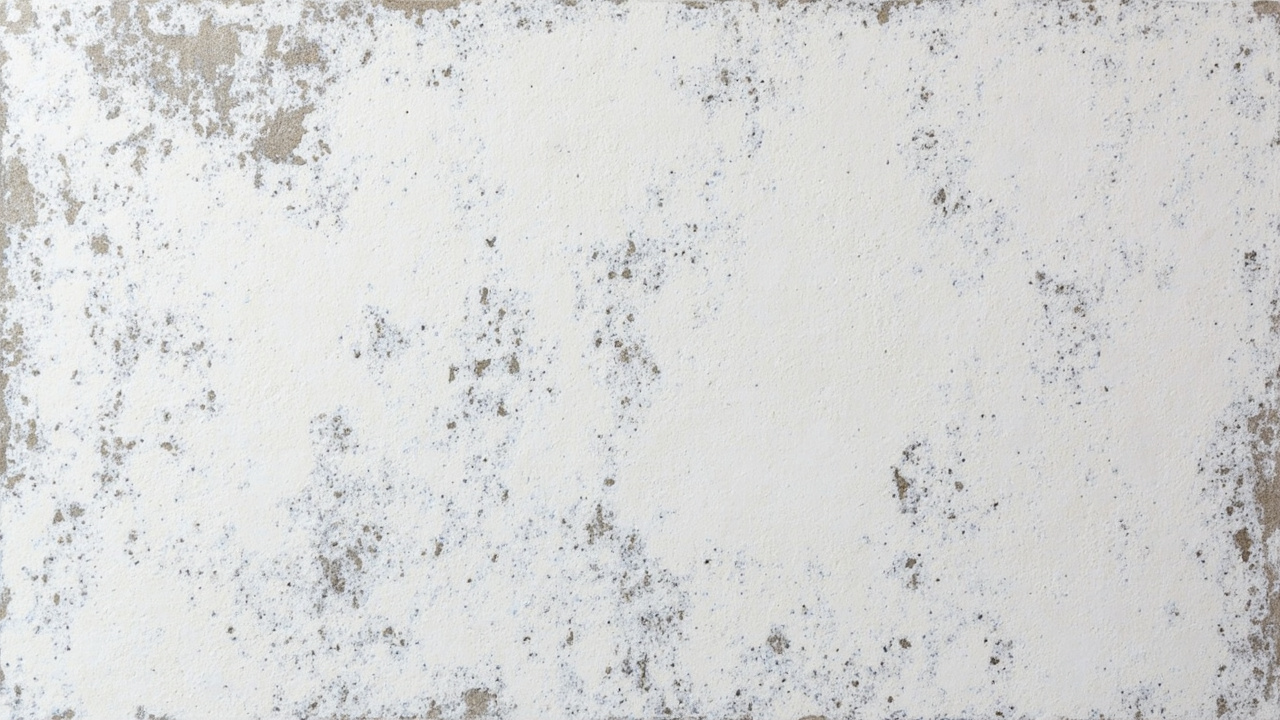
Efflorescence deserves special attention. It forms when water moves through concrete or masonry, dissolves calcium hydroxide, and then deposits it on the surface as the water evaporates. If you see that white chalky staining on your basement wall in a pattern that mirrors the outer edge of your patio, the patio is almost certainly the water source.
The Hydrostatic Pressure Problem Most Homeowners Miss
Hydrostatic pressure is the force that water exerts against a surface when it cannot drain away. A basement wall is essentially a dam. As long as the soil around it stays reasonably dry, the dam holds fine. When a sloping patio channels water directly against that wall and the clay soil beneath becomes saturated, the pressure against the wall can reach several hundred pounds per square foot.
Poured concrete foundations handle this better than concrete block. Older Livonia and Dearborn Heights homes with block foundations are particularly vulnerable. Water finds the mortar joints between blocks and begins seeping through. Once the mortar starts to deteriorate from repeated wet-dry cycles, the intrusion gets worse each season.
The Detroit River watershed drainage system was not designed to handle the concentrated surface runoff that comes off modern hardscaping. When every house on a block has a patio, a driveway, and minimal permeable surface, the ground becomes overwhelmed during heavy rain events. Your foundation absorbs what the drainage system cannot move fast enough.
Foundation Water Damage Signals That Need Professional Attention
Some water damage signs go beyond a damp wall. These indicate that moisture has already moved inside the structure and active restoration is needed.
| Warning Sign | What It Indicates | Urgency Level |
|---|---|---|
| Active water seeping through wall cracks during rain | Hydrostatic pressure breach, foundation crack | High, address within 24 hours |
| Efflorescence on basement walls | Chronic moisture migration through masonry | Moderate, address within 2 weeks |
| Musty odor without visible water | Hidden moisture in framing or insulation, early mold growth | Moderate to high, test immediately |
| Visible mold on drywall or wood framing | Sustained moisture above 60% relative humidity | High, professional remediation needed |
| Buckling or bowing basement wall | Structural failure from sustained hydrostatic pressure | Critical, same-day evaluation |
| White mineral staining on floor near wall base | Water wicking through the cove joint at floor-wall seam | Moderate, interior drain system may be needed |
If your basement is showing two or more of these signs at the same time, the moisture has been present long enough to create secondary damage in the building materials. A moisture meter reading above 16% in wood framing or above 4% in concrete walls means active drying and restoration are needed, not just fixing the patio grade.
If you are already dealing with mold alongside the moisture, read why bleach won’t fix your Ferndale basement mold and when to call a pro before attempting any cleanup on your own.
What Professional Water Damage Restoration Involves for Patio-Related Flooding
Fixing the patio grade stops the source. Restoring the basement addresses the damage already done. These are two separate scopes of work, and both matter.
Step 1, Moisture Assessment with Industrial Equipment
A visual inspection tells only part of the story. IICRC-certified technicians use calibrated moisture meters, thermal imaging cameras, and sometimes hygrometers to map where moisture has penetrated. This matters because water travels. Water that enters at one point on the foundation wall may wick laterally through the concrete and show up on drywall 10 feet away from where the patio drains.
Detroit’s summer average relative humidity sits between 70% and 80% on most days. That ambient humidity already stresses your basement’s moisture control. When patio drainage adds a direct water load on top of that, the moisture content in wood framing and insulation can climb rapidly. Thermal imaging shows where cold, wet zones exist behind finished walls without tearing anything open unnecessarily.
Step 2, Structural Drying with Commercial Dehumidifiers
Consumer-grade dehumidifiers from hardware stores remove roughly 30 to 70 pints of moisture per day. Commercial LGR (low-grain refrigerant) dehumidifiers used in professional restoration remove three to five times that volume and operate at relative humidity levels where consumer units stop working effectively. When concrete block walls have absorbed moisture, getting them dry requires sustained airflow and dehumidification over multiple days.
Restoration teams also deploy desiccant dehumidifiers in cases where the basement temperature is low and standard refrigerant units lose efficiency. Air movers placed in a calculated pattern accelerate evaporation from walls, floors, and framing. Drying logs document moisture readings every 24 hours until target moisture levels are achieved.
Step 3, Addressing Secondary Damage
Insulation that has absorbed moisture must come out. Fiberglass batt insulation touching a wet concrete wall loses all insulating value and becomes a permanent moisture reservoir and mold substrate. Drywall below the flood line often needs removal too. These are not arbitrary decisions. IICRC S500 standards define when materials can be dried in place versus when they require removal and replacement.
If you have hardwood floors in the finished portion of your basement or in rooms above the affected area, moisture migration can cause cupping and buckling. For guidance on that specific problem, this breakdown on saving hardwood floors after water intrusion covers the decision timeline you need to follow.

Comparing Patio Repair Options and Their Drainage Impact
Not every solution requires tearing out the entire patio. The right approach depends on how severe the grade reversal is and how much sub-base damage has occurred.
| Repair Approach | Best For | Drainage Improvement | Typical Disruption |
|---|---|---|---|
| Re-leveling individual sunken pavers | Minor settling, isolated low spots | Moderate, corrects specific pooling areas | 1 to 2 days, no excavation |
| Partial sub-base reset with regrade | Section near foundation has reversed slope | Good, re-establishes proper pitch away from house | 2 to 3 days, pavers reset in repaired zone |
| Full patio removal and rebuild with permeable pavers | Severe sub-base failure, recurring water issues | Excellent, permeable pavers reduce surface runoff by 60 to 80 percent | 4 to 7 days, full excavation |
| Adding a channel drain at the foundation edge | Grade correction not feasible, space constraints | Good, intercepts water before it reaches foundation | 1 to 2 days, saw-cutting required |
| Foundation grading with new topsoil and seed | Adjacent soil grade contributing to problem | Moderate to good, corrects the overall drainage plane | 1 day, no paver work |
Polymeric sand is a critical detail in any patio repair. Standard jointing sand washes out over time, which allows water to migrate straight down through the joints and into the sub-base. Polymeric sand binds with moisture on installation and cures into a firm, flexible joint that resists washout and blocks weed growth. Re-sanding with polymeric sand after any re-leveling work is not optional if you want the repair to hold through Michigan winters.
Masonry sealing the pavers after re-sanding adds another layer of protection. A penetrating silane-siloxane sealer reduces water absorption into the paver surface itself and slows the efflorescence process. It also reduces freeze-thaw spalling on the paver faces. For properties near Royal Oak, Grosse Pointe, or Bloomfield Hills where decorative pavers represent a significant investment, sealing every three to five years is worth the cost versus full paver replacement.
The Role of Foundation Grading Beyond the Patio
The patio is often the biggest culprit, but it rarely acts alone. Foundation grading, which is the slope of the soil directly against the house, is supposed to drop at least 6 inches over the first 10 feet away from the foundation. In established Livonia neighborhoods, decades of soil compaction, garden bed additions, and mulch buildup have often flattened or reversed this grade entirely.
The EPA’s WaterSense program and current stormwater management guidelines both emphasize that managing surface water at the source, before it reaches the foundation, is the most cost-effective way to prevent basement water intrusion. That means addressing patio grade, foundation grade, downspout extensions, and window well drainage as a system rather than one component at a time.
Downspout extensions should discharge at least 6 feet from the foundation and preferably into a downslope area or dry creek bed. If your downspouts dump right next to the patio and the patio is sloping inward, you have two concentrated water sources running directly at your foundation during every rain event.
Insurance Coverage for Patio-Related Basement Flooding
This is where many Livonia and metro Detroit homeowners get stuck. Standard homeowner’s insurance policies typically exclude gradual water damage and surface water intrusion. If the water entered through the foundation because of poor exterior drainage, many insurers will classify it as a maintenance issue rather than a covered peril.
That said, the line between a covered sudden event and an excluded gradual leak is not always clear, and the framing of your claim matters. Read through the guidance on how to get your Detroit home insurance to actually pay for water restoration before you talk to your adjuster. Documentation of the patio drainage failure as the cause, combined with evidence of when the damage started, changes the conversation significantly.
If you are in the process of filing a claim right now, the step-by-step insurance claim guidance for Corktown homeowners applies directly to any Detroit-area water damage claim and walks through the documentation you need to build a strong case.
What to Do Right Now If Water Is Already in Your Basement
If you are reading this because your basement has water in it today, here is the order of operations.
First, identify and stop any active water entry if you safely can. That might mean diverting downspouts or placing sandbags at the patio edge temporarily. Second, remove standing water with a wet-dry vac or submersible pump. Third, pull wet rugs and any cardboard boxes off the floor immediately. Carpet that stays wet for more than 24 to 48 hours becomes a mold problem. Read about how to decide whether wet carpet can be saved or needs replacement before you make any decisions about flooring.
Fourth, get airflow moving and call a restoration professional. The 24-to-48-hour window is real. That is when mold spore germination begins on wet organic material. An IICRC-certified restoration company serving the Detroit metro area can deploy equipment the same day in most cases.
The EPA’s mold cleanup guidelines are clear that any water intrusion affecting more than 10 square feet of material warrants professional assessment. Patio-related basement flooding routinely affects far more than that.
A sloping brick paver patio is a fixable problem. The damage it has already caused inside your basement is also fixable. The one thing that makes both outcomes worse is waiting. If you are seeing signs of moisture intrusion in a Livonia, Dearborn, or Westland basement, get the drainage issue and the restoration work assessed together so the fix addresses the full scope of damage, not just the part you can see.