
Saving the Original 1920s Built-in Cabinetry in Your Boston-Edison Home After a Pipe Burst
When water from a burst pipe floods your Boston-Edison home’s built-in cabinetry, you’re not just dealing with wet wood—you’re facing the potential loss of irreplaceable craftsmanship. These 1920s built-ins feature old-growth timber with unique grain patterns and densities that modern lumber simply cannot replicate. The immediate 24-48 hours after a pipe burst determine whether your historic woodwork can be saved or must be replaced. Fixing the Mess After a Frozen Pipe Bursts in Your Detroit Home.
The first step is stopping the water source and removing standing water. But the real challenge begins with understanding how old-growth wood responds to moisture. Unlike modern kiln-dried lumber, wood from the 1920s was air-dried over months or years, creating a denser cellular structure that absorbs water more slowly but also releases it more reluctantly. This means standard drying techniques can cause irreversible warping or splitting if applied too aggressively. Water Damage Restoration Livonia.
Why Historic Wood Requires a Specialized Approach
Old-growth lumber used in Boston-Edison homes came from trees that grew slowly in dense forests, resulting in tighter growth rings and higher density than today’s fast-grown timber. This density creates different moisture content thresholds. While modern lumber typically reaches equilibrium moisture content (EMC) around 9-12% in Michigan’s climate, old-growth oak or maple may stabilize at 7-10%, making it more susceptible to dimensional changes.
The original finishes on these built-ins also matter significantly. Many feature shellac-based coatings or hand-rubbed varnishes that become soluble when exposed to water. Aggressive cleaning or heat drying can cause these finishes to blister, dissolve, or become permanently discolored. The lath and plaster walls surrounding many Boston-Edison built-ins add another layer of complexity, as they can wick moisture and create hidden pockets of dampness that standard moisture meters might miss. Water Damage Restoration Warren.
Our Preservation-First Restoration Process
The restoration process begins with comprehensive moisture mapping using penetrating and non-penetrating moisture meters to identify all affected areas. We then create a drying plan that respects the wood’s age and original construction methods. This typically involves:
- Controlled Environment Setup
We establish negative air pressure and contain the affected area to prevent cross-contamination. Temperature is maintained between 70-75°F, and humidity is gradually reduced using desiccant dehumidifiers rather than refrigerant units, which can create condensation on cold surfaces.
- Low-Impact Drying Techniques
Instead of direct heat application, we use indirect drying methods like air movement from specialized low-velocity fans positioned to create gentle cross-ventilation through the cabinetry. This prevents surface drying that can trap moisture inside.
- Finish Preservation Assessment
Our technicians test the solubility of existing finishes using small, inconspicuous areas. If finishes are water-soluble, we use specialized cleaning agents that won’t dissolve the original coating while removing water stains and mineral deposits.
- Moisture Content Monitoring
We track moisture levels daily using pinless meters to avoid damaging the wood surface. The goal is reaching EMC without overshooting, which can cause the wood to become brittle or develop new cracks.
Throughout the process, we document moisture readings, temperature, and humidity levels. This documentation serves two purposes: it guides our restoration decisions and provides evidence for insurance claims involving historic preservation.
Common Challenges: Tannins, Warping, and Mold in Lath and Plaster
Old-growth wood contains higher concentrations of natural tannins, especially in oak and mahogany. When these woods get wet, tannins can migrate to the surface, creating dark stains that standard cleaning cannot remove. We use specialized tannin removers that neutralize these stains without bleaching the wood or damaging the original finish. How to Remove Mold Safely from Your Royal Oak Home.
Warping presents another significant challenge. The 1920s built-ins were constructed before modern adhesives and fasteners became standard. Many joints rely on wooden pegs or hide glue, which can fail when exposed to moisture. We assess each joint’s integrity and use reversible restoration techniques that maintain the original construction methods whenever possible.
Lath and plaster walls surrounding built-ins create hidden moisture reservoirs. The plaster can absorb several times its weight in water, and the wood lath expands when wet, potentially cracking the plaster. We use infrared cameras to detect these hidden moisture pockets and may need to create small access points to ensure complete drying without demolishing entire wall sections.
Mold growth in historic homes requires special consideration. The EPA mandates specific containment procedures for mold remediation, but in historic preservation contexts, we balance mold removal with surface preservation. This often means using antimicrobial treatments that won’t discolor or damage original finishes. EPA mold remediation guidelines.
Case Study: Restoring Boston-Edison Quarter-Sawn Oak Built-Ins
A recent project on Longfellow Street involved quarter-sawn white oak built-ins that suffered extensive water damage from a second-floor pipe burst. The homeowner initially considered replacement, but our assessment revealed the wood was structurally sound despite surface damage.
We implemented a 14-day restoration process using desiccant dehumidification to gradually reduce moisture content from 18% to 9%. The quarter-sawn grain pattern, which creates the distinctive ray-fleck appearance, actually helped the wood resist warping compared to flat-sawn alternatives. Our tannin treatment removed dark staining without affecting the wood’s natural patina.
Final moisture readings showed uniform distribution throughout the cabinetry, and the original shellac finish was preserved through careful cleaning rather than stripping. The homeowner saved approximately $8,000 compared to replacement costs while maintaining the home’s historic character.
Insurance Considerations for Historic Properties
Standard homeowners insurance policies often undervalue historic features or exclude coverage for specialized restoration techniques. We work directly with insurance adjusters to document the replacement cost of original built-ins versus modern equivalents. This documentation typically includes:
- Detailed photographs of all affected areas before any work begins
- Moisture mapping reports showing the extent of damage
- Estimates for preservation restoration versus replacement
- References to local historic district requirements if applicable
The Detroit Historic District Commission may have specific requirements for repairs in Boston-Edison, and we ensure all restoration work complies with these guidelines. This compliance can be crucial for insurance approval and maintaining the home’s historic designation.
Prevention Strategies for Boston-Edison Homes
Many Boston-Edison homes have aging plumbing systems with galvanized steel pipes that corrode from the inside out. This corrosion creates weak points that can fail suddenly. We recommend annual plumbing inspections focusing on supply lines to upper floors where built-ins are typically located.
Temperature monitoring in winter months is critical. Homes with historic single-pane windows often have cold spots near exterior walls where pipes run. Installing pipe insulation in these areas costs significantly less than emergency restoration services.
Water detection systems have become more affordable and can provide early warning of leaks before extensive damage occurs. These systems can be particularly valuable in homes with finished basements where a second-floor pipe burst might go unnoticed for hours. Flooded Basement Cleanup in Grosse Pointe Done Fast and Done Right.
Frequently Asked Questions
Can all water-damaged historic built-ins be saved?
Not all built-ins can be saved, but most can if addressed within 24-48 hours. The determining factors include the water category (clean vs. contaminated), exposure duration, and the wood’s structural integrity. We provide honest assessments rather than false hope.
How long does the restoration process take?
Most projects require 7-14 days for complete restoration. The first 48-72 hours focus on water removal and initial drying, followed by several days of controlled drying and finish restoration. Rushing the process typically results in more damage.
Will insurance cover preservation restoration?
Coverage varies by policy, but many insurers will cover restoration if it’s demonstrated to be more cost-effective than replacement. We provide detailed cost comparisons and can work with your insurance company throughout the claims process.
What makes your approach different from standard water damage restoration?
Standard restoration focuses on rapid drying and material replacement. Our preservation-first approach considers the historical value, original construction methods, and finish integrity. We use specialized equipment and techniques that minimize damage to irreplaceable features.
How can I tell if my built-ins are worth restoring?
Factors include the wood species, craftsmanship quality, historical significance, and replacement cost. Quarter-sawn oak, mahogany, and walnut built-ins from the 1920s typically justify restoration due to their rarity and value. We offer free assessments to help you make informed decisions.
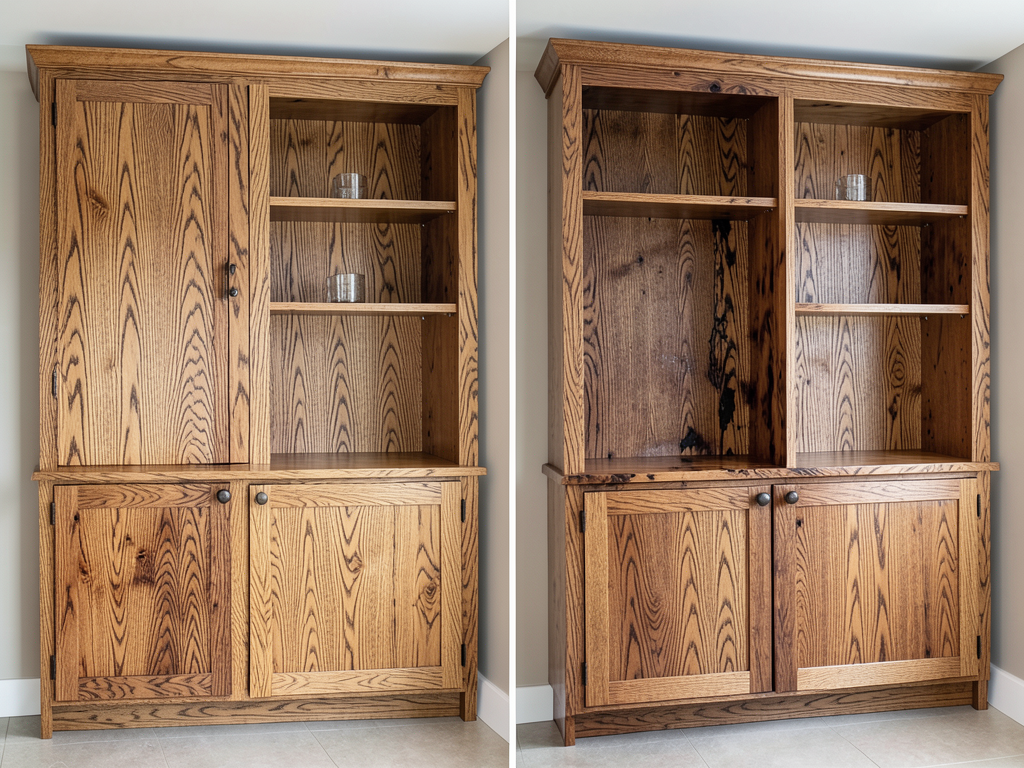
Quarter-sawn oak built-in cabinetry showing distinctive ray-fleck grain pattern before and after water damage restoration.
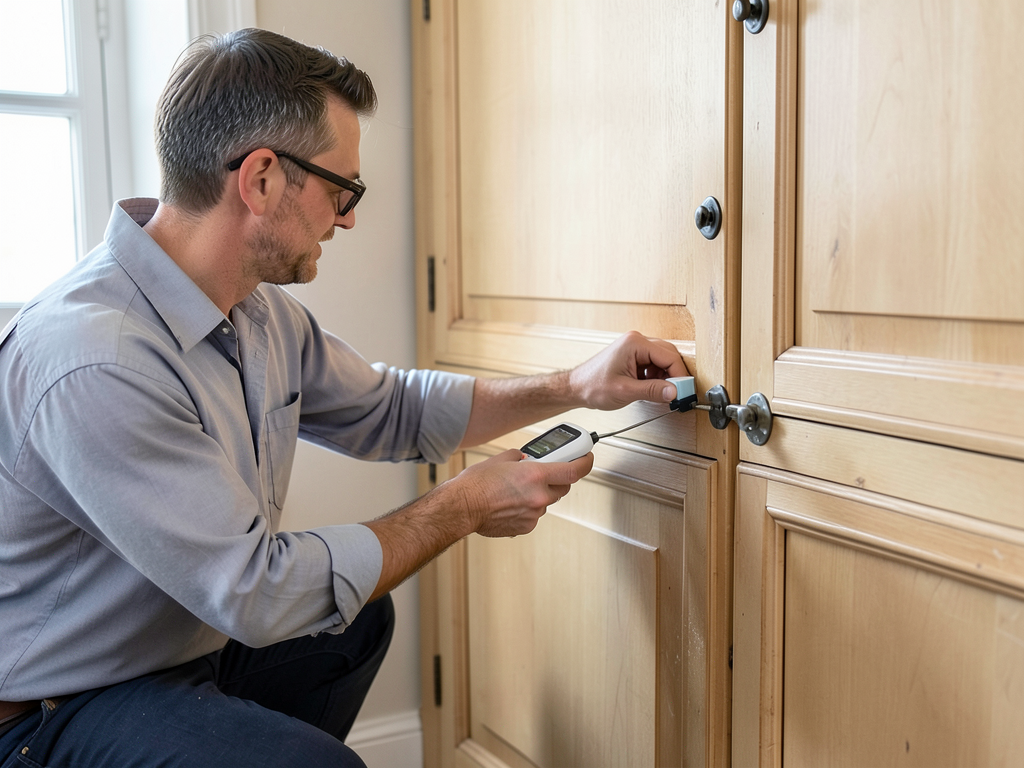
Technician using pinless moisture meter on historic built-in to monitor drying progress without damaging original finish.
Desiccant dehumidifier setup in historic home restoration project showing controlled environment equipment.
Cost Factors and Value Preservation
The cost of restoring historic built-ins varies based on several factors. Simple drying and cleaning might cost $1,500-3,000, while comprehensive restoration involving finish work and structural repairs can range from $5,000-15,000. These costs typically represent 40-60% of replacement value while preserving irreplaceable craftsmanship.
Beyond direct costs, there’s the value preservation aspect. Original built-ins contribute significantly to a historic home’s character and market value. Replacing them with modern cabinetry can reduce a Boston-Edison home’s value by $10,000-25,000 or more, depending on the extent and quality of the original features.
Why Choose Local Detroit Expertise
Water damage restoration in historic Detroit homes requires understanding local building patterns, material availability in the 1920s, and the specific challenges of Michigan’s climate. Our team has restored hundreds of built-ins in Boston-Edison, Indian Village, and other historic Detroit neighborhoods.
We understand the freeze-thaw cycles that affect Detroit-area homes, the high humidity levels that can complicate drying processes, and the specific plumbing issues common in homes built nearly a century ago. This local expertise means faster response times, more accurate assessments, and better outcomes for your historic features. For more information, visit IICRC S500 water damage restoration standards.
Call (313) 572-5559 today to schedule your inspection. Every hour counts when historic wood is at risk. Our team is ready to respond 24/7 to protect your Boston-Edison home’s irreplaceable built-ins from permanent water damage.
Call (313) 572-5559 now for emergency response. Don’t let a burst pipe destroy your home’s historic character. We’re standing by to save your 1920s built-ins.