

The Difference Between a Roof Repair and a Full Restoration Matters More Than You Think
A roof leak feels urgent the moment you see a water stain spreading across your ceiling. Your first instinct is to call a roofer and get it patched. Sometimes that is exactly the right call. But in a neighborhood like University District, where homes were built in the 1920s and 1930s with original framing and plaster walls, a simple patch can mask a much bigger problem underneath.
The core question is not just whether the shingles are damaged. The real question is how far the water has already traveled inside your home’s structure. That answer determines whether you need a repair or a full roof leak restoration.
What a Roof Leak Repair Actually Covers
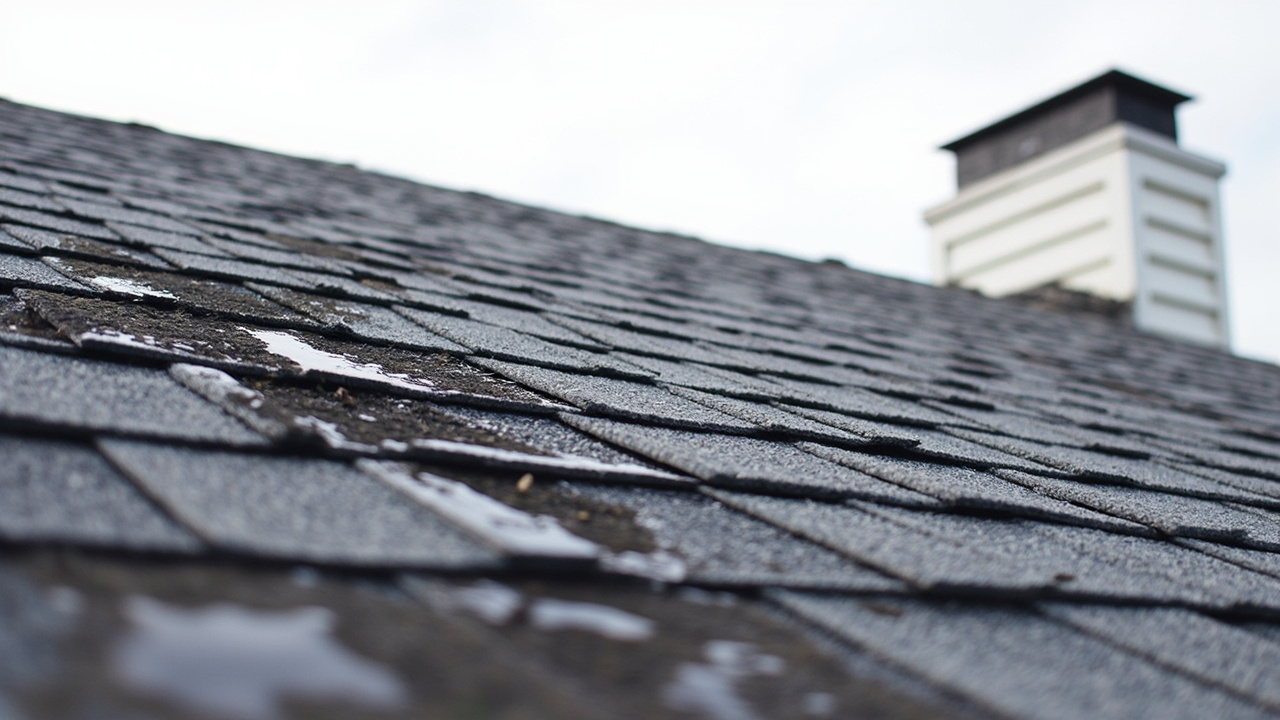
A standard roof repair is a surface-level fix. A roofing contractor replaces broken or missing asphalt shingles, reseals cracked flashing around chimneys and dormers, and patches any gaps in the underlayment where water is entering. The work stays on the exterior of the roof deck.
This approach works when the leak is caught fast, within 24 to 48 hours, and the water intrusion is limited to one spot. If no water reached the attic insulation, ceiling joists, or interior drywall, a repair is appropriate and cost-effective.
Here is what a repair does not address. It does not check for moisture trapped in wood framing. It does not measure the moisture content in your attic insulation. It does not look for early mold growth on rafters or roof sheathing. You are trusting that the water stayed where you can see it, and in Detroit’s climate, that is rarely the case.
Signs That a Repair Is Enough
- The leak is less than 24 hours old and you caught it immediately
- The water stain on the ceiling is small and dry to the touch
- The attic insulation directly above the stain shows no discoloration or compression
- There is no soft or spongy feel in the ceiling drywall
- No musty odor is present in the room or attic
- This is the first time this section of the roof has leaked
What Roof Leak Restoration Actually Means
Roof leak restoration is a water mitigation process, not just a roofing job. It combines the exterior repair with a full structural drying protocol inside the home. This is where IICRC-certified water damage professionals come in, because their job starts where the roofer’s job ends.
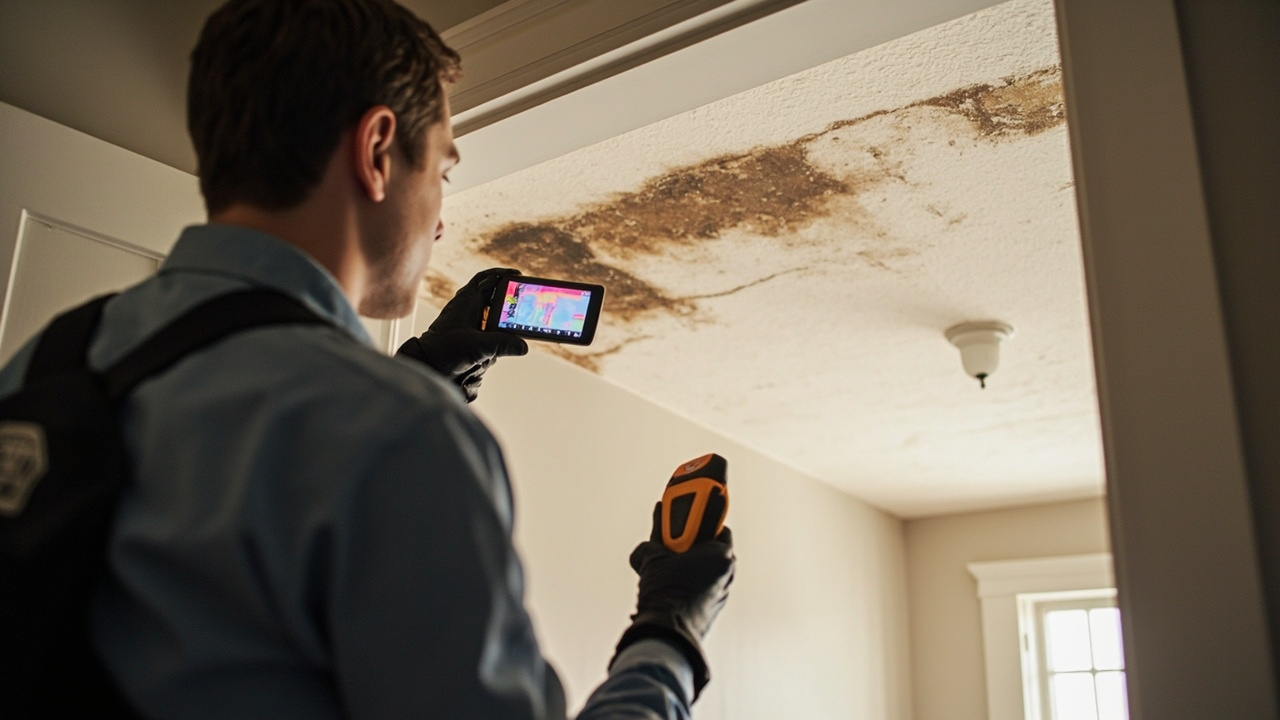
A restoration crew will perform moisture mapping using thermal imaging cameras and pin-type moisture meters. These tools find water that has wicked into wall cavities, roof sheathing, and ceiling joists without being visible to the eye. This is standard practice on any job where a roof has leaked for more than a day, or where the same area has leaked before.
After moisture mapping, industrial air movers and desiccant dehumidifiers are placed to drive moisture content in wood framing back down to acceptable levels, typically below 16 percent. If microbial growth is already present, mold remediation is performed before any reconstruction starts. The goal is to restore the entire building assembly to pre-loss condition, not just stop the visible drip.
Signs That You Need Restoration, Not Just a Repair
- The leak has been active for more than 48 hours or was undetected for days
- Ceiling drywall feels soft, bowed, or is showing paint bubbles
- Attic insulation is saturated or has dark staining
- You can see or smell mold in the attic or along the ceiling line
- The same area has leaked more than once over the past few seasons
- Thermal imaging shows moisture spreading beyond the visible stain
- Wood subfloor or structural sheathing shows discoloration or delamination
Repair vs. Restoration at a Glance
| Factor | Roof Repair | Roof Leak Restoration |
|---|---|---|
| Scope of Work | Exterior fix only (shingles, flashing, underlayment) | Exterior fix plus structural drying and mold prevention |
| Professionals Involved | Roofing contractor | Roofer plus IICRC-certified water mitigation crew |
| Typical Timeframe | 1 to 2 days | 3 to 7 days for drying, longer if reconstruction is needed |
| Equipment Used | Roofing tools and materials | Thermal imaging, moisture meters, air movers, dehumidifiers |
| Addresses Hidden Moisture | No | Yes |
| Mold Risk After Work | Present if moisture is trapped | Greatly reduced when properly executed |
| Insurance Involvement | Sometimes covered, depends on cause | Often covered under dwelling coverage for sudden events |
Why Detroit Homes Face a Specific Set of Risks
University District sits in the northwest corner of Detroit, and like Palmer Park, Sherwood Forest, and Bagley nearby, most of the housing stock here is 80 to 100 years old. Original roof framing in these homes was built to last, but the materials were not designed to handle repeated moisture cycles without maintenance.
Michigan’s freeze-thaw pattern is the biggest driver of roof failures in this area. When temperatures swing from below freezing at night to above freezing during the day, ice dams form along the eaves. Ice dams happen when heat escaping from the living space warms the upper roof deck, melts snow, and then that meltwater refreezes at the colder overhang. The ice backs up under shingles and forces water into the wall assembly.
A simple shingle repair does nothing to address the ice dam cycle. The underlying cause is almost always inadequate attic insulation and ventilation under the Michigan Residential Building Code standards. If your roofer patches the shingles but the ice dam forms again next winter, the leak returns. That is when homeowners in Rosedale Park, Grandmont, and University District end up calling for a full restoration after their second or third round of damage.
Lake effect snow from Lake St. Clair and Lake Erie also deposits heavier, wetter snow loads on Detroit rooftops compared to inland areas. Wet snow adds significant weight and holds moisture against the roof longer, accelerating deterioration of both shingles and the underlayment beneath them.
How Insurance Treats These Two Scenarios Differently
This is where homeowners in Southeast Michigan often get surprised. A standard homeowner’s policy in Michigan typically covers sudden and accidental water damage, meaning a storm blows off shingles and rain intrudes in a single event. That qualifies for a claim.
What policies do not cover is damage from a slow leak or lack of maintenance. If an adjuster determines that your roof was gradually deteriorating over multiple seasons, the claim for interior damage can be denied. This is why the timing of your response matters enormously.
When you file a claim for roof-related water damage, the documentation your restoration company provides carries significant weight. Moisture mapping reports, thermal imaging photos, and moisture meter readings create a clear record that the damage was sudden and not a long-term neglect situation. IICRC-certified restoration companies understand how to document a loss properly for Michigan insurance adjusters.
It is also worth knowing that some Michigan policies include coverage for mold remediation up to a specific sublimit. If your restoration company identifies mold during structural drying and documents it before any work begins, that coverage may apply. If mold is found later because the initial repair did not address hidden moisture, you may be looking at out-of-pocket costs. For related water damage scenarios in the Detroit area, you can also review what the recovery process looks like after a frozen pipe bursts in a Detroit home, since freeze-related damage follows a similar documentation and drying protocol.

The Cost Factors You Need to Understand
Costs vary significantly based on the size of the affected area, the age of the roofing materials, and how far moisture has traveled into the building assembly. What follows are the key variables that drive cost in either direction.
| Cost Driver | Roof Repair | Full Restoration |
|---|---|---|
| Roof Size and Pitch | Low impact on localized repairs | Affects access and drying equipment placement |
| Age of Shingles | Older shingles may require full section replacement | Often triggers full re-roof as part of scope |
| Depth of Moisture Penetration | Not measured in repair scope | Directly determines equipment days and drying time |
| Presence of Mold | Not addressed | Adds remediation scope and extends project timeline |
| Structural Damage to Framing | Not included | Requires licensed carpenter or contractor involvement |
| Insurance Deductible | May not meet deductible threshold | Total loss often exceeds deductible, making claim worthwhile |
One thing homeowners in University District consistently underestimate is the cost of skipping restoration and paying for repeated repairs. When the same section of roof causes interior damage twice within a few years, you are paying twice for ceiling drywall replacement, twice for painting, and you may still be sitting on untreated wood framing with elevated moisture content. Mold in a 1920s plaster-and-lathe attic is expensive to remediate. Catching it at the first loss event is far less costly than finding it two years later.
What Moisture Mapping Finds That a Visual Inspection Misses
Thermal imaging shows temperature differentials in walls and ceilings. Wet insulation holds temperature differently than dry insulation, so the camera reveals moisture migration patterns that are invisible to the naked eye. A standard visual inspection by a roofer or a homeowner will show you where the water came in and where it stained the ceiling. It will not show you that moisture wicked three feet laterally along a ceiling joist before stopping, or that it dripped behind a wall and is sitting above the window header.
Pin-type moisture meters confirm what the thermal camera suggests. Restoration crews take readings at multiple points around the visible damage and at reference points in unaffected areas. When wood framing reads above 19 percent moisture content, you have an active microbial growth risk within 24 to 72 hours. Structural drying must begin immediately.
This process is the reason why roof leak restoration is a different discipline than roofing. A roofer makes the exterior watertight. A water mitigation professional resolves what the water did after it got inside. If your home in University District has had a leak and you did not engage a mitigation crew, there is a real chance moisture is still present in the structure even if the roof is now dry and repaired.
When the Right Answer Is Both, Done in the Right Order
The most common outcome on residential jobs in the Detroit metro area is a combination approach. The roofing contractor repairs or replaces the compromised sections of the roof first to stop the water source. Then the water damage restoration crew enters to perform moisture mapping, structural drying, and any mold remediation needed before reconstruction of the ceiling or wall assemblies begins.
This order matters. You do not want to close up a ceiling with fresh drywall before the framing behind it has been dried to acceptable levels. That traps moisture inside the wall assembly and guarantees mold growth within weeks. Restoration crews use moisture logs to track daily readings and confirm that framing has reached target moisture content before any reconstruction materials go back in place.
If your home has also experienced related water intrusion at the foundation or lower levels, the same principle applies. You can read about what professional basement flood cleanup looks like in the region at our Grosse Pointe flooded basement cleanup guide. The drying and documentation standards are the same regardless of where the water entered.
For University District homeowners dealing with attic mold found during a restoration inspection, the remediation process follows the same protocols used across the Detroit metro. Our guide on safely removing mold from a Royal Oak home walks through the containment and treatment steps that apply to any residential mold situation in Southeast Michigan.
Take Action Before the Next Freeze Cycle Hits
If you have a visible water stain, a soft ceiling, or a history of roof leaks in your University District home, do not wait for the next rain to confirm the problem is still there. By the time moisture becomes visible on a ceiling, it has usually been traveling through the structure for longer than it looks.
A 24-hour inspection from an IICRC-certified water damage restoration team will give you a clear picture of what the repair alone cannot see. Moisture mapping takes less than an hour and the results tell you exactly whether you need a surface fix or a full structural dry-out. That information is what your insurance adjuster needs and what protects your home’s structural integrity through the next Michigan winter.
Call for an emergency inspection today. The sooner moisture is measured and addressed, the simpler and less costly the solution will be.
{
“@context”: “https://schema.org”,
“@type”: “BlogPosting”,
“headline”: “Should You Repair or Restore Your Water Damaged Roof in University District Detroit”,
“description”: “Roof leak in University District? Learn when a simple repair is enough vs. when full water damage restoration is the smarter call for Detroit homeowners.”,
“wordCount”: 2064,
“datePublished”: “2026-04-08T13:06:00.000Z”,
“dateModified”: “2026-04-08T13:06:00.000Z”,
“inLanguage”: “en-US”,
“mainEntityOfPage”: {
“@type”: “WebPage”,
“@id”: “https://ironwoodwaterdamagerestorationdetroit.com”
},
“publisher”: {
“@type”: “LocalBusiness”,
“name”: “Ironwood Water Damage Restoration Detroit”,
“url”: “https://ironwoodwaterdamagerestorationdetroit.com”
},
“author”: {
“@type”: “Organization”,
“name”: “Ironwood Water Damage Restoration Detroit”,
“url”: “https://ironwoodwaterdamagerestorationdetroit.com”
},
“image”: {
“@type”: “ImageObject”,
“url”: “https://ironwoodwaterdamagerestorationdetroit.com/wp-content/uploads/2026/03/deciding-between-repairing-or-replacing-your-water-1.jpg”
}
}
{
“@context”: “https://schema.org”,
“@type”: “LocalBusiness”,
“name”: “Ironwood Water Damage Restoration Detroit”,
“url”: “https://ironwoodwaterdamagerestorationdetroit.com”,
“address”: {
“@type”: “PostalAddress”,
“addressLocality”: “Detroit”
},
“areaServed”: {
“@type”: “City”,
“name”: “Detroit”
}
}
{
“@context”: “https://schema.org”,
“@type”: “BreadcrumbList”,
“itemListElement”: [
{
“@type”: “ListItem”,
“position”: 1,
“name”: “Home”,
“item”: “https://ironwoodwaterdamagerestorationdetroit.com”
},
{
“@type”: “ListItem”,
“position”: 2,
“name”: “Blog”,
“item”: “https://ironwoodwaterdamagerestorationdetroit.com/blog”
},
{
“@type”: “ListItem”,
“position”: 3,
“name”: “Should You Repair or Restore Your Water Damaged Roof in University District Detroit”
}
]
}
{
“@context”: “https://schema.org”,
“@type”: “Service”,
“serviceType”: “Water Damage Restoration”,
“provider”: {
“@type”: “LocalBusiness”,
“name”: “Ironwood Water Damage Restoration Detroit”,
“url”: “https://ironwoodwaterdamagerestorationdetroit.com”
},
“areaServed”: {
“@type”: “City”,
“name”: “Detroit”
},
“description”: “Roof leak in University District? Learn when a simple repair is enough vs. when full water damage restoration is the smarter call for Detroit homeowners.”
}