

Your luxury vinyl plank flooring survived the spill. But that does not mean the water is gone.
LVP is one of the most popular flooring choices across the Detroit metro area right now, from Clawson bungalows to mid-century ranches in Royal Oak and newer builds in Sterling Heights. Homeowners love it because it is durable, affordable, and marketed as waterproof. That last claim is where things get dangerous.
The planks themselves resist water. The subfloor underneath them does not. And because LVP creates a nearly sealed surface, any moisture that gets underneath has nowhere to go. It just sits there, soaking into your plywood or concrete, feeding mold colonies, and quietly destroying your floor structure.
The Real Problem with Waterproof Flooring Claims
Walk into any flooring showroom and the sales pitch is the same. Waterproof. Kid-proof. Pet-proof. What the marketing does not tell you is that waterproof refers to the plank surface only.
LVP is installed as a floating floor system. The click-lock planks sit over an underlayment, which sits over your subfloor. Water from a leaking dishwasher, a slow pipe drip, or a flooded basement does not care about the surface rating. It finds the seams between planks, the expansion gaps at the walls, and any installation gap left around pipes or vents.
Once water gets under the floor, it is trapped. LVP does not breathe the way hardwood does. It acts like a tarp over your subfloor. Moisture gets in, and it cannot evaporate out.
In the Detroit area, this problem is amplified by our climate. Wayne County and Oakland County homes deal with high basement humidity from spring through early fall. The Great Lakes weather patterns push moisture levels that routinely surprise homeowners who moved here from drier climates. Older homes in Clawson, Berkley, and Hazel Park often have Michigan basements with hydrostatic pressure issues that push groundwater vapor upward through concrete slabs.
Signs You Have Water Under Your Luxury Vinyl Plank
The signs are not always obvious. LVP hides problems well for a while. But there are things to look and listen for.
- Spongy or soft spots when you walk across the floor, especially near walls or appliances
- A hollow or crackling sound in areas where the floor used to feel solid
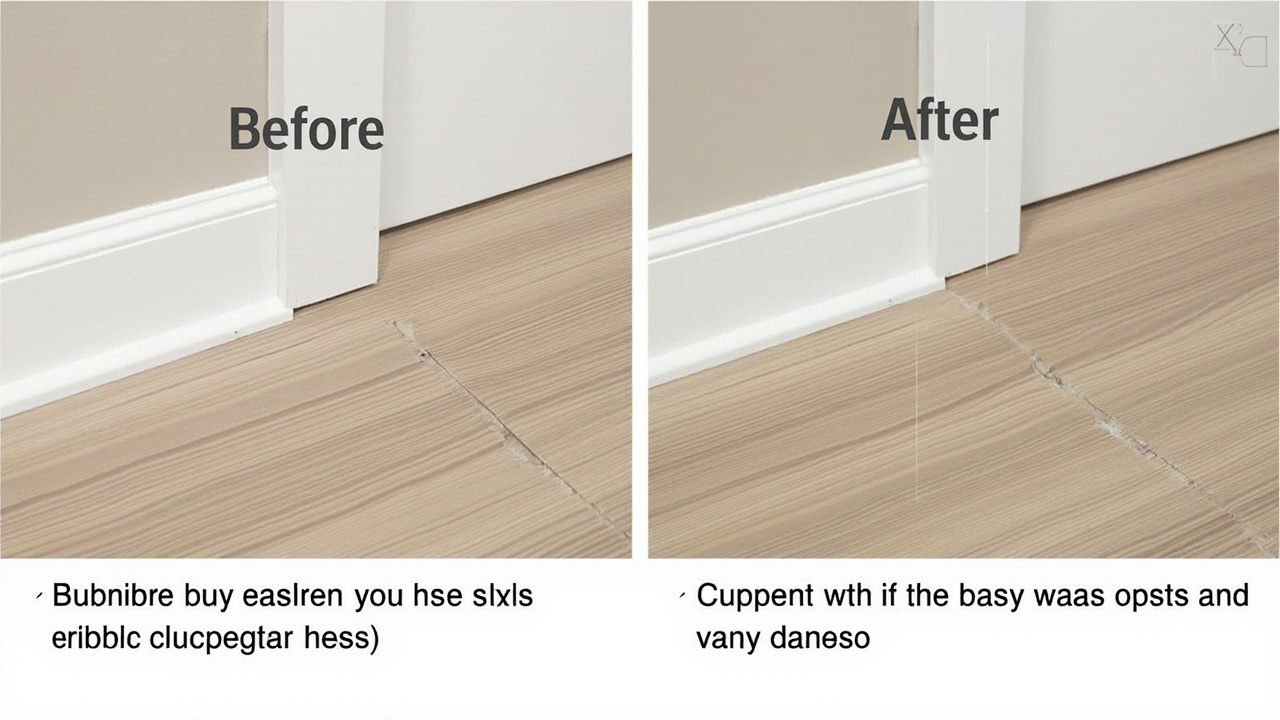
- Buckling or cupping at the plank edges, which means the subfloor beneath is swelling
- Visible gaps opening up between planks that were previously tight
- Adhesive failure on glued-down LVP installations, causing planks to lift at corners or seams
- A musty or earthy odor coming from the floor, especially when the room is warm
- Discoloration or staining at the grout lines if LVP was installed near tile transitions
That musty smell is the one people in this area know well. Anyone who has spent time in Detroit’s older housing stock recognizes that damp basement odor. When it starts coming from your main floor, that is a serious warning sign that mold has already taken hold underneath your LVP.
The Mold Timeline Every Homeowner Should Know
According to the EPA’s guidance on mold cleanup, mold can begin colonizing wet organic materials within 24 to 48 hours of moisture exposure. Your plywood subfloor is an organic material. So is the paper facing on any drywall your flooring abuts.
Here is what the timeline looks like once water gets under LVP and stays there.
| Time After Moisture Exposure | What Is Happening | Damage Level |
|---|---|---|
| 0 to 6 hours | Water saturates underlayment, begins wicking into subfloor grain | Moderate, often reversible |
| 6 to 24 hours | Subfloor begins to swell, LVP planks may start to cup or gap | Significant, subfloor may need replacement |
| 24 to 48 hours | Mold spores begin colonizing wet organic material | Severe, antimicrobial treatment required |
| 48 to 72 hours | Stachybotrys chartarum (black mold) conditions develop on continuously wet surfaces | Hazardous, professional remediation required |
| 72 hours and beyond | Structural rot begins in plywood subfloor, adhesive failure accelerates | Critical, full subfloor replacement likely |
The single biggest mistake Clawson homeowners make is waiting to see if the floor dries out on its own. It will not. Not under LVP. The clock starts the moment moisture gets underneath those planks.
What to Do in the First 60 Minutes
If you suspect water is under your LVP right now, these steps matter.
First, identify and stop the water source. A running appliance, a leaking supply line, or a slow pipe drip needs to be shut off before any drying can help. If you cannot find the source, shut off the main water supply to your home.
Second, do not run fans directly over the LVP surface and assume that fixes it. Surface air movement does almost nothing for moisture trapped under a sealed floor. This is one of the most common DIY errors.
Third, use a hygrometer to check ambient humidity in the room. If your readings are above 60 percent relative humidity, the conditions are actively supporting mold growth. A standard dehumidifier from a hardware store can help, but it is not a replacement for industrial dehumidification equipment.
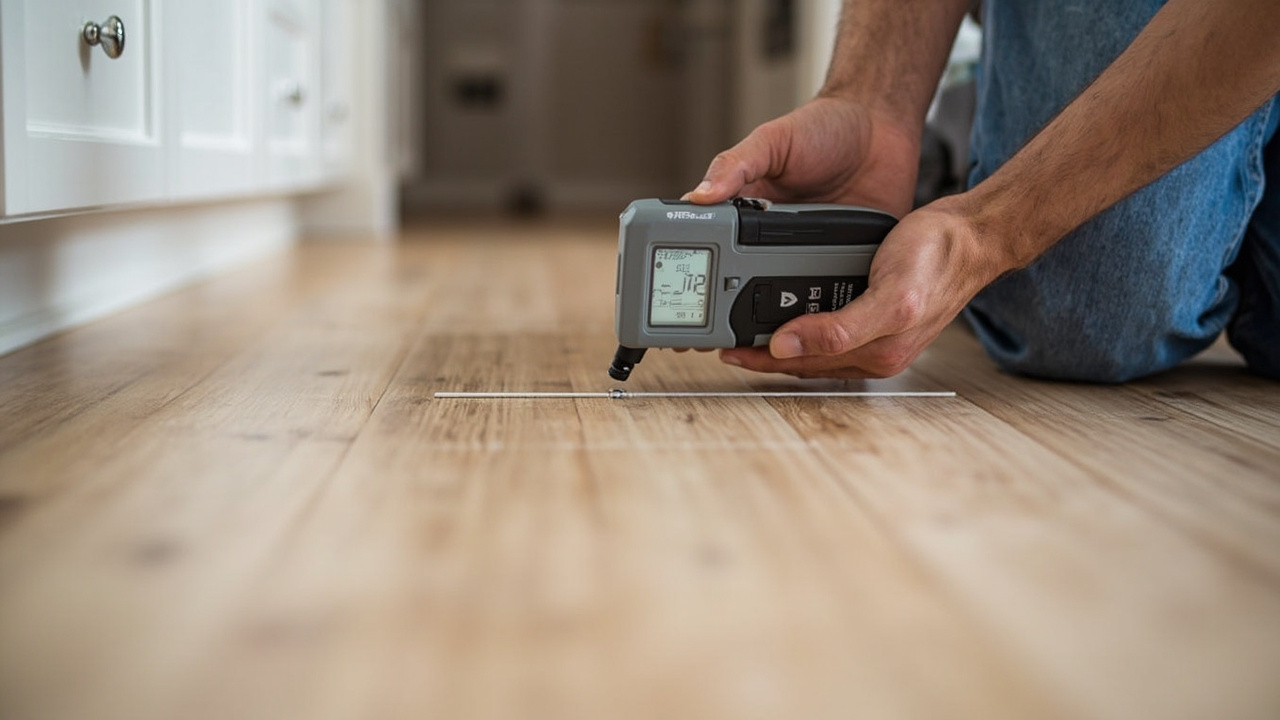
Fourth, call a water damage restoration professional. If the water event was more than minor surface moisture, the only way to know how far the moisture has spread is with professional moisture mapping using a pin-type or pinless moisture meter. Your eyes cannot tell you what is happening two inches into your subfloor.
If the water came from a sewage backup or a sump pump failure mixed with sewage, that changes the category from gray water to black water, which requires a completely different response protocol. For more on that, see our guide on sewage backup cleanup in Detroit.
DIY Drying vs. Professional Restoration
There is an honest way to frame this comparison. Some very minor moisture events, caught within the first few hours, can be addressed with careful DIY effort. Most cannot.
| Factor | DIY Approach | Professional Restoration |
|---|---|---|
| Moisture detection | Visual inspection only | Calibrated moisture meters, thermal imaging |
| Drying method | Box fans, consumer dehumidifier | Injectidry systems, commercial air movers, industrial desiccant dehumidifiers |
| Drying timeline | Days to weeks, often incomplete | Typically 3 to 5 days with monitoring |
| Mold prevention | Limited, no EPA-registered antimicrobial treatment | Antimicrobial treatment applied to subfloor after drying |
| Documentation | None for insurance | Moisture logs, photos, IICRC S500 compliant reports for claims |
| Floor salvage | Low probability if water was present more than 6 hours | Higher probability with rapid professional intervention |
The critical difference is the injectidry system. Professional restoration companies use specialized drying equipment that forces warm, dry air directly into the cavity between the subfloor and the LVP planks. This allows the floor structure to dry from the inside out without necessarily removing every plank. Consumer equipment cannot do this.
If your home has a concrete slab subfloor rather than plywood, the concern shifts. Concrete does not rot, but it holds moisture against the vapor barrier and underlayment below your LVP for extended periods. In older Clawson and Berkley homes built on slab foundations, this trapped moisture can wick upward and cause adhesive failure or mold growth in the underlayment material itself. Professional moisture mapping with a hygrometer and thermal camera is the only reliable way to assess slab moisture levels.

The Detroit Restoration Process Step by Step
When a restoration crew arrives at a home with water under LVP, the process follows a clear sequence based on IICRC S500 standards for water damage restoration.
The first step is moisture mapping. Technicians use pin-type moisture meters to probe the subfloor at multiple grid points across the affected area. This tells us exactly where the moisture boundary ends, which is often much larger than the visible damage zone. Water travels. A dishwasher leak in the kitchen can push moisture under LVP all the way to a hallway ten feet away.
Second is documentation. Every moisture reading is logged with the location on a floor diagram. This documentation protects you during the insurance claims process and establishes a baseline for the drying goal.
Third is controlled demolition if needed. If LVP planks are badly buckled or the subfloor readings indicate saturation above restorable levels, sections of flooring are removed. Click-lock LVP can sometimes be carefully removed and stored for reinstallation if it is not warped. Glued-down LVP is typically considered a loss once significant moisture has compromised the adhesive.
Fourth is structural drying. Industrial air movers are positioned to create directed airflow across exposed subfloor. Injectidry panels can be installed to dry under planks that remain in place. Commercial desiccant or refrigerant dehumidifiers run continuously, pulling moisture out of the air and accelerating evaporation from the subfloor material.
Fifth is antimicrobial treatment. Once the subfloor reaches the drying standard (typically below 12 percent moisture content for wood, and relative humidity balanced with the ambient environment), EPA-registered antimicrobial agents are applied to the subfloor surface to address any mold that developed during the moisture event.
The whole process typically takes three to five days of active drying in most residential situations across the Wayne County and Oakland County service area. Larger homes, or homes where the moisture event went undetected for multiple days, can take longer.
If the damage extends into your basement, the situation gets more complex. Basement flooding that wicks upward through a subfloor requires both above-floor and below-floor drying protocols. We cover that in detail on our page about flooded basement cleanup for Grosse Pointe and surrounding communities.
What Happens When Mold Is Already Growing
If the musty smell is already present, or if you see visible mold growth at the wall base where LVP meets the baseboard, the remediation scope changes. Mold remediation is a separate scope of work from water damage drying, even though they often happen together.
Black mold, specifically Stachybotrys chartarum, requires controlled containment, negative air pressure, HEPA air scrubbing, and disposal of contaminated porous materials. This is not a situation where spray-and-wipe products from the hardware store are appropriate. If you are seeing mold growth in your home, read through the detailed guidance on how to safely remove mold from a Michigan home.
Homeowners in the Detroit metro area dealing with basement moisture events should also be aware that mold can spread from a basement to upper floors through HVAC systems and wall cavities. Early intervention stops that spread.
Filing a Michigan Insurance Claim for Water Under LVP
Whether your homeowner’s policy covers water under LVP depends on the cause of the water event, not the type of flooring.
Sudden and accidental discharge from a broken pipe or appliance failure is typically covered under standard Michigan homeowner’s policies. Flooding from outside the home is covered under separate flood insurance, which is administered through the National Flood Insurance Program. Long-term seepage or gradual leaks are almost universally excluded.
The documentation your restoration company provides is critical for your claim. Moisture logs, before-and-after photos, and a written scope of damage from an IICRC-certified technician give your insurance adjuster the evidence needed to process a valid claim. Trying to document after the fact, or after you have already attempted DIY drying, weakens your position significantly.
If a frozen pipe was the source of your water event, the claims process has its own specific requirements. See our page on dealing with burst frozen pipes in Detroit homes for guidance specific to that scenario.
Photograph everything before any work begins. Move furniture to show the full extent of visible damage. Take close-up photos of buckling, cupping, or discoloration. Document the source of the water if it is visible. Your restoration company should also provide their own documentation, but your own photos from the first hours of the event add important context.
Preventing Water from Getting Under LVP in the First Place
Most of the water damage calls we get for LVP floors in Clawson and the surrounding communities come from a short list of preventable sources.
Appliance supply lines are the leading cause. Refrigerator ice maker lines and dishwasher supply hoses fail quietly and slowly. Inspect braided stainless supply lines annually and replace them on a scheduled basis before failure.
Expansion gaps at walls are the most common installation error that accelerates water infiltration. LVP requires a gap between the plank edge and the wall to allow for thermal expansion. When installers skip this or homeowners add baseboards that compress the floor, those gaps seal. Water that hits the baseboard area has no barrier stopping it from entering the subfloor cavity.
Vapor barriers under concrete slab installations are essential in Michigan’s climate. If your LVP was installed directly over a concrete slab without a 6-mil polyethylene vapor barrier, ground moisture will eventually work its way into the underlayment. This is especially true in Clawson, Ferndale, and Hazel Park neighborhoods where older homes sit on concrete slabs poured before modern moisture mitigation standards were in place.
For homes with existing basement moisture problems, addressing the source before installing LVP on upper floors is essential. Installing a dehumidifier system in the basement and ensuring proper grading and gutter drainage around the foundation reduces the ambient moisture load on all floor systems in the home.
When to Call a Professional and When Not to Wait
If the moisture event happened within the last few hours and was minor, a quick response with a wet vac to remove standing water and a dehumidifier in the room is a reasonable first step while you assess the situation.
Call a professional immediately if any of the following apply. The water source was a sewage line or backed-up drain. The floor has been wet for more than 12 hours. You can smell a musty odor. The LVP is already buckling or gapping. The affected area is larger than 10 square feet. Or the event happened in a basement or lower level where humidity and ventilation are already limited.
Detroit’s housing stock is older on average than most Midwest metros. Many homes in Clawson, Royal Oak, and nearby communities have plywood subfloors over wood joists, which are far more vulnerable to moisture damage than modern engineered subfloor systems. The risk of structural rot in these older floor systems is real, and the repair cost climbs fast once rot sets in.
Water damage under LVP is not a wait-and-see situation. The floor may look fine from the surface while the structure beneath it is being destroyed. Reach out to a local restoration professional who can give you an honest assessment with actual moisture readings, not guesswork.
{
“@context”: “https://schema.org”,
“@type”: “BlogPosting”,
“headline”: “Why Your Luxury Vinyl Plank Flooring Might Be Trapping Water in Your Clawson Home”,
“description”: “LVP is marketed as waterproof, but water under luxury vinyl plank destroys subfloors fast. Learn the signs, risks, and what Detroit homeowners should do now.”,
“wordCount”: 2398,
“datePublished”: “2026-04-02T10:49:00.000Z”,
“dateModified”: “2026-04-02T10:49:00.000Z”,
“inLanguage”: “en-US”,
“mainEntityOfPage”: {
“@type”: “WebPage”,
“@id”: “https://ironwoodwaterdamagerestorationdetroit.com”
},
“publisher”: {
“@type”: “LocalBusiness”,
“name”: “Ironwood Water Damage Restoration Detroit”,
“url”: “https://ironwoodwaterdamagerestorationdetroit.com”
},
“author”: {
“@type”: “Organization”,
“name”: “Ironwood Water Damage Restoration Detroit”,
“url”: “https://ironwoodwaterdamagerestorationdetroit.com”
},
“image”: {
“@type”: “ImageObject”,
“url”: “https://ironwoodwaterdamagerestorationdetroit.com/wp-content/uploads/2026/03/why-your-luxury-vinyl-plank-flooring-might-be-trap-1.jpg”
}
}
{
“@context”: “https://schema.org”,
“@type”: “LocalBusiness”,
“name”: “Ironwood Water Damage Restoration Detroit”,
“url”: “https://ironwoodwaterdamagerestorationdetroit.com”,
“address”: {
“@type”: “PostalAddress”,
“addressLocality”: “Detroit”
},
“areaServed”: {
“@type”: “City”,
“name”: “Detroit”
}
}
{
“@context”: “https://schema.org”,
“@type”: “BreadcrumbList”,
“itemListElement”: [
{
“@type”: “ListItem”,
“position”: 1,
“name”: “Home”,
“item”: “https://ironwoodwaterdamagerestorationdetroit.com”
},
{
“@type”: “ListItem”,
“position”: 2,
“name”: “Blog”,
“item”: “https://ironwoodwaterdamagerestorationdetroit.com/blog”
},
{
“@type”: “ListItem”,
“position”: 3,
“name”: “Why Your Luxury Vinyl Plank Flooring Might Be Trapping Water in Your Clawson Home”
}
]
}
{
“@context”: “https://schema.org”,
“@type”: “Service”,
“serviceType”: “Water Damage Restoration”,
“provider”: {
“@type”: “LocalBusiness”,
“name”: “Ironwood Water Damage Restoration Detroit”,
“url”: “https://ironwoodwaterdamagerestorationdetroit.com”
},
“areaServed”: {
“@type”: “City”,
“name”: “Detroit”
},
“description”: “LVP is marketed as waterproof, but water under luxury vinyl plank destroys subfloors fast. Learn the signs, risks, and what Detroit homeowners should do now.”
}