
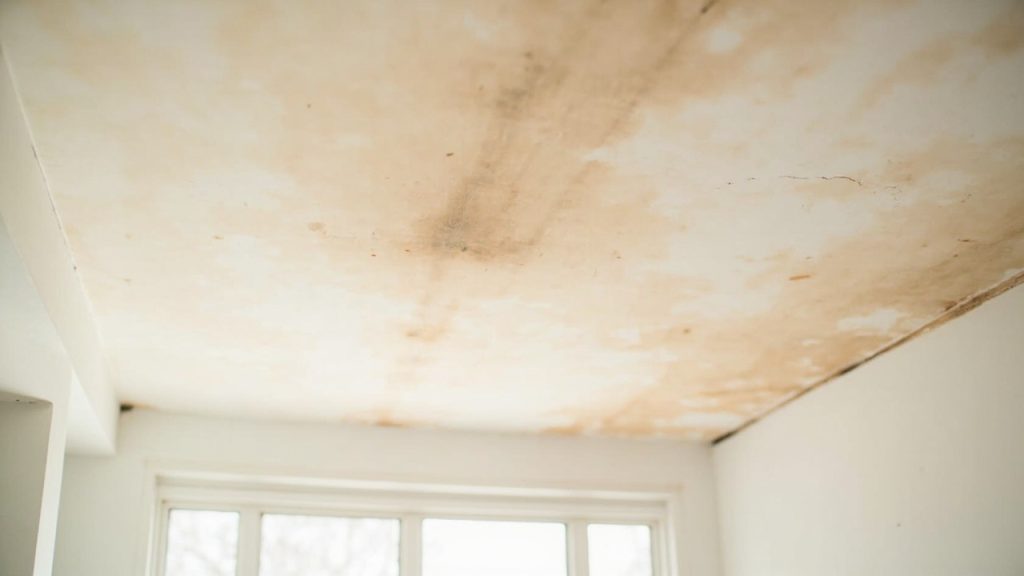
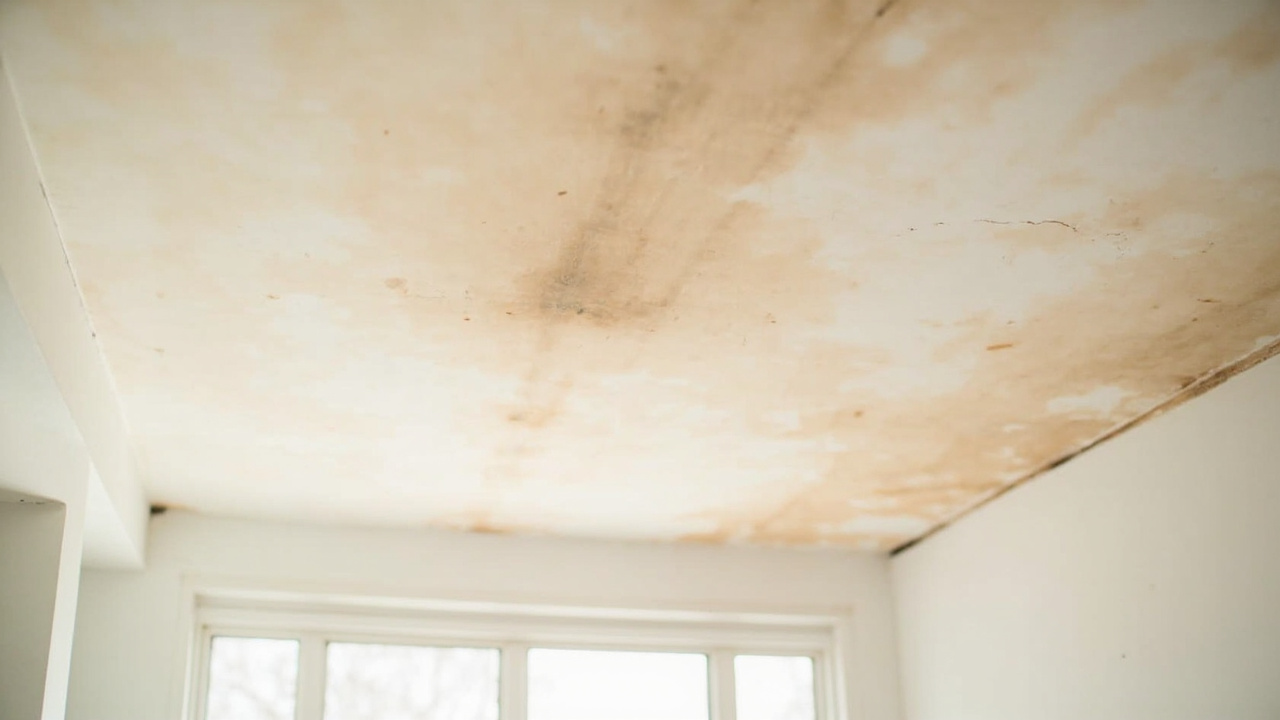
Your ceiling is sagging. There’s a brown stain spreading across the wall. You just stopped the leak, and now you’re staring at soaked drywall wondering if any of it can be saved. The answer depends on three things: what kind of water hit it, how long it’s been wet, and how deep the moisture has gone. Get those three factors right, and you can make a smart decision fast.
The 24 to 48 Hour Window That Determines Everything
Gypsum board is highly porous. It pulls water in fast and holds it deep inside the panel core. Within 24 to 48 hours of saturation, mold spores already present in the environment begin to colonize the wet surface. Once that happens, the drywall is no longer a restoration candidate. It becomes a remediation problem.
East English Village sits in a part of Detroit where older homes often have minimal vapor barriers and aging insulation behind the drywall. That combination accelerates moisture absorption. If you’re reading this the same day the leak happened, you’re still inside the window where restoration is possible.
If the drywall has been wet for more than 48 hours, particularly in a finished basement or an interior wall cavity, the odds shift toward replacement. That’s not a worst-case scenario. That’s standard field experience.
Water Categories That Determine if Your Drywall Can Be Saved
The Institute of Inspection Cleaning and Restoration Certification (IICRC) classifies water damage into three categories. Those categories directly determine whether your drywall is salvageable before a single moisture reading is taken.
| Water Category | Source Examples | Can Drywall Be Saved? | Action Required |
|---|---|---|---|
| Category 1 (Clean Water) | Broken supply line, overflowing clean sink, rain intrusion | Possibly, if caught within 24-48 hours | Rapid structural drying, moisture verification |
| Category 2 (Gray Water) | Washing machine overflow, dishwasher leak, aquarium | Unlikely. Microbial contamination likely present | Containment, antimicrobial treatment, likely replacement |
| Category 3 (Black Water) | Sewage backup, flooding from storm drains, toilet overflow with feces | No. Replacement is required | Full removal, proper disposal, structural decontamination |
Category 3 drywall cannot be saved. Period. Sewage water carries pathogens including bacteria, viruses, and parasites that penetrate the gypsum core and paper facing. No amount of drying or antimicrobial spray makes that panel safe to leave in place. If your heavy leak came from a backed-up drain or storm flooding, read our guide on what to do right now for sewage backup cleanup in Detroit before you touch anything.
The Three Signs Your Drywall Is Still Salvageable
Assuming your water source was Category 1 and you caught the leak quickly, here’s what a certified technician looks for when determining if the drywall stays or goes.
No Structural Sagging or Paper Delamination
Run your hand across the surface. If the paper facing is bubbling, peeling, or the panel feels spongy rather than firm, the gypsum core has already begun to break down. Drywall that has lost structural integrity cannot be dried back to a usable state. The gypsum matrix fractures when fully saturated, and no amount of airflow reverses that.
Look for bowing or warping along the panel edges. Check corners where two panels meet. Separation at the seams is another indicator that the core has swollen beyond recovery.
Moisture Readings Are Still Within the Recoverable Range
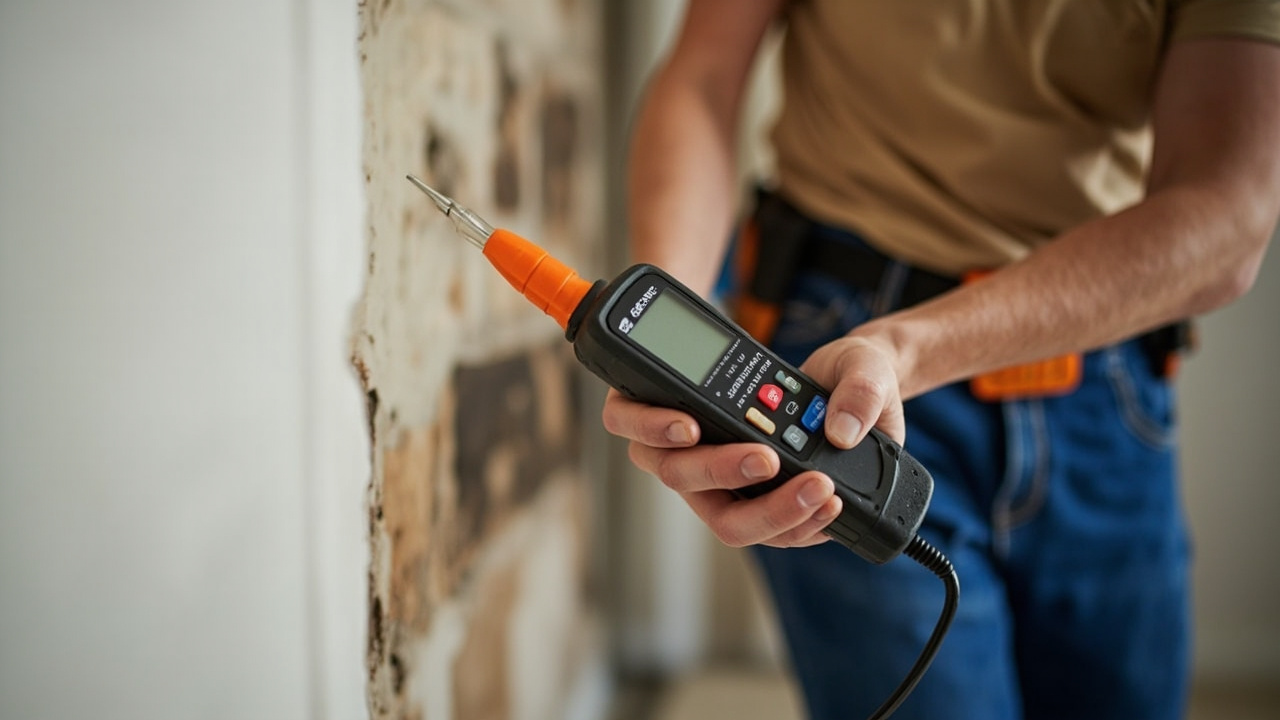
A calibrated moisture meter is the definitive tool here. Technicians use pin-type and pinless meters to read moisture content through the panel depth. Drywall in a dry, stable condition reads below 1% moisture content. Anything above 1% is considered elevated and requires active drying. Readings above 15 to 17% in gypsum board indicate deep saturation that has likely reached the wall cavity insulation.
Thermal imaging cameras reveal what moisture meters miss. A wall can look and feel dry on the face while hiding saturated insulation and wet framing behind it. Homes in East English Village and surrounding areas like Indian Village and Jefferson-Chalmers were largely built between the 1920s and 1950s. Many have plaster over wood lath as a base layer behind the drywall, which creates additional moisture trapping layers that thermal imaging catches immediately.
The Wall Cavity Insulation Is Not Saturated
This is the factor most homeowners overlook. Even if the drywall face is still firm, if the insulation behind it is wet, you have a serious problem. Fiberglass batt insulation loses its insulating value when wet and can harbor mold. Blown-in cellulose insulation is worse. It compacts, clumps, and stays wet for weeks while feeding mold growth on the back side of the drywall you thought you saved.
If a technician detects elevated moisture behind the panel, the drywall typically needs to come off regardless of surface condition. Saving the face while leaving wet insulation in place guarantees a mold problem within two to four weeks.
When Drywall Replacement Is Non-Negotiable
There’s no judgment call needed when any of the following conditions are present. Replacement is the only responsible path.
- The water source was Category 2 or Category 3.
- Visible mold growth is present on the face or edges of the panel. Stachybotrys (black mold) and Aspergillus are common in Detroit’s humid interior environments. Check our resource on how to remove mold safely from your Royal Oak home for context on what mold remediation actually involves.
- The drywall has been wet for more than 48 hours without active drying equipment running.
- Blown-in or cellulose insulation behind the panel is saturated.
- The gypsum core is visibly crumbling, swollen, or soft.
- Paper facing has fully delaminated from the gypsum core.
- Moisture readings at the framing studs exceed 19% wood moisture content, indicating the structural members are now at risk.
Replacement is not a failure. Leaving compromised drywall in place is. The long-term cost of a mold remediation project far exceeds the cost of removing and replacing wet panels early.
Professional Drying vs. Running Fans From the Hardware Store
This is where most DIY attempts break down. A box fan from a big-box store moves air but does not remove moisture from the air. You end up pushing humid air from one side of the room to the other. In a Detroit summer, where outdoor humidity regularly sits above 70% near Lake St. Clair and the Detroit River, pulling in outside air actively makes the drying problem worse.
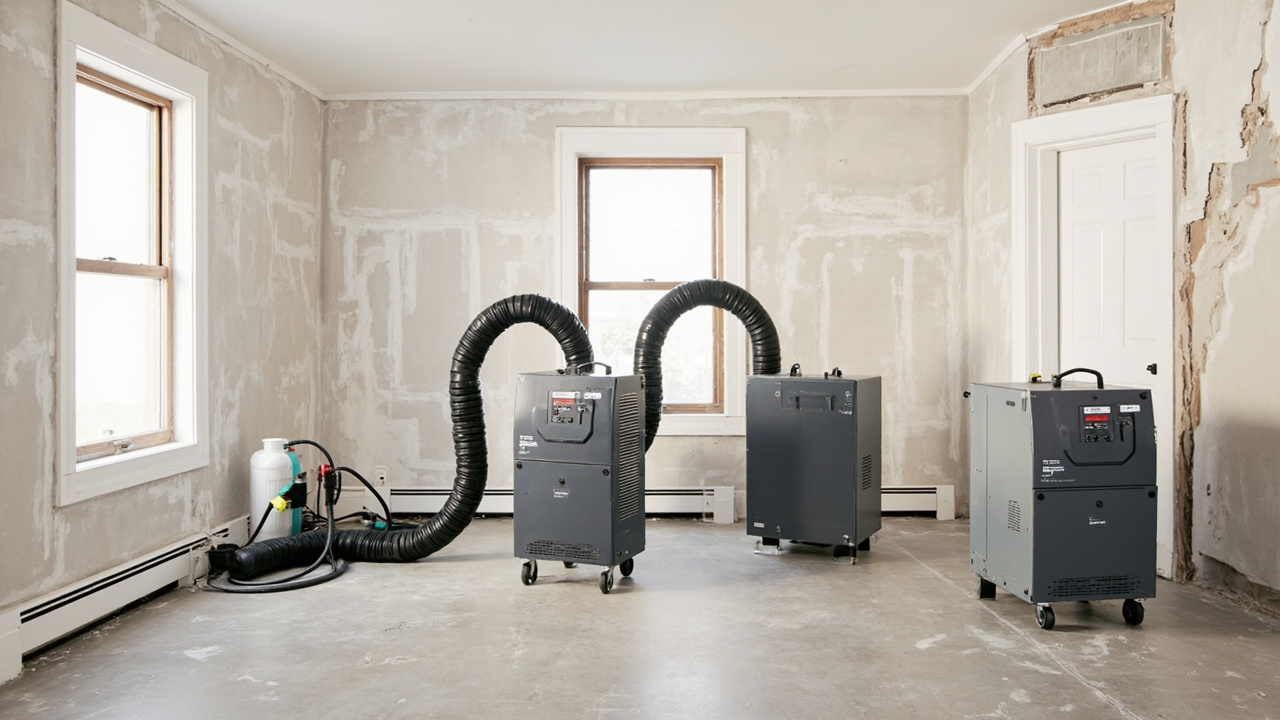
Industrial dehumidifiers used in professional restoration work operate at a completely different scale. A single LGR (Low Grain Refrigerant) dehumidifier can remove 80 to 150 pints of water from the air per day under controlled conditions. Paired with high-velocity air movers that direct concentrated airflow along the wall surface to drive evaporation, a professional drying setup accelerates moisture removal by a factor that retail equipment cannot match.
Detroit’s seasonal humidity profile is a real challenge. Spring thaw season and late summer both bring sustained periods of high ambient humidity. During those periods, the psychrometric gap between the wet drywall and the surrounding air narrows, which slows evaporative drying. Professional equipment compensates by controlling temperature and humidity inside the affected space rather than fighting outdoor conditions.
| Drying Method | Equipment Type | Estimated Drying Time (Category 1, Caught Early) | Moisture Verification? |
|---|---|---|---|
| DIY Fan and Open Windows | Retail box fans | 7 to 14+ days (if it works at all) | No |
| DIY Dehumidifier | Consumer-grade unit (30-50 pint/day) | 5 to 10 days | No |
| Professional Structural Drying | LGR dehumidifiers plus air movers plus thermal imaging | 3 to 5 days with daily monitoring | Yes, with documented moisture logs |
The timeline gap matters because every extra day adds mold risk. For homes in East English Village, where many properties have uninsulated crawl spaces or poured concrete basements that hold humidity naturally, professional equipment is not an upgrade. It’s the minimum tool set that actually works.
The Step-by-Step Process for Restoring Wet Drywall
Step 1. Moisture Testing and Mapping
A certified technician uses a pin moisture meter for surface and point readings, a pinless meter for scanning large areas quickly, and a thermal imaging camera to identify hidden moisture pockets. Every affected area gets mapped. Readings are logged to establish a baseline and track drying progress daily.
Step 2. Structural Drying Setup
Air movers are positioned at a 45-degree angle to the wet wall surface. LGR dehumidifiers are placed strategically based on the room’s cubic footage. In some cases, drywall may be drilled with small access holes to direct airflow into the wall cavity without full panel removal, a technique called flood cutting at the low point of saturation.
Step 3. Antimicrobial Treatment
Once moisture levels drop into the safe range, an EPA-registered antimicrobial agent is applied to the affected surfaces. This addresses any mold spore activity before the drywall is sealed or refinished. Skipping this step is how homeowners end up with mold returning behind fresh paint six weeks later.
Step 4. Final Verification and Documentation
Before any repairs begin, the technician takes a full set of final moisture readings. Every affected surface must read at or below the 1% threshold for gypsum board and below 19% for wood framing. This documentation matters for Michigan homeowners insurance claims. Insurers require proof of professional drying verification before they approve repair estimates.
For reference on what a complete water damage cleanup process looks like from start to finish, our guide on professional cleanup for flooded basements in Dearborn walks through the full scope of what proper restoration involves.
What Michigan Homeowners Insurance Actually Covers
Most standard Michigan homeowners insurance policies cover sudden and accidental water damage. A pipe that bursts overnight, a washing machine supply line that fails, a roof leak from a storm. They do not cover damage from gradual leaks or deferred maintenance. If your heavy leak came from a supply line failure, you’re likely covered. If it came from a slow drip you noticed months ago, you may not be.
Document everything before cleanup begins. Photograph the water source, the affected walls and ceilings, and any personal property damage. A professional restoration company provides moisture logs and drying reports that serve as formal documentation for your claim. Michigan insurance adjusters require this paperwork before approving repair payouts for drywall replacement or structural drying costs.
If a frozen pipe caused your leak this winter, the process for handling a burst pipe in Detroit involves specific steps that affect both your drywall and your insurance claim.
East English Village Homes Have Specific Vulnerabilities
Homes in East English Village and the surrounding neighborhoods of Morningside, Cornerstone Village, and Chandler Park Drive are predominantly early to mid-20th century construction. That era of building typically features plaster walls, wood lath framing, and older cast iron or galvanized steel plumbing. When those pipes finally fail, the leaks tend to be significant because the pressure has been building for years.
The combination of older plumbing systems and Detroit’s hard winters creates a high-risk profile. Water damage from frozen pipes in interior walls is common every winter. If the affected area includes a basement, the problem compounds quickly. For a look at how basement flooding is handled in Detroit’s eastern suburbs, the Grosse Pointe basement cleanup process is directly relevant to East English Village conditions.
Older construction also means the EPA’s guidelines on mold and moisture in buildings apply with particular importance. These homes were not built with modern vapor barriers or moisture-resistant drywall as standard. When water gets in, it spreads further and faster than it would in newer construction.
Making the Decision Without Second-Guessing Yourself
You don’t need to guess. The moment you have a professional with a moisture meter and thermal imaging camera on site, the decision about your drywall becomes objective. Numbers either support saving it or they don’t. There’s no subjective judgment required.
What you do need to do is act fast. Call for an assessment within the first 24 hours. Don’t wait to see if it dries on its own. In East English Village’s older housing stock, surrounded by Detroit’s humid Great Lakes climate, waiting almost always makes the outcome worse and the repair more expensive.
If you’re dealing with wet drywall right now, call for a professional moisture assessment today. Bring in someone with IICRC certification, thermal imaging equipment, and documented drying protocols. That combination gives you the real answer on whether your drywall can be saved, backed by data, not guesswork.
{
“@context”: “https://schema.org”,
“@type”: “BlogPosting”,
“headline”: “Can Your East English Village Drywall Be Saved After a Heavy Leak”,
“description”: “Find out if your wet drywall can be saved after a leak in East English Village. Learn moisture thresholds, water categories, and when replacement is the only option.”,
“wordCount”: 2029,
“datePublished”: “2026-02-27T14:07:00.000Z”,
“dateModified”: “2026-02-27T14:07:00.000Z”,
“inLanguage”: “en-US”,
“mainEntityOfPage”: {
“@type”: “WebPage”,
“@id”: “https://ironwoodwaterdamagerestorationdetroit.com”
},
“publisher”: {
“@type”: “LocalBusiness”,
“name”: “Ironwood Water Damage Restoration Detroit”,
“url”: “https://ironwoodwaterdamagerestorationdetroit.com”
},
“author”: {
“@type”: “Organization”,
“name”: “Ironwood Water Damage Restoration Detroit”,
“url”: “https://ironwoodwaterdamagerestorationdetroit.com”
},
“image”: {
“@type”: “ImageObject”,
“url”: “https://ironwoodwaterdamagerestorationdetroit.com/wp-content/uploads/2026/03/determining-if-your-east-english-village-drywall-c-1.jpg”
}
}
{
“@context”: “https://schema.org”,
“@type”: “LocalBusiness”,
“name”: “Ironwood Water Damage Restoration Detroit”,
“url”: “https://ironwoodwaterdamagerestorationdetroit.com”,
“address”: {
“@type”: “PostalAddress”,
“addressLocality”: “Detroit”
},
“areaServed”: {
“@type”: “City”,
“name”: “Detroit”
}
}
{
“@context”: “https://schema.org”,
“@type”: “BreadcrumbList”,
“itemListElement”: [
{
“@type”: “ListItem”,
“position”: 1,
“name”: “Home”,
“item”: “https://ironwoodwaterdamagerestorationdetroit.com”
},
{
“@type”: “ListItem”,
“position”: 2,
“name”: “Blog”,
“item”: “https://ironwoodwaterdamagerestorationdetroit.com/blog”
},
{
“@type”: “ListItem”,
“position”: 3,
“name”: “Can Your East English Village Drywall Be Saved After a Heavy Leak”
}
]
}
{
“@context”: “https://schema.org”,
“@type”: “Service”,
“serviceType”: “Water Damage Restoration”,
“provider”: {
“@type”: “LocalBusiness”,
“name”: “Ironwood Water Damage Restoration Detroit”,
“url”: “https://ironwoodwaterdamagerestorationdetroit.com”
},
“areaServed”: {
“@type”: “City”,
“name”: “Detroit”
},
“description”: “Find out if your wet drywall can be saved after a leak in East English Village. Learn moisture thresholds, water categories, and when replacement is the only option.”
}