
Your finished basement in Livonia just flooded. You pulled out the wet rugs, grabbed a shop vac, and pointed a box fan at the wall. That feels like progress. It is not.
That approach works on an unfinished concrete basement. In a finished basement with drywall, insulation, laminate flooring, and carpet padding, it guarantees mold growth behind your walls within 48 to 72 hours. Most homeowners do not find out until they smell it weeks later.
Here is what actually needs to happen, and why the finished materials in your basement change everything about the drying process.
Why Finished Basements Fail Standard Drying Approaches
An unfinished basement is mostly concrete and exposed framing. You can see everything. Moisture dries out with enough airflow and time.
A finished basement is a system of layers. Drywall sits in front of fiberglass batt insulation. Carpet lays over padding, which sits over a subfloor, which sits over concrete. Each layer traps moisture. Each layer creates a dark, warm, enclosed space where mold thrives.
Wayne County clay soil makes this worse. Detroit-area homes sit on dense clay that does not drain quickly. When we get heavy spring rains or rapid snowmelt off the roof, hydrostatic pressure builds against your foundation walls. Water does not just come in through the floor drain or a burst pipe. It wicks through the concrete itself, saturating the bottom of your drywall and the base of your insulation before you see visible pooling.
By the time you notice the wet carpet, the moisture has already moved up 12 to 18 inches into your wall cavity.
The First 30 Minutes Matter More Than the Next 30 Hours
Before you touch anything in that basement, kill the power to the affected area at your breaker panel. Standing water and electrical outlets are a fatal combination. If water reached your electrical panel, stay out and call your utility provider.
Next, figure out what kind of water you are dealing with. This is not a minor detail.
- Category 1 (Clean Water) comes from a supply line break, a malfunctioning appliance, or rainwater that has not contacted contaminated surfaces. It is the safest to handle.
- Category 2 (Grey Water) contains some contaminants. Washing machine overflow or sump pump failure involving standing groundwater falls here.
- Category 3 (Black Water) is sewage backup, floodwater that has contacted the ground outside, or any water that has been sitting longer than 48 hours. It contains bacteria and pathogens. Do not handle this without full PPE at minimum.
If your basement flooded from a sewer backup, stop reading DIY guides and call a professional immediately. You can read more about the immediate steps for sewage situations in our guide on what to do right now for sewage backup cleanup in Detroit. Black water contamination in a finished basement requires antimicrobial treatment, controlled demolition, and proper disposal. It is not a shop vac job.
What the IICRC S500 Standard Actually Requires
The IICRC S500 Standard for Professional Water Damage Restoration is the technical framework every certified restoration company follows. It outlines drying goals, documentation requirements, and material-specific protocols.
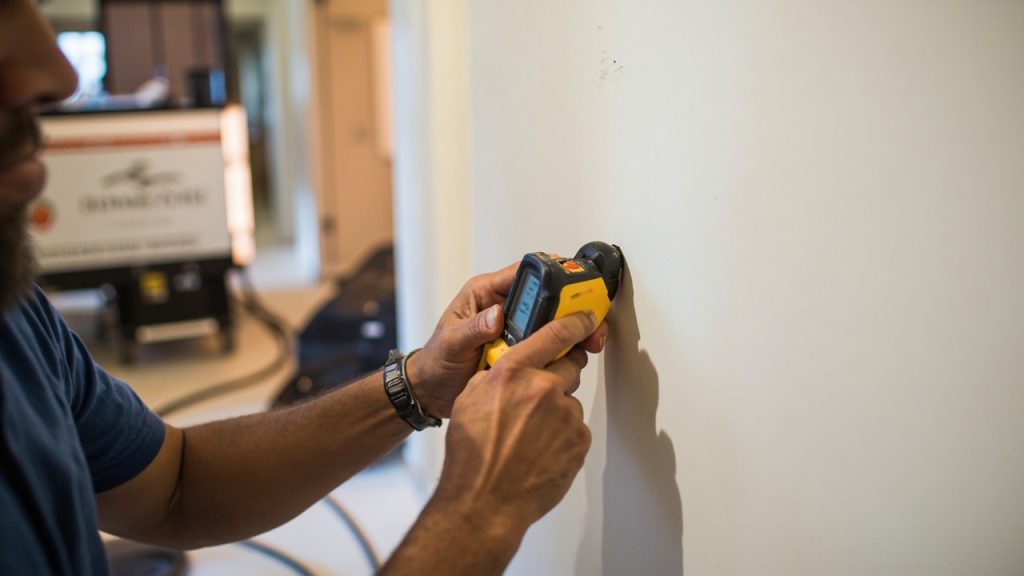
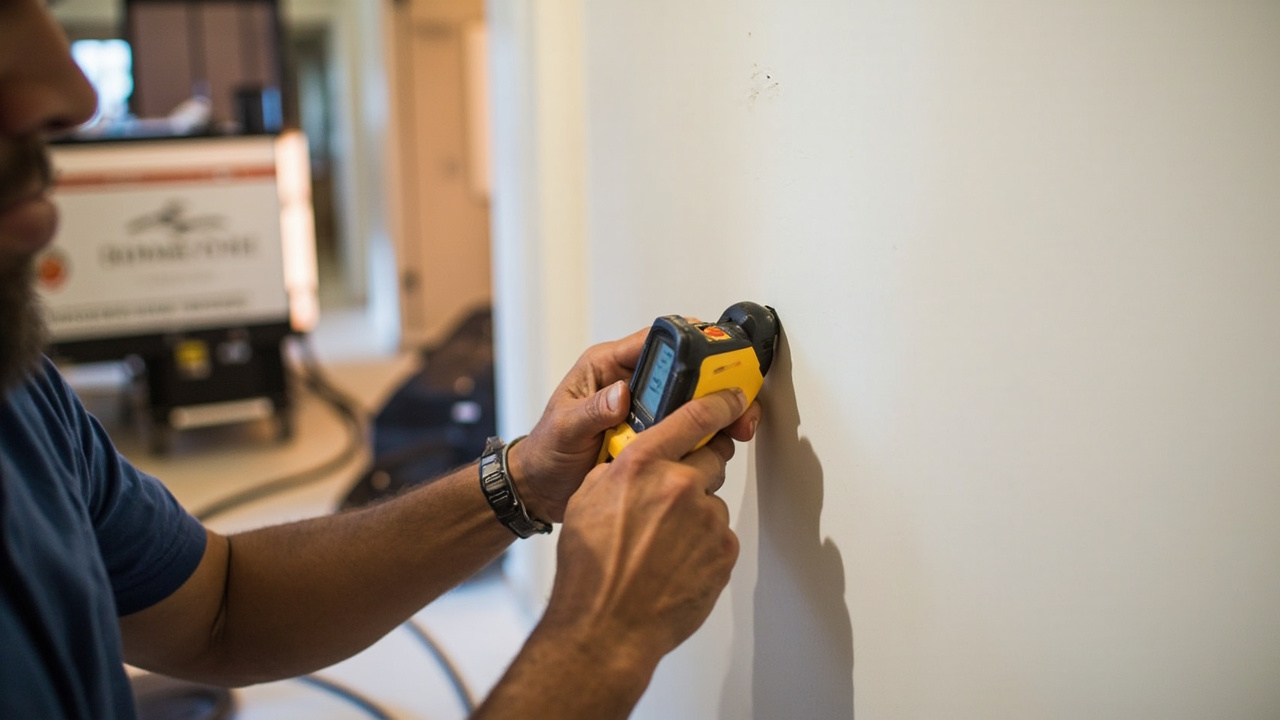
The standard does not say “dry until it looks dry.” It sets specific moisture content targets for different materials and requires documented readings at multiple points throughout the structure. A certified technician uses a calibrated moisture meter and a hygrometer to track both material moisture content and ambient relative humidity.
Your goal is to get structural materials back to their dry standard. For drywall in a Michigan climate, that means a moisture content below 15 percent. For wood subfloors, it means below 12 percent. You cannot guess at these numbers. You measure them.
The Four Things That Actually Dry a Finished Basement
Certified restorers call this the psychrometric process. It means controlling the relationship between temperature, humidity, and airflow to move moisture out of materials and out of the air. Four elements work together.
1. Water Extraction
You pull out standing water first with a truck-mounted extractor or a portable extraction unit. A shop vac moves water, but a professional extractor moves significantly more volume per hour and can pull water from carpet padding more effectively.
For finished basements, weighted extraction tools press directly into carpet and padding to pull trapped moisture from the bottom layers. Without this step, the padding stays saturated even after the surface feels dry.
2. Controlled Demolition of Wet Materials
This is where most Livonia homeowners go wrong. They leave the drywall in place.
Wet drywall does not dry in place effectively. The paper facing holds moisture. The gypsum core saturates and becomes structurally compromised. And the insulation behind it stays wet regardless of how many fans you run on the surface.
The standard practice is flood cuts. A technician cuts drywall 12 to 18 inches above the visible water line, removes it, pulls out the wet insulation, and allows the wall cavity to dry with direct airflow. This is not optional if you want a truly dry wall cavity. Drywall is inexpensive to replace. Mold remediation is not.
On the floor side, carpet and padding in a finished basement exposed to Category 2 or Category 3 water almost always need to go. Padding is a sponge. It does not release moisture fast enough to dry before mold begins. Carpet can sometimes be cleaned and reinstalled if it is Category 1 water and the response is fast. Padding almost never survives a significant water event regardless of category.
3. Dehumidification
This is the step most homeowners underestimate. They put a consumer-grade 30-pint or 50-pint dehumidifier in the corner and expect it to do the work.
Consumer dehumidifiers are designed to control ambient humidity in a space that is already at normal moisture levels. They are not designed to pull moisture out of saturated building materials.
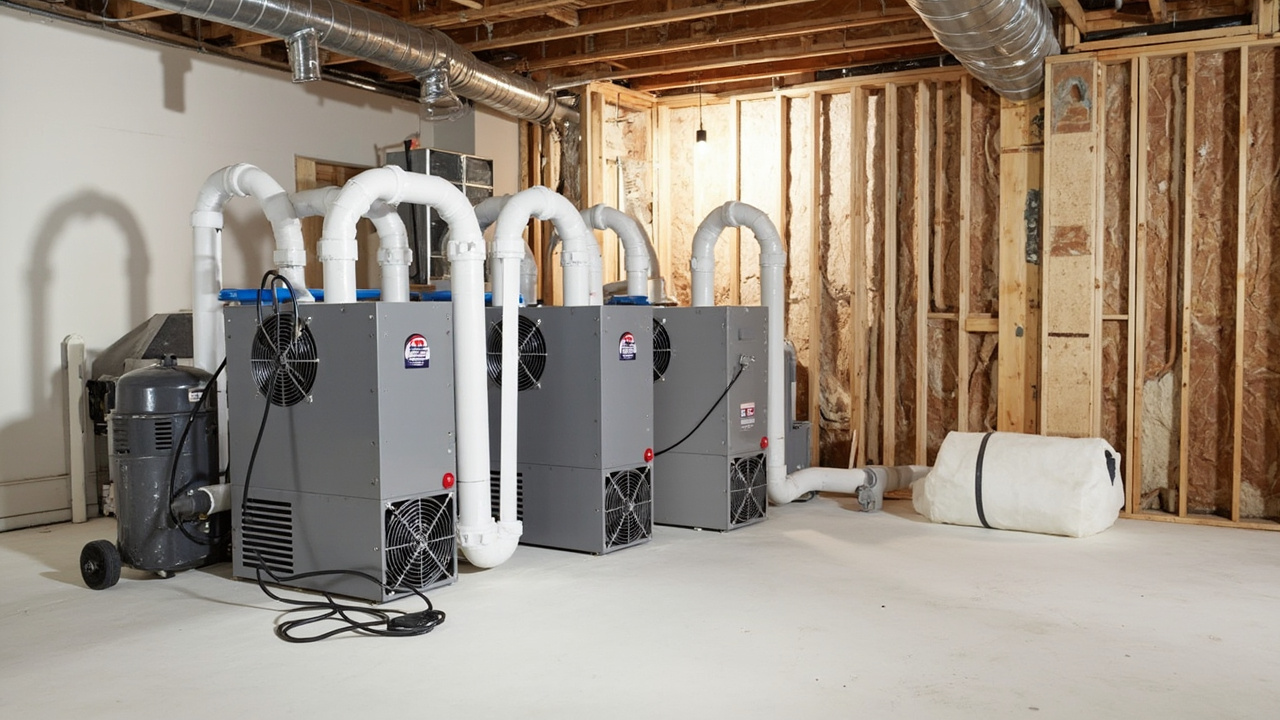
Professional restoration uses LGR (Low Grain Refrigerant) dehumidifiers. A single commercial LGR unit pulls moisture at a rate several times higher than a consumer unit and operates efficiently even at lower temperatures. Detroit basements run cold, especially in early spring during snowmelt season. Consumer dehumidifiers lose efficiency significantly below 65 degrees Fahrenheit. LGR units maintain performance at much lower temperatures.
For a typical finished basement in the 800 to 1,200 square foot range with wet drywall and subfloor, a restoration crew deploys multiple LGR units and runs them continuously for three to five days minimum, taking daily moisture readings to track progress.
4. Airflow and Temperature Management
High-velocity air movers direct warm, dry air across wet surfaces and into wall cavities through the flood cut openings. They work in combination with the dehumidifiers. The air movers push moist air off surfaces. The dehumidifiers pull that moisture out of the air before it redeposits on other surfaces.
Temperature matters too. Warmer air holds more moisture, which means the dehumidifiers can extract more per cycle. Keeping your basement at 70 to 75 degrees Fahrenheit during drying speeds the process measurably.
Comparing DIY vs. Professional Drying Outcomes
| Factor | DIY Approach | Professional Restoration |
|---|---|---|
| Water Extraction Speed | Slow, surface-level with shop vac | Fast, deep extraction from padding and subfloor |
| Wall Cavity Drying | Rarely addressed, moisture trapped behind drywall | Flood cuts performed, direct airflow into cavity |
| Dehumidification Capacity | Consumer unit, limited performance below 65°F | Commercial LGR units, effective in cold Michigan basements |
| Moisture Verification | Visual and touch only | Calibrated moisture meters and hygrometers with daily logs |
| Mold Risk Within 72 Hours | High, especially behind drywall | Low when proper protocol is followed |
| Insurance Documentation | Little to none | Full moisture logs, photos, scope of work for claims |
The Equipment Professionals Use That You Cannot Rent at Home Depot
There is a real gap between the tools available at a rental counter and what a restoration crew brings to a job site. Understanding this gap helps you make a smarter decision about when to call for help.
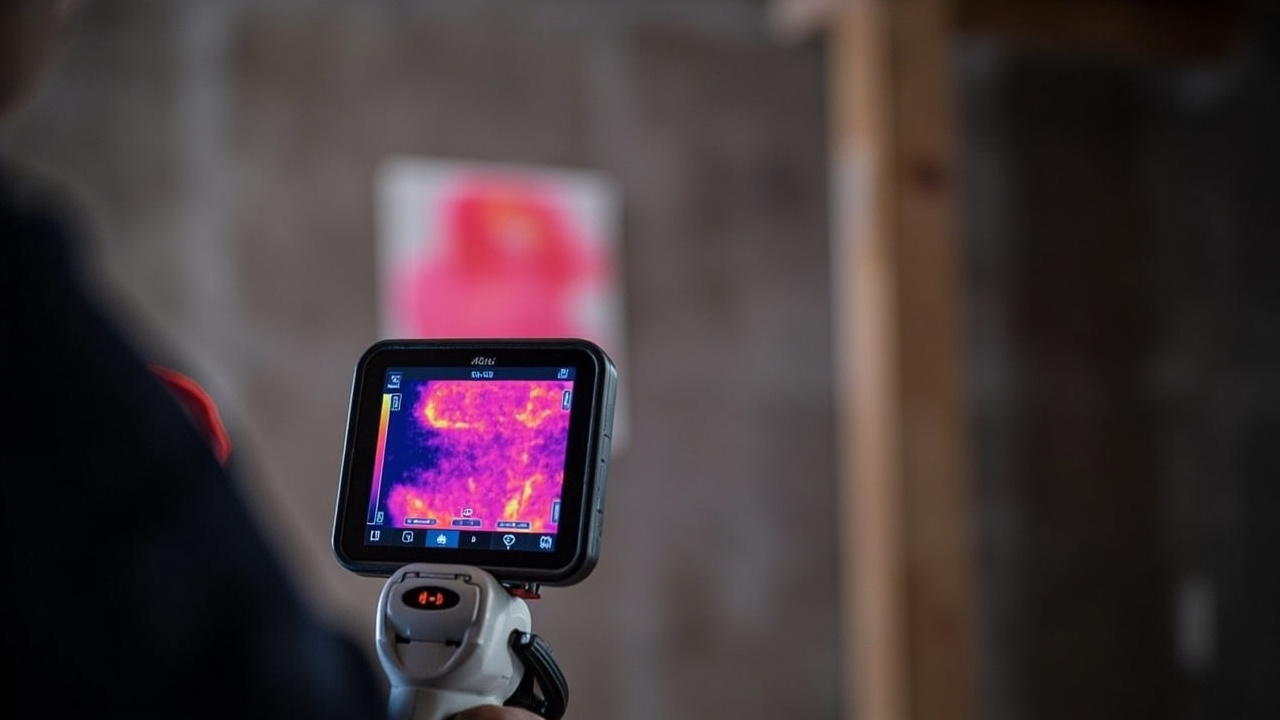
Thermal imaging cameras detect moisture hidden behind walls and under flooring without destructive testing. A technician scans the entire basement and maps every wet zone before touching anything. This prevents both under-treating (missing wet spots) and over-treating (demolishing dry areas unnecessarily).
Brands like Dri-Eaz and Phoenix manufacture the commercial LGR dehumidifiers and high-velocity air movers that form the core of a professional drying system. These units are not available at rental counters in the Livonia area. Restoration companies own and maintain fleets of this equipment.
HEPA air scrubbers run throughout the job to capture airborne mold spores and particulates that become suspended during demolition and drying. In a finished basement where you have disturbed wet drywall and insulation, air quality matters for your family and for the restoration crew.
Detroit’s Clay Soil and Why Your Basement Is Vulnerable Every Spring
Livonia and the surrounding communities in Wayne County sit on a clay-heavy soil profile. Clay expands when it gets wet and contracts when it dries. That seasonal movement creates pressure against your foundation walls year after year.
When the Great Lakes Water Authority (GLWA) combined sewer system gets overwhelmed by a heavy rain event, sewer backup into basements across the metro area spikes. Homeowners in older neighborhoods near Farmington Road and Five Mile in Livonia have dealt with this pattern for years.
Hydrostatic pressure from saturated clay soil also forces water through hairline cracks in poured concrete foundations. This is not a dramatic flood event. It is slow seepage that saturates the bottom of your wall insulation over days or weeks. By the time you notice the musty smell, you may have a mold colony growing in your wall cavity.
If you have seen this pattern in your basement, your sump pump is your first line of defense. A failed sump pump during a spring storm is one of the most common calls we get across the metro Detroit area. Check the float, the discharge line, and the backup power source before storm season every year.
When Carpet and Flooring Can Be Saved vs. When They Cannot
| Material | Category 1 Water, Fast Response | Category 2 or Slow Response | Category 3 or Sewage |
|---|---|---|---|
| Carpet (glued down) | Usually discard | Discard | Discard |
| Carpet (stretched, tacked) | May be salvageable with fast extraction | Usually discard | Discard |
| Carpet Padding | Discard in almost all cases | Discard | Discard |
| Laminate Flooring | Discard (swells and separates) | Discard | Discard |
| Engineered Hardwood | Sometimes salvageable with fast response | Usually discard | Discard |
| Ceramic Tile | Usually stays, subfloor must be dried | Tile stays, assess subfloor moisture | Tile cleaned, grout may need treatment |
| Drywall (bottom 12-18 inches) | Cut and remove | Cut and remove | Cut and remove |
| Fiberglass Batt Insulation | Remove if wet | Remove | Remove |
Mold Risk and What 48 Hours Really Means
You have probably heard that mold starts growing within 24 to 48 hours of a water event. That is accurate under the right temperature and humidity conditions, which a finished Michigan basement provides almost perfectly in spring and summer.
Mold does not need visible water. It needs moisture content above a threshold in the building material, warmth, and organic material to feed on. Drywall paper, wood framing, and carpet backing all qualify as food sources.
The mold that grows inside your wall cavity after a poorly dried basement event is usually not visible from the room side until the colony is large enough to push through or until you demolish the wall for another reason. That is why homeowners in Livonia and Rosedale Park sometimes discover severe mold problems months after a flooding event they thought they handled themselves.
If you are already past the point of drying and facing active mold, the situation requires a different approach. Our guide on how to remove mold safely from your Royal Oak home walks through what that remediation process looks like.
For context on how flooding affects other finished spaces across the metro area, you can also read about flooded basement cleanup in Grosse Pointe and what a professional process looks like from start to finish.
Michigan Homeowners Insurance and What It Typically Covers
Standard Michigan homeowners insurance does not cover flooding from outside sources by default. If your basement flooded from groundwater, surface water, or a backed-up municipal sewer system, you need specific endorsements on your policy.
Two riders matter most for Livonia homeowners. The first is a sewer and drain backup endorsement. The second is a sump pump failure or overflow endorsement. These are separate additions to your standard policy and are not expensive relative to what a finished basement claim costs.
If your flooding came from a burst supply pipe or appliance failure inside the home, your standard policy likely covers it as a sudden and accidental loss. Keep every moisture reading log, every photo, and every invoice from your restoration company. Insurers in Michigan require documented proof of the scope and progression of the damage. A professional restoration company generates this documentation automatically as part of the IICRC S500 drying process.
If your flooding involved a frozen pipe that burst, the cause matters for your claim. Read through our breakdown of fixing the mess after a frozen pipe bursts in your Detroit home to understand the full scope of what that type of water event involves.
A DIY vs. Pro Decision Framework for Livonia Homeowners
Not every basement water event requires a restoration crew. Here is how to think through it clearly.
Call a professional when any of these conditions are true. The water source is grey water or black water. The water has been standing more than 24 hours. The affected area covers more than 50 square feet of finished floor. You cannot confirm the wall cavity is dry with a moisture meter. You smell anything musty after 48 hours of drying. Your sump pump failed during the event and groundwater was involved.
You can reasonably handle it yourself when all of these are true. The water is clean Category 1. You caught it within a few hours. The area is small. You can access all affected materials including wall cavities. You have access to commercial extraction equipment and LGR dehumidification. You can take and document moisture readings daily.
Most finished basement floods in the Livonia area do not meet all those DIY criteria. The combination of finished materials, clay soil moisture intrusion, and Michigan’s humidity levels makes professional intervention the smarter financial and health decision in the majority of cases.
If you are in Dearborn or surrounding communities and want to understand the professional process more thoroughly, our detailed look at professional cleanup for flooded basements in Dearborn covers what to expect from start to finish.
Get an Honest Assessment Before Mold Makes the Decision for You
A finished basement that gets dried correctly is fully restorable. The drywall goes back up. The flooring gets replaced. The insulation is reinstalled. You end up with a basement that is structurally sound and properly documented for your insurance claim.
A finished basement that gets dried incorrectly becomes a mold remediation project. That means full wall demolition, controlled removal of contaminated materials, antimicrobial treatment of the framing, and air quality testing before reconstruction begins. The cost difference is substantial.
If your Livonia basement has water in it right now, the smartest move is a professional assessment within the first few hours. A certified technician can use thermal imaging and moisture meters to tell you exactly what is wet, what needs to come out, and what can be saved. That information costs you nothing compared to discovering hidden mold in three months.
We respond 24/7 across the Metro Detroit area including Livonia, Wayne County, and surrounding communities. Call our team and we will have a technician to your home fast enough to make a real difference in the outcome.
{
“@context”: “https://schema.org”,
“@type”: “BlogPosting”,
“headline”: “What Most Livonia Homeowners Get Wrong When Drying Out a Finished Basement”,
“description”: “Livonia homeowners make costly mistakes drying finished basements. Learn the right process, materials, and when to call a pro before mold takes hold.”,
“wordCount”: 2601,
“datePublished”: “2026-02-28T09:12:00.000Z”,
“dateModified”: “2026-02-28T09:12:00.000Z”,
“inLanguage”: “en-US”,
“mainEntityOfPage”: {
“@type”: “WebPage”,
“@id”: “https://ironwoodwaterdamagerestorationdetroit.com”
},
“publisher”: {
“@type”: “LocalBusiness”,
“name”: “Ironwood Water Damage Restoration Detroit”,
“url”: “https://ironwoodwaterdamagerestorationdetroit.com”
},
“author”: {
“@type”: “Organization”,
“name”: “Ironwood Water Damage Restoration Detroit”,
“url”: “https://ironwoodwaterdamagerestorationdetroit.com”
},
“image”: {
“@type”: “ImageObject”,
“url”: “https://ironwoodwaterdamagerestorationdetroit.com/wp-content/uploads/2026/03/what-most-livonia-homeowners-get-wrong-when-drying-1.jpg”
}
}
{
“@context”: “https://schema.org”,
“@type”: “LocalBusiness”,
“name”: “Ironwood Water Damage Restoration Detroit”,
“url”: “https://ironwoodwaterdamagerestorationdetroit.com”,
“address”: {
“@type”: “PostalAddress”,
“addressLocality”: “Detroit”
},
“areaServed”: {
“@type”: “City”,
“name”: “Detroit”
}
}
{
“@context”: “https://schema.org”,
“@type”: “BreadcrumbList”,
“itemListElement”: [
{
“@type”: “ListItem”,
“position”: 1,
“name”: “Home”,
“item”: “https://ironwoodwaterdamagerestorationdetroit.com”
},
{
“@type”: “ListItem”,
“position”: 2,
“name”: “Blog”,
“item”: “https://ironwoodwaterdamagerestorationdetroit.com/blog”
},
{
“@type”: “ListItem”,
“position”: 3,
“name”: “What Most Livonia Homeowners Get Wrong When Drying Out a Finished Basement”
}
]
}
{
“@context”: “https://schema.org”,
“@type”: “Service”,
“serviceType”: “Water Damage Restoration”,
“provider”: {
“@type”: “LocalBusiness”,
“name”: “Ironwood Water Damage Restoration Detroit”,
“url”: “https://ironwoodwaterdamagerestorationdetroit.com”
},
“areaServed”: {
“@type”: “City”,
“name”: “Detroit”
},
“description”: “Livonia homeowners make costly mistakes drying finished basements. Learn the right process, materials, and when to call a pro before mold takes hold.”
}