
A Wet Garage Floor Is Not Normal and Not Random
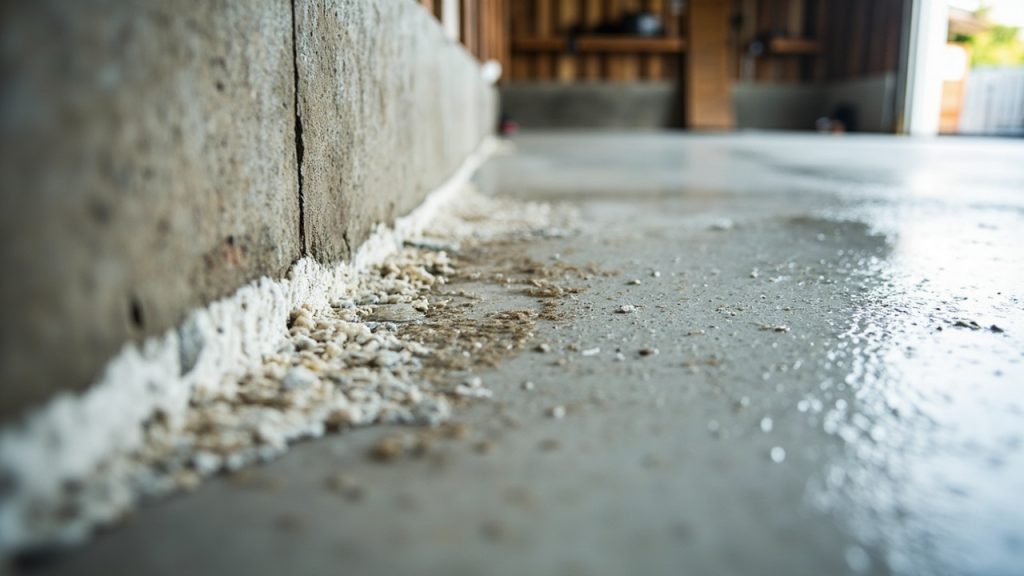
If you walk into your Livonia garage on a summer morning and find the concrete floor wet, you are not imagining things. That dampness has a specific cause, and ignoring it leads to mold, concrete spalling, and structural damage that costs far more to repair than the original moisture problem. This guide breaks down exactly why it happens and what to do about it.
Two Very Different Problems That Look the Same
Before any fix makes sense, you need to identify which type of moisture you are dealing with. Grab a piece of plastic sheeting, about two feet square. Tape it flat to your garage floor and seal all four edges with duct tape. Leave it for 24 to 48 hours.
If moisture collects on top of the plastic, the problem is condensation coming from humid air. If moisture collects underneath the plastic, between the plastic and the concrete, the problem is water vapor migrating up through the slab itself. That process is called vapor transmission, and it means groundwater is moving through the porous concrete from below.
Both problems are common in Livonia and across Metro Detroit, but they require completely different fixes. Treating one with the solution meant for the other is a waste of money.
Condensation in Livonia Garages
Detroit sits in a region heavily influenced by moisture from Lake St. Clair, the Detroit River, and Lake Erie. Summer dew points routinely climb into the upper 60s and low 70s Fahrenheit. When warm, humid outdoor air drifts into a garage and meets a concrete slab that is still cool from overnight temperatures, the water vapor in that air condenses on the surface. Livonia homeowners in neighborhoods like Rosedale or near Seven Mile Road often report this most aggressively between June and August.
Hydrostatic Pressure and Vapor Transmission
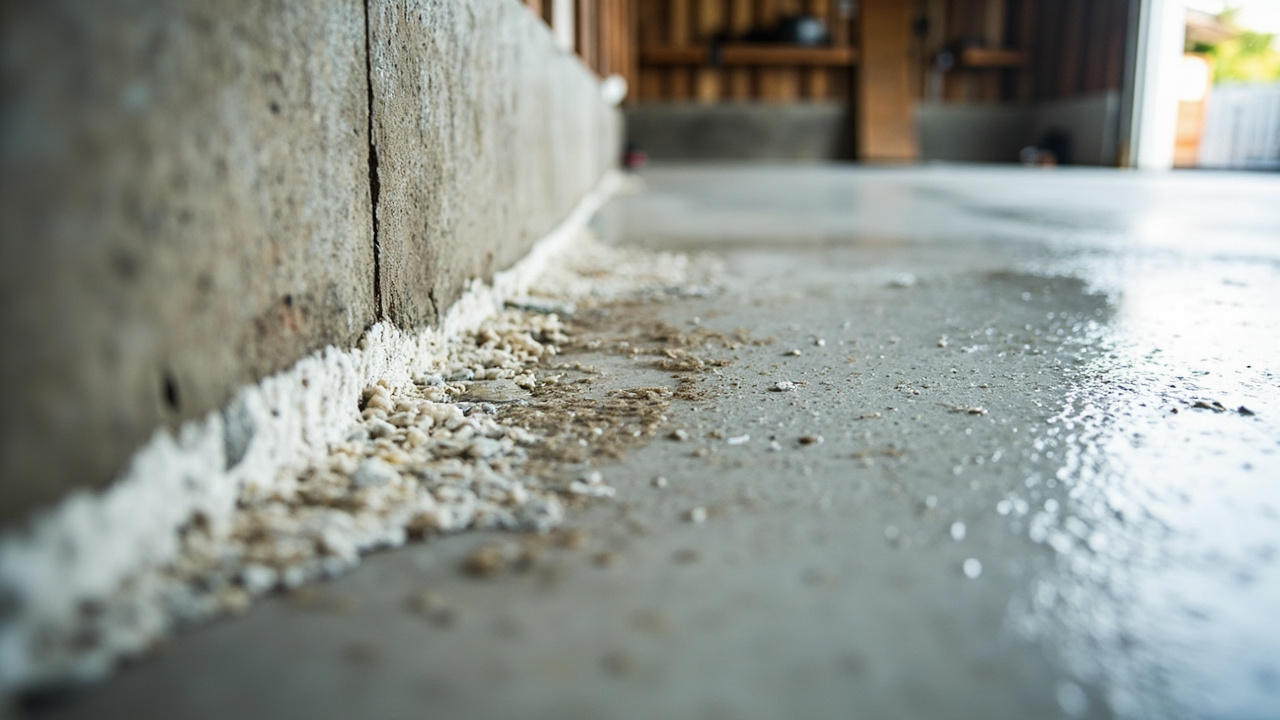
Hydrostatic pressure is groundwater pushing up against and through your slab from below. The clay-heavy soils common throughout Wayne and Oakland counties hold water longer than sandy soils, which keeps ground moisture in constant contact with your concrete. The slab itself is porous, and water molecules move through it by vapor drive, traveling from higher moisture concentration below to lower concentration above.
You will often see a white, chalky residue on the surface. That is efflorescence, which is mineral salt left behind as water evaporates after migrating through the concrete. Efflorescence is one of the clearest signs that vapor transmission is your primary issue.
Why Detroit’s Climate Destroys Garage Floors Faster Than Most Cities
Michigan averages more than 130 freeze-thaw cycles per year. Every time water trapped inside concrete pores freezes, it expands by roughly 9 percent. Over multiple winters, that expansion causes cracking and spalling, which opens wider pathways for even more water intrusion.
Road salt is another factor unique to this region. Wayne County crews apply thousands of tons of salt to roads from November through March. That salt gets tracked into garages on tires and shoes. Salt is hygroscopic, meaning it actively draws moisture from the air and holds it against your concrete surface.
The combination of freeze-thaw cycling, clay soil moisture retention, Great Lakes humidity, and road salt accelerates concrete degradation in Livonia garages significantly faster than what homeowners in drier, more temperate climates experience. According to the Michigan Department of Environment, Great Lakes, and Energy, ground saturation levels in Southeast Michigan regularly exceed the state average due to regional hydrology and historical land drainage patterns.
Short-Term Fixes That Actually Help
If professional waterproofing is not in the immediate budget, these steps reduce moisture damage while you plan a permanent solution.
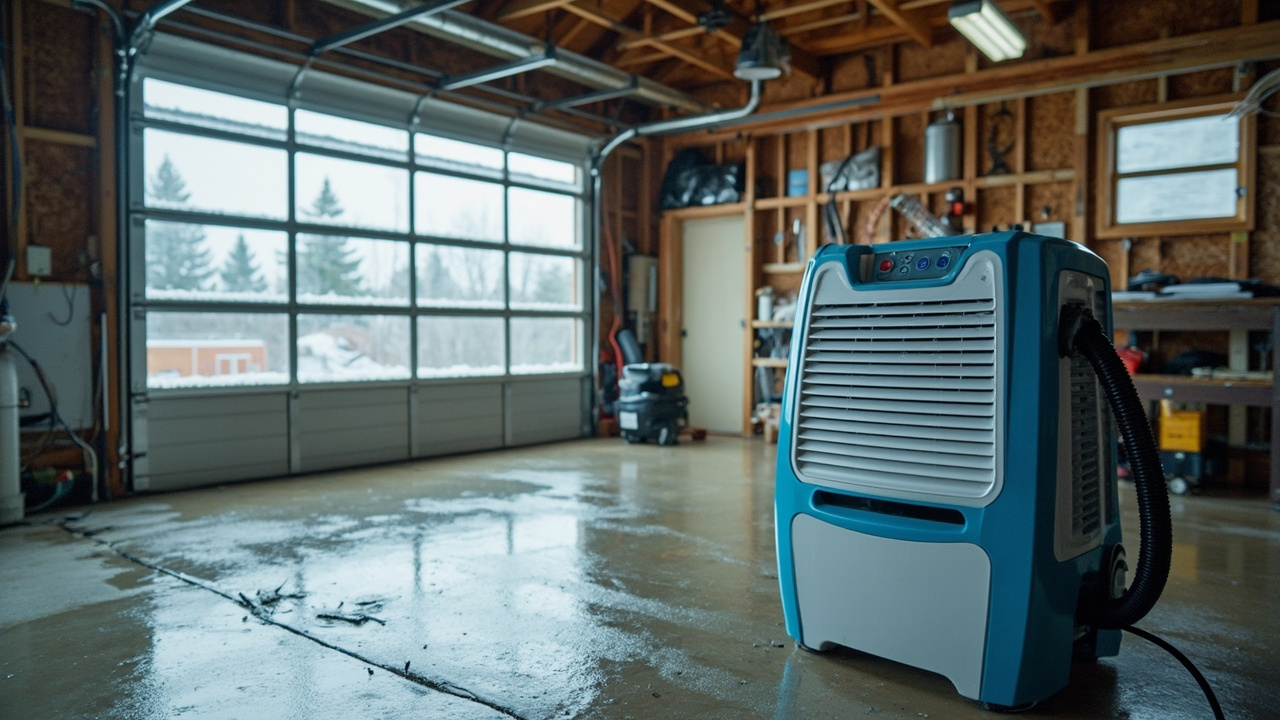
- Run a commercial-grade dehumidifier. A unit rated for at least 70 pints per day makes a measurable difference in condensation. Consumer units sold at big-box stores often underperform in a large, uninsulated garage space.
- Improve cross-ventilation. Install a ventilation fan on the opposite wall from your garage door. Moving air out prevents it from sitting against the cold slab long enough to condense.
- Apply a penetrating concrete sealer. Silane-siloxane sealers penetrate the surface and chemically bond with the concrete to reduce vapor permeability. This is not a permanent fix but buys time and slows surface moisture accumulation.
- Keep the floor clear of vehicles immediately after driving in winter. Snow and ice melt directly onto the slab and pool. Park briefly, then move the vehicle so that moisture can evaporate rather than sit.
- Check and clear your garage’s perimeter drainage. Gutters and downspouts that direct water toward the foundation are a common culprit. Extend downspouts at least six feet away from the structure.
Permanent Solutions Ranked by Severity of the Problem
| Problem Severity | Recommended Solution | Typical Timeline | Professional Required? |
|---|---|---|---|
| Mild condensation only | Dehumidifier plus sealer coat | 1 to 2 days | No |
| Moderate vapor transmission | Penetrating vapor barrier plus epoxy or polyaspartic coating | 2 to 4 days | Recommended |
| Active water seepage or cracks | Crack injection plus interior waterproofing membrane | 3 to 5 days | Yes |
| Hydrostatic pressure with pooling | French drain system plus sump pump installation | 5 to 10 days | Yes |
| Structural slab failure | Full slab replacement with proper sub-base drainage | 1 to 3 weeks | Yes |
Polyaspartic and Epoxy Floor Coatings
A quality polyaspartic coating applied over a properly prepared, dry slab creates a low-permeability surface that resists vapor transmission and road salt damage. Polyaspartic cures faster than traditional epoxy, which matters in Michigan where weather windows for exterior and semi-exterior work are limited. Epoxy flooring remains a solid option for interior temperature-controlled garages, but polyaspartic outperforms it in Livonia’s temperature-swing environment.
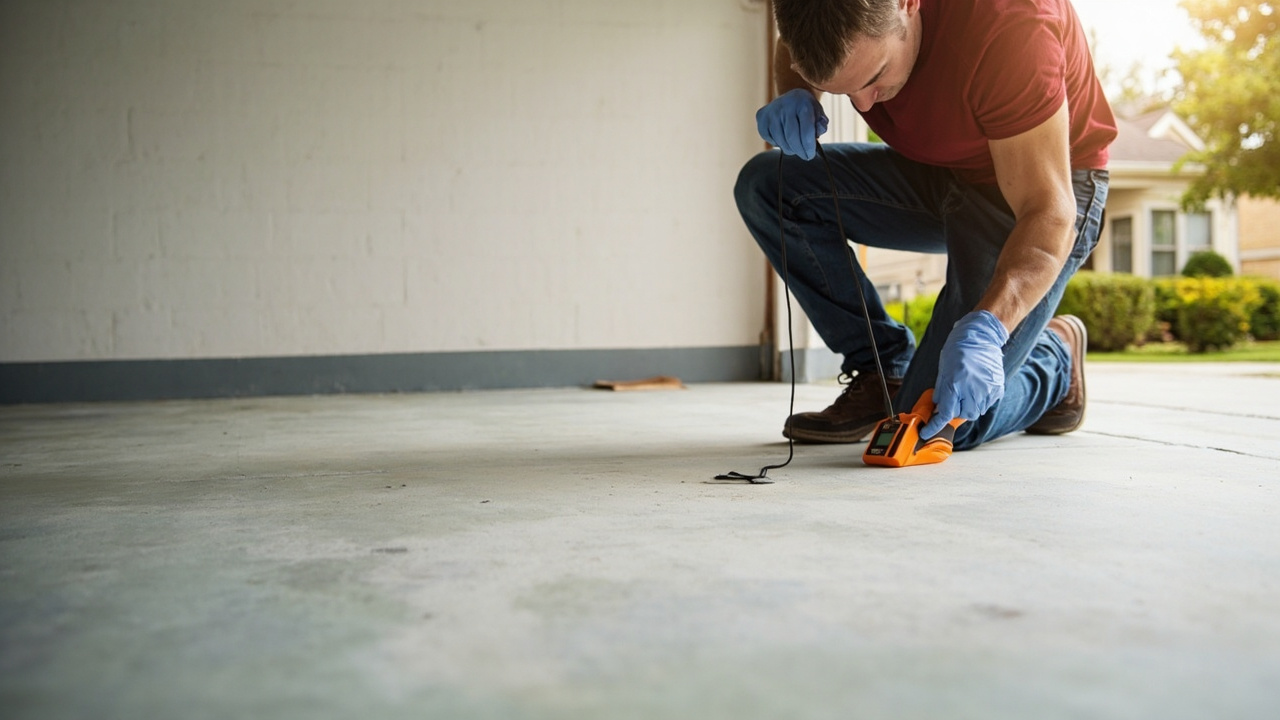
Neither coating works if applied over a slab with active moisture migration. The coating will bubble, peel, and fail within one to two seasons. Moisture testing with a calcium chloride test or relative humidity probe is required before any coating application. This step is mandated under IICRC Standards for flooring installation over concrete.
Interior French Drains and Sump Pump Installation
When hydrostatic pressure is the cause, surface coatings alone will not solve the problem. Water needs a path to go somewhere. An interior French drain system involves cutting a channel around the perimeter of the garage floor, installing a perforated drain pipe, and directing water to a sump basin. A sump pump then removes that water from the structure.
This is a proven, code-compliant approach that the U.S. Environmental Protection Agency’s moisture control guidelines recognize as an effective strategy for managing sub-slab groundwater in residential structures. When a Livonia garage connects to a living space, this system also reduces radon pathways since radon mitigation and moisture control share the same drainage infrastructure.
Vapor Barriers at the Sub-Slab Level
If you are resurfacing or replacing a slab, installing a 20-mil polyethylene vapor barrier beneath the new concrete is the single most effective long-term prevention measure. Michigan Building Code requires a vapor retarder beneath all new concrete slabs on grade that are adjacent to conditioned spaces. For an attached Livonia garage, this applies directly.
Comparing Coating Options for Livonia Garage Floors
| Coating Type | Cure Time | Salt Resistance | Vapor Tolerance | Lifespan (Estimate) |
|---|---|---|---|---|
| Penetrating Silane-Siloxane Sealer | 4 to 8 hours | Good | Moderate | 3 to 5 years |
| Water-Based Epoxy | 24 to 48 hours | Moderate | Low | 3 to 7 years |
| 100% Solids Epoxy | 24 to 72 hours | Good | Low to moderate | 5 to 10 years |
| Polyaspartic Coating | 1 to 4 hours | Excellent | Moderate to high | 10 to 15 years |
| Interior Waterproofing Membrane | 12 to 24 hours | Excellent | High | 15 to 20+ years |
What Happens When You Ignore a Damp Garage Floor
A chronically damp garage floor is not just an inconvenience. It is an active threat to your property and health, especially in an attached garage.
Mold Establishes Quickly in Michigan Humidity
Mold spores germinate in 24 to 48 hours given the right moisture level. A damp concrete slab combined with summer humidity creates those conditions reliably. Once mold colonizes the base of drywall, wood framing, or stored belongings near the garage floor, the remediation process becomes substantially more involved. If your attached garage shares walls with finished living space, mold spores travel through gaps and HVAC pathways into your home.
We have seen this progression in homes throughout Livonia, Dearborn, and Westland where a damp garage floor went unaddressed for two or more seasons. The resulting mold remediation costs significantly exceeded what a proper waterproofing installation would have cost. If mold has already appeared, read through our guide on how to remove mold safely from your Royal Oak home for context on what professional remediation involves.
Concrete Spalling and Structural Degradation
Freeze-thaw cycling combined with continuous moisture saturation causes concrete to spall, which means the surface layer flakes and chips away. Once spalling begins, the exposed aggregate absorbs even more water, accelerating the cycle. A slab that starts with surface spalling can deteriorate to the point of requiring full replacement within a decade in Livonia’s climate.
Deep cracks in a garage slab also represent a potential pathway for soil gases, including radon. Southeast Michigan has documented radon risk zones, and a compromised slab in an attached garage is a pathway worth taking seriously.
Foundation and Framing Impact
When persistent moisture sits at the base of garage walls, it wicks upward into wood framing through capillary action. Bottom plates rot. This weakens the structural connection between the wall framing and the foundation. In an attached garage, that framing is part of your home’s envelope. The repair cost for rotted bottom plates and compromised framing far exceeds any waterproofing investment.
If you have already seen water intrusion move beyond the garage into adjacent spaces, the situation is similar to a flooded basement scenario. Our team covers what that process looks like in our article on professional cleanup for flooded basements in Dearborn, which outlines the restoration steps when water has reached structural materials.
When the Problem Is More Than Garage Moisture
Sometimes a damp garage floor is a symptom of a larger drainage issue affecting the entire property. If your basement is also showing signs of water intrusion, or if you have noticed sewage odors along with moisture, those are separate problems that compound each other.
Livonia sits in a service area that connects to the Detroit Water and Sewerage Department (DWSD) drainage infrastructure. Heavy rain events can overwhelm combined sewer lines and force water back through floor drains. If you smell sewage in the garage or see discolored water backing up through a floor drain, that is a sewage backup situation requiring immediate attention. For that specific emergency, our sewage backup cleanup guide for Detroit explains the steps to take right now.
Similarly, if Michigan’s winter frost heave cycles have caused pipe movement and you suspect a burst pipe is adding to your moisture problem, our breakdown of fixing the mess after a frozen pipe bursts in your Detroit home covers that specific damage scenario in detail.
How a Professional Assessment Works for Garage Moisture
A thorough garage moisture inspection from a certified restoration technician starts with moisture mapping, using pin and pinless meters to identify the moisture content of the concrete slab, adjacent walls, and any wood framing near the floor. A calcium chloride test or in-situ relative humidity probe then quantifies how much vapor is transmitting through the slab per 24-hour period. That number directly determines which coating or waterproofing system will hold long-term.
IICRC-certified technicians follow documented drying and assessment protocols that take the guesswork out of product selection. A company that skips moisture testing and jumps straight to coating application is setting you up for a premature failure.
Basement moisture problems follow a similar diagnostic process. If you want to see what a professional inspection and remediation looks like in an adjacent Metro Detroit market, the flooded basement cleanup process in Grosse Pointe gives a real-world example of how moisture assessment leads to a restoration plan.
Get a Free Garage Moisture Inspection in Livonia
A damp garage floor does not get better on its own in Michigan’s climate. Each freeze-thaw cycle widens existing cracks. Each summer adds another season of mold risk. The longer the moisture problem runs, the more it costs to correct the downstream damage.
If you are seeing a wet slab, efflorescence, peeling paint, rust stains from metal shelving, or any sign of active seepage, contact our team for a free on-site inspection. We serve Livonia and the greater Metro Detroit area, from Dearborn Heights to Northville, with certified water damage restoration and garage waterproofing services. We will tell you exactly what you are dealing with and give you a clear plan to fix it for good.
{
“@context”: “https://schema.org”,
“@type”: “BlogPosting”,
“headline”: “Why Your Livonia Garage Floor Is Always Damp (And What Actually Fixes It)”,
“description”: “Livonia garage floor damp and wet? Learn the real causes behind garage moisture and the professional fixes that actually work for Metro Detroit homeowners.”,
“wordCount”: 2094,
“datePublished”: “2026-03-08T12:32:00.000Z”,
“dateModified”: “2026-03-08T12:32:00.000Z”,
“inLanguage”: “en-US”,
“mainEntityOfPage”: {
“@type”: “WebPage”,
“@id”: “https://ironwoodwaterdamagerestorationdetroit.com”
},
“publisher”: {
“@type”: “LocalBusiness”,
“name”: “Ironwood Water Damage Restoration Detroit”,
“url”: “https://ironwoodwaterdamagerestorationdetroit.com”
},
“author”: {
“@type”: “Organization”,
“name”: “Ironwood Water Damage Restoration Detroit”,
“url”: “https://ironwoodwaterdamagerestorationdetroit.com”
},
“image”: {
“@type”: “ImageObject”,
“url”: “https://ironwoodwaterdamagerestorationdetroit.com/wp-content/uploads/2026/03/why-your-livonia-garage-floor-is-always-damp-and-h-1.jpg”
}
}
{
“@context”: “https://schema.org”,
“@type”: “LocalBusiness”,
“name”: “Ironwood Water Damage Restoration Detroit”,
“url”: “https://ironwoodwaterdamagerestorationdetroit.com”,
“address”: {
“@type”: “PostalAddress”,
“addressLocality”: “Detroit”
},
“areaServed”: {
“@type”: “City”,
“name”: “Detroit”
}
}
{
“@context”: “https://schema.org”,
“@type”: “BreadcrumbList”,
“itemListElement”: [
{
“@type”: “ListItem”,
“position”: 1,
“name”: “Home”,
“item”: “https://ironwoodwaterdamagerestorationdetroit.com”
},
{
“@type”: “ListItem”,
“position”: 2,
“name”: “Blog”,
“item”: “https://ironwoodwaterdamagerestorationdetroit.com/blog”
},
{
“@type”: “ListItem”,
“position”: 3,
“name”: “Why Your Livonia Garage Floor Is Always Damp (And What Actually Fixes It)”
}
]
}
{
“@context”: “https://schema.org”,
“@type”: “Service”,
“serviceType”: “Water Damage Restoration”,
“provider”: {
“@type”: “LocalBusiness”,
“name”: “Ironwood Water Damage Restoration Detroit”,
“url”: “https://ironwoodwaterdamagerestorationdetroit.com”
},
“areaServed”: {
“@type”: “City”,
“name”: “Detroit”
},
“description”: “Livonia garage floor damp and wet? Learn the real causes behind garage moisture and the professional fixes that actually work for Metro Detroit homeowners.”
}