
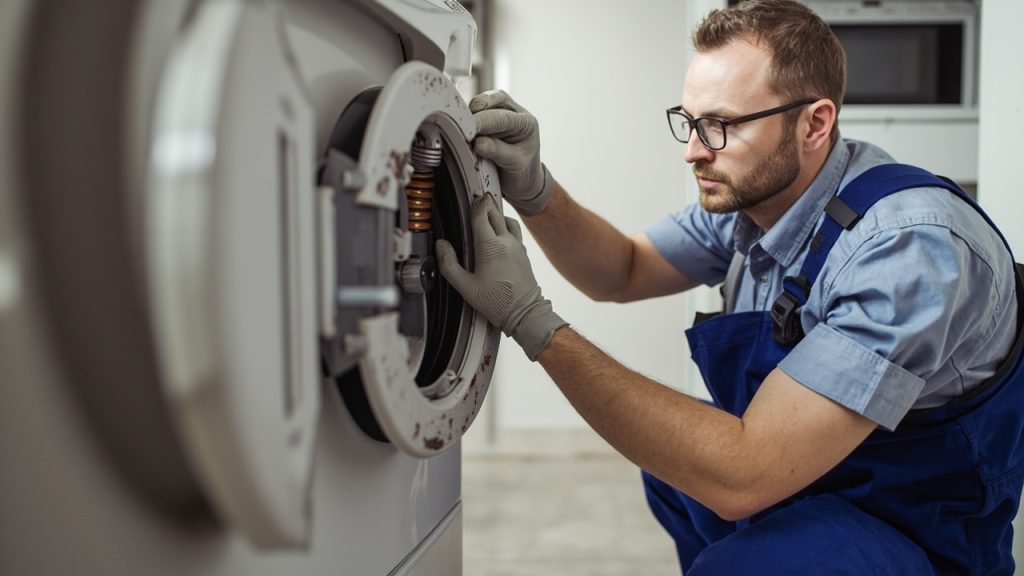
Your washing machine sits quietly in the corner of your laundry room, and most Detroit homeowners never give it a second thought. But behind that appliance, a pair of rubber hoses operates under constant water pressure, and when one of them fails, the damage can be catastrophic. In Woodbridge and other high-density Detroit neighborhoods, a single washing machine failure can flood multiple floors, destroy hardwood, saturate drywall, and trigger mold growth within 48 hours.
This is not a rare event. Washing machine supply hose failures are one of the most common sources of residential water damage in the greater Detroit metro. The good news is that most failures are preventable. The bad news is that most homeowners wait until it is too late.
The Real Cost of a Laundry Room Flood in Detroit
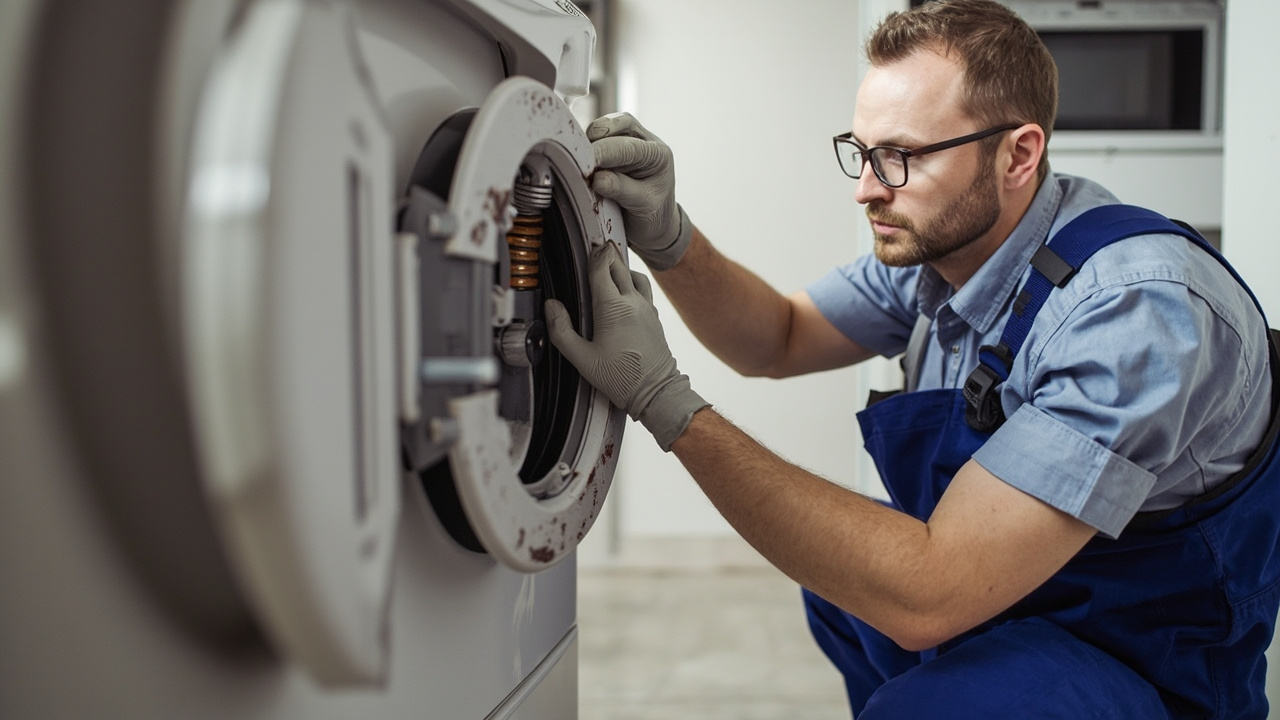
Water damage from an appliance failure is rarely a small cleanup job. When a washing machine hose bursts during a wash cycle, it can release dozens of gallons per minute directly onto your floor. In a Woodbridge two-flat or a Corktown Victorian with a finished basement, that water moves fast and far.
The financial impact is significant. Water mitigation, structural drying, flooring replacement, and mold remediation can add up to a substantial claim. According to the Insurance Information Institute, water damage and freezing claims are among the most frequent homeowner insurance claims filed each year, often displacing families for days or even weeks during restoration.
In older Detroit homes, the structural impact compounds the cost. Subfloor systems in pre-1970 construction often use dimensional lumber with no moisture barrier. Once water penetrates, you are not just replacing flooring. You may be replacing joists.
The Five Vulnerability Points in Your Washing Machine
Most homeowners assume the washing machine itself is the failure point. In reality, the machine is usually fine. The failure almost always happens at the connection points and hoses, not inside the unit.
Supply Hoses, Rubber vs. Braided Stainless Steel
Standard rubber supply hoses are the single biggest risk factor in any laundry room. Rubber degrades under constant pressure. It becomes brittle, develops micro-cracks, and eventually blisters and ruptures. The average rubber hose has a useful life of roughly five years under normal residential water pressure.
Braided stainless steel hoses are a significant upgrade. The outer steel mesh reinforces the inner rubber lining, handles pressure spikes, and resists the abrasion that kills standard hoses. Their expected service life is considerably longer, and they show visible wear before they fail, giving you a warning window that rubber hoses simply do not provide.
| Hose Type | Average Lifespan | Failure Warning Signs | Recommended Use |
|---|---|---|---|
| Standard Rubber | 3 to 5 years | Blistering, cracking, discoloration | Not recommended |
| Reinforced Rubber | 5 to 7 years | Minor blistering, stiffness | Acceptable short-term |
| Braided Stainless Steel | 8 to 10 years | Fraying at connectors, visible rust | Strongly recommended |
| Auto-Shutoff Braided Hose | 8 to 10 years | Integrated flow sensor triggers shutoff | Best available option |
The Drain Line Connection
The drain hose at the back of your machine connects to a standpipe or laundry tub. This connection is often unsecured, relying only on gravity and a loose fit to stay in place. During high-spin cycles, the hose vibrates. Over time, it walks out of the standpipe and discharges rinse water directly onto the floor. A simple zip tie or drain hose retaining clip solves this completely.
Internal Pump Seals and Door Gaskets
Front-load washers have a rubber door gasket that seals the drum during the wash cycle. In Detroit, where hard water is a consistent issue, mineral deposits from Southeast Michigan’s water supply accelerate gasket degradation. The gasket begins to pit and crack, and small leaks develop at the door seal. You might notice it first as a damp smell, then as water pooling in front of the machine after a load.
Inlet Valve Failure
The water inlet valve inside the machine controls water flow into the drum. When it sticks open due to debris or wear, the machine overfills. Water spills through the drum and out the door seal before the machine can detect an overflow condition. This type of failure is quiet and often goes unnoticed until significant water has spread under flooring.
The Shut-Off Valve Behind the Machine
Most laundry rooms have a pair of hot and cold shut-off valves on the wall behind the washer. In homes built before the 1990s, these are often original valves that have not been turned in decades. A valve that sits fully open for years without being exercised will seize. When you need to shut off water in an emergency, it will not turn. Test your valves now, before you need them.
How Southeast Michigan Hard Water Destroys Appliance Components
Detroit’s municipal water supply draws from the Detroit River and Lake Huron, passing through treatment that still leaves measurable mineral content. Suburban communities throughout Wayne, Oakland, and Macomb counties deal with hard water that deposits calcium and magnesium scale inside pipes, hoses, and appliance components.
Inside a washing machine, this buildup targets gaskets, seals, and valve seats. Mineral scale acts like sandpaper against rubber components. It also insulates heating elements and reduces the efficiency of inlet valves. The U.S. Geological Survey’s water hardness data classifies much of Southeast Michigan’s water as moderately hard to hard, accelerating the degradation timeline for rubber and metal components alike.
If you see white scale buildup around your faucets or showerheads, your washing machine is experiencing the same internal buildup. Running a monthly drum cleaning cycle with a washer cleaner tablet and descaling the detergent drawer and gasket with white vinegar helps extend component life considerably.
The Prevention Checklist Every Detroit Homeowner Should Follow
Prevention takes less than ten minutes per month. Most homeowners skip it entirely. Here is what a proper inspection covers.
- Check supply hoses for blistering, bulging, or cracking. Run your hand along the full length of both hoses. Any soft spot or visible deformation means replacement is overdue.
- Inspect the hose connectors at both ends. Look for mineral staining or moisture at the threads. This indicates a slow weep that will become a full leak.
- Verify the drain hose is secured in the standpipe. It should insert at least four inches into the pipe and be anchored with a clip or strap.
- Exercise the shut-off valves. Turn them fully off and back on. If they resist or leak at the packing nut, call a plumber.
- Clean the door gasket on front-load washers. Pull back the rubber fold and remove any debris or mold buildup from the inner lip.
- Check for levelness. A machine that is not level vibrates harder during spin cycles, stressing hose connections and accelerating wear at every joint.
- Run a monthly cleaning cycle. This reduces scale and bacterial buildup inside the drum and internal components.
Smart Technology That Can Prevent a Catastrophic Failure
The appliance technology market has matured significantly, and the options available to Detroit homeowners right now are genuinely effective at preventing flooding before it starts.
Wi-Fi Leak Sensors
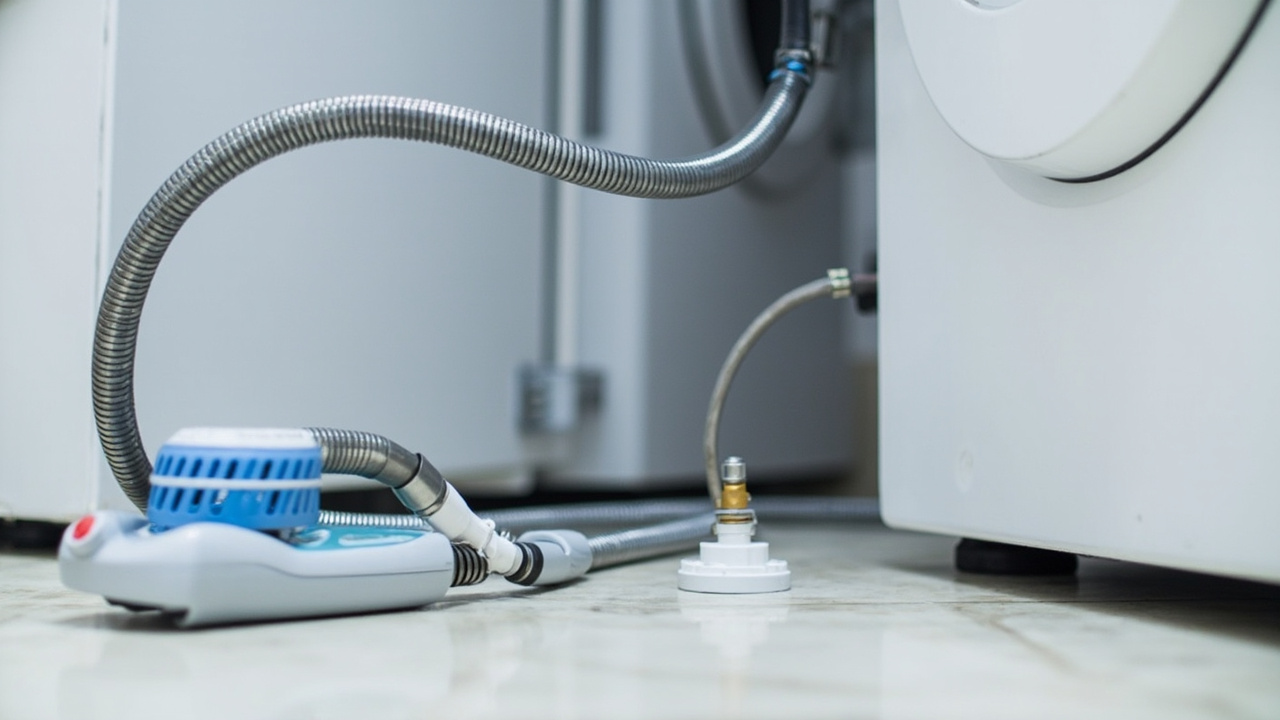
Placing a water leak detector directly on the floor behind your washing machine gives you real-time alerting if moisture reaches the sensor. Modern units from brands like Moen, Govee, and Resideo sync with smartphone apps and can trigger automations through smart home platforms. When you are at work and a hose connection weeps, you get a push notification before gallons accumulate. The cost is minimal relative to the damage it prevents.
Automatic Shut-Off Valves
An automatic shut-off valve installs on the supply lines behind the washer and integrates with a floor sensor. When the sensor detects water, the valve closes in seconds. This is the single most effective mechanical prevention tool available for laundry rooms. Some systems integrate with your home’s main water shut-off for whole-house protection, which is particularly valuable in Woodbridge and other neighborhoods where aging infrastructure can create multiple simultaneous failure risks.
Sump Pump Integration for Basement Laundry Rooms
If your washer is in the basement, sump pump integration becomes critical. Many Detroit basements deal with hydrostatic pressure from clay-heavy soil, particularly after the spring thaw along the Detroit River corridor. A washing machine failure on top of an overwhelmed sump system turns a manageable spill into a full basement flood. A battery backup sump system and a dedicated floor drain near the washer are non-negotiable in basement laundry setups.
| Smart Prevention Technology | Response Time | Best For | Complexity of Install |
|---|---|---|---|
| Wi-Fi Leak Sensor | Alert within 30 seconds | Early warning, remote monitoring | Very easy, no plumbing |
| Auto-Shutoff Valve (sensor-triggered) | Closes within 5 seconds | Unoccupied homes, overnight cycles | Moderate, requires supply line access |
| Whole-Home Water Monitor | Continuous flow monitoring | Full property protection | Professional install recommended |
| Battery Backup Sump Pump | Activates on power loss or overflow | Basement laundry rooms | Moderate, requires existing sump basin |
What to Do in the First 15 Minutes After a Washing Machine Leak
If prevention fails, your actions in the first quarter hour determine how much damage you can limit. Do not wait for the restoration team before you act.
First, shut off the water supply immediately. Use the valves behind the machine. If they will not turn, go to your main water shut-off. In most Detroit homes, this is in the basement near where the main line enters the foundation wall.
Second, cut power to the area if water has reached flooring near outlets or appliances. Do not walk through standing water to reach an electrical panel. Shut off the breaker from a dry location first.
Third, remove as much water as possible with towels, a wet-dry vacuum, or a mop. Every gallon you extract before a restoration crew arrives reduces drying time and limits how deeply moisture penetrates your subfloor.
Do not run ceiling fans over wet areas if the ceiling below a second-floor laundry is wet. Air movement can spread contamination. Focus on extraction first.
If you are dealing with a finished basement, the situation escalates quickly. Saturated drywall and insulation begin supporting mold growth within 24 to 48 hours under typical Michigan humidity conditions. Time is the critical factor. For situations that have gone beyond a simple spill, professional response is necessary. Our team handles flooded basement cleanup across the greater Detroit area, including situations where appliance failures have saturated multiple levels of a home.
Mold Risk After a Washing Machine Flood
Detroit’s humidity levels during spring and fall create ideal conditions for mold colonization after a water event. The IICRC S500 standard for water mitigation sets clear guidelines for how quickly different categories of water damage must be addressed to prevent secondary damage, including mold growth.
A washing machine supply line failure is typically Category 1 water, meaning it is clean supply water. But if that water sits in a basement for more than 24 hours, it can degrade to Category 2 or 3 as it contacts building materials, organic debris, and soil. At that point, you are no longer just dealing with water damage. You are dealing with a microbial contamination event.
If you suspect mold has already started growing after a flood event, the approach is different from standard drying. You can read more about what that process looks like in our guide on safely removing mold from a Detroit-area home.
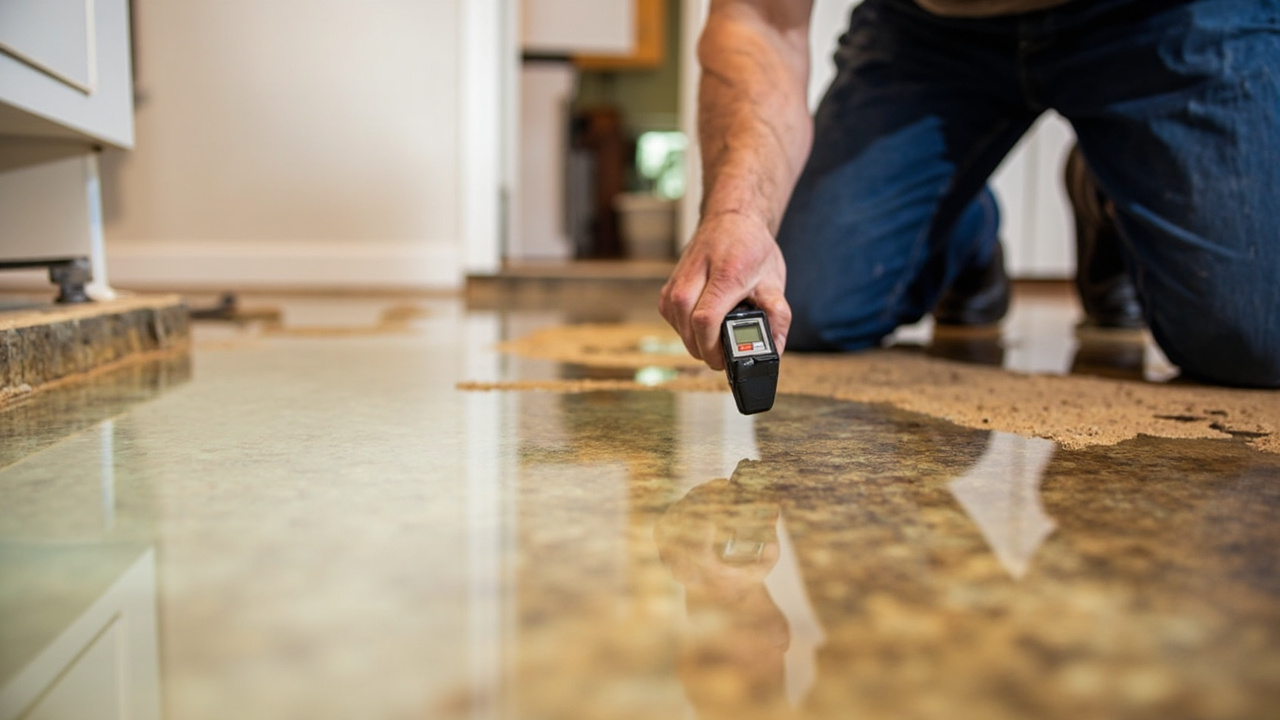
Woodbridge homeowners in particular should be aware that older plaster walls and original horsehair insulation absorb and hold moisture differently than modern drywall systems. Detection equipment matters here. Thermal imaging and moisture meters are essential tools for finding hidden saturation behind historic plaster walls, not just surface-level inspection.
Detroit’s Older Housing Stock Creates Unique Risk Factors
Many Woodbridge, Midtown, and Corktown homes were built between 1900 and 1950. The plumbing systems in these homes reflect that era. Original cast iron drain lines, galvanized supply pipes, and older shut-off valve designs all present challenges that newer construction does not have.
Galvanized pipes, still present in some unrenovated Detroit homes, corrode from the inside out. They narrow over time, restricting flow and increasing upstream pressure. Higher pressure means greater stress on hose connections and valve seats throughout the home. If your home still has galvanized supply lines and you are running a washing machine off them, your hose failure risk is elevated above average.
Detroit building codes have been updated over multiple revision cycles to address these concerns, but existing structures are not always required to retrofit to current standards unless renovation work triggers a permit. Knowing your home’s plumbing generation matters when you are assessing appliance risk.
For homeowners who have already dealt with frozen pipe bursts from older plumbing systems, the recovery process has familiar elements. Our team also covers burst pipe cleanup across Detroit, where the water intrusion patterns and structural drying needs are similar to appliance flood scenarios.
When Prevention Fails and You Need Professional Restoration
Some flooding events go beyond what a homeowner can manage with a shop vac and a fan. If water has spread under multiple rooms, saturated subfloor materials, or been sitting for more than a few hours, professional water mitigation is the right call.
IICRC-certified restoration professionals use calibrated drying equipment, industrial dehumidifiers, and moisture mapping to ensure structural materials reach dry standard before any reconstruction begins. Skipping this step and going straight to reinstalling flooring traps moisture inside wall cavities and subfloor assemblies, where mold will grow undetected for months.
If the flooding has reached your basement level, the scope of damage typically widens. Saturation can wick into foundation walls, affect stored belongings, and compromise any existing basement waterproofing or vapor barriers. For reference on what professional basement flood remediation looks like and what to expect from the process, see our detailed breakdown of professional flooded basement cleanup in the Detroit metro.
Your washing machine hose is one of the simplest things in your home to maintain, and one of the most damaging when it fails. Spend ten minutes on an inspection this week. If the hoses are rubber and more than five years old, replace them with braided stainless steel. Install a sensor on the floor. Exercise those shut-off valves.
If you have already had a flooding event or you are not sure whether your laundry area is at risk, call us. We do site assessments throughout Woodbridge, New Center, Southwest Detroit, and the greater metro area. The inspection costs nothing. The flood does.
{
“@context”: “https://schema.org”,
“@type”: “BlogPosting”,
“headline”: “Why Your Woodbridge Washing Machine Hose Might Be Your Home’s Biggest Risk”,
“description”: “Detroit homeowners in Woodbridge face serious water damage risk from washing machine hoses. Learn how to prevent costly laundry room floods before they start.”,
“wordCount”: 2382,
“datePublished”: “2026-03-10T12:09:00.000Z”,
“dateModified”: “2026-03-10T12:09:00.000Z”,
“inLanguage”: “en-US”,
“mainEntityOfPage”: {
“@type”: “WebPage”,
“@id”: “https://ironwoodwaterdamagerestorationdetroit.com”
},
“publisher”: {
“@type”: “LocalBusiness”,
“name”: “Ironwood Water Damage Restoration Detroit”,
“url”: “https://ironwoodwaterdamagerestorationdetroit.com”
},
“author”: {
“@type”: “Organization”,
“name”: “Ironwood Water Damage Restoration Detroit”,
“url”: “https://ironwoodwaterdamagerestorationdetroit.com”
},
“image”: {
“@type”: “ImageObject”,
“url”: “https://ironwoodwaterdamagerestorationdetroit.com/wp-content/uploads/2026/03/why-your-woodbridge-washing-machine-hose-might-be-1.jpg”
}
}
{
“@context”: “https://schema.org”,
“@type”: “LocalBusiness”,
“name”: “Ironwood Water Damage Restoration Detroit”,
“url”: “https://ironwoodwaterdamagerestorationdetroit.com”,
“address”: {
“@type”: “PostalAddress”,
“addressLocality”: “Detroit”
},
“areaServed”: {
“@type”: “City”,
“name”: “Detroit”
}
}
{
“@context”: “https://schema.org”,
“@type”: “BreadcrumbList”,
“itemListElement”: [
{
“@type”: “ListItem”,
“position”: 1,
“name”: “Home”,
“item”: “https://ironwoodwaterdamagerestorationdetroit.com”
},
{
“@type”: “ListItem”,
“position”: 2,
“name”: “Blog”,
“item”: “https://ironwoodwaterdamagerestorationdetroit.com/blog”
},
{
“@type”: “ListItem”,
“position”: 3,
“name”: “Why Your Woodbridge Washing Machine Hose Might Be Your Home’s Biggest Risk”
}
]
}
{
“@context”: “https://schema.org”,
“@type”: “Service”,
“serviceType”: “Water Damage Restoration”,
“provider”: {
“@type”: “LocalBusiness”,
“name”: “Ironwood Water Damage Restoration Detroit”,
“url”: “https://ironwoodwaterdamagerestorationdetroit.com”
},
“areaServed”: {
“@type”: “City”,
“name”: “Detroit”
},
“description”: “Detroit homeowners in Woodbridge face serious water damage risk from washing machine hoses. Learn how to prevent costly laundry room floods before they start.”
}