
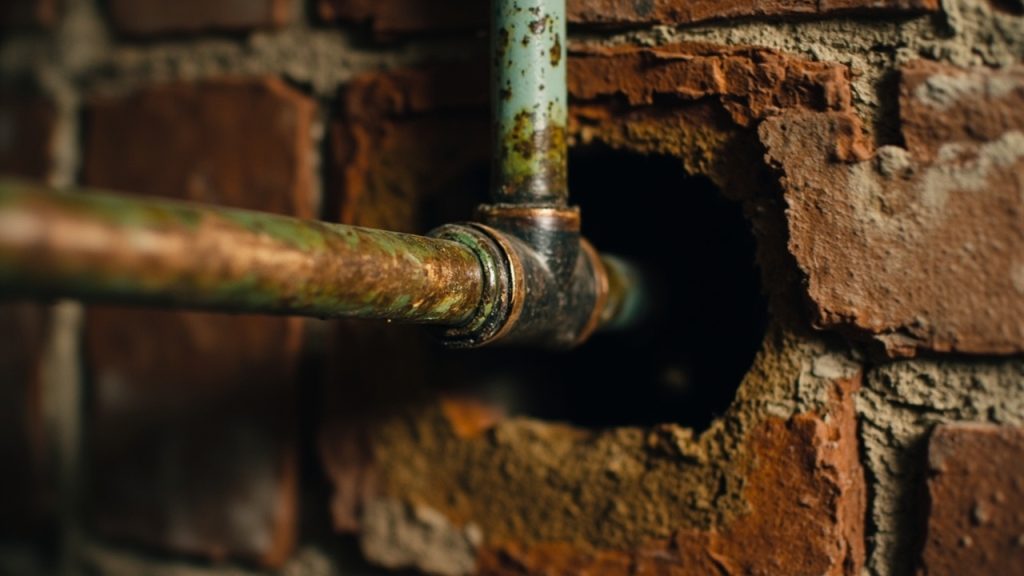
Your Boston-Edison mansion was built to last a century. The pipe system running through its walls was not. If you own a historic home in one of Detroit’s most architecturally significant neighborhoods, aging copper and galvanized plumbing is one of the most serious threats to the structural integrity of your property right now.
This guide walks you through what actually happens when old pipes fail in a high-value historic home, why the damage is far more destructive than in a modern build, and what a proper professional restoration looks like when the materials inside your walls are irreplaceable.
Why Historic Plumbing Systems in Detroit Fail the Way They Do
Homes in Boston-Edison, Indian Village, Brush Park, and Sherwood Forest were built between roughly 1890 and 1940. That means the plumbing systems running through them have had decades of thermal stress, chemical corrosion, and freeze-thaw cycling to break down. Detroit’s winters are brutal on aging infrastructure. A pipe that survived fifty mild winters can fail catastrophically after one hard freeze, especially in an underheated section of a large home.
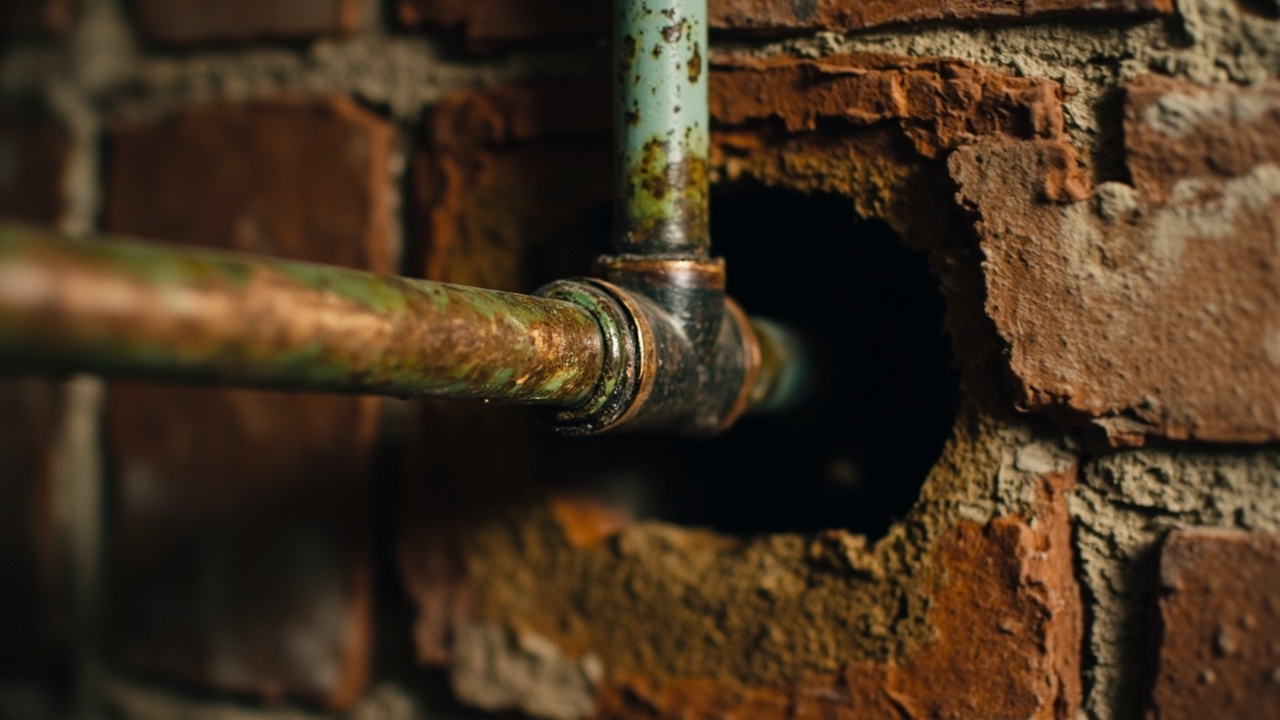
The original pipe materials matter enormously. Many of these homes started with galvanized steel supply lines, which were later supplemented or partially replaced with copper during mid-century renovations. The problem is that galvanized steel corrodes from the inside out. You cannot see it happening. The pipe looks intact from the outside while the interior slowly fills with rust scale, which eventually restricts flow and weakens the wall of the pipe until it splits.
Copper is more durable than galvanized steel, but it is not immune to failure. In Detroit’s older homes, pinhole leaks in copper pipes are extremely common. They develop through a process called pitting corrosion, driven by chloramine compounds in treated municipal water, low pH levels, and galvanic reactions at the transition joints where copper meets older galvanized sections. The EPA has documented that homes built before the mid-1980s frequently contain lead service line connections at the street, which adds another layer of risk at the point where the city main meets your private system.
Lead service lines are still present in thousands of Detroit homes. The Detroit Water and Sewerage Department (DWSD) has ongoing replacement programs, but many private-side lead lines remain untouched. At the junction between a lead service line and copper interior piping, galvanic corrosion accelerates dramatically. This is often where the first pinhole leaks appear.
What Makes Water Damage So Destructive in a Historic Home
In a modern home built with drywall and PVC framing, water damage is expensive but relatively straightforward to remediate. You cut out the wet drywall, dry the studs, replace the section. Total cost is painful but predictable.
In a Boston-Edison mansion or an Indian Village Tudor, the equation is completely different. The materials water is soaking into are often irreplaceable.
Horsehair Plaster and Lath
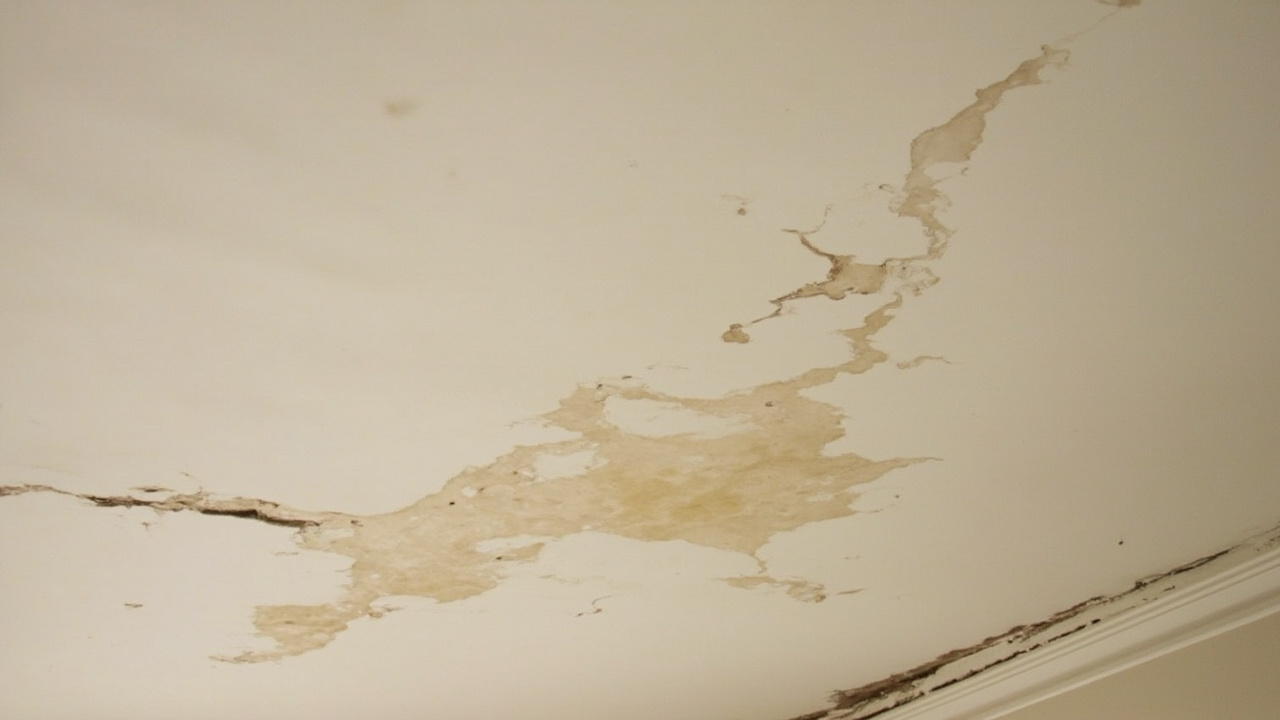
Original lath-and-plaster walls are the first casualty of a slow pipe leak. Unlike drywall, plaster does not simply wick moisture to the surface. It holds water in layers. The horsehair fibers that give old plaster its tensile strength begin to swell and separate from the lath boards behind them. By the time you see a brown stain or a bulge on the surface, the plaster may already be delaminating across a wide area.
Matching original plaster in a historic restoration is a specialty skill. The Detroit Historic District Commission has specific requirements about how interior surfaces in protected structures must be repaired. Cutting corners with a skim coat over damaged substrate will fail inspection and compromise the historic character of the home.
Original Hardwood Floors and Millwork
Quarter-sawn oak floors in Boston-Edison homes are typically two inches thick or more. That thickness is both an asset and a liability in a water event. Thick hardwood absorbs enormous amounts of moisture before it shows visible warping, which means the damage is often extensive before the homeowner notices anything. The cupping and crowning that follow a plumbing leak in a historic home can destroy flooring that took skilled craftsmen weeks to install.
Hand-carved millwork, built-in cabinetry, original wainscoting, and coffered ceilings all respond badly to elevated moisture. Wood movement caused by water intrusion cracks finish joints, loosens mortise-and-tenon connections, and warps panels that have stayed flat for a hundred years.

Masonry Foundations and Efflorescence
Most Detroit historic homes sit on rubble stone or brick foundations. When water migrates through these foundations, it carries dissolved salts to the surface, leaving the white crystalline deposits known as efflorescence. This is a reliable indicator that moisture is moving through your masonry. Left unaddressed, it signals active water intrusion that will eventually compromise mortar joints and structural integrity. If you are seeing efflorescence in your basement, read more about what that means for your lower level in our guide to flooded basement cleanup.
Neighborhood-Specific Plumbing Challenges Across Detroit’s Historic Districts
Not every historic Detroit neighborhood has the same plumbing profile. The age of construction, the original builder’s material choices, and the renovation history of each block all affect what you are likely to find inside your walls.
| Neighborhood | Dominant Build Era | Common Pipe Materials | Primary Risk Factor |
|---|---|---|---|
| Boston-Edison | 1905 to 1930 | Galvanized steel, early copper, lead service lines | Galvanic corrosion at dissimilar metal joints |
| Indian Village | 1895 to 1925 | Lead, cast iron stacks, partial copper replacements | Cast iron drain stack failures and root intrusion |
| Brush Park | 1870s to 1890s (original), mixed renovation | Highly variable, mixed-era systems | Incompatible material transitions from multiple renovation periods |
| Sherwood Forest | 1920 to 1940 | Galvanized to copper transition era | Pinhole copper leaks from chloramine reaction |
| Palmer Woods | 1915 to 1935 | Early copper, clay sewer laterals | Clay sewer collapse and basement backups |
If your home is in Corktown, you are dealing with some of the oldest residential infrastructure in Wayne County. Homes there frequently still have original clay tile sewer laterals running to the street. Clay pipe does not corrode, but it cracks under ground movement and tree root pressure. When a clay lateral fails, sewage backs up into the basement through floor drains. This is a health hazard and a restoration emergency. Our page on sewage backup cleanup in Detroit covers the immediate steps you need to take if that happens.
Mold Timeline in Historic Detroit Basements
One of the most dangerous aspects of a slow pipe leak in a historic home is that it often goes undetected for weeks or months. A pinhole leak inside a plaster wall loses only a small amount of water per day, but it loses it consistently, directly into materials that hold moisture well. By the time you see a stain, mold growth is almost certainly already underway.
Mold can begin colonizing wet organic material within 24 to 72 hours in the right conditions. Detroit’s older basements, with their limited ventilation and uninsulated stone walls, create ideal mold environments year-round. The original wood framing and cellulose-based insulation materials common in pre-war construction are excellent mold substrates.
| Time After Water Intrusion | Typical Damage Stage | Restoration Complexity |
|---|---|---|
| 0 to 24 hours | Surface wetting, no mold, minimal structural change | Low, standard drying protocol |
| 24 to 72 hours | Deep moisture penetration into plaster and wood, mold spore activation | Moderate, requires professional drying and monitoring |
| 72 hours to 1 week | Visible mold colonies, plaster delamination beginning, floor cupping | High, remediation plus historic material assessment |
| 1 to 4 weeks | Structural wood saturation, widespread mold, finish material loss likely | Very high, possible structural compromise |
| Over 4 weeks | Deep wood rot possible, mold through wall cavities, air quality affected | Severe, full remediation and historic reconstruction required |
If you suspect a slow leak has been active for more than a few days, mold testing should be part of your initial assessment. For guidance on what mold remediation looks like in older Detroit-area homes, see our article on removing mold safely from your home.
How Professional Restoration Works in a Historic Home
Restoring water damage in a Boston-Edison mansion is not the same process as a standard residential job. Every decision about access, drying, and repair has to account for the historic character of the materials and any applicable preservation requirements.
Non-Invasive Leak Detection
The first priority is finding the source without destroying more than necessary. Experienced restoration crews use thermal imaging cameras to locate moisture behind plaster walls without cutting. Infrared thermography shows temperature differentials caused by evaporating moisture, which allows technicians to map the wet zone before touching anything. Moisture meters calibrated for dense plaster and old-growth wood give accurate saturation readings in materials that behave differently from modern construction.
This matters enormously in a historic home. Cutting exploratory holes in original lath-and-plaster walls to find a leak is an amateur approach that causes unnecessary damage and can create Historic District Commission compliance issues.
Controlled Drying That Protects Original Materials
IICRC S500 Standards govern professional water damage restoration, and they apply specifically to structural drying protocols. In a historic home, those protocols need to be adapted. Aggressive heat drying applied too quickly to thick plaster and old-growth hardwood causes rapid moisture loss that can crack plaster and warp floors. Controlled drying with calibrated desiccant dehumidifiers and low-velocity air movers gives better results on dense historic materials.
The goal is to bring the moisture content of affected materials down to the equilibrium moisture content for the Detroit climate without causing secondary damage from drying too fast. This typically takes longer than a standard residential dry-out, which affects the project timeline and should be factored into your insurance claim documentation.
Accessing and Repairing Pipes in Plaster Walls
When a pipe repair requires opening a plaster wall, the access strategy matters. A skilled restoration team will identify the smallest necessary opening, use controlled cuts rather than demolition, and preserve the lath structure wherever possible. This gives the plaster repair contractor the best substrate to work with.
Replacing failed copper sections in a historic home should use copper-to-copper connections wherever possible to avoid galvanic corrosion at the repair point. If a lead service line section is involved, coordinate with the DWSD on any required permits and replacement procedures under current Michigan Residential Code requirements.
Detroit Historic District Commission Requirements and What They Mean for Your Restoration
If your home is in a locally designated historic district or listed on the National Register of Historic Places, repair work that affects the exterior or visible interior elements may require review by the Detroit Historic District Commission. Pipe repairs inside wall cavities typically do not require HDC approval, but any exterior work, window replacements made necessary by water damage, or reconstruction of significant interior features may trigger a review process.
The practical implication is that restoration contractors working in Boston-Edison, Indian Village, and similar districts need to understand the difference between what requires a permit, what requires HDC review, and what can proceed under standard emergency repair provisions. Using a contractor unfamiliar with these requirements can create compliance problems that cost significantly more to resolve than the original repair.
Always pull the appropriate permits through the City of Detroit Building Safety Engineering and Environmental Department. A restoration that is done without permits in a protected historic district can affect your ability to sell the property and may require remediation of the non-permitted work.
Warning Signs Your Boston-Edison Home Has a Slow Pipe Leak Right Now
Most historic home pipe failures are not dramatic. They are quiet and slow, which makes them more dangerous. Watch for these indicators.
- Unexplained increases in your Detroit Water and Sewerage Department water bills without a change in usage
- Soft spots or discoloration on plaster walls or ceilings, especially near bathrooms or the kitchen
- Musty odor in rooms that were previously odor-free, particularly in areas below bathrooms or along exterior walls
- Efflorescence on basement walls or floor, indicating moisture movement through masonry
- Buckling or cupping in original hardwood flooring in rooms that have not experienced obvious flooding
- Visible rust staining at pipe fittings in the basement or crawl space
- Low water pressure at fixtures in a specific part of the house, which can indicate scale buildup or a developing failure in galvanized pipe
- Water stains appearing and drying repeatedly on the same section of wall or ceiling
If your home experienced a pipe burst rather than a slow leak, the response timeline compresses significantly. Our article on what to do after a frozen pipe bursts covers the emergency protocol specific to Detroit homes.
Documenting Everything for Your Insurance Claim
Historic homes carry specific replacement cost challenges that standard homeowners insurance policies often undervalue. The cost of matching original plaster profiles, sourcing period-appropriate millwork, or bringing in a craftsman who can replicate hand-carved details is substantially higher than standard drywall and trim replacement. Before any restoration work begins, photograph every affected area thoroughly. A qualified restoration company will provide detailed scope documentation that supports a historic-accurate replacement cost claim rather than a standard depreciated value settlement.
Work with your adjuster to confirm that your policy covers like-for-like restoration of historic materials. If your current policy only covers functional replacement with modern materials, that is a significant coverage gap worth addressing before the next pipe failure, not after.
You can also review current guidance on historic property insurance and valuation through the National Park Service Historic Preservation resources, which provides frameworks that adjusters and contractors both reference for protected properties.
Owners of larger historic properties with below-grade finished spaces should also review what a professional remediation process looks like at the scope and scale their home requires. Our overview of professional flooded basement cleanup gives a clear picture of the process from initial assessment through final clearance testing.
When to Call a Restoration Professional in a Historic Home
The threshold for calling a professional in a Boston-Edison mansion should be lower than it is in a standard residential property. The cost of getting the drying and remediation wrong in a home with irreplaceable materials is far higher than the cost of a professional assessment that turns out to be precautionary.
Call a water damage restoration professional immediately if you find any of the following conditions. Active water flow from a pipe, plaster that sounds hollow when tapped in a previously solid area, any visible mold growth, moisture readings above 16 percent in wood structural members, or any water event that has been present for more than 24 hours in a wall or floor assembly.
The older the home, the faster the damage compounds. A Boston-Edison mansion is one of Detroit’s most significant residential assets. Protecting it means acting on the first signs of a problem, not waiting to see if it gets worse.
If you are seeing warning signs in your historic Detroit home right now, reach out to a restoration team with documented experience in historic property water damage. Ask specifically about their thermal imaging process, their familiarity with lath-and-plaster drying protocols, and whether they have worked with the Detroit Historic District Commission on permitted restoration projects. That conversation will tell you quickly whether they are the right fit for a property like yours.
{
“@context”: “https://schema.org”,
“@type”: “BlogPosting”,
“headline”: “Dealing with Aging Copper Pipe Leaks in Your Boston-Edison Mansion”,
“description”: “Boston-Edison homeowners: learn how aging copper pipes cause water damage in historic Detroit mansions and what restoration pros actually do to fix it right.”,
“wordCount”: 2502,
“datePublished”: “2026-03-13T10:23:00.000Z”,
“dateModified”: “2026-03-13T10:23:00.000Z”,
“inLanguage”: “en-US”,
“mainEntityOfPage”: {
“@type”: “WebPage”,
“@id”: “https://ironwoodwaterdamagerestorationdetroit.com”
},
“publisher”: {
“@type”: “LocalBusiness”,
“name”: “Ironwood Water Damage Restoration Detroit”,
“url”: “https://ironwoodwaterdamagerestorationdetroit.com”
},
“author”: {
“@type”: “Organization”,
“name”: “Ironwood Water Damage Restoration Detroit”,
“url”: “https://ironwoodwaterdamagerestorationdetroit.com”
},
“image”: {
“@type”: “ImageObject”,
“url”: “https://ironwoodwaterdamagerestorationdetroit.com/wp-content/uploads/2026/03/dealing-with-aging-copper-pipe-leaks-in-your-bosto-1.jpg”
}
}
{
“@context”: “https://schema.org”,
“@type”: “LocalBusiness”,
“name”: “Ironwood Water Damage Restoration Detroit”,
“url”: “https://ironwoodwaterdamagerestorationdetroit.com”,
“address”: {
“@type”: “PostalAddress”,
“addressLocality”: “Detroit”
},
“areaServed”: {
“@type”: “City”,
“name”: “Detroit”
}
}
{
“@context”: “https://schema.org”,
“@type”: “BreadcrumbList”,
“itemListElement”: [
{
“@type”: “ListItem”,
“position”: 1,
“name”: “Home”,
“item”: “https://ironwoodwaterdamagerestorationdetroit.com”
},
{
“@type”: “ListItem”,
“position”: 2,
“name”: “Blog”,
“item”: “https://ironwoodwaterdamagerestorationdetroit.com/blog”
},
{
“@type”: “ListItem”,
“position”: 3,
“name”: “Dealing with Aging Copper Pipe Leaks in Your Boston-Edison Mansion”
}
]
}
{
“@context”: “https://schema.org”,
“@type”: “Service”,
“serviceType”: “Water Damage Restoration”,
“provider”: {
“@type”: “LocalBusiness”,
“name”: “Ironwood Water Damage Restoration Detroit”,
“url”: “https://ironwoodwaterdamagerestorationdetroit.com”
},
“areaServed”: {
“@type”: “City”,
“name”: “Detroit”
},
“description”: “Boston-Edison homeowners: learn how aging copper pipes cause water damage in historic Detroit mansions and what restoration pros actually do to fix it right.”
}