
That brown stain on your ceiling might be nothing. Or it might mean your floor joists are rotting right now. Knowing the difference between cosmetic water stains and structural water damage could save you tens of thousands of dollars and keep your family safe.
Bagley homeowners deal with a specific set of water challenges. The neighborhood sits on older housing stock, many homes built before World War II with brick exteriors, stone foundations, and wood-framed construction that absorbs moisture differently than modern builds. Add Detroit’s brutal freeze-thaw cycles, clay-heavy soil that holds water against foundations, and aging municipal infrastructure, and you have conditions that turn a slow leak into serious structural failure faster than most people expect.
This guide walks you through the real indicators of structural compromise versus surface-level staining, so you can make an informed decision instead of guessing.
What Actually Makes Water Damage “Structural”
Structural water damage means moisture has compromised the load-bearing capacity of your home. That includes your foundation walls, floor joists, subfloor sheathing, wall studs behind drywall, and roof rafters. When these components absorb water, they lose integrity through wood rot, delamination, or corrosion of fasteners and metal connectors.
Cosmetic damage, by contrast, affects only surface materials. Drywall that got wet and dried out. Paint that bubbled. Ceiling tiles that discolored. These still need attention, but they do not threaten the stability of your home.
The problem is that structural damage rarely announces itself clearly. It hides inside walls, under floors, and behind finished surfaces. You often see the cosmetic symptom first, and only a trained eye catches the structural evidence underneath.
Visible Indicators of Structural Compromise
Foundation Cracks and Hydrostatic Pressure
Detroit’s clay-heavy soil expands when wet and contracts when dry. This cycle exerts hydrostatic pressure against your foundation walls year after year. In Bagley and surrounding areas like Grandmont-Rosedale, many homes have poured concrete or stone-and-mortar foundations that show this stress over time.
Not every crack signals danger. Hairline cracks under 1/8 inch wide that run vertically are often settlement cracks that have stabilized. But horizontal cracks in block or poured walls are a serious warning. Horizontal cracking means the wall is bowing inward under lateral soil pressure. That is a structural failure, not a cosmetic issue.
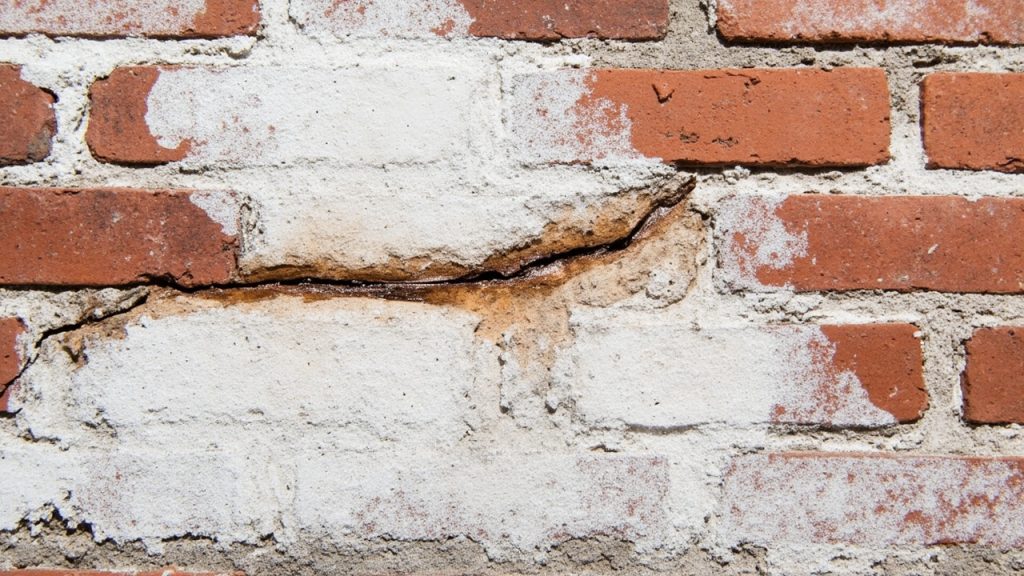
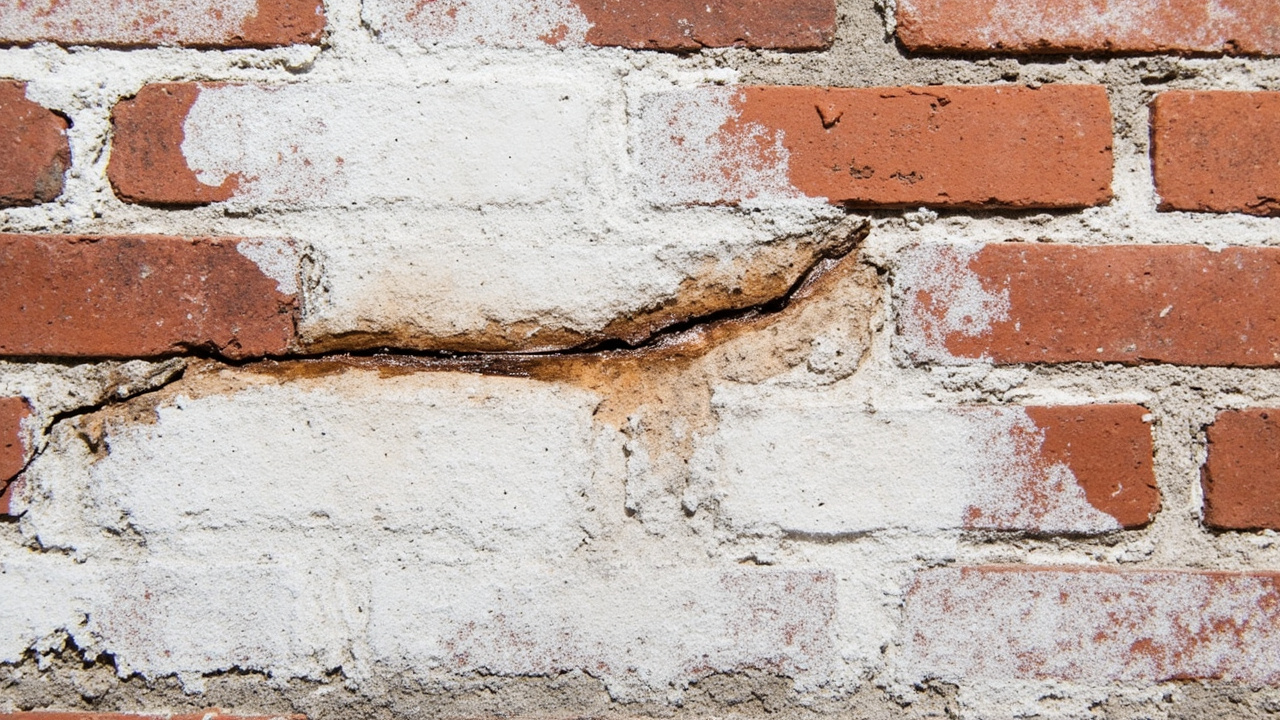
Stair-step cracking through mortar joints in brick or block foundations also indicates differential settlement. Efflorescence, the white chalky mineral deposit you see on basement walls, tells you water is actively migrating through the masonry. It is a signal, not the damage itself. What it points to matters far more than the white residue you can wipe off.
Sagging Floors and Warped Subflooring
Walk your floors slowly. A soft spot underfoot, a dip you can feel, or a floor that bounces slightly when you walk across it all point to compromised subflooring or damaged floor joists beneath. In older Bagley homes with original hardwood over 3/4 inch plank subfloor, prolonged moisture exposure causes the subfloor to delaminate or the joists to develop dry rot.
Dry rot is deceptive. Wood can look intact from the surface while the interior fiber structure has completely broken down. A screwdriver test is one way professionals check this: push a screwdriver tip into a joist at a suspected area. If it sinks in easily, the wood has lost its structural integrity and needs replacement, not just drying.
Doors and windows that suddenly stick or no longer close square are another signal worth taking seriously. When structural members shift from moisture damage, door frames rack out of plumb. This is especially common in two-story Bagley homes where first-floor water damage can affect the load path of the entire structure above.
Hidden Signs You Can Smell or Hear Before You See Them
A persistent musty smell in a room with no visible water stain is not a minor inconvenience. It is a strong indicator that moisture is trapped somewhere inside the building envelope, and microbial growth has started. Black mold (Stachybotrys chartarum) requires sustained moisture on cellulose materials like drywall paper, wood framing, or insulation to colonize. Once you smell it, growth is likely already underway.
Listen for creaking that was not there before. New creaking sounds when you walk across a floor can mean fasteners are loosening as wood swells and contracts through wet-dry cycles. This is distinct from normal old-house settling. If the sound changed after a known water event, treat it as a symptom, not background noise.
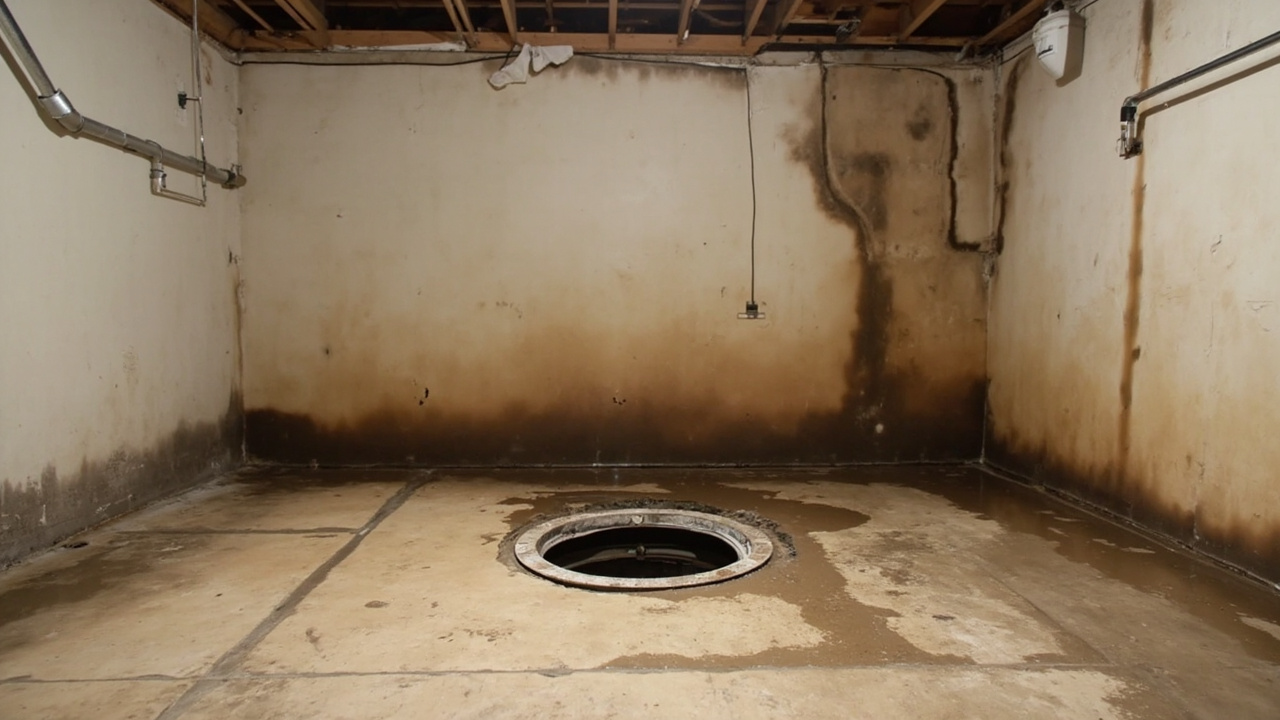
A basement that suddenly feels more humid or has a new earthy smell after a heavy rain may be showing early signs of foundation seepage or sump pump failure. Many Detroit-area homes rely on sump pumps to manage groundwater, especially during spring snowmelt. If yours ran non-stop during the last storm and then went quiet, check the discharge line and the pit for standing water before assuming everything is fine.
For a deeper look at what happens when basement water gets out of control, the flooded basement cleanup process in the Grosse Pointe area shows how quickly a manageable situation escalates without fast intervention.
Detroit-Specific Risks That Accelerate Structural Damage
The Freeze-Thaw Cycle and Your Masonry
Detroit averages multiple freeze-thaw cycles each winter. When water infiltrates brick mortar, concrete, or stone and then freezes, it expands roughly nine percent by volume. That expansion force is enough to fracture masonry from the inside out. The Michigan frost line sits around 42 inches below grade, meaning water trapped near your foundation can freeze and heave the soil against your walls repeatedly throughout winter.
Bagley’s brick bungalows and Tudor-style homes with original masonry are particularly vulnerable. Repointing worn mortar joints is maintenance. Ignoring it allows water entry that eventually reaches wood framing behind the brick veneer, where structural damage happens silently.
Basement Seepage Patterns in Older Detroit Homes
Many Bagley homes were built with fieldstone or poured concrete block basements that lack modern waterproofing. Water enters through floor-wall joints (the cove joint), through wall cracks, or by wicking up through the slab via capillary action in hygroscopic concrete. Hygroscopic materials actively draw moisture from surrounding soil and hold it. That steady low-level moisture damages anything stored on the floor and keeps relative humidity high enough for mold growth year-round.
The EPA’s guidance on mold and moisture confirms that organic building materials kept above 60 percent relative humidity for extended periods support mold colonization. In a leaking Detroit basement, that threshold is easy to exceed without visible standing water.
If you have had sewage involvement with your water event, the risk profile changes entirely. Contamination affects how structural materials must be handled and disposed of. See what to do right now for sewage backup cleanup in Detroit for the correct safety and remediation steps.
Damage Timeline and How Fast Structural Problems Develop
One of the most dangerous misconceptions homeowners have is that they have time. Water moves faster through building assemblies than most people expect. The table below outlines what happens at different time thresholds after a water intrusion event.
| Timeframe After Water Intrusion | What Is Happening Inside Your Home | Damage Classification |
|---|---|---|
| 0 to 24 hours | Drywall absorbs moisture, wood begins swelling, flooring starts to buckle, paint bubbles | Mostly cosmetic, reversible with fast extraction |
| 24 to 48 hours | Mold spores begin germinating on wet cellulose, metal fasteners start to corrode, subflooring begins delaminating | Transitional, cosmetic becoming structural |
| 48 to 72 hours | Active mold colonies form, wood fiber softening visible, drywall loses structural capacity, odor evident | Structural in porous materials, mold remediation required |
| 1 week or more | Dry rot begins in wood framing, load-bearing capacity reduces, mold penetrates deeply, materials may be unsalvageable | Confirmed structural damage, significant reconstruction likely |
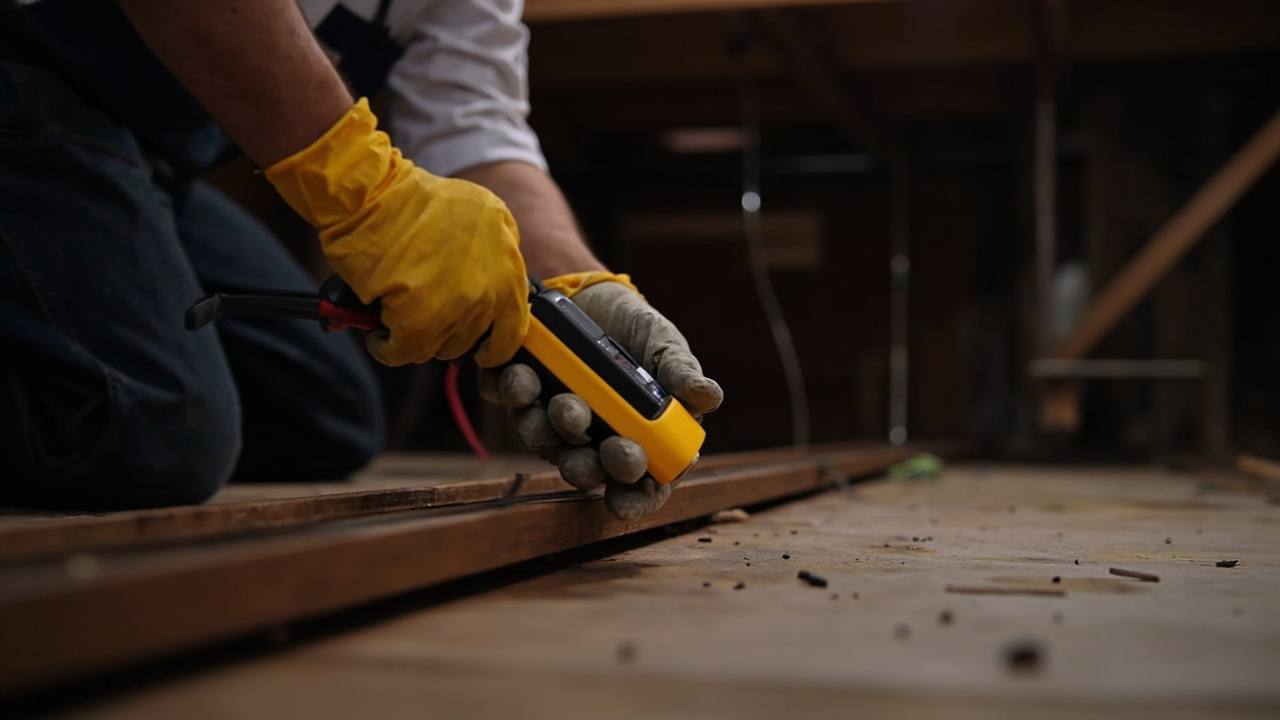
These timelines align with IICRC S500 standards for professional water damage restoration, which set the industry benchmark for extraction, drying, and documentation protocols. A certified restoration team uses moisture meters, thermal imaging cameras, and calibrated drying equipment to confirm when materials have returned to acceptable moisture content, not just when they look dry.
Comparing Cosmetic Stains to Structural Damage Symptoms
Use this comparison to assess what you are seeing before calling for an inspection.
| What You See or Smell | Likely Cosmetic | Likely Structural |
|---|---|---|
| Brown ceiling stain (dry, no sagging) | Old leak that resolved, surface stain only | Check for active moisture above with a meter |
| Bubbling or peeling paint on walls | Moisture behind drywall, drying in progress | If near foundation or in basement, check for wicking |
| White chalky deposits on basement walls | Historic moisture movement, may be inactive | Active efflorescence with damp wall means ongoing seepage |
| Musty odor in a room | Rarely cosmetic-only | Almost always indicates hidden moisture and microbial growth |
| Soft or bouncy floor area | Not cosmetic | Confirmed structural, requires inspection immediately |
| Horizontal crack in basement wall | Not cosmetic | Confirmed structural, hydrostatic pressure failure |
| Door or window no longer closes square | Could be normal settling if gradual | If sudden after water event, structural framing shift likely |
What Happens When You Wait Too Long
“Wait and see” is the most expensive decision a homeowner can make with water damage. A modest amount of water in a Bagley basement that gets dried within 24 hours is a manageable restoration. The same event left untreated for a week may require tearing out floor joists, replacing sections of subfloor, full mold remediation, and possibly foundation repair.
Detroit’s Building Safety Engineering and Environmental Department (BSEED) can require structural repairs before a home passes inspection for resale. If damage reaches the point where a permit is required for repairs, your remediation costs increase substantially and timelines extend. Addressing problems early keeps the work in the category of insurance-eligible restoration rather than major reconstruction.
If your Bagley home has a finished basement, frozen pipe history, or a sump pump that has failed before, you are dealing with elevated risk factors. Frozen pipe bursts are one of the most common sources of hidden structural damage in Detroit homes because the water often flows inside wall cavities before it appears at the surface. Read more about fixing the mess after a frozen pipe bursts in your Detroit home to understand the full scope of that damage type.
Professional Inspection vs. What You Can Check Yourself
You can gather useful information on your own before calling a restoration professional. Here is a practical checklist for a safe initial walkthrough of a water-affected area.
- Do not enter a space with standing water if electrical outlets, panels, or wiring may be submerged. Turn off power at the breaker first.
- Wear an N95 respirator if you smell musty odors. Airborne mold spores are a health risk, not just a surface problem.
- Press firmly on drywall near the affected area. If it crumbles or compresses easily, it has lost structural integrity and needs removal.
- Look at the base of walls in the basement for efflorescence deposits or dark staining at the floor-wall joint.
- Check exposed floor joists in the basement ceiling for discoloration, soft spots, or white fungal growth on wood surfaces.
- Look for rust staining around nail heads or screws in subflooring. Fastener corrosion signals prolonged moisture exposure.
- Probe any suspicious wood with a flat-head screwdriver. Sound wood resists penetration. Compromised wood accepts the tip easily.
What you cannot check yourself is just as important. Moisture meters read the actual water content deep inside walls, not just the surface. Thermal imaging reveals evaporative cooling patterns that identify wet insulation cavities behind intact drywall. These tools tell you whether a wall that looks dry still carries enough moisture to sustain mold growth or continue degrading structural members.
An IICRC-certified technician following S500 standards will map the moisture boundary, document baseline readings, and establish drying goals before any equipment gets placed. This documentation also matters for insurance claims. Adjusters respond better to calibrated readings and moisture maps than to photos of stains.
Mold is often the downstream consequence of unaddressed structural moisture. If you are already seeing visible mold growth, the structural assessment and mold remediation have to happen together. For homeowners in nearby areas dealing with the same issue, the process for safely removing mold in Royal Oak homes outlines how professional remediation works and what proper containment looks like.
What Structural Repairs Actually Involve
If inspection confirms structural damage, the scope of work depends on which components are affected. Foundation wall repair for bowing or cracked walls involves carbon fiber straps, wall anchors, or in severe cases, piering. Floor joist sistering adds new lumber alongside damaged joists to restore load-bearing capacity. Subfloor replacement removes delaminated or rotted sheathing and installs new moisture-resistant panels.
All of this requires the structure to be dried to acceptable moisture content first, per IICRC S500 standards. Sealing wet wood or pouring new concrete over wet substrate traps moisture and accelerates the damage you are trying to fix. Drying must be verified, not assumed.
For Dearborn homeowners or anyone in the broader metro area curious about what the full professional cleanup and repair process looks like start to finish, the guide on professional cleanup for flooded basements in Dearborn walks through expectations at each stage.
When to Call a Restoration Professional in Detroit
Call a certified water damage restoration company, not just a general contractor, when you see any of the following conditions in your Bagley home.
- Any horizontal crack in a basement or foundation wall
- Soft, bouncy, or uneven floors following a water event
- Persistent musty odor that does not clear after ventilation
- Visible mold growth larger than 10 square feet (the EPA threshold for professional remediation)
- A water event that was not dried within 24 to 48 hours
- Water intrusion that involved sewage contamination at any level
- Doors or windows that shifted out of square after a plumbing failure or flood
The distinction between cosmetic and structural is real, but it is not always visible to an untrained eye. A professional assessment takes the guesswork out of it and gives you concrete information to act on, whether that means a paint job or a foundation repair crew.
If you are a Bagley homeowner and you are unsure whether what you are seeing is serious, do not wait for more symptoms to develop. Contact a local IICRC-certified water damage restoration team for an inspection. The cost of knowing is far less than the cost of finding out too late.
{
“@context”: “https://schema.org”,
“@type”: “BlogPosting”,
“headline”: “Structural Water Damage Signs Every Bagley Homeowner in Detroit Should Know”,
“description”: “Learn how to tell if your Bagley home has structural water damage or just cosmetic stains. Detroit-specific signs, timelines, and when to call a pro.”,
“wordCount”: 2372,
“datePublished”: “2026-03-16T11:41:00.000Z”,
“dateModified”: “2026-03-16T11:41:00.000Z”,
“inLanguage”: “en-US”,
“mainEntityOfPage”: {
“@type”: “WebPage”,
“@id”: “https://ironwoodwaterdamagerestorationdetroit.com”
},
“publisher”: {
“@type”: “LocalBusiness”,
“name”: “Ironwood Water Damage Restoration Detroit”,
“url”: “https://ironwoodwaterdamagerestorationdetroit.com”
},
“author”: {
“@type”: “Organization”,
“name”: “Ironwood Water Damage Restoration Detroit”,
“url”: “https://ironwoodwaterdamagerestorationdetroit.com”
},
“image”: {
“@type”: “ImageObject”,
“url”: “https://ironwoodwaterdamagerestorationdetroit.com/wp-content/uploads/2026/03/how-to-tell-if-your-bagley-home-has-structural-wat-1.jpg”
}
}
{
“@context”: “https://schema.org”,
“@type”: “LocalBusiness”,
“name”: “Ironwood Water Damage Restoration Detroit”,
“url”: “https://ironwoodwaterdamagerestorationdetroit.com”,
“address”: {
“@type”: “PostalAddress”,
“addressLocality”: “Detroit”
},
“areaServed”: {
“@type”: “City”,
“name”: “Detroit”
}
}
{
“@context”: “https://schema.org”,
“@type”: “BreadcrumbList”,
“itemListElement”: [
{
“@type”: “ListItem”,
“position”: 1,
“name”: “Home”,
“item”: “https://ironwoodwaterdamagerestorationdetroit.com”
},
{
“@type”: “ListItem”,
“position”: 2,
“name”: “Blog”,
“item”: “https://ironwoodwaterdamagerestorationdetroit.com/blog”
},
{
“@type”: “ListItem”,
“position”: 3,
“name”: “Structural Water Damage Signs Every Bagley Homeowner in Detroit Should Know”
}
]
}
{
“@context”: “https://schema.org”,
“@type”: “Service”,
“serviceType”: “Water Damage Restoration”,
“provider”: {
“@type”: “LocalBusiness”,
“name”: “Ironwood Water Damage Restoration Detroit”,
“url”: “https://ironwoodwaterdamagerestorationdetroit.com”
},
“areaServed”: {
“@type”: “City”,
“name”: “Detroit”
},
“description”: “Learn how to tell if your Bagley home has structural water damage or just cosmetic stains. Detroit-specific signs, timelines, and when to call a pro.”
}