

Your basement just flooded. Water is sitting on your floor, your belongings are ruined, and your phone is already ringing with calls you need to return. Before you touch a single item or start mopping, you need to document everything. The photos and records you create in the next 60 minutes can be the difference between a full claim payout and a denied one.
This guide walks you through the exact documentation process Detroit homeowners need to protect their insurance claim from the moment disaster strikes to the final adjuster walkthrough.

Safety and Mitigation Come Before the Camera
Michigan insurance policies include what is called a “Duty to Mitigate.” You are legally required to take reasonable steps to prevent further damage. If you skip this step and the adjuster sees it, your claim can be reduced or denied.
Before you photograph anything, do these three things. Turn off electricity to any affected zones at your breaker panel. If you smell sewage or see dark water, do not enter until a professional clears it. Shut off your main water supply if a burst pipe caused the flooding.
Once the space is safe, your next job is documentation. Do not throw anything away yet. Do not move damaged furniture outside. Keep everything in place until you have a complete visual record.
Detroit homes, especially the brick bungalows common in neighborhoods like Bagley and Rosedale Park, often have finished basements that complicate Category 2 or Category 3 water intrusion. Contaminated water soaks into drywall, carpet pad, and wood framing fast. The clock is running, but so is your evidence window.
Step 1 — The Visual Evidence Phase
Wide Shots Establish the Full Scope
Start at the doorway of each affected room. Take a wide-angle photo from each corner of the room so you have four overlapping perspectives. These images establish the scope of damage and show the adjuster exactly what the space looked like before any mitigation work began.
Use your phone’s standard camera, not portrait mode. Portrait mode artificially blurs backgrounds, which can obscure damage. Turn on every light in the room and open any window blinds before shooting.
Close-Up Shots Prove the Details
After the wide shots, move to close-ups of specific damage. Photograph water stains on walls, buckled hardwood, saturated drywall, and damaged electrical panels. Get within 12 to 18 inches of each item so the texture and extent of damage are clearly visible.
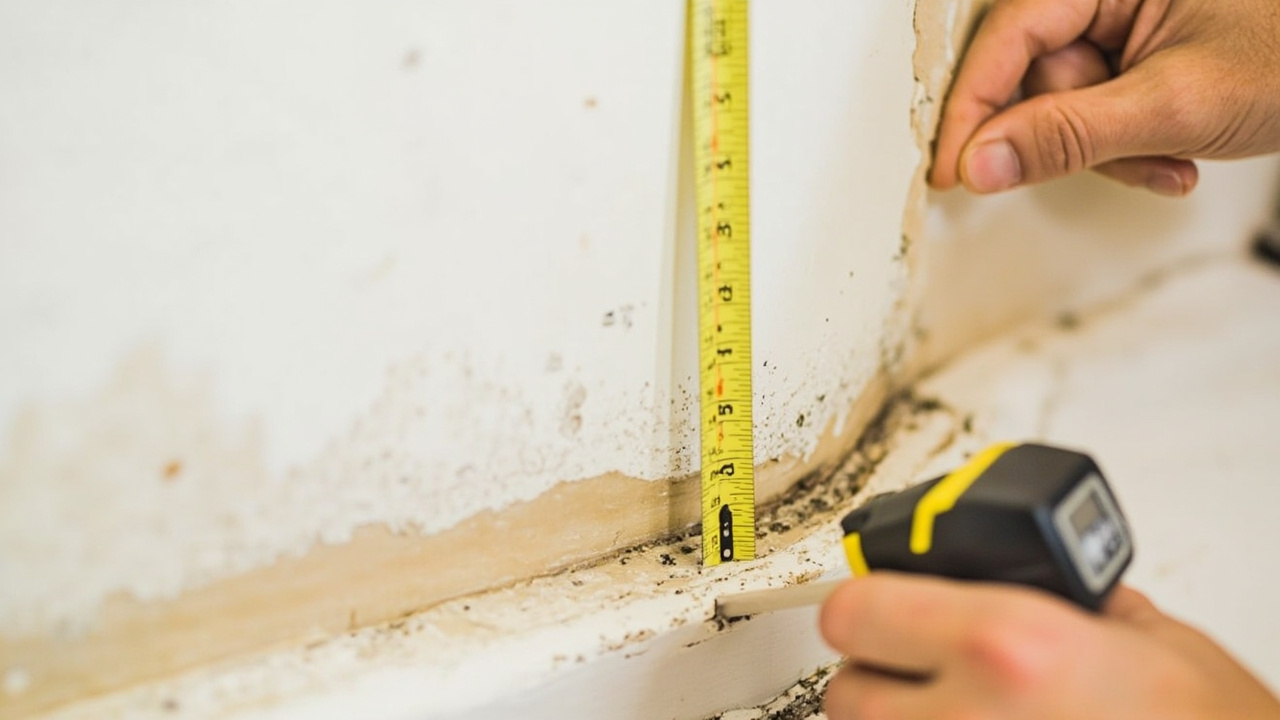
One technique that helps adjuster reviews significantly — place a ruler or a standard 12-inch tape measure next to the water line on your basement wall. This gives the adjuster a clear measurement of how high the water reached. For Detroit homeowners dealing with Great Lakes Water Authority (GLWA) sewer backup events, which have caused flooding across neighborhoods from Jefferson Chalmers to the far west side, this detail is especially important for Sewer Backup Endorsement claims.
Video Walkthrough Seals the Visual Record
After photos, do one continuous video walkthrough. Narrate as you walk. Say things like “This is the southeast corner of the basement, you can see the waterline at 14 inches on the drywall.” A four to six minute uncut video is more convincing than 40 separate photos.
Upload the video to cloud storage immediately. Do not rely solely on your phone. Phones get dropped, stolen, and damaged during remediation work.
Step 2 — Building Your Damaged Goods Inventory
Every damaged item needs to be catalogued. Insurance adjusters require a detailed personal property inventory to process your claim, and the difference between Actual Cash Value (ACV) and Replacement Cost Value (RCV) coverage will directly affect how much you recover per item.
ACV coverage pays what your item was worth at the time of loss. RCV coverage pays what it costs to replace it today. Knowing which you have changes how you build your inventory.
| Coverage Type | What It Pays | Best For | Common Detroit Scenario |
|---|---|---|---|
| Actual Cash Value (ACV) | Depreciated value of the item at time of loss | Lower premium budgets | Older furnace or appliances in a Corktown flat |
| Replacement Cost Value (RCV) | Full cost to replace with a comparable new item | Newer homes or renovated spaces | Finished basement in a Grosse Pointe Park home |
| Extended Replacement Cost | RCV plus a percentage buffer for cost increases | High-value content or historic properties | Restored Victorian in Midtown or Indian Village |
For each damaged item in your inventory, record the following.
- Brand name and model number (check the back or bottom of appliances)
- Estimated age of the item
- Estimated replacement cost based on current retail pricing
- Receipts, credit card statements, or online order confirmations if available
- Serial numbers for electronics, appliances, and HVAC equipment
- Photos of each item showing the damage clearly
Photograph serial number tags and model plates directly. This speeds up adjuster verification and prevents disputes about what was actually in the home.
If your basement had stored items from a recent renovation, include those too. Contractors can provide invoices showing material costs, which serve as proof of value.
Step 3 — Tracking Every Professional Interaction and Repair
Once your restoration contractor arrives and begins structural drying, a new documentation phase starts. You need a paper trail of everything from this point forward.
Logging Adjuster Communications
Keep a communication log. For every phone call with your insurance adjuster or company representative, write down the date, time, the person’s name, and a brief summary of what was discussed. Follow up every call with a short email restating what was said. This creates a written record that cannot be disputed later.
The Michigan Department of Insurance and Financial Services (DIFS) oversees insurance company conduct in the state. If your insurer misrepresents your policy or delays your claim without cause, DIFS accepts formal complaints. Knowing this often changes how quickly adjusters respond.
Collecting Contractor Documentation
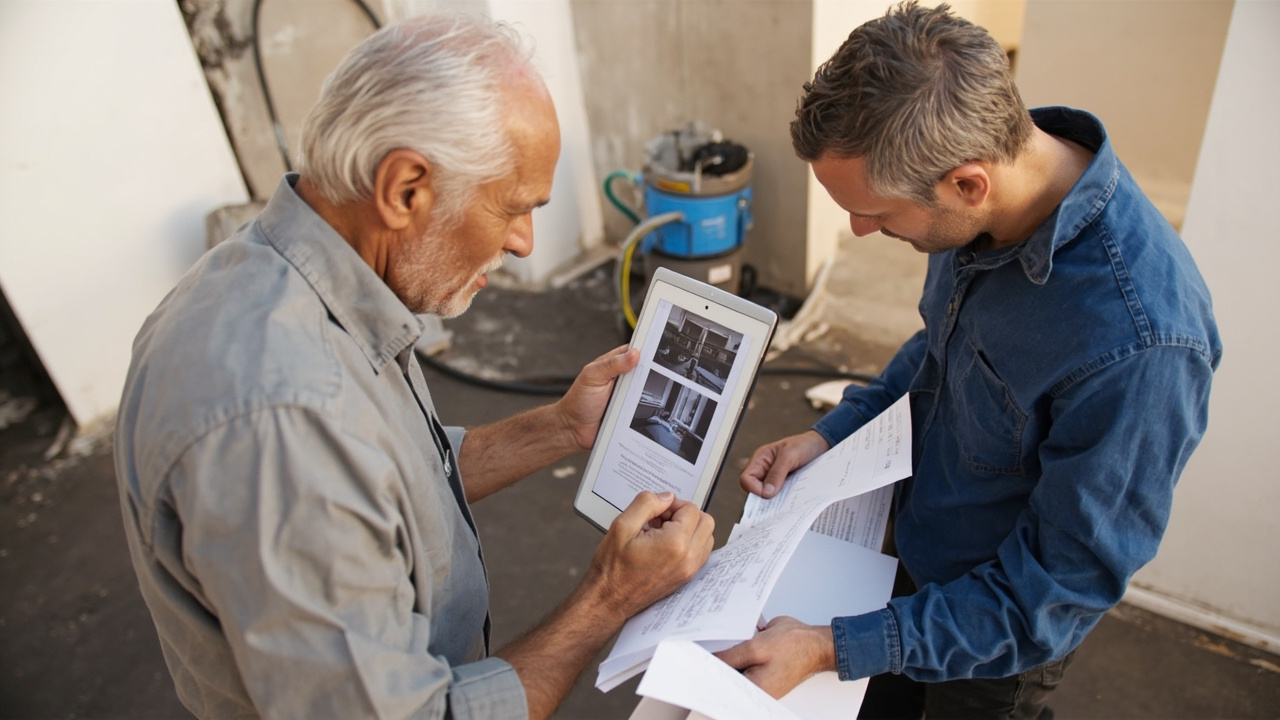
Your IICRC-certified restoration contractor will generate moisture readings, drying logs, and equipment placement reports. These are technical documents that verify the extent of water intrusion and prove the need for professional mitigation. Ask for copies of everything.
Specifically request the initial moisture mapping report, which shows moisture levels in walls, floors, and ceilings measured with a pin-type or non-invasive moisture meter. This document often reveals damage that is not visible to the eye, especially in older Detroit homes with plaster walls or original hardwood subflooring.
If mold remediation becomes necessary, which it often does when water sits for more than 48 hours, keep all third-party clearance testing reports. Mold documentation is separate from the water damage claim in most policies. Read our guide on how to remove mold safely from your Royal Oak home if you are already seeing growth develop.
Water Damage Categories and Why They Affect Your Claim
Not all water damage is treated equally by adjusters or contractors. The IICRC classifies water damage into three categories based on contamination level. The category affects remediation protocols, materials that can be saved versus demolished, and ultimately the scope of your claim.
| Category | Water Source | Health Risk | Common Detroit Cause |
|---|---|---|---|
| Category 1 (Clean Water) | Supply line break, overflow from clean source | Low | Burst pipe during a Michigan freeze, supply line failure |
| Category 2 (Gray Water) | Washing machine overflow, dishwasher, sump pump failure | Moderate | Sump pump failure during heavy spring rain |
| Category 3 (Black Water) | Sewage backup, rising groundwater, river flooding | High | DWSD sewer surcharge events, basement flooding from storm overflow |
Category 3 damage requires full protective equipment for anyone entering the space and typically involves complete removal of porous materials like drywall, insulation, and carpet. If you had a sewage backup, your standard homeowner policy may not cover it unless you added a Sewer Backup Endorsement. This is one of the most common coverage gaps in Metro Detroit policies.
For a closer look at what sewage backup cleanup actually involves, see our article on what to do right now for sewage backup cleanup in Detroit. And if you are in the Downriver or western suburbs and dealing with a flooded basement specifically, our guide on professional cleanup for flooded basements in Dearborn covers what the remediation process looks like from start to finish.
Common Pitfalls That Kill Detroit Insurance Claims
Confusing Flood Coverage with Water Damage Coverage
Standard homeowner policies do not cover floods. Flooding from overflowing rivers, storm surge, or rising groundwater requires a separate National Flood Insurance Program (NFIP) policy or a private flood endorsement. Detroit homeowners near the Rouge River corridor or in low-lying areas of East English Village need to verify this distinction before a loss occurs, not after.
Water damage from an internal source, like a burst pipe or appliance failure, is typically covered under your standard policy. Sewer backup requires a specific endorsement as noted above. These are three completely different coverage buckets, and adjusters use the distinction to limit payouts.
Throwing Away Evidence Before Documentation Is Complete
Homeowners in cleanup mode instinctively start bagging up ruined items. Do not do this until your adjuster authorizes disposal or until you have photographed every item individually. If you discard damaged goods before the adjuster can inspect them, you lose that portion of your claim.
If items are a biohazard (Category 3 contamination), document them photographically and have your contractor prepare a written inventory before disposal. Your IICRC-certified contractor should be able to provide a demolition log that lists all removed materials by type and quantity.
Not Hiring a Public Adjuster When the Claim Is Large
When your water damage claim exceeds a significant threshold, consider hiring a Public Adjuster. A Public Adjuster works for you, not the insurance company. They review your policy, inspect the damage independently, and negotiate the settlement on your behalf. Their fee typically comes from a percentage of the final claim settlement.
For large-scale structural drying jobs in historic properties in Midtown or Palmer Woods, where remediation of original plaster, old-growth hardwood, and custom millwork adds up fast, a Public Adjuster often recovers significantly more than homeowners receive on their own.
Skipping the Proof of Loss Form Deadline
Michigan insurance policies require you to file a Proof of Loss Form within a specific timeframe after reporting your claim. Missing this deadline can void your right to payment. Read your policy’s section on duties after loss and note the deadline the moment you file your claim.
If your pipe burst event caused the damage, our detailed guide on fixing the mess after a frozen pipe bursts in your Detroit home covers both the remediation and the documentation side of these specific claims. And if you are in Grosse Pointe and dealing with a basement event, see our resource on flooded basement cleanup in Grosse Pointe for timelines and what to expect from the cleanup crew.
Your Water Damage Documentation Checklist
Print this out or screenshot it before you start.
- Confirm the space is electrically safe before entering
- Take wide-angle photos from all four corners of each affected room
- Photograph the water line height with a ruler or tape measure for scale
- Take close-up photos of all structural damage (walls, floors, ceilings)
- Record a continuous video walkthrough with narration
- Upload all photos and video to cloud storage immediately
- Photograph every damaged personal property item individually
- Record brand, model, serial number, and estimated age of each damaged item
- Locate receipts, credit card statements, or purchase records
- Start a communication log for all adjuster contacts
- Request moisture mapping reports from your restoration contractor
- Collect all contractor estimates and written scopes of work
- Confirm your Sewer Backup Endorsement status with your agent
- Note the Proof of Loss deadline in your policy and set a calendar reminder
- Contact DIFS if your insurer delays or misrepresents your claim
For official guidance on Michigan homeowner insurance requirements and your rights during a claim, the Michigan Department of Insurance and Financial Services publishes consumer resources that every policyholder should review before filing a claim.
Documentation is not paperwork. It is the foundation of your entire claim. The 90 minutes you spend photographing, inventorying, and logging contacts will determine how your claim resolves. Do it right the first time, and you give yourself the best possible position when the adjuster walks through your door.
If you are currently dealing with active water damage in Detroit and need an IICRC-certified team on site fast, call us now. We respond across the metro, from Hamtramck and Highland Park to the Eastside communities along the lakefront. We will start drying and help you document everything correctly from the first hour.
{
“@context”: “https://schema.org”,
“@type”: “BlogPosting”,
“headline”: “How to Take the Right Photos for Your Detroit Water Damage Insurance Claim (A Step by Step Guide)”,
“description”: “Detroit homeowners: learn exactly how to document water damage for your insurance claim, step by step, from an IICRC-certified restoration expert.”,
“wordCount”: 2073,
“datePublished”: “2026-03-17T07:13:00.000Z”,
“dateModified”: “2026-03-17T07:13:00.000Z”,
“inLanguage”: “en-US”,
“mainEntityOfPage”: {
“@type”: “WebPage”,
“@id”: “https://ironwoodwaterdamagerestorationdetroit.com”
},
“publisher”: {
“@type”: “LocalBusiness”,
“name”: “Ironwood Water Damage Restoration Detroit”,
“url”: “https://ironwoodwaterdamagerestorationdetroit.com”
},
“author”: {
“@type”: “Organization”,
“name”: “Ironwood Water Damage Restoration Detroit”,
“url”: “https://ironwoodwaterdamagerestorationdetroit.com”
},
“image”: {
“@type”: “ImageObject”,
“url”: “https://ironwoodwaterdamagerestorationdetroit.com/wp-content/uploads/2026/03/taking-the-right-photos-for-your-detroit-water-dam-1.jpg”
}
}
{
“@context”: “https://schema.org”,
“@type”: “LocalBusiness”,
“name”: “Ironwood Water Damage Restoration Detroit”,
“url”: “https://ironwoodwaterdamagerestorationdetroit.com”,
“address”: {
“@type”: “PostalAddress”,
“addressLocality”: “Detroit”
},
“areaServed”: {
“@type”: “City”,
“name”: “Detroit”
}
}
{
“@context”: “https://schema.org”,
“@type”: “BreadcrumbList”,
“itemListElement”: [
{
“@type”: “ListItem”,
“position”: 1,
“name”: “Home”,
“item”: “https://ironwoodwaterdamagerestorationdetroit.com”
},
{
“@type”: “ListItem”,
“position”: 2,
“name”: “Blog”,
“item”: “https://ironwoodwaterdamagerestorationdetroit.com/blog”
},
{
“@type”: “ListItem”,
“position”: 3,
“name”: “How to Take the Right Photos for Your Detroit Water Damage Insurance Claim (A Step by Step Guide)”
}
]
}
{
“@context”: “https://schema.org”,
“@type”: “Service”,
“serviceType”: “Water Damage Restoration”,
“provider”: {
“@type”: “LocalBusiness”,
“name”: “Ironwood Water Damage Restoration Detroit”,
“url”: “https://ironwoodwaterdamagerestorationdetroit.com”
},
“areaServed”: {
“@type”: “City”,
“name”: “Detroit”
},
“description”: “Detroit homeowners: learn exactly how to document water damage for your insurance claim, step by step, from an IICRC-certified restoration expert.”
}