
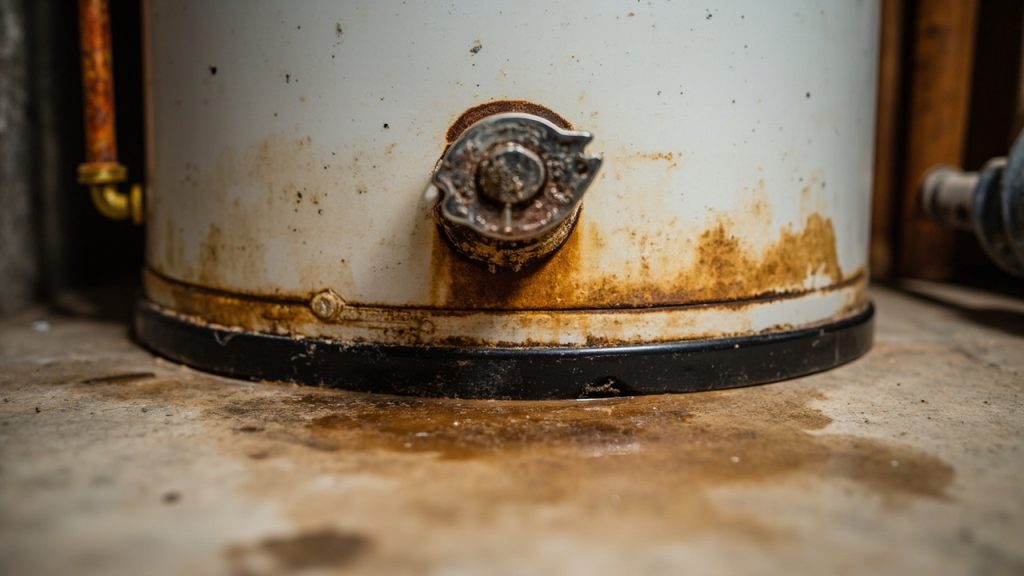
Your Water Heater Is Trying to Tell You Something
Most Oak Park homeowners never think about their water heater until it fails. By then, you are standing in a wet basement watching hundreds of gallons of damage spread across your floor. The warning signs almost always show up weeks or months before the failure. Knowing what to look for can be the difference between a plumber visit and a full water damage restoration job.
This guide covers every major symptom of a failing water heater, explains why Oak Park homes are especially vulnerable, and tells you exactly what to do when you find a problem.
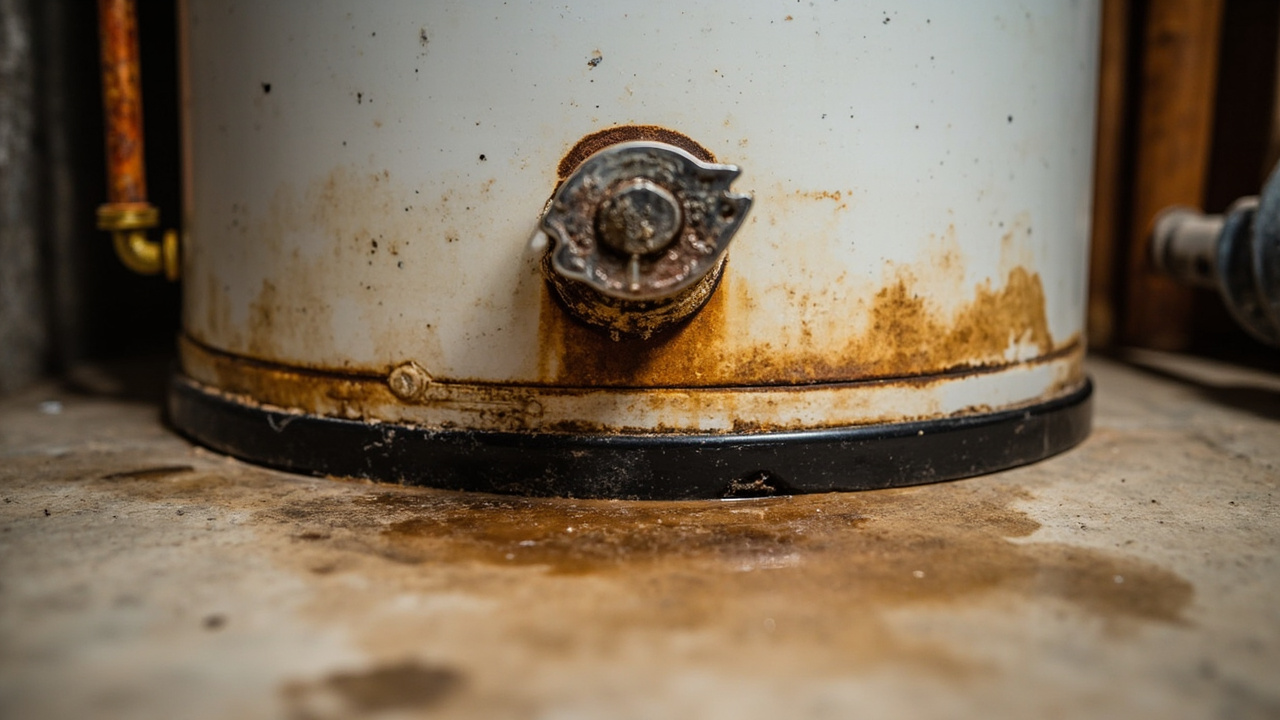
Visual Red Flags Around the Base of Your Water Heater
Start every inspection at floor level. Any moisture you can see is already a problem worth investigating.
Standing Water or Damp Spots
Even a small puddle beneath your tank is not normal. Water pooling at the base usually points to a corroded tank bottom, a failing drain valve, or a leaking temperature and pressure relief valve (T&P valve). These components do not self-repair. The leak will grow.
Pay attention to the floor around the unit too. Efflorescence on concrete, which looks like white chalky deposits, tells you water has been wicking through that slab repeatedly. That is chronic moisture, not a one-time event.
Rust and Corrosion on the Tank
Surface rust on the exterior can be cosmetic. Rust around pipe fittings, the pressure relief valve discharge pipe, or the base of the tank is a different story. That indicates active corrosion penetrating the steel. Once the interior sacrificial anode rod is depleted, rust accelerates quickly from the inside out.
Check the inlet and outlet connections at the top of the tank. Blue-green staining on copper fittings means electrolytic corrosion is active. That joint will fail.
Blistering or Discoloration on the Tank Surface
Paint bubbling or discoloration on the tank body suggests heat stress or internal pressure cycling beyond normal range. This is common in tanks that have had sediment buildup for years, forcing the burner to work harder and longer than it should.
What You Hear and Smell When a Water Heater Is Failing
Popping and Rumbling Noises
That loud popping or rumbling sound when your hot water runs is sediment. Mineral deposits settle on the bottom of the tank, and the burner tries to heat water through that layer of scale. The trapped water beneath the sediment superheats, creates steam pockets, and produces that knocking sound.
In Oak Park, this problem is accelerated. Detroit’s municipal water supply carries elevated levels of calcium and magnesium, and homes near Coolidge Hwy and the 9 Mile Road corridor frequently report sediment buildup within three to five years in tanks without water softeners.
Hissing or Sizzling Sounds
A hissing sound from the tank body often means water is dripping onto a hot surface internally. That is a live leak inside the unit. A hissing from the T&P valve means the valve is venting, which indicates pressure or temperature inside the tank has exceeded safe limits. Do not ignore either of these.
Musty or Sulfur Odors in the Basement
A musty smell around your water heater or in the surrounding area points to mold growth from ongoing moisture. Even a slow drip from a tank fitting creates enough sustained humidity to trigger mold colonization on drywall, framing lumber, and insulation within 24 to 72 hours.
A rotten egg odor from your hot water tap means hydrogen sulfide gas is forming inside the tank. This happens when bacteria react with a deteriorating magnesium anode rod. It is a sign the interior of your tank has been compromised. If you are seeing this alongside any visible moisture, the tank is in the late stages of failure.
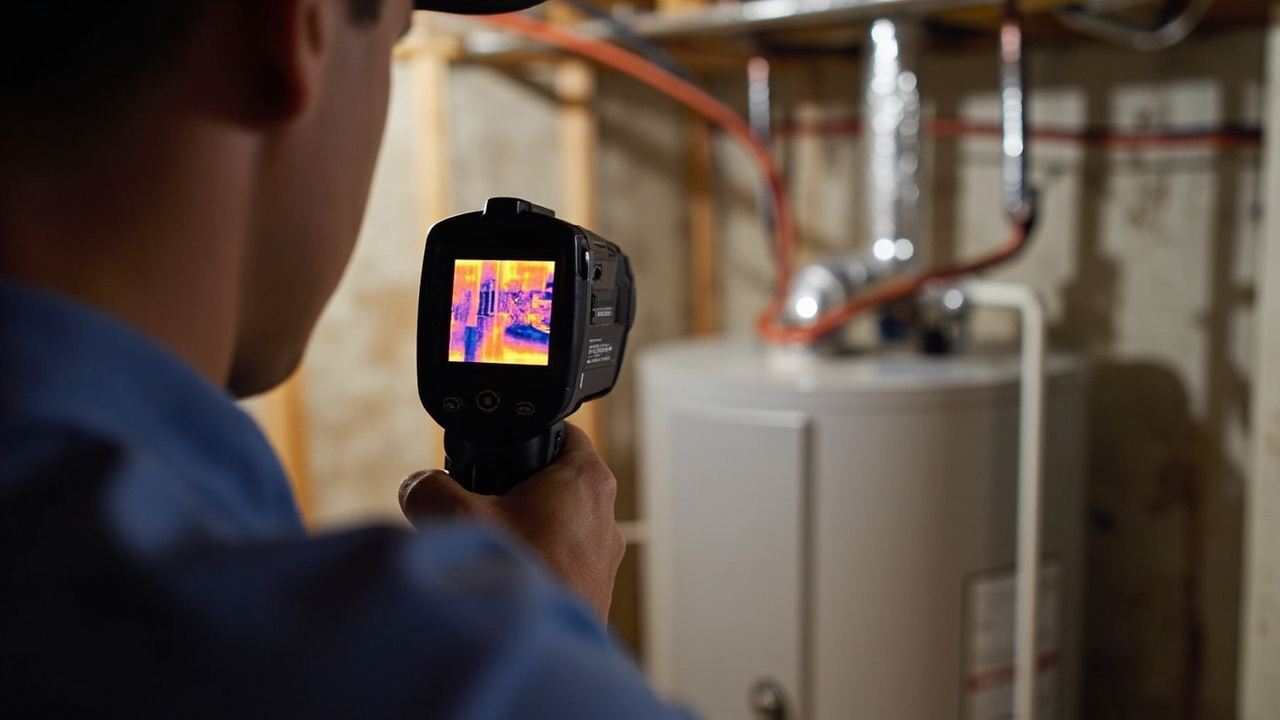
The Oak Park and Detroit Factor in Water Heater Failures
Oak Park sits in Oakland County, just north of Eight Mile Road. The homes here were largely built between the 1950s and 1970s, which means a large percentage of basements contain original or once-replaced infrastructure that is now aging again. Water heaters in these homes face specific challenges that homeowners in newer subdivisions do not deal with at the same rate.
Hard Water From the Detroit Municipal Supply
Southeast Michigan water is classified as moderately hard to hard, typically measuring between 8 and 12 grains per gallon depending on the distribution zone. This mineral load directly shortens tank lifespan. The Michigan Department of Environment, Great Lakes, and Energy (EGLE) monitors water quality across Detroit-area municipal supplies, and the data consistently shows elevated hardness in Oakland County zones.
Hard water deposits calcium scale on heating elements and tank floors faster than in softer-water cities. A tank that might last 12 years elsewhere may show significant sediment buildup and anode rod depletion inside seven years in Oak Park without regular maintenance flushing.
Freeze-Thaw Stress on Basement Infrastructure
Michigan winters stress every component of a basement mechanical room. Pipes feeding cold water into your heater can experience micro-fractures from freeze-thaw cycling at exterior walls. The connections between supply lines and the tank are particularly vulnerable. When those joints are stressed repeatedly, even a small crack can cause a slow drip that goes unnoticed until significant water damage has occurred.
Detroit summers bring their own problem. High humidity levels from late June through August create condensation on cold supply pipes and tank bodies. If you notice what looks like a leak in summer, confirm whether it is a true leak or condensation before calling a plumber. Either way, that moisture feeds mold growth if it persists.
Average Water Heater Lifespan in Southeast Michigan
| Tank Type | Standard Lifespan (National Average) | Realistic Lifespan in SE Michigan (Hard Water) | Key Failure Mode |
|---|---|---|---|
| Standard Gas Tank (40-50 gal) | 8-12 years | 7-10 years | Sediment buildup, anode rod depletion, tank corrosion |
| Standard Electric Tank (40-50 gal) | 10-15 years | 8-12 years | Scale on heating elements, element failure, tank rust |
| Tankless Gas Unit | 18-25 years | 15-20 years | Heat exchanger scaling, flow sensor failure |
| Heat Pump Water Heater | 12-15 years | 10-13 years | Refrigerant issues, condensate drain clogs |
When a Drip Becomes a Water Damage Emergency
A water heater that fails completely can release 40 to 80 gallons of water in minutes. In a typical Oak Park basement, that volume saturates concrete, wicks into drywall, soaks any stored belongings, and pools against the foundation. What starts as a contained mechanical failure becomes a structural drying emergency fast.
Structural Damage From Prolonged Exposure
Water sitting on a concrete slab does not just evaporate. It migrates. It moves into wall cavities, saturates the bottom plates of framing walls, and creates the ideal environment for mold within 48 hours according to EPA mold remediation guidelines. In finished basements, that timeline compresses because insulation and drywall trap moisture rather than allowing it to air dry.
Homes along the older sections of Oak Park near Greenfield Road or Scotia Road frequently have partially finished basements with wood paneling or drywall that absorbs water instantly. Once that material is saturated, it either requires professional structural drying or removal. There is no middle ground.
The Hidden Damage You Cannot See
This is where homeowners consistently underestimate the problem. Moisture travels behind walls, under flooring, and into subfloor assemblies. Thermal imaging is the only reliable way to map where water has migrated beyond what is visible. Certified technicians use moisture meters and infrared cameras to find saturation pockets that look dry to the eye but are actively feeding mold growth inside wall cavities.
If your basement has seen a significant water heater leak, the cleanup is not just mopping up the floor. It requires equipment-based structural drying, moisture monitoring over multiple days, and verification readings before closing up any wall assemblies.
For homeowners who have already experienced a flooded basement situation, understanding what professional cleanup involves is critical. Our guide on flooded basement cleanup done fast and done right walks through the full process and what to expect from a qualified restoration team.
Water Heater Leak Symptoms at a Glance
| Symptom | What It Likely Means | Urgency Level | Who to Call |
|---|---|---|---|
| Puddle at base of tank | Drain valve leak, tank bottom failure | High | Plumber immediately |
| T&P valve dripping or hissing | Overpressure, temperature runaway | Very High | Plumber immediately, shut down unit |
| Rust at pipe fittings | Active corrosion, joint failure approaching | Medium-High | Plumber within days |
| Popping/rumbling noises | Sediment buildup, accelerated wear | Medium | Plumber for flush or evaluation |
| Musty odor near unit | Mold growth from existing moisture | High | Restoration specialist for assessment |
| Discolored hot water | Internal rust, anode rod failure | Medium-High | Plumber for tank inspection |
| Wet drywall or floor away from tank | Water migration, structural saturation | Very High | Restoration specialist first |
How to Shut Off Your Water Heater in an Oak Park Home
If you find an active leak, do not wait. Follow these steps immediately.
- Shut off the cold water supply. The cold water inlet valve sits on top of the tank, typically on the right side. Turn it clockwise until it stops. If the valve is stuck or corroded (common in older Oak Park homes), locate your main shutoff valve near the water meter and close that instead.
- Shut off the energy source. For a gas heater, turn the gas valve on the supply line to the off position. For an electric heater, go to your circuit breaker panel and switch off the breaker labeled for the water heater.
- Do not drain the tank yourself if there is standing water around the unit and you cannot confirm the electrical is fully off. Water and live current near a breaker panel or any electrical outlet is a serious hazard.
- Document everything before touching it. Take photos and video of all visible damage for your insurance claim. This step takes two minutes and protects thousands of dollars in claims.
- Call a restoration specialist before cleanup if the water has spread beyond a small contained area. The drying and mold prevention work must start within hours, not days.
If the leak has caused water to spread significantly, the situation shares characteristics with other basement flood events. The same urgency applies that we describe for homeowners dealing with pipe burst damage in Detroit homes.
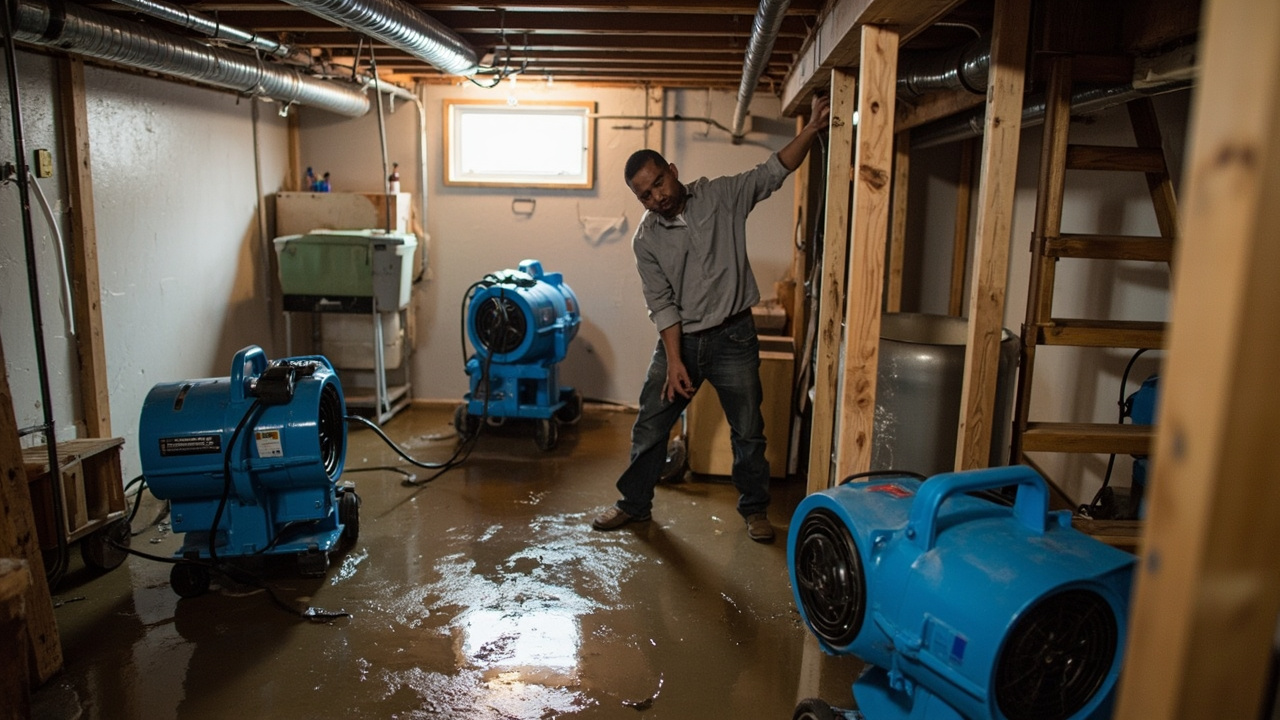
Why This Is a Restoration Job, Not Just a Plumbing Job
Replacing the water heater is the plumber’s work. What happens to the water that already escaped is the restoration specialist’s domain. These are two separate scopes of work, and confusing them is one of the most common mistakes homeowners make after a water heater failure.
A plumber installs the new unit and moves on. They are not equipped or certified to assess moisture migration, map saturation with thermal imaging, deploy commercial drying equipment, or test for mold spore counts. IICRC-certified restoration technicians handle that scope.
What Happens Without Proper Structural Drying
Skipping professional drying after a water heater leak is a gamble with your home’s structure. Within 24 to 48 hours, mold colonies begin forming in saturated materials. Within a week, you can have active mold growth behind finished walls that is invisible until you start smelling it or cutting into drywall.
The cost of mold remediation after the fact is consistently higher than the cost of immediate drying. Oakland County building inspectors also require documentation of proper drying and remediation when water damage affects structural components before renovation permits are issued.
Oak Park homeowners dealing with mold concerns after any water intrusion can find specific guidance on remediation protocols in our resource on safely removing mold from Detroit-area homes. The process in Oak Park follows the same IICRC S520 standards.
Insurance Coverage and Documentation
Most homeowner insurance policies in Michigan cover sudden and accidental water damage from a water heater failure. What they routinely deny is damage attributed to a slow leak that was left unaddressed. The documentation you create at the scene, the timestamps on your photos, and the restoration company’s initial assessment report all serve as the evidentiary foundation for your claim.
A restoration specialist with experience in the Detroit metro area will understand what adjusters look for, how to write scope-of-loss documentation, and how to prevent your claim from being delayed or reduced due to incomplete damage reporting.
Proactive Steps to Extend Your Water Heater’s Life in Oak Park
Prevention beats cleanup every time. These are the specific maintenance actions that matter most given Oak Park’s hard water conditions and older housing stock.
- Flush your tank annually. Connect a hose to the drain valve and run water out until it runs clear. This removes sediment before it bakes onto the tank floor. In Detroit-area hard water zones, do this every 12 months without exception.
- Inspect the sacrificial anode rod every three years. This magnesium or aluminum rod inside the tank attracts corrosion away from the steel walls. When it is consumed, the tank itself begins to corrode. Most plumbers can pull and inspect it during a service visit.
- Test the T&P valve once a year. Lift the lever briefly to confirm it opens and releases water, then closes cleanly. A valve that sticks open, drips after testing, or shows heavy mineral encrustation should be replaced immediately.
- Install a drip pan with a drain line. Oakland County building codes require drain pans on water heater replacements in finished mechanical spaces. If your current installation lacks one, add it. A properly plumbed drip pan contains small leaks before they spread across the floor.
- Consider a water softener. This is the single most effective way to extend equipment life in the Detroit metro water service area. Reducing hardness below 3 grains per gallon dramatically slows scale and anode rod consumption.
- Install a leak detection sensor. These simple devices sit on the floor near the tank and trigger an alarm at the first sign of moisture. Some connect to a smartphone app. The investment is minimal compared to the cost of a missed leak.
When Basement Water Damage Goes Beyond the Heater
Sometimes a water heater failure reveals other vulnerabilities. Homes in Oak Park’s older neighborhoods sometimes have pre-existing foundation cracks, aged floor drains, or sump pump systems that struggle during simultaneous events. A heater failure during a heavy rain event, for example, can compound into a multi-source flooding situation that overwhelms a standard sump pump.
If water intrusion in your basement has multiple origins or you are not certain the water heater was the only source, a professional assessment covers all of them. Understanding the full scope of basement flooding scenarios is something we detail in our resource on professional flooded basement cleanup for Detroit-area homeowners.
Gray water from a leaking water heater is generally Category 1 water damage, meaning it comes from a clean supply source. But if it contacts sewer lines, floor drains, or raw concrete with organic material, contamination categories can shift quickly. A restoration technician classifies the water and treats accordingly, which matters for both health safety and insurance documentation.
For situations involving contaminated water or sewage in the basement system, the immediate action steps are covered in detail in our guide on sewage backup cleanup in Detroit.
Get an Assessment Before the Problem Gets Worse
If you recognized two or more symptoms from this guide, your water heater is telling you something clear. Do not wait for the flood to confirm it. A professional assessment from an IICRC-certified restoration team covers visible damage, moisture readings behind walls, and an action plan specific to your home.
Ironwood Water Damage Restoration serves Oak Park and the broader Detroit metro area with 24-hour response. If you are seeing signs of a failing unit or already dealing with water in your basement, reach out now before the drying window closes.
{
“@context”: “https://schema.org”,
“@type”: “BlogPosting”,
“headline”: “Warning Signs Your Water Heater Is About to Flood Your Oak Park Basement”,
“description”: “Learn the key Oak Park water heater leak symptoms before a small drip becomes a flooded basement. Detroit restoration experts explain what to watch for.”,
“wordCount”: 2608,
“datePublished”: “2026-03-21T12:34:00.000Z”,
“dateModified”: “2026-03-21T12:34:00.000Z”,
“inLanguage”: “en-US”,
“mainEntityOfPage”: {
“@type”: “WebPage”,
“@id”: “https://ironwoodwaterdamagerestorationdetroit.com”
},
“publisher”: {
“@type”: “LocalBusiness”,
“name”: “Ironwood Water Damage Restoration Detroit”,
“url”: “https://ironwoodwaterdamagerestorationdetroit.com”
},
“author”: {
“@type”: “Organization”,
“name”: “Ironwood Water Damage Restoration Detroit”,
“url”: “https://ironwoodwaterdamagerestorationdetroit.com”
},
“image”: {
“@type”: “ImageObject”,
“url”: “https://ironwoodwaterdamagerestorationdetroit.com/wp-content/uploads/2026/03/how-to-spot-a-failing-water-heater-before-it-flood-1.jpg”
}
}
{
“@context”: “https://schema.org”,
“@type”: “LocalBusiness”,
“name”: “Ironwood Water Damage Restoration Detroit”,
“url”: “https://ironwoodwaterdamagerestorationdetroit.com”,
“address”: {
“@type”: “PostalAddress”,
“addressLocality”: “Detroit”
},
“areaServed”: {
“@type”: “City”,
“name”: “Detroit”
}
}
{
“@context”: “https://schema.org”,
“@type”: “BreadcrumbList”,
“itemListElement”: [
{
“@type”: “ListItem”,
“position”: 1,
“name”: “Home”,
“item”: “https://ironwoodwaterdamagerestorationdetroit.com”
},
{
“@type”: “ListItem”,
“position”: 2,
“name”: “Blog”,
“item”: “https://ironwoodwaterdamagerestorationdetroit.com/blog”
},
{
“@type”: “ListItem”,
“position”: 3,
“name”: “Warning Signs Your Water Heater Is About to Flood Your Oak Park Basement”
}
]
}
{
“@context”: “https://schema.org”,
“@type”: “Service”,
“serviceType”: “Water Damage Restoration”,
“provider”: {
“@type”: “LocalBusiness”,
“name”: “Ironwood Water Damage Restoration Detroit”,
“url”: “https://ironwoodwaterdamagerestorationdetroit.com”
},
“areaServed”: {
“@type”: “City”,
“name”: “Detroit”
},
“description”: “Learn the key Oak Park water heater leak symptoms before a small drip becomes a flooded basement. Detroit restoration experts explain what to watch for.”
}