
Why Palmer Park Homes Hide Water Damage Better Than Most
Palmer Park is one of Detroit’s most architecturally significant neighborhoods. The Tudor Revival homes, brick colonials, and multi-story apartment buildings along Pontchartrain Drive and LaSalle Boulevard were built with thick plaster walls, deep wall cavities, and complex roof lines. That’s beautiful construction. It’s also the perfect environment for water damage to hide for months before you see a single stain.
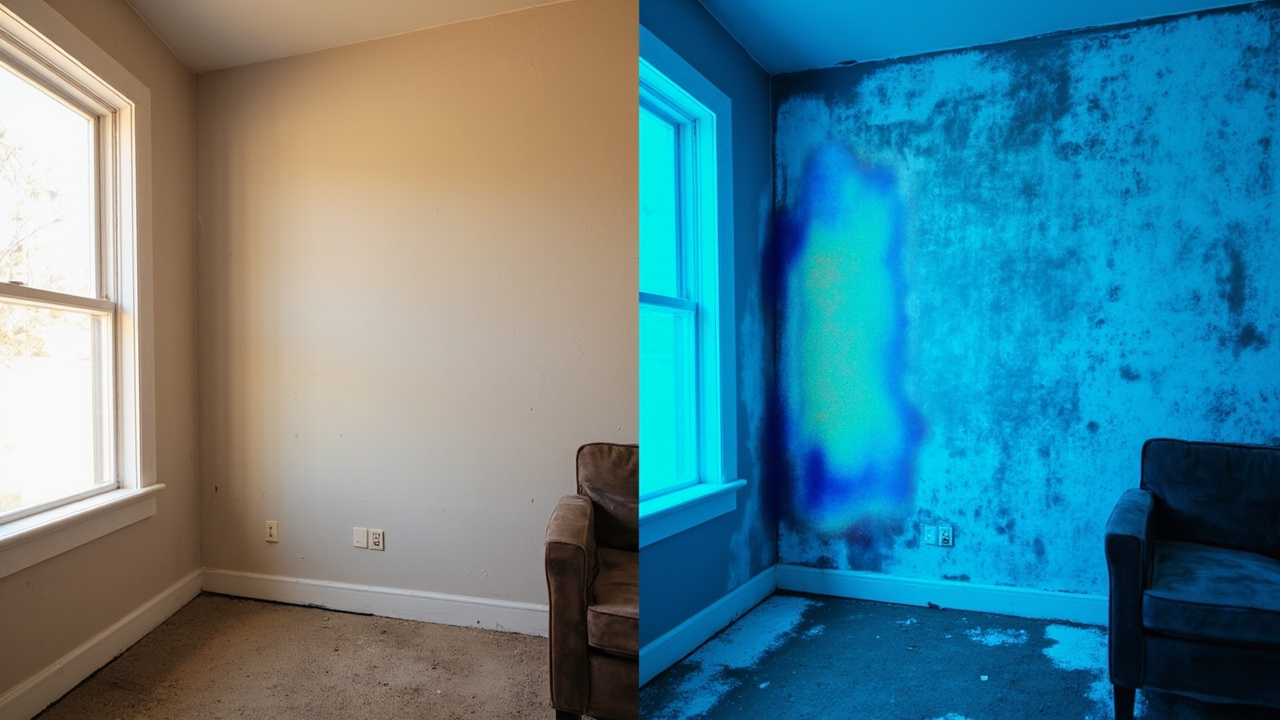
By the time moisture shows up on a wall surface in a Palmer Park home, the water has often been sitting inside the wall cavity for weeks. You’re already looking at potential mold growth, compromised drywall, and rotted framing. The real damage is invisible to the naked eye.
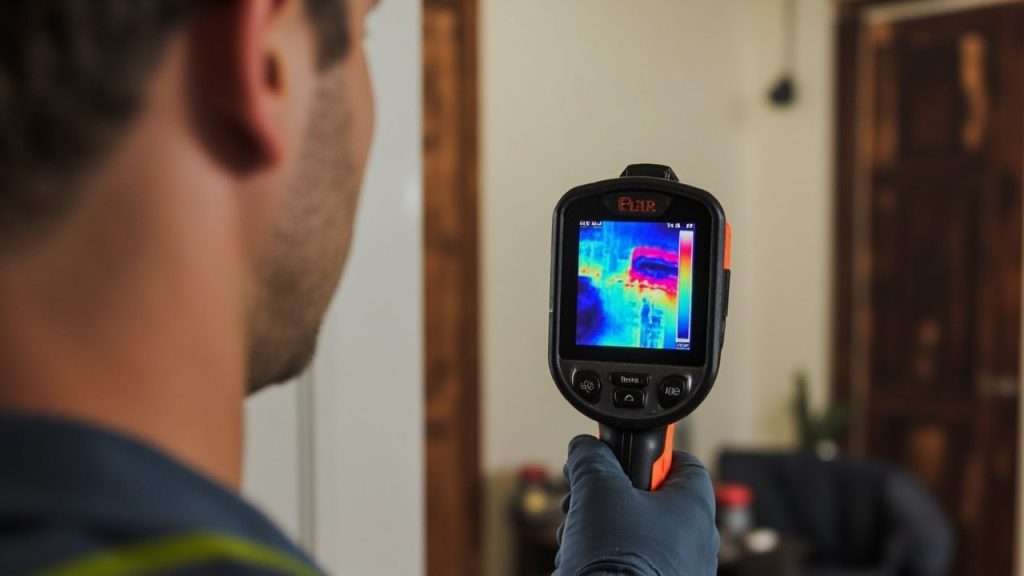
Thermal imaging cameras change that completely. A professional-grade infrared camera reads temperature differentials across wall surfaces and ceilings, showing technicians exactly where moisture is hiding without opening a single wall.
The Science Behind Infrared Thermography for Leak Detection
Every material releases heat energy at a different rate. Water has an exceptionally high thermal mass compared to drywall, wood framing, or plaster. When moisture saturates a wall cavity, it creates a measurable temperature anomaly on the surface above it.
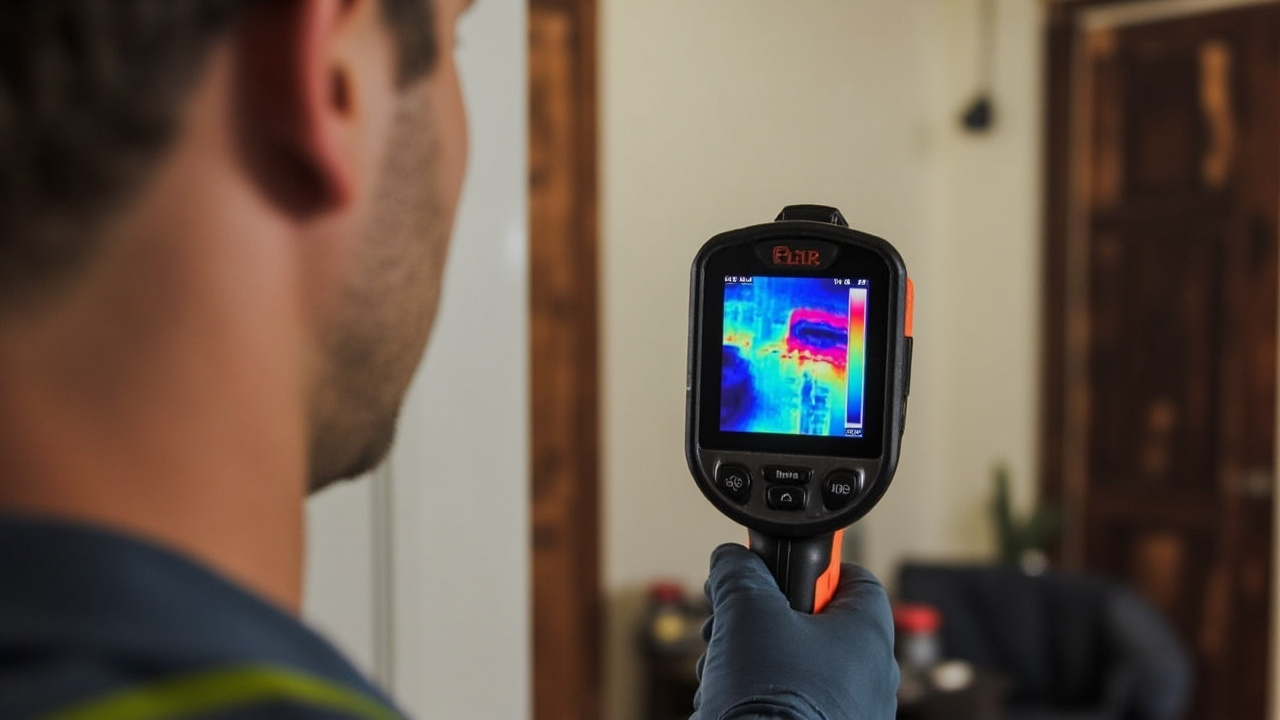
This happens because of evaporative cooling. Wet building materials shed heat faster than dry ones. A FLIR thermal camera detects that temperature drop, displaying it as a cool, dark zone on the thermal image. That zone tells the technician where the moisture is, how far it has spread, and often which direction it traveled from the source.
The critical measurement here is Delta T, the temperature differential between the affected area and the surrounding dry material. Professional-grade infrared cameras used in water damage restoration can detect temperature variances as small as 0.1 degrees Celsius. That precision matters in a home with multiple water sources and complex structural layers.
According to the EPA’s guidance on moisture and mold, moisture control is the single most critical factor in preventing mold growth in building materials. Finding moisture fast is not optional. It’s what separates a minor remediation from a full gut job.
How a Thermal Scan Actually Works in Your Home
A proper infrared inspection is not just pointing a camera at a wall. There is a defined process that IICRC-certified technicians follow to get accurate, actionable data.
Step 1 — Establishing Baseline Conditions
For thermography to work reliably, there needs to be at least a 10-degree Fahrenheit difference between indoor and outdoor temperatures. In Detroit, this is rarely a problem from October through April. That temperature differential creates the thermal gradient that makes moisture anomalies visible on the camera screen.
Step 2 — Systematic Wall and Ceiling Scanning
The technician moves through each room in a grid pattern, scanning walls, ceilings, floors, and around window frames. In Palmer Park’s older homes, special attention goes to the areas around chimney chases, the roof-to-wall junctions on dormers, and the perimeter of basement walls where groundwater intrusion is common in Metro Detroit’s clay soil conditions.
Step 3 — Moisture Meter Confirmation
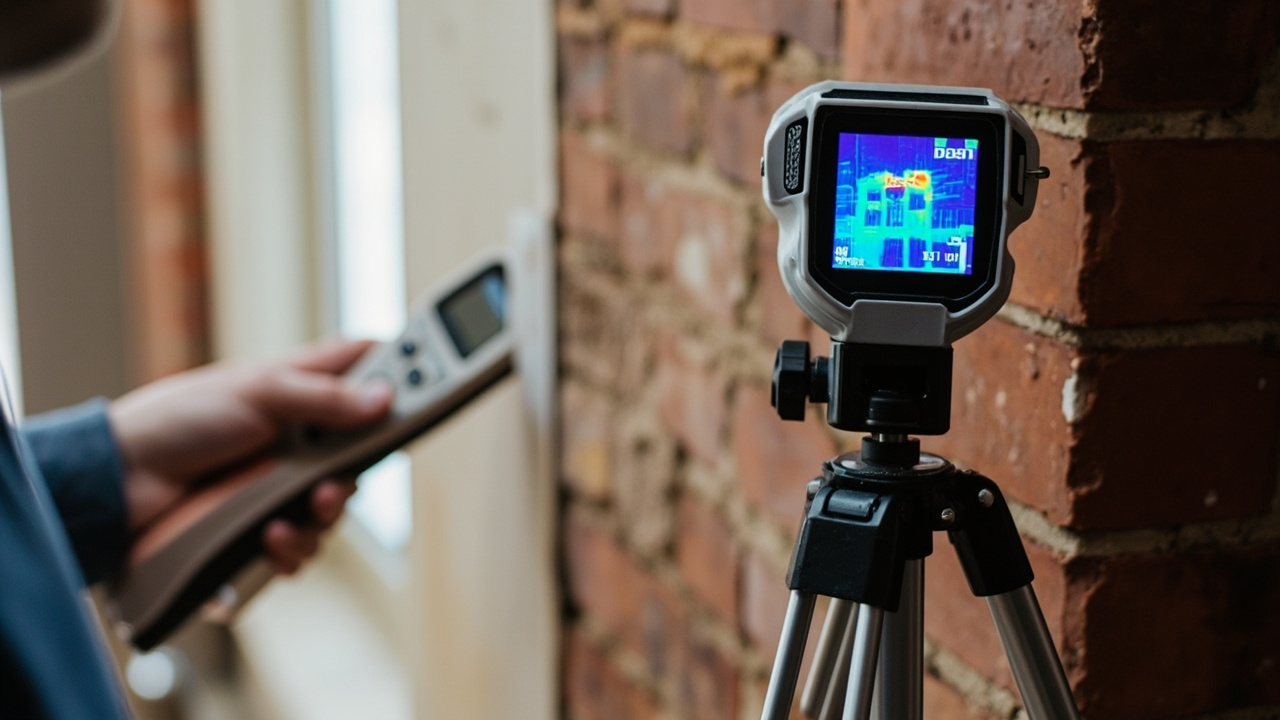
Thermal imaging identifies where to look. A calibrated moisture meter confirms what is there. After flagging anomalies with the FLIR camera, the technician uses a pin-type or non-invasive capacitance moisture meter to get actual moisture content readings at each flagged location. This two-step process eliminates false positives caused by thermal bridges, cold air gaps, or pipe chases.
Step 4 — Moisture Mapping and Documentation
Every flagged area gets logged into a moisture map of the property. This document serves two purposes. First, it tells the restoration crew exactly where to dry and what materials may need removal. Second, it gives your insurance adjuster visual proof of the damage extent before any demolition begins. That documentation matters when you are filing a claim with your carrier.
Step 5 — Psychrometric Readings
Psychrometrics is the measurement of moisture in the air. Temperature, relative humidity, and dew point readings taken at the time of the scan establish the baseline for the drying plan. These numbers tell the technician how many commercial dehumidifiers and air movers are needed, where to place them, and what target conditions the drying equipment needs to reach.
Professional FLIR Cameras Versus Consumer Options
There are cheap thermal camera attachments for smartphones. Some homeowners buy them and scan their own walls. Here is the problem with that approach.
| Feature | Professional FLIR (E8 Pro / T540 Series) | Consumer Smartphone Attachment |
|---|---|---|
| Thermal Sensitivity | 0.04°C to 0.08°C (40–80 mK) | 0.15°C to 0.30°C (150–300 mK) |
| Image Resolution | 320×240 to 640×480 pixels | 80×60 to 160×120 pixels |
| Accuracy for Moisture | Reliable at typical Delta T levels | Misses low-level moisture anomalies |
| Data Logging | GPS-tagged, exportable reports | Screenshot only |
| Insurance Documentation | Accepted by most major carriers | Often rejected without calibration records |
| False Positive Rate | Low when paired with moisture meter | High, especially near electrical components |
The resolution gap is significant in Palmer Park homes. When you are scanning a 12-foot plaster wall in a 1920s colonial, a low-resolution image may show a vague cool zone. A professional-grade FLIR camera shows you the exact boundaries of the moisture intrusion, the direction of wicking, and whether the floor cavity below is also affected.
IICRC certification requires technicians to follow defined moisture assessment protocols. That standard exists for a reason. The data you collect on day one determines every decision made through the entire restoration process.
Water Damage Scenarios in Detroit Where Thermal Imaging Is Most Critical
Frozen Pipe Damage in Michigan Winters
Detroit’s freeze-thaw cycles are severe. January and February routinely push overnight lows into single digits. When a supply line in an exterior wall cavity freezes and bursts, the water does not always flow where you can see it immediately. It travels down wall cavities and into floor assemblies before appearing anywhere visible.
If you are dealing with the aftermath of a burst pipe, read our detailed guide on fixing the mess after a frozen pipe bursts in your Detroit home. Thermal imaging in these situations can trace the water path from the rupture point all the way down to the subfloor, preventing the kind of missed moisture that turns into a mold problem 30 days later.
Roof Leaks in Complex Palmer Park Rooflines
The Tudor and colonial homes in Palmer Park have steep hipped roofs, intersecting valleys, and multiple dormers. These are high-risk areas for flashing failures and ice dam damage. A roof leak in a dormer can travel horizontally inside the attic before dropping down into a second-floor wall cavity. The entry point and the visible damage can be 15 feet apart. Thermal imaging finds both.
Slab Leaks in Mid-Century Construction
The apartment buildings and ranch-style homes around the Palmer Park golf course area often sit on slab foundations. A slab leak from a pressurized supply line can push warm water through the concrete, creating a distinct thermal signature on finished floors above. The heat differential from a hot water line slab leak is often detectable through ceramic tile and hardwood flooring.
Basement Seepage from DWSD Infrastructure
The Detroit Water and Sewerage Department manages aging infrastructure throughout the city. During heavy rain events, combined sewer overflows and lateral line backups push water into basement walls from the outside. This kind of seepage saturates block foundation walls without any single visible entry point. A thermal scan of a wet basement reveals which block courses are saturated and where drainage pressure is highest.
For situations that escalate to full basement flooding, our team also handles flooded basement cleanup across Metro Detroit with the same documentation-first process.
What Thermal Imaging Cannot Do On Its Own
A thermal camera is a detection tool. It is not a standalone diagnostic. Here is a clear breakdown of where the technology is definitive and where it needs to be combined with other tools.
| Detection Scenario | Thermal Camera Alone | Thermal Camera Plus Moisture Meter |
|---|---|---|
| Active pipe leak inside wall | Identifies likely zone | Confirms and quantifies moisture content |
| Dried water stain (historical) | May miss it entirely | Moisture meter detects residual elevation |
| Thermal bridge (cold stud cavity) | Shows false cool zone | Moisture meter eliminates false positive |
| Slab leak in active water line | Strong thermal signature | Confirms floor material moisture level |
| Mold growth behind drywall | Cannot detect mold directly | High moisture reading flags mold risk zone |
| Roof leak travel path | Maps moisture migration clearly | Quantifies severity at each point |
Understanding this distinction protects you from two mistakes. The first is trusting a thermal scan without moisture meter confirmation and demolishing the wrong wall. The second is skipping the scan entirely and missing moisture that never shows on a meter probe because you tested the wrong location.
The Connection Between Undetected Moisture and Mold Growth
In Metro Detroit’s humid summers, mold can begin colonizing wet building materials in as little as 48 to 72 hours under the right temperature and humidity conditions. Palmer Park’s older homes often have limited wall ventilation, which means moisture that enters a wall cavity stays there.
If you have seen visible mold in another area of your home and are wondering whether hidden moisture is behind it, the process for removing mold safely from Detroit-area homes starts with finding all the moisture sources first. Treating visible mold without mapping the hidden moisture that feeds it is a short-term fix.
Thermal imaging paired with air quality testing gives you the full picture before any remediation work begins. That sequence matters for scope of work accuracy and for your health.
How This Technology Protects Your Insurance Claim
Insurance carriers are increasingly sophisticated about water damage claims. Adjusters for major carriers now expect moisture documentation before approving demolition and replacement scopes.
Here is what a thermal imaging report provides that a phone photo cannot:
- GPS-tagged and time-stamped images showing the date and time of initial assessment
- Calibrated temperature data showing Delta T measurements at each anomaly zone
- A moisture map overlay showing spread from the source point
- Psychrometric baseline data establishing conditions at the time of assessment
- Before-and-after thermal images documenting the drying progress
This documentation package strengthens your claim and accelerates the adjuster’s approval process. It also protects you if a dispute arises about the extent of damage after restoration is complete.
If your water damage involves any sewage component, the documentation need is even higher. Our guide on sewage backup cleanup in Detroit covers the Category 3 water classification and why documentation from the first hour matters for both health and insurance purposes.
Choosing a Thermal Imaging Restoration Team in Detroit
Not every water damage company in the Metro Detroit area uses professional-grade thermal equipment. When you contact a restoration company for an assessment, ask these specific questions before scheduling.
Ask what model of thermal camera the technician will bring. A specific model number answer indicates the company actually owns the equipment. A vague answer about having infrared technology suggests they may be using a low-resolution consumer tool.
Ask whether the technician is IICRC certified in water damage restoration. The IICRC certification program sets the industry standard for moisture assessment procedures, including how thermal imaging data must be collected and documented. Certification is not decoration. It tells you the technician is trained to interpret what the camera shows.
Ask how they document findings for insurance. If the answer is photos on a phone, keep looking. Professional moisture mapping with psychrometric data is what gets claims approved and keeps your project on track.
Palmer Park homes are significant investments. The architectural character of those homes also means that unnecessary demolition to find a leak costs far more than it should. Thermal imaging done right protects both your home and your claim. Call a Detroit-area IICRC-certified team that carries professional FLIR equipment and produces documented moisture maps. That is the standard the job requires.
{
“@context”: “https://schema.org”,
“@type”: “BlogPosting”,
“headline”: “How Thermal Imaging Cameras Find Hidden Water Damage in Palmer Park Homes”,
“description”: “Thermal imaging cameras reveal hidden water damage in Detroit’s Palmer Park homes without tearing down walls. Learn how FLIR technology protects your investment.”,
“wordCount”: 1951,
“datePublished”: “2026-03-24T06:24:00.000Z”,
“dateModified”: “2026-03-24T06:24:00.000Z”,
“inLanguage”: “en-US”,
“mainEntityOfPage”: {
“@type”: “WebPage”,
“@id”: “https://ironwoodwaterdamagerestorationdetroit.com”
},
“publisher”: {
“@type”: “LocalBusiness”,
“name”: “Ironwood Water Damage Restoration Detroit”,
“url”: “https://ironwoodwaterdamagerestorationdetroit.com”
},
“author”: {
“@type”: “Organization”,
“name”: “Ironwood Water Damage Restoration Detroit”,
“url”: “https://ironwoodwaterdamagerestorationdetroit.com”
},
“image”: {
“@type”: “ImageObject”,
“url”: “https://ironwoodwaterdamagerestorationdetroit.com/wp-content/uploads/2026/03/thermal-imaging-cameras-and-how-they-find-hidden-w-1.jpg”
}
}
{
“@context”: “https://schema.org”,
“@type”: “LocalBusiness”,
“name”: “Ironwood Water Damage Restoration Detroit”,
“url”: “https://ironwoodwaterdamagerestorationdetroit.com”,
“address”: {
“@type”: “PostalAddress”,
“addressLocality”: “Detroit”
},
“areaServed”: {
“@type”: “City”,
“name”: “Detroit”
}
}
{
“@context”: “https://schema.org”,
“@type”: “BreadcrumbList”,
“itemListElement”: [
{
“@type”: “ListItem”,
“position”: 1,
“name”: “Home”,
“item”: “https://ironwoodwaterdamagerestorationdetroit.com”
},
{
“@type”: “ListItem”,
“position”: 2,
“name”: “Blog”,
“item”: “https://ironwoodwaterdamagerestorationdetroit.com/blog”
},
{
“@type”: “ListItem”,
“position”: 3,
“name”: “How Thermal Imaging Cameras Find Hidden Water Damage in Palmer Park Homes”
}
]
}
{
“@context”: “https://schema.org”,
“@type”: “Service”,
“serviceType”: “Water Damage Restoration”,
“provider”: {
“@type”: “LocalBusiness”,
“name”: “Ironwood Water Damage Restoration Detroit”,
“url”: “https://ironwoodwaterdamagerestorationdetroit.com”
},
“areaServed”: {
“@type”: “City”,
“name”: “Detroit”
},
“description”: “Thermal imaging cameras reveal hidden water damage in Detroit’s Palmer Park homes without tearing down walls. Learn how FLIR technology protects your investment.”
}