
Saving Your Valuable Vinyl Record Collection After a Basement Leak in Ferndale
Your basement floods. You rush downstairs. The carpet squelches under your feet. Then you see them—rows of record sleeves warped and soaked, album covers curling at the edges. That sinking feeling hits hard. Vinyl records aren’t just music. They’re memories, investments, and irreplaceable pieces of culture. In Ferndale, where basements are common and vintage vinyl is part of the local identity, this scenario plays out more often than you’d think. Flooded Basement Cleanup in Grosse Pointe Done Fast and Done Right.
The good news. Quick action can save most of your collection. The bad news. Waiting even a few hours lets mold take hold, and once that happens, the damage is permanent. This guide walks you through what to do right now, why Ferndale’s specific conditions make vinyl extra vulnerable, and when it’s time to call a professional. What to Do Right Now for Sewage Backup Cleanup in Detroit.
Immediate Steps to Take When Your Records Get Wet
Time is your enemy. Mold can start growing on paper and cardboard within 24 to 48 hours. The first 2 hours are critical.
- Stop the Water Source
Turn off the main water supply if it’s a burst pipe. Use towels or a wet vacuum to remove standing water around your collection area. How to Remove Mold Safely from Your Royal Oak Home.
- Handle Records by the Edges
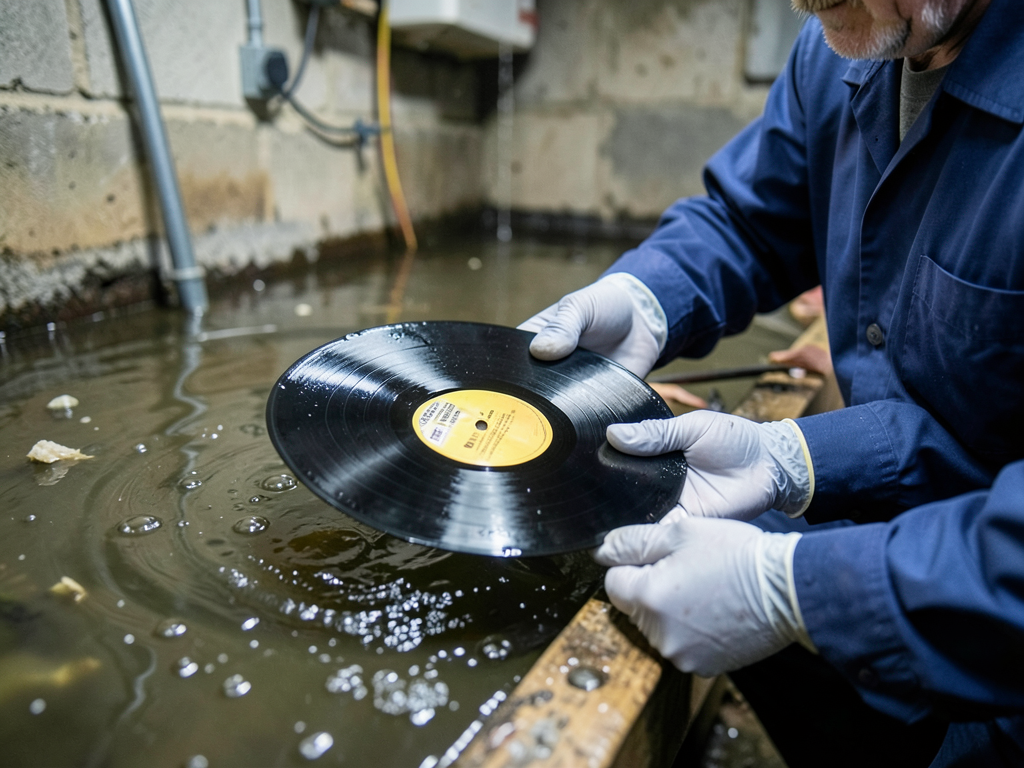
Never touch the grooves. Use clean, dry cotton gloves if possible. Lift each record carefully from its sleeve.
- Rinse Off Debris
If records are muddy or covered in drywall dust, hold them under lukewarm running water. Do not use soap. Do not scrub. Let the water flow over the surface to remove particles.
- Stand Records Upright to Dry
Place them vertically on a clean towel or rack. Do not stack them flat. Do not use heat sources like hair dryers or ovens. Room temperature air circulation is best.
- Separate Wet Jackets and Sleeves
Remove records from paper jackets immediately. Paper traps moisture and accelerates mold growth. Lay jackets flat on absorbent paper to dry separately. EPA mold remediation guidelines.
Warning: Do not try to play a wet record. The needle will grind debris into the grooves and ruin it permanently.
Why Ferndale’s Basement Conditions Make Vinyl Extra Vulnerable
Ferndale sits in a low-lying area near the intersection of 9 Mile Road and Woodward Avenue. The neighborhood’s older homes—many built in the 1920s and 1930s—feature full basements with porous concrete block walls. These foundations weren’t designed for today’s water table levels.
The soil here contains high clay content. Clay expands when wet and contracts when dry. This constant movement creates hairline cracks in basement walls. Water seeps through these cracks during heavy rains or rapid snowmelt—both common in Southeast Michigan.
Detroit’s climate adds another layer of risk. Summer humidity often exceeds 80%. When warm, moist air hits cool basement surfaces, condensation forms. This creates the perfect environment for mold to grow on paper album jackets and cardboard sleeves.
Golden Nugget: Vinyl records themselves (made of polyvinyl chloride) are water-resistant. The real damage comes from the paper components—jackets, sleeves, and liner notes—which absorb water like a sponge and become breeding grounds for mold.
The Professional Restoration Process for Water-Damaged Records
Sometimes DIY isn’t enough. If your collection includes rare pressings, first editions, or irreplaceable family recordings, professional restoration becomes worth the investment. Professional Cleanup for Flooded Basements in Dearborn (What to Expect and Why It Matters).
Professional restorers follow a specific protocol based on IICRC S500 standards for water damage restoration. Here’s what the process looks like: IICRC S500 standards.
| Step | Professional Method | Why It Matters |
|---|---|---|
| Initial Assessment | Category determination (clean vs. contaminated water) | Contaminated water requires different handling to prevent health hazards |
| Record Cleaning | Ultrasonic cleaning with distilled water and specialized solutions | Removes microscopic debris from grooves without scratching |
| Jacket Restoration | Freeze-drying followed by humidification flattening | Prevents warping and removes moisture without damaging ink |
| Mold Remediation | HEPA vacuuming and antimicrobial treatment | Eliminates spores that can spread to other records |
| Final Testing | Playback testing on calibrated equipment | Ensures audio quality meets professional standards |
Golden Nugget: Ultrasonic cleaning uses high-frequency sound waves to create microscopic bubbles that gently lift dirt from record grooves. This method is 40% more effective than hand cleaning for removing embedded debris.
Why General Water Damage Companies Fail with Vinyl
Most water damage restoration companies don’t understand the unique chemistry of vinyl records. They might use high-heat drying fans that warp PVC or apply generic antimicrobial sprays that damage album artwork.
The difference comes down to material science. Vinyl records require 65-70°F temperatures and 40-50% relative humidity for optimal storage. Most restoration equipment is designed for building materials, not delicate media.
Professional record restoration specialists use equipment like:
- HEPA air scrubbers to remove airborne spores
- Digital hygrometers to monitor exact humidity levels
- Specialized record cleaning machines with velvet brushes
- Acid-free storage materials for long-term preservation
Golden Nugget: 78 RPM records (common in Ferndale’s vintage collections) are made from shellac, not PVC. Shellac dissolves in water, making these records nearly impossible to restore once wet. This is why immediate action is critical.
Insurance Documentation for High-Value Collections
If you have a valuable record collection, documenting it before disaster strikes is essential. Most homeowners’ insurance policies have limits on collectibles—often $2,000 to $5,000 total.
Here’s how to maximize your claim if the worst happens:
- Create an Inventory
Photograph each record with its label visible. Note the artist, title, year, and condition. Use apps like CLZ Music or Discogs to maintain digital records.
- Get Appraisals
For records worth over $100, get written appraisals from certified vinyl experts. Keep these with your inventory.
- Store Separately
Keep your most valuable records in a different area from your main collection. This limits losses if one section floods.
- Understand Your Policy
Ask your insurance agent about scheduled personal property endorsements for high-value collections.
Golden Nugget: The IRS allows casualty loss deductions for collectibles if your insurance doesn’t cover the full value. Keep all restoration receipts and appraisals for tax purposes.
Preventing Future Basement Water Damage in Ferndale
Once you’ve salvaged your collection, preventing future damage becomes the priority. Ferndale’s specific conditions require targeted solutions.
Start with exterior waterproofing. The clay soil here holds water against foundation walls. Install proper grading so water flows away from your home. Extend downspouts at least 6 feet from the foundation.
Consider a sump pump system if you don’t have one. Ferndale’s water table rises significantly during spring rains. A battery backup sump pump provides protection during power outages—common during Michigan thunderstorms.
Install a dehumidifier in your basement. Target 45-50% relative humidity. This prevents both mold growth and record warping. Clean the dehumidifier filter monthly during summer months.
Golden Nugget: Michigan’s 2022 Residential Code now requires sump pump discharge pipes to exit at least 10 feet from the foundation. Older Ferndale homes may not meet this standard, creating a cycle where pumped water seeps back through foundation walls.
When to Call a Professional Restoration Service
DIY works for small incidents. But certain situations demand professional help:
- More than 20 records affected
- Contaminated water (sewage, chemical spills)
- Visible mold growth on jackets or sleeves
- Valuable or rare pressings
- Time constraints (you’re leaving town soon)
Professional services can often restore 70-80% of a water-damaged collection if called within 48 hours. After that, mold damage reduces success rates significantly. Fixing the Mess After a Frozen Pipe Bursts in Your Detroit Home.
Warning: Never use heat guns, hair dryers, or ovens to dry records. PVC melts at 165°F. Even low heat can warp grooves permanently.
Local Ferndale Resources for Record Collectors
Ferndale’s music scene means you’re not alone if disaster strikes. Several local resources can help:
Found Sound on 9 Mile often partners with restoration specialists for collector emergencies. The Ferndale Historical Museum maintains climate-controlled storage for local music artifacts. Several local record shops employ staff who understand proper record handling.
The Detroit area also has specialized document restoration companies that handle water-damaged media. These firms use the same techniques as major libraries and archives.
Golden Nugget: Ferndale’s 48220 zip code has one of the highest concentrations of vinyl collectors per capita in Michigan. Local water damage companies familiar with this demographic understand the emotional and financial value of record collections.
Frequently Asked Questions
Can vinyl records be restored after sitting in water for weeks?
Success rates drop dramatically after 72 hours. Mold penetrates paper components and can spread to record surfaces. Professional ultrasonic cleaning may help, but severe cases often result in permanent damage.
Should I throw away moldy record jackets?
Not necessarily. Professional freeze-drying can often salvage jackets with light mold. However, jackets with heavy mold growth should be discarded to prevent spore spread to other records.
How much does professional record restoration cost?
Costs vary by damage extent. Basic cleaning runs $5-10 per record. Complete restoration including jacket repair can cost $25-50 per item. Most companies require a minimum service fee of $200-300.
Can I use my regular vacuum to remove water from records?
No. Household vacuums can generate static electricity that damages record grooves. Use only specialized wet-dry vacuums with HEPA filtration, or better yet, let professionals handle it.
How long does the restoration process take?
Basic cleaning takes 2-3 days. Complex restorations with mold remediation can take 1-2 weeks. Rush services are available for an additional fee.
Take Action Now to Protect Your Collection
Water damage waits for no one. Every hour you delay reduces your chances of saving your vinyl collection. If you’re facing a wet basement in Ferndale, don’t gamble with your memories.
Call (313) 572-5559 today. Our team specializes in water damage restoration for Metro Detroit homes, including delicate media like vinyl records. We’ll arrive within 2 hours, assess the damage, and create a restoration plan that maximizes your chances of saving your collection.
Don’t let mold win. Pick up the phone and call (313) 572-5559 before the next storm hits. Your records deserve expert care, and you deserve peace of mind.