
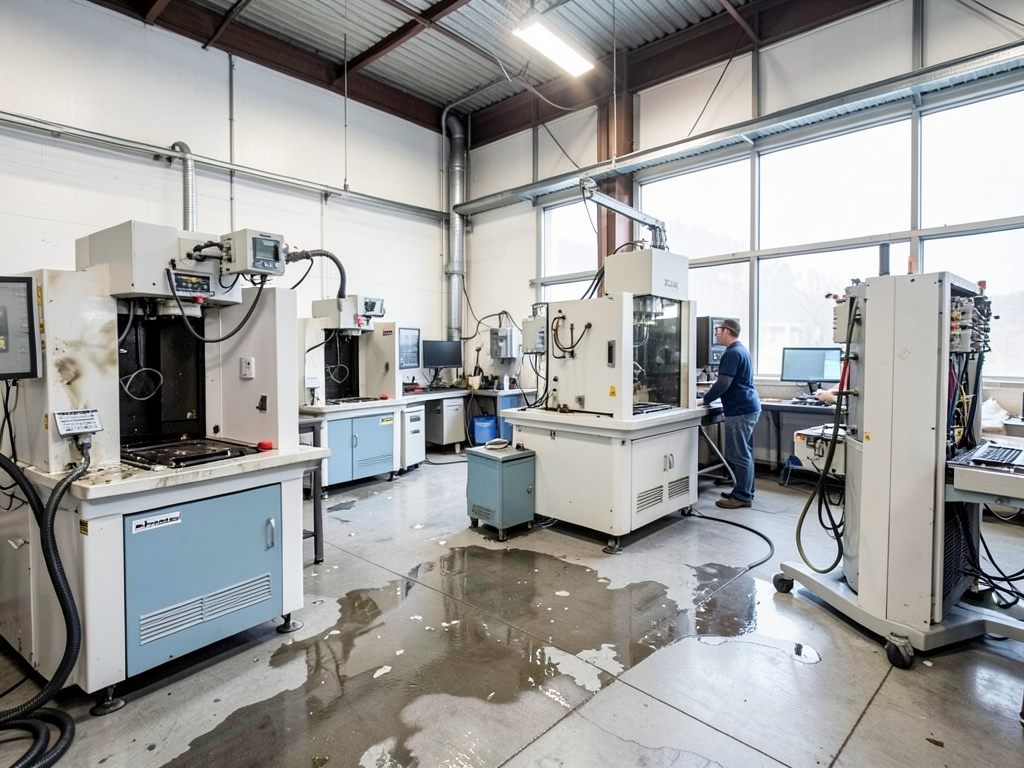
Why Small Machine Shops in Warren Face Unique Risks During a Flash Flood
Warren’s industrial corridor along Mound Road and Groesbeck Highway sits in a low-lying area where sudden storms overwhelm storm drains. Flash flooding here isn’t just water in the parking lot. It’s a direct threat to expensive CNC machines, precision tools, and sensitive inventory that can be ruined in minutes. The combination of aging infrastructure, high clay content soil, and concentrated manufacturing activity creates a perfect storm for industrial water damage when heavy rain hits.
When flash flooding strikes a machine shop, the first 60 minutes determine whether equipment survives or becomes scrap metal. Water conducts electricity through control panels, shorts out servo motors, and causes rust to form on precision-ground surfaces within hours. Unlike residential flooding where the main concern is drywall and carpet, industrial water damage threatens the core assets that keep a business running.
Warren’s position in the Great Lakes watershed means it receives more annual rainfall than many parts of Michigan. When combined with the area’s high clay soil content, water has nowhere to go fast. The result is rapid surface flooding that can breach loading docks and roll-up doors before anyone can react. For small machine shops operating on thin margins, this isn’t just an inconvenience. It’s a potential business-ending event.
Warren’s Industrial Geography Creates Perfect Flood Conditions
The Mound Road industrial corridor developed in the 1950s when Detroit’s auto industry was booming. Back then, storm water management wasn’t a priority. Today, those same factories and machine shops face outdated drainage systems that weren’t designed for current rainfall volumes. The area between 11 Mile and 14 Mile roads sits in a natural bowl where water collects quickly during intense storms.
Warren’s proximity to the Clinton River watershed adds another layer of risk. When the river rises due to upstream rainfall, it backs up into the city’s storm drains. This creates a situation where water can’t escape even if it’s not raining directly overhead. For machine shops with floor-level electrical panels or equipment near exterior walls, this is a recipe for disaster.
The soil composition in Macomb County contains high levels of clay that expand when wet. This expansion creates pressure on foundations and can cause small cracks to form. During a flash flood, water exploits these weaknesses and enters through basement walls or floor slabs. Once inside, it spreads across concrete floors and finds its way to the lowest point, which is often where valuable equipment sits. Flooded Basement Cleanup in Grosse Pointe Done Fast and Done Right.
Unique Equipment Vulnerabilities in Machine Shops
Machine shops contain equipment that reacts to water in ways residential properties never encounter. CNC machines have electronic control panels that short out when submerged. Precision spindles contain bearings that rust within hours of water exposure. Tool changers have hydraulic systems that can be permanently damaged by contaminated flood water.
The coolant systems in machine shops present another hazard. When flood water mixes with cutting fluids, it creates a chemical soup that can damage both equipment and pose health risks to cleanup crews. This mixture often requires specialized handling under EPA guidelines for hazardous materials. Standard water damage restoration techniques don’t address these industrial-specific concerns. Clean Water Act regulations.
Many Warren machine shops operate in buildings with slab-on-grade construction. This means there’s no basement to contain flooding, so water spreads across the entire floor area. When flood water reaches electrical panels, it can cause arc flashes or complete system failures. The cost to replace industrial electrical systems often exceeds the value of the equipment they power.
Critical First Response Timeline for Industrial Flooding
The first 60 minutes after flash flooding are critical for machine shops. Water continues to conduct electricity through equipment even after power is cut. Rust begins forming on precision surfaces within 4-6 hours. Mold can start growing in 24-48 hours in the warm, humid environment of a machine shop. Fixing the Mess After a Frozen Pipe Bursts in Your Detroit Home.
Professional industrial water damage restoration follows a specific protocol. First, the electrical system must be safely disconnected. This isn’t as simple as flipping a breaker. Industrial panels often require lockout-tagout procedures under OSHA regulations. Next, standing water needs removal using submersible pumps capable of handling contaminated water. OSHA flood response guidelines.
Once visible water is gone, the real work begins. Moisture meters must check inside electrical panels, control cabinets, and equipment bases. Thermal imaging cameras reveal hidden moisture in concrete slabs that can cause problems weeks later. Industrial dehumidifiers then run continuously to remove moisture from the air and prevent secondary damage. How to Remove Mold Safely from Your Royal Oak Home.
Specialized Equipment for Industrial Water Damage
Residential water damage restoration uses equipment designed for homes. Industrial restoration requires heavy-duty machinery. Desiccant dehumidifiers can remove 500-1000 pints of moisture per day compared to the 70-100 pints of standard units. These machines are essential for drying large open areas quickly.
Air movers in industrial settings need to be more powerful. Standard fans move 1,500-3,000 cubic feet per minute. Industrial air movers push 5,000-10,000 CFM to create the airflow needed to dry concrete and equipment surfaces. Without this airflow, moisture gets trapped and causes long-term problems.
HEPA filtration becomes critical in machine shops. Flood water often contains oil, coolant, and other contaminants. Standard air scrubbers won’t capture these particles. Industrial HEPA units with activated carbon filters remove both particulates and chemical vapors from the air during the drying process.
Compliance Requirements for Industrial Restoration
Industrial water damage restoration must comply with multiple regulations. The EPA requires proper disposal of contaminated water under the Clean Water Act. OSHA mandates specific safety protocols for workers entering flooded industrial spaces. The Michigan Department of Environmental Quality may need to approve disposal methods for certain chemical mixtures.
Insurance companies often require documentation of compliance with these regulations. Without proper documentation, claims can be denied even if the work was done correctly. This makes choosing a restoration company familiar with industrial compliance essential for machine shop owners.
The National Fire Protection Association (NFPA) has specific requirements for electrical equipment that has been exposed to water. Simply drying out a control panel isn’t enough. Many components require replacement rather than restoration to maintain safety certifications and insurance coverage.
Cost Factors in Industrial Water Damage Restoration
Industrial water damage restoration costs significantly more than residential work. The equipment is larger and more expensive. The expertise required is specialized. The compliance requirements add administrative overhead. A typical residential basement drying might cost $2,000-$5,000. An industrial machine shop could easily run $20,000-$100,000 depending on the extent of damage.
Several factors drive these costs. First, the need for specialized equipment rental. Desiccant dehumidifiers rent for $300-$500 per day compared to $50-$100 for standard units. Second, the labor costs for technicians with industrial experience. These workers command premium wages due to their specialized knowledge.
Third, the cost of compliance documentation and testing. Industrial hygienists may need to test air quality and surface contamination. This testing alone can cost $1,000-$5,000. Fourth, the potential need for equipment replacement rather than restoration. Some industrial components simply can’t be safely restored after water exposure.
Prevention Strategies for Machine Shop Owners
Machine shop owners in Warren can take several steps to reduce flood damage risk. First, install water detection systems with automatic shutoffs. These systems can detect water at floor level and cut power to vulnerable equipment before major damage occurs. While expensive upfront, they can save tens of thousands in potential losses.
Second, elevate critical equipment above the 100-year flood level. This might mean building platforms or installing equipment on higher floors if available. Even six inches of elevation can mean the difference between minor damage and catastrophic loss. Third, maintain clear drainage paths around the building.
Fourth, create a detailed emergency response plan. This plan should include contact information for restoration companies, insurance providers, and key employees. It should also outline specific steps to take when flooding occurs, including which equipment to prioritize for protection. Fifth, review insurance coverage annually to ensure it covers industrial water damage scenarios.
Insurance Considerations for Industrial Water Damage
Standard commercial property insurance often excludes flood damage. Machine shop owners need specific flood coverage, especially in Warren’s flood-prone areas. This coverage should address both building damage and business interruption. The latter is often more valuable since equipment can be replaced faster than lost revenue.
Insurance companies may require specific mitigation measures before issuing flood coverage. This could include installing sump pumps with battery backup, raising equipment above certain heights, or installing water barriers around critical areas. Meeting these requirements upfront can save money on premiums and ensure coverage when needed.
When filing a claim, documentation becomes crucial. Insurance adjusters need proof of the damage extent, the restoration steps taken, and the compliance with regulations. Working with a restoration company experienced in industrial insurance claims can streamline this process and improve the chances of full coverage.
Case Study: Warren Machine Shop Recovery
A Warren machine shop on Groesbeck Highway experienced a flash flood in July 2024 when a severe thunderstorm dropped 4 inches of rain in two hours. The shop’s floor-level electrical panels were submerged within 30 minutes. Initial damage estimates exceeded $150,000 for equipment alone.
The restoration team arrived within 45 minutes and immediately implemented the emergency response protocol. Electrical power was safely disconnected using proper lockout-tagout procedures. Submersible pumps removed 2,000 gallons of contaminated water in four hours. Industrial dehumidifiers ran for five days to remove moisture from concrete and equipment.
Thermal imaging revealed moisture trapped in electrical panels that weren’t visible to the naked eye. These panels required complete replacement rather than restoration to meet NFPA safety standards. The shop was able to resume limited operations within 72 hours and full production within two weeks. Total restoration cost was $98,000, with insurance covering $85,000 after the deductible.
Choosing the Right Restoration Partner
Not all water damage restoration companies can handle industrial facilities. Machine shop owners need partners with specific experience in industrial environments. Look for companies with IICRC certification in commercial drying, experience with industrial equipment, and knowledge of compliance requirements.
Ask potential restoration partners about their experience with similar facilities. Request references from other machine shops or industrial clients. Verify their insurance coverage includes professional liability for industrial work. Ensure they have relationships with industrial hygienists and testing laboratories for compliance documentation. Professional Cleanup for Flooded Basements in Dearborn (What to Expect and Why It Matters).
The right partner will arrive quickly with appropriate equipment, follow proper safety protocols, and provide detailed documentation for insurance purposes. They should also offer guidance on prevention strategies to reduce future risk. This comprehensive approach can mean the difference between a temporary setback and a permanent closure. What to Do Right Now for Sewage Backup Cleanup in Detroit.
Long-Term Business Continuity Planning
Flash flooding in Warren isn’t going away. Climate data shows increasing frequency of intense rainfall events in Southeast Michigan. Machine shop owners need long-term strategies beyond just emergency response. This includes regular infrastructure assessments, equipment upgrades to water-resistant models, and ongoing staff training for flood response.
Consider creating redundant systems where possible. This might mean having backup electrical panels in elevated locations or duplicate critical equipment that can be quickly deployed. While expensive, these investments can pay for themselves in a single flood event by minimizing downtime.
Build relationships with multiple restoration companies before you need them. When flooding occurs, the best companies are often booked within hours. Having pre-established relationships ensures priority response when every minute counts. This preparation can significantly reduce the total cost and duration of restoration work.
Frequently Asked Questions
How quickly should I respond to flood damage in my machine shop?
Response time is critical. You should begin emergency procedures within the first 15 minutes of discovering flooding. This includes shutting off power to affected areas and moving valuable equipment if possible. Professional restoration teams should arrive within 60 minutes to begin proper mitigation procedures.
Can my CNC machines be saved after flood exposure?
It depends on the extent of exposure and how quickly response begins. Machines exposed to clean water for less than 24 hours often can be restored with proper cleaning and drying. However, machines submerged in contaminated water or exposed for extended periods typically require component replacement or complete rebuilding.
What documentation do I need for insurance claims?
You’ll need photos and videos of the damage before any cleanup begins, detailed inventory lists of affected equipment, invoices for emergency response services, and documentation of compliance with safety regulations. Keep all communication with your restoration company in writing and request daily progress reports during the restoration process.
How can I prevent future flood damage?
Install water detection systems with automatic shutoffs, elevate critical equipment above potential flood levels, maintain clear drainage around your building, and create a detailed emergency response plan. Consider flood barriers for loading docks and water-resistant enclosures for electrical panels. Regular maintenance of your building’s drainage systems is also essential.
What makes industrial flood restoration different from residential?
Industrial restoration deals with larger spaces, more complex equipment, hazardous materials, and stricter compliance requirements. The equipment used is more powerful and specialized. The expertise required includes knowledge of industrial systems, compliance regulations, and insurance claim processes specific to commercial properties.
Take Action Before the Next Storm Hits
Flash flooding in Warren’s industrial corridor is a real and growing threat to machine shops. The combination of aging infrastructure, high clay soil, and concentrated manufacturing activity creates conditions where water damage can occur with little warning. Understanding these unique risks is the first step in protecting your business.
Don’t wait until water is rising to figure out your response plan. Take time now to assess your vulnerabilities, create emergency procedures, and establish relationships with qualified restoration partners. The cost of preparation is minimal compared to the potential losses from a single flood event.
Machine shops in Warren face unique challenges during flash floods, but with proper planning and the right restoration partner, these challenges can be managed effectively. Your equipment, your inventory, and your business continuity depend on taking action before the next storm arrives.
Call (313) 572-5559 today to schedule your inspection. Our team specializes in industrial water damage restoration and can help you create a comprehensive flood response plan tailored to your specific facility and equipment needs.