

How to Check Your Huntington Woods Home for Refrigerator Water Line Leaks Before They Cause Chaos
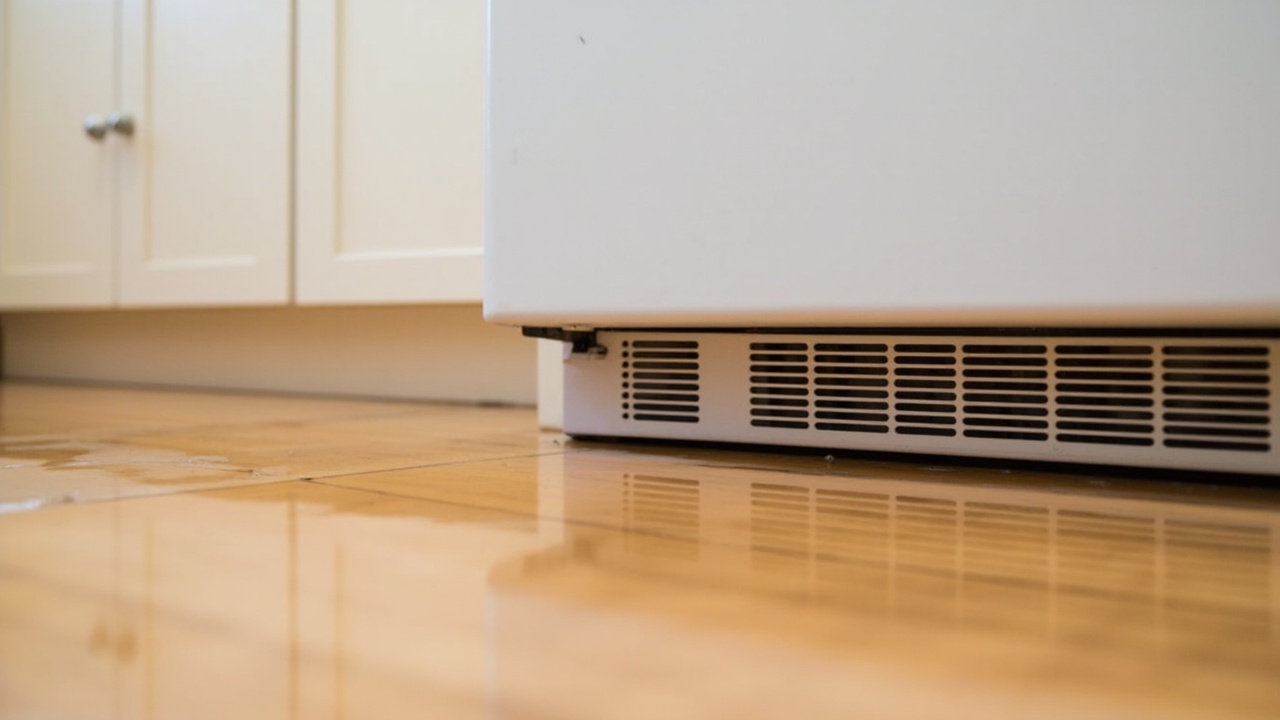
A small puddle behind your refrigerator is not a minor inconvenience. In a Huntington Woods home with original hardwood floors and older cabinetry, that slow drip from a failing water supply line can silently destroy a kitchen in a matter of days. If you have a refrigerator with an ice maker or water dispenser, you have a pressurized water line running behind or under your fridge right now. If that line is aging, kinked, or connected with a worn compression fitting, water is already working its way somewhere it should not be.
This guide walks you through exactly how to find a refrigerator ice maker leak, what damage to expect if one goes unchecked, and when a shop-vac simply will not cut it.
Why Huntington Woods Kitchens Are Especially Vulnerable
Huntington Woods is a small city tucked between Royal Oak and Oak Park, and it is known for its mature tree canopy and classic Tudor and Colonial-style homes built in the mid-20th century. Those homes are charming, but their kitchens present specific challenges when water damage enters the picture.
Many of these kitchens still have original hardwood floors or vinyl over older plank subfloors. The subfloor moisture that builds up under a slow refrigerator leak is invisible from the surface. By the time you see warping or discoloration, the subfloor material has already been saturated long enough for mold to establish itself. Michigan’s humidity levels during the warmer months compound this. Detroit Metro area homes regularly see indoor relative humidity climb above 60% in the summer, which is above the threshold where mold spores activate and colonize damp organic material.
The proximity of basements in Huntington Woods homes is another factor. Many kitchens sit directly above an unfinished or partially finished basement. Water that penetrates a subfloor does not stop there. It follows the path of least resistance down into the basement ceiling and walls, which is why a refrigerator leak upstairs sometimes shows up first as a stain or odor downstairs.
Where Refrigerator Water Line Leaks Start
The water supply line that feeds your ice maker and dispenser runs from a valve on your kitchen wall or cabinet, behind the refrigerator. Most residential supply lines are either braided stainless steel or clear plastic tubing. The plastic version is the one that fails most often.
Here are the most common failure points to inspect on a quarterly basis:
- The compression fitting at the wall valve. Over time, repeated vibration from the refrigerator loosens the fitting. A loose compression fitting drips slowly and consistently behind the appliance where you cannot see it.
- The line itself, especially near bends. Plastic tubing cracks at stress points. If someone moved the refrigerator without disconnecting the line first, the tubing may have a hairline fracture near the bend.
- The connection point at the back of the refrigerator. This fitting takes the most movement stress as the appliance gets pulled out for cleaning or service.
- The ice maker inlet valve inside the refrigerator. When this valve fails partially, it can leak inside the appliance and drain through the bottom, mimicking a supply line leak.
- The drain pan under the fridge. This is a different issue, but a cracked or overflowing drain pan from a blocked defrost drain produces water at the floor level and gets misidentified as a supply line problem regularly.
Immediate Safety Steps When You Find Water
If you discover water at or near your refrigerator, stop and follow these steps in order. Do not start mopping before cutting power and water.
First, pull the refrigerator away from the wall carefully. Avoid yanking the supply line. Locate the shut-off valve on the wall behind the unit. Most are a simple quarter-turn ball valve. Turn it perpendicular to the pipe to shut it off. If you cannot find an individual valve, shut off the water at your main supply line for the house.
Second, check whether the floor around or under the refrigerator is wet. If the water has reached an outlet, baseboard, or is pooling near any electrical connection, do not touch the outlet and go to your breaker panel. Shut off the circuit for the kitchen before going back in. Wet floors near live electrical circuits present a real shock risk.
Third, photograph everything before you touch it. Your property insurance claim will move faster when you have documented the initial condition. Take photos of the supply line, the valve, the floor, and any visible water staining on the walls or cabinetry. The Michigan Department of Insurance and Financial Services notes that documentation quality directly affects how quickly and completely homeowners insurance claims are processed for water damage events.

Assessing the Damage Beyond the Surface
Here is where most Huntington Woods homeowners make a critical mistake. They see a wet floor, clean it up, push the refrigerator back, and consider it resolved. What they cannot see is the moisture that has wicked into the flooring material, traveled under the baseboards, and absorbed into the drywall at the toe kicks of the cabinets.
Professional water damage restoration technicians use thermal imaging cameras and moisture meters to find this hidden saturation. A thermal imaging camera detects temperature variance in building materials. Wet drywall holds heat differently than dry drywall, and that contrast shows up clearly on an infrared scan. Without this equipment, there is no reliable way to know if your subfloor is truly dry or just dry on the surface.
The IICRC (Institute of Inspection Cleaning and Restoration Certification) sets the professional standards for structural drying and moisture assessment. Certified technicians use psychrometric charts and moisture readings to calculate how much drying capacity is needed and how long the process will take. This is not guesswork. It is a science-based protocol that prevents the most expensive outcome, which is mold remediation on top of water damage restoration.
How to Read the Signs of Hidden Moisture
Even without a thermal camera, you can look for specific indicators that the damage goes deeper than the surface:
- Soft or spongy spots in the floor when you walk near the refrigerator location
- Buckling or cupping in hardwood planks
- Swelling at the bottom edge of kitchen cabinets
- Paint bubbling on the baseboard or lower wall section near the leak area
- A musty smell that does not go away after cleaning and airing the kitchen
Any of these signs after a refrigerator water line leak means moisture has moved into the building structure. At that point, the job is no longer a cleanup. It is structural drying.
The Hidden Dangers That Develop After 24 Hours
Mold does not wait for a convenient time. In Michigan’s warm months, mold spores can begin to colonize wet organic material within 24 to 48 hours of sustained moisture exposure. Kitchen drywall, cabinet particleboard, and wood subfloor are all organic materials. They are all mold food when wet.
The concern with refrigerator ice maker leaks specifically is that they are often slow and chronic rather than sudden and obvious. A supply line with a minor compression fitting failure might leak a few ounces per day for weeks before the homeowner notices the floor warping. By that point, mold has had days or weeks to establish behind the kick plate, under the subfloor, and inside the wall cavity.
If the leak has been ongoing for more than 72 hours, or if you are not certain how long the water has been present, treat the situation as a mold risk from the start. For context on how mold can migrate through a kitchen and into adjacent areas, the guidance we provide for removing mold safely in Royal Oak homes applies directly to Huntington Woods as well, given the similar home ages and construction styles.
DIY Cleanup vs. Professional Structural Drying
Not every refrigerator water line leak requires a professional restoration crew. But knowing which situation you are in matters enormously for protecting your home’s value and your family’s health.
| Situation | DIY Appropriate? | What You Need |
|---|---|---|
| Small puddle discovered within hours, surface only wet, no cabinet contact | Yes | Towels, shop-vac, fans for airflow, moisture meter if available |
| Water under flooring or behind cabinets, soft floor spots detected | No | Thermal imaging, industrial dehumidifiers, structural drying protocol |
| Musty odor present, more than 48 hours of exposure suspected | No | Mold assessment, air quality testing, full remediation protocol |
| Water reached basement ceiling or lower level | No | Full moisture mapping of both levels, extraction, structural drying |
| Leak discovered immediately, tile floor, no cabinet or wall contact | Yes, with monitoring | Shop-vac, fans, daily moisture checks for 72 hours |
When a professional is needed, they bring industrial dehumidifiers and high-velocity air movers that work together to control the psychrometric conditions in the space. These are not rental-grade shop fans. Commercial drying equipment exchanges the air in the affected space multiple times per hour and maintains specific temperature and humidity ratios that accelerate evaporation from building materials without causing secondary damage from over-drying.

What Michigan Building Code Means for Your Repair
If the water damage requires cabinet replacement, subfloor repair, or drywall work, the Michigan Residential Code governs the scope and method of those repairs. This matters for two reasons.
First, unpermitted repairs can complicate a home sale. Huntington Woods is a desirable city, and home inspectors in this market are thorough. Subfloor repairs done without proper documentation can become a negotiation issue when you sell.
Second, insurance adjusters review the scope of work against local code requirements. Work that does not meet Michigan Residential Code standards can be denied or reduced in a claim payout. A restoration company familiar with the Detroit Metro area and the specific code requirements for Oakland County will document the work correctly from day one.
Filing a Property Insurance Claim for Ice Maker Water Damage
Most standard homeowner’s insurance policies in Michigan cover sudden and accidental water discharge from an appliance supply line. A slow leak that the carrier determines you should have caught earlier can be classified as a maintenance issue and denied. This is why speed of discovery and response matters.
| Insurance Claim Factor | Impact on Your Claim |
|---|---|
| Time between leak start and discovery | Shorter time favors coverage approval |
| Photographic documentation before cleanup | Speeds adjuster assessment and supports payout |
| Professional moisture report with readings | Validates scope of damage beyond visible surface |
| Evidence of recent appliance maintenance | Demonstrates reasonable homeowner diligence |
| Signed scope of work from licensed restoration company | Required for most insurance-funded repairs in Michigan |
If you are unsure whether the damage qualifies under your policy, a restoration company that works directly with insurance carriers can help you build the claim file correctly from the start. This is not about inflating claims. It is about making sure the full scope of legitimate damage gets documented and covered.
Quarterly Inspection Routine for Huntington Woods Homeowners
Prevention is the best outcome here. A refrigerator water line inspection takes about ten minutes and should happen at least four times per year. Here is what to check each time:
- Pull the refrigerator out six inches and visually inspect the full length of the supply line for cracks, kinks, or moisture on the outside of the tubing
- Check the compression fitting at the wall valve for any white mineral deposits, which indicate slow seepage
- Press your hand against the floor directly behind the refrigerator and check for any soft or cool spots that suggest moisture underneath
- Look at the underside of the lowest kitchen cabinet near the refrigerator for swelling or discoloration at the toe kick
- If your refrigerator is more than ten years old and still has the original plastic supply line, replace it with a braided stainless steel line
Braided stainless steel lines are far more resistant to failure than plastic tubing. The cost of the replacement line and a plumber’s time is a fraction of what water damage restoration costs when a plastic line finally splits.
How Detroit Metro Restoration Teams Handle Ice Maker Leaks
When a professional water damage crew responds to a refrigerator ice maker leak cleanup call in Huntington Woods, the process follows a structured sequence. It is not just showing up with fans.
The first step is moisture mapping. Technicians use thermal imaging cameras and pin-type moisture meters to establish the full extent of saturation in the flooring, cabinetry, and walls. Every reading gets logged against a floor plan. This creates the baseline for the drying protocol.
Next comes extraction. Any standing or absorbed surface water gets removed with commercial extraction equipment before drying begins. Trying to dry over wet material wastes time and drying capacity.
Then comes structural drying, where industrial dehumidifiers and air movers get positioned according to the psychrometric conditions of the space. Temperature, relative humidity, and airflow rates all factor into placement. Technicians return daily to take readings and adjust equipment placement as materials dry at different rates.
This same protocol applies to other water damage scenarios throughout the Detroit Metro area. If you have dealt with water intrusion in other parts of your home, our detailed guide on what to do after a frozen pipe bursts in Detroit covers the structural drying process in more depth. And for homeowners in neighboring communities dealing with basement flooding from any source, our resources on basement cleanup in Grosse Pointe and flooded basement cleanup in Dearborn walk through what the professional process looks like from start to finish.
When to Call a Detroit Water Damage Specialist Right Now
If you found this article because you noticed water near your refrigerator today, here is a simple decision point. If the water has touched any building material beyond the tile or hard surface floor directly under the appliance, or if you cannot confirm exactly when the leak started, call a professional today.
Water damage in a kitchen does not get better on its own. It gets worse, and it gets more expensive the longer it sits. Mold remediation on top of structural drying on top of cabinet and subfloor replacement is a significantly larger project than catching the damage within the first 24 hours.
We serve Huntington Woods and the surrounding Detroit Metro communities including Royal Oak, Oak Park, Ferndale, Berkley, and beyond. Our IICRC-certified technicians are available 24 hours a day, seven days a week. If you are dealing with a refrigerator ice maker leak cleanup situation right now, contact our team and we will have a crew to your home within hours to assess the damage and stop it from getting worse. If you have experienced any backup or sewage-related water issues as a secondary concern, our Detroit sewage backup cleanup guidance is also available to help you understand that process.
Do not wait to see if the floor dries on its own. Call us, get the moisture mapping done, and know exactly what you are dealing with before the 48-hour mold window closes.
{
“@context”: “https://schema.org”,
“@type”: “BlogPosting”,
“headline”: “How to Check Your Huntington Woods Home for Refrigerator Water Line Leaks Before They Cause Chaos”,
“description”: “Spot refrigerator ice maker leaks early in Huntington Woods. Learn the signs, hidden risks, and when to call a Detroit water damage restoration pro.”,
“wordCount”: 2486,
“datePublished”: “2026-04-04T12:40:00.000Z”,
“dateModified”: “2026-04-04T12:40:00.000Z”,
“inLanguage”: “en-US”,
“mainEntityOfPage”: {
“@type”: “WebPage”,
“@id”: “https://ironwoodwaterdamagerestorationdetroit.com”
},
“publisher”: {
“@type”: “LocalBusiness”,
“name”: “Ironwood Water Damage Restoration Detroit”,
“url”: “https://ironwoodwaterdamagerestorationdetroit.com”
},
“author”: {
“@type”: “Organization”,
“name”: “Ironwood Water Damage Restoration Detroit”,
“url”: “https://ironwoodwaterdamagerestorationdetroit.com”
},
“image”: {
“@type”: “ImageObject”,
“url”: “https://ironwoodwaterdamagerestorationdetroit.com/wp-content/uploads/2026/03/checking-your-huntington-woods-home-for-refrigerat-1.jpg”
}
}
{
“@context”: “https://schema.org”,
“@type”: “LocalBusiness”,
“name”: “Ironwood Water Damage Restoration Detroit”,
“url”: “https://ironwoodwaterdamagerestorationdetroit.com”,
“address”: {
“@type”: “PostalAddress”,
“addressLocality”: “Detroit”
},
“areaServed”: {
“@type”: “City”,
“name”: “Detroit”
}
}
{
“@context”: “https://schema.org”,
“@type”: “BreadcrumbList”,
“itemListElement”: [
{
“@type”: “ListItem”,
“position”: 1,
“name”: “Home”,
“item”: “https://ironwoodwaterdamagerestorationdetroit.com”
},
{
“@type”: “ListItem”,
“position”: 2,
“name”: “Blog”,
“item”: “https://ironwoodwaterdamagerestorationdetroit.com/blog”
},
{
“@type”: “ListItem”,
“position”: 3,
“name”: “How to Check Your Huntington Woods Home for Refrigerator Water Line Leaks Before They Cause Chaos”
}
]
}
{
“@context”: “https://schema.org”,
“@type”: “Service”,
“serviceType”: “Water Damage Restoration”,
“provider”: {
“@type”: “LocalBusiness”,
“name”: “Ironwood Water Damage Restoration Detroit”,
“url”: “https://ironwoodwaterdamagerestorationdetroit.com”
},
“areaServed”: {
“@type”: “City”,
“name”: “Detroit”
},
“description”: “Spot refrigerator ice maker leaks early in Huntington Woods. Learn the signs, hidden risks, and when to call a Detroit water damage restoration pro.”
}