

University District homes sell fast. Those wide brick Tudors and Colonial Revivals along Livernois and the Seven Mile corridor draw buyers who want character, good bones, and a shot at equity. But “good bones” can hide a lot of problems behind plaster walls and beneath original hardwood floors. Water damage is the one issue that can turn a smart investment into a money pit in under twelve months.
If you are serious about a fixer upper in University District, Sherwood Forest, or the Palmer Woods adjacent blocks, you need more than a general home inspection. You need someone who knows how water moves through a 1930s brick home with a stone foundation and a basement sump that may not have been serviced since before you were born.

Why University District Homes Hide Water Damage So Well
Detroit’s University District sits in a part of the city where the housing stock is genuinely old. Most homes here were built between 1920 and 1950. That means original clay tile drain lines, gravity-fed drainage systems, and foundation walls that were never designed to handle the hydrostatic pressure that comes with Wayne County’s heavy clay soils.
When it rains hard in late spring or during a rapid snowmelt in early March, that clay soil holds water like a bowl pressed against your foundation. The Detroit Water and Sewerage Department (DWSD) sewer system in this part of the city is a combined system in many blocks, meaning storm runoff and sanitary waste share the same pipes. When those pipes back up during a heavy rain event, the first place that water goes is into basements through floor drains.
The problem is that water damage from these events does not always look dramatic. A seller does a coat of Drylok on the basement walls, throws down some rubber flooring, and suddenly the evidence of three years of seasonal flooding disappears from a casual walk-through. That is why you need eyes that know what to look for.
The Inspection Tools That Actually Find Hidden Moisture
A standard home inspector carries a flashlight and a probe. That is not enough for a 90-year-old home in this neighborhood. When assessing a potential purchase for water damage, professionals use a specific set of tools that go well beyond what a general inspector brings.
Moisture Meters and What the Readings Mean
A professional-grade pin-type moisture meter penetrates wood framing and subflooring to measure moisture content by percentage. Dry wood typically reads below 15 percent. Readings above 20 percent indicate active or very recent moisture intrusion. Readings above 25 percent mean you have a structural drying problem that has likely been ongoing for months.
Non-invasive moisture meters use electrical impedance to read moisture through finished surfaces without damaging them. These are useful for scanning large areas of drywall or plaster quickly. But they have limits. They can give false positives near pipes and false negatives on dense plaster. A good technician uses both types together.
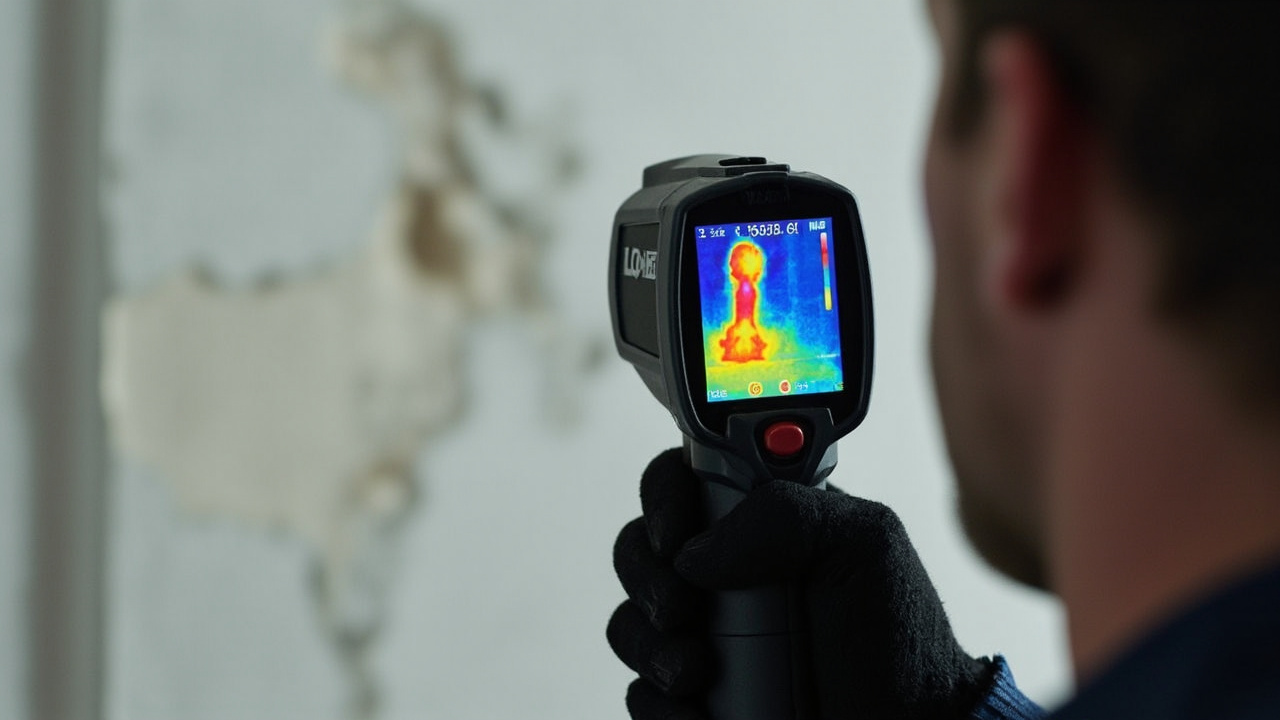
Infrared Thermal Imaging
An infrared camera does not see water directly. It reads temperature differentials. Wet building materials hold a different temperature than dry ones, especially during early morning when ambient temperatures are changing. Evaporating moisture shows as a cooler zone on the thermal image. This is how professionals find water trapped inside wall cavities, beneath tile, and under flooring without tearing anything apart.
In University District homes with original plaster-over-lathe walls, thermal imaging is often the only non-destructive way to find moisture that has wicked into the framing. The IICRC (Institute of Inspection Cleaning and Restoration Certification) sets the training standards for technicians using these tools in restoration work, and it is worth asking any inspector whether they hold IICRC credentials before you hire them.
Where to Look First in a University District Fixer Upper
Not all areas of a home carry equal risk. In Detroit’s older residential neighborhoods, certain spots fail predictably. Focus your inspection energy here.
The Basement Floor Drain and Sump Pit
Lift the floor drain cover. Smell it. If you get a sewage odor, that drain has seen black water backup. Check the sump pit. Is there a sump pump installed? Is it functional? A sump pit with rust staining, efflorescence on the surrounding concrete, or a pump that is more than five years old without documentation of service is a red flag. Missing or failed sump pumps are one of the leading causes of basement flooding in Wayne County homes.
Basement Walls and the Water Table Line
Look for a horizontal stain line on the interior of basement walls. This is called a hydrostatic pressure line, and it tells you exactly how high water has risen inside that basement during a flood event. Fresh paint or Drylok applied below and up to a certain height is a classic attempt to conceal this line. Run your moisture meter along the base of every basement wall.
Efflorescence, that white chalky mineral deposit that forms on masonry, is not just cosmetic. It means water has moved through the block or stone repeatedly, carrying minerals with it. The presence of efflorescence means chronic moisture intrusion, not a single incident.
First Floor Subfloor and Rim Joists
The rim joist is the framing member that sits on top of the foundation wall and supports the first floor. In older Detroit homes, this area is almost never insulated properly, and when basement humidity or flooding is chronic, the rim joists rot. Probe the wood with a screwdriver. If it sinks in without much resistance, you have rot. Replacing rim joists in a full perimeter basement is a significant structural cost.
Upstairs Bathrooms and the Floors Below Them
Original cast iron plumbing in University District homes often holds up surprisingly well. The problem is the wax ring seals on older toilets, the supply lines to clawfoot tubs, and the tile grout in original ceramic tile floors. These fail slowly and silently. Check the ceiling of the room directly below every bathroom. Staining, bubbling paint, or soft drywall means the bathroom above has leaked repeatedly.
The Attic and the Roof Deck
Ice damming is a serious problem in Detroit. When heat escapes through an under-insulated attic, it melts snow on the roof. That meltwater runs down to the cold eaves, refreezes, and backs up under the shingles. Over several winters, this cycle soaks the roof deck and the tops of the exterior walls. Look for dark staining on the underside of the roof sheathing, daylight coming through anywhere, or insulation that looks compressed or water-stained.
If the home has had a frozen pipe burst in its history, you may find staining that runs vertically through multiple floors. Ask the seller directly and check disclosure documents carefully.
Reading the Red Flags During a Walk-Through
Before any instruments come out, your eyes tell you a lot. Here is what to watch for the moment you walk through the door.
- Musty odor that does not dissipate after the first few minutes. This is active mold growth somewhere in the structure, almost always related to chronic moisture.
- Buckled or warped hardwood floors. Wood floors cup and crown when subfloor moisture content rises. This rarely reverses fully even after drying.
- Freshly painted basement walls. Sellers do not paint basements before sale unless they are hiding something or trying to increase appeal in a space that previously looked bad.
- Missing or recently patched drywall on ceilings or near exterior walls on upper floors.
- Sticking doors and windows. Wood frames swell when moisture content rises. A door that drags on the floor was not always that way.
- Visible mold or mildew on window sills, in closets, or in bathroom grout. If you see surface mold here, there is almost certainly more behind the walls.
- New flooring installed over old subfloor in just one room. This pattern often means a localized leak was covered rather than repaired.

The Difference Between Surface Damage and Structural Damage
Not all water damage is equal. A buyer needs to understand this distinction before they can evaluate the real cost of a purchase.
| Damage Type | What It Means | Typical Scope | Time to Remediate |
|---|---|---|---|
| Cosmetic surface staining | Water reached finishes but not framing | Paint, drywall patching | 1 to 3 days |
| Category 1 water intrusion (clean water) | Pipe break, supply line failure | Structural drying, possible subfloor replacement | 3 to 5 days drying |
| Category 2 water intrusion (grey water) | Dishwasher, washing machine, HVAC condensate | Content removal, antimicrobial treatment, structural drying | 5 to 7 days drying |
| Category 3 water intrusion (black water) | Sewage backup, flooding from outside | Full demo of affected materials, mold remediation, structural drying | 7 to 14+ days |
| Chronic moisture without single event | Ongoing humidity, slow leaks, ice damming | Mold remediation, structural repairs, source correction | Highly variable |
Black water events, meaning sewage backup from combined sewer overflow, are common in older Detroit neighborhoods during heavy rain. If a basement has flooded from a sewer backup even once, the EPA and current EPA guidelines consider porous materials like drywall, insulation, and carpet that contacted that water to be contaminated and requiring full removal. You cannot remediate that with bleach and a fan. If this happened in a home you are considering, budget for full basement remediation before it becomes your health problem. Our team handles exactly this type of situation. See our full breakdown of sewage backup cleanup in Detroit to understand what that process actually involves.
Mold Risk in University District Fixer Uppers
Mold grows in 24 to 72 hours after moisture becomes available. A home that flooded even once and was not professionally dried creates the conditions for colony growth inside wall cavities, beneath flooring, and in HVAC ductwork. You may not see it during a showing. You will smell it eventually, and your family will breathe it daily.
The most common molds found in Detroit basement environments are Cladosporium, Penicillium, and Aspergillus species. Stachybotrys chartarum, commonly called black mold, appears in areas with chronic high moisture and low air circulation. All of these require professional remediation to address safely. For more on what that process looks like in older Michigan homes, read our guide on how to remove mold safely.
What a Professional Water Damage Assessment Covers
A water damage-specific inspection goes well beyond what a general home inspector performs. Here is what a qualified restoration professional examines during a pre-purchase assessment.
| Inspection Component | Tool Used | What It Identifies |
|---|---|---|
| Moisture mapping | Pin and non-invasive moisture meters | Active moisture content in wood, drywall, and subfloor |
| Thermal imaging scan | FLIR or equivalent infrared camera | Hidden moisture behind walls and under floors |
| Visual assessment of drainage | Direct inspection | Sump condition, floor drain function, grading around foundation |
| Air quality sampling | Cassette air samples sent to lab | Mold spore types and concentrations in living areas |
| Structural probing | Screwdriver probe, moisture meter | Rot in rim joists, sill plates, and exposed framing |
| Attic assessment | Visual plus moisture meter | Ice dam damage, roof deck rot, insulation compromise |
| Documentation report | Written findings with photos | Evidence for price negotiation and insurance pre-qualification |
How to Use Inspection Findings to Negotiate
A written moisture assessment report is a negotiation document. Every moisture reading above threshold and every square foot of thermal imaging showing active moisture is a dollar amount you can put on the table in purchase price negotiations or seller repair requests.
Sellers in University District know the neighborhood is desirable. They will not always volunteer what the basement looked like two springs ago. Your inspector’s report creates a paper trail and gives you leverage to either negotiate a lower price, require remediation before closing, or walk away cleanly if the scope is beyond what the deal supports financially.
If you are buying in adjacent areas like Sherwood Forest or closer to the Grosse Pointe borders, the inspection process is the same but the baseline risk profile shifts slightly. Grosse Pointe properties also carry basement flooding risk tied to proximity to Lake St. Clair drainage systems. Our team has extensive experience with those properties too. See our page on flooded basement cleanup in Grosse Pointe for context on what remediation looks like in that market.
For buyers looking at Dearborn properties or homes on the west side of the metro, the same principles apply. You can read about what professional remediation involves in that area on our Dearborn flooded basement cleanup page.
Questions to Ask Before You Make an Offer
Put these questions to the seller or their agent in writing before you make an offer on any University District fixer upper.
- Has the basement ever flooded or taken on water? When and what was the source?
- Is there a sump pump, and when was it last serviced or replaced?
- Has the home ever had mold remediation performed? Was it permitted and documented?
- Have there been any insurance claims related to water damage in the past ten years?
- Has the basement ever been painted or coated with waterproofing products? When?
- Are there any known issues with the sewer connection or DWSD service line?
Sellers are not always forthcoming, but their answers become part of the legal disclosure record. If they deny problems that your inspection subsequently uncovers, that disclosure matters when you go back to the table.
When the Damage Is Real, Know What Comes Next
Some buyers find a property they love even after an inspection reveals real water damage. That is not necessarily a reason to walk away. It depends entirely on the scope, the category of water involved, and whether the source of the problem has been corrected or can be corrected within a known budget.
Structural drying of a basement that has dried out between incidents is a defined process with defined timelines. Mold remediation in a closed wall cavity is disruptive but containable. Replacing a failed sump pump and installing a battery backup is a predictable cost. What you cannot fix cheaply is ongoing sewer backup from a failed city connection, a foundation wall that has moved, or mold that has spread into the HVAC system of a home without a clean-access air handler.
Know what you are buying. Have someone qualified tell you the difference before you sign.
If you are ready to schedule a pre-purchase water damage assessment for a University District property or anywhere in the Detroit metro, reach out to the Ironwood team directly. We bring the tools, the IICRC credentials, and the specific local knowledge to tell you exactly what you are looking at before you commit.
{
“@context”: “https://schema.org”,
“@type”: “BlogPosting”,
“headline”: “How to Spot Hidden Water Damage in a University District Fixer Upper Before You Buy”,
“description”: “Buying a fixer upper in Detroit’s University District? Learn how to find hidden water damage before closing—tools, red flags, and what pros look for.”,
“wordCount”: 2405,
“datePublished”: “2026-04-01T10:40:00.000Z”,
“dateModified”: “2026-04-01T10:40:00.000Z”,
“inLanguage”: “en-US”,
“mainEntityOfPage”: {
“@type”: “WebPage”,
“@id”: “https://ironwoodwaterdamagerestorationdetroit.com”
},
“publisher”: {
“@type”: “LocalBusiness”,
“name”: “Ironwood Water Damage Restoration Detroit”,
“url”: “https://ironwoodwaterdamagerestorationdetroit.com”
},
“author”: {
“@type”: “Organization”,
“name”: “Ironwood Water Damage Restoration Detroit”,
“url”: “https://ironwoodwaterdamagerestorationdetroit.com”
},
“image”: {
“@type”: “ImageObject”,
“url”: “https://ironwoodwaterdamagerestorationdetroit.com/wp-content/uploads/2026/03/how-to-spot-hidden-water-damage-in-a-university-di-1.jpg”
}
}
{
“@context”: “https://schema.org”,
“@type”: “LocalBusiness”,
“name”: “Ironwood Water Damage Restoration Detroit”,
“url”: “https://ironwoodwaterdamagerestorationdetroit.com”,
“address”: {
“@type”: “PostalAddress”,
“addressLocality”: “Detroit”
},
“areaServed”: {
“@type”: “City”,
“name”: “Detroit”
}
}
{
“@context”: “https://schema.org”,
“@type”: “BreadcrumbList”,
“itemListElement”: [
{
“@type”: “ListItem”,
“position”: 1,
“name”: “Home”,
“item”: “https://ironwoodwaterdamagerestorationdetroit.com”
},
{
“@type”: “ListItem”,
“position”: 2,
“name”: “Blog”,
“item”: “https://ironwoodwaterdamagerestorationdetroit.com/blog”
},
{
“@type”: “ListItem”,
“position”: 3,
“name”: “How to Spot Hidden Water Damage in a University District Fixer Upper Before You Buy”
}
]
}
{
“@context”: “https://schema.org”,
“@type”: “Service”,
“serviceType”: “Water Damage Restoration”,
“provider”: {
“@type”: “LocalBusiness”,
“name”: “Ironwood Water Damage Restoration Detroit”,
“url”: “https://ironwoodwaterdamagerestorationdetroit.com”
},
“areaServed”: {
“@type”: “City”,
“name”: “Detroit”
},
“description”: “Buying a fixer upper in Detroit’s University District? Learn how to find hidden water damage before closing—tools, red flags, and what pros look for.”
}