
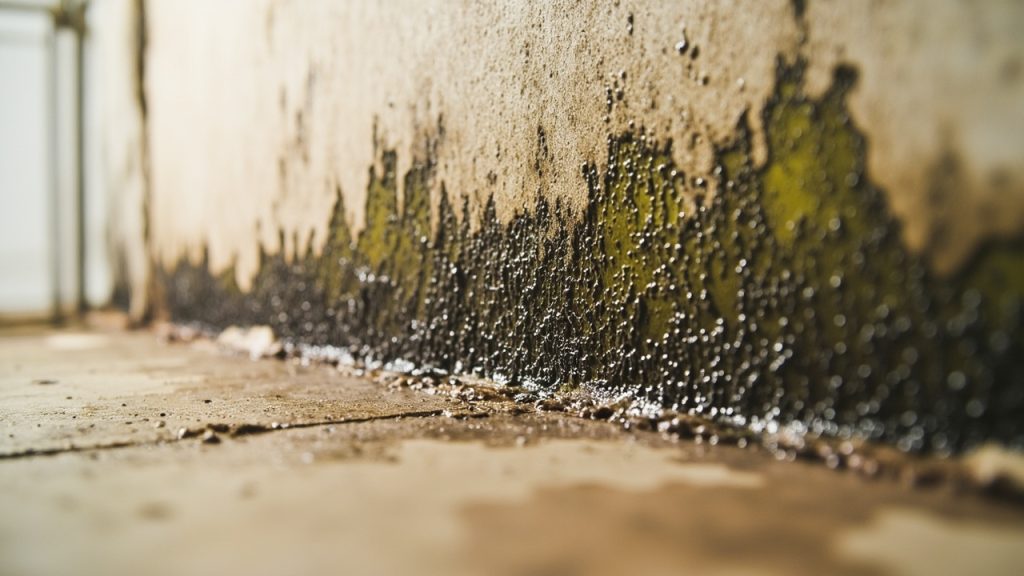
That musty, earthy smell in your basement or bathroom is not always just “old house.” In Farmington Hills and across Metro Detroit, that odor is often the first warning sign of Stachybotrys chartarum, the mold species most people call black mold. Catching it early matters. Once it takes hold behind drywall or under flooring, you are dealing with a remediation project, not a quick wipe-down.
This guide walks you through exactly what to look for, where to look, and when a professional air quality test stops being optional.
What That Musty Smell Actually Is (And Why It Hits Farmington Hills Homes Hard)
The odor you are smelling comes from microbial volatile organic compounds, or mVOCs. These are chemical byproducts released by mold colonies as they feed on organic material. Drywall paper, wood framing, carpet padding, and ceiling tiles are all food sources. The smell is often described as damp, earthy, or similar to rotting leaves.
Farmington Hills sits in Oakland County, one of the wetter suburban zones in the Metro Detroit area. The Great Lakes moisture system pushes humidity levels well above the 50% threshold that the EPA recommends as the upper safe limit for indoor relative humidity. During spring thaw and summer storm seasons, basements in this area absorb moisture through foundation walls, sump pump failures, and window well overflow. That combination creates exactly the conditions mold needs.
If your home was built before the 1990s, the insulation and vapor barrier systems were not designed for current moisture loads. Many homes in Farmington Hills, West Bloomfield, and surrounding communities still have original crawl spaces or unfinished basements with minimal waterproofing. Mold colonies can establish in as little as 24 to 48 hours after a moisture event.
Visual Identification of Black Mold vs. Look-Alike Stains
Many homeowners confuse black mold with other common substances. Getting this right before you start scrubbing matters, because disturbing an active mold colony without containment spreads spores throughout your HVAC system and living spaces.
What Stachybotrys Chartarum Actually Looks Like
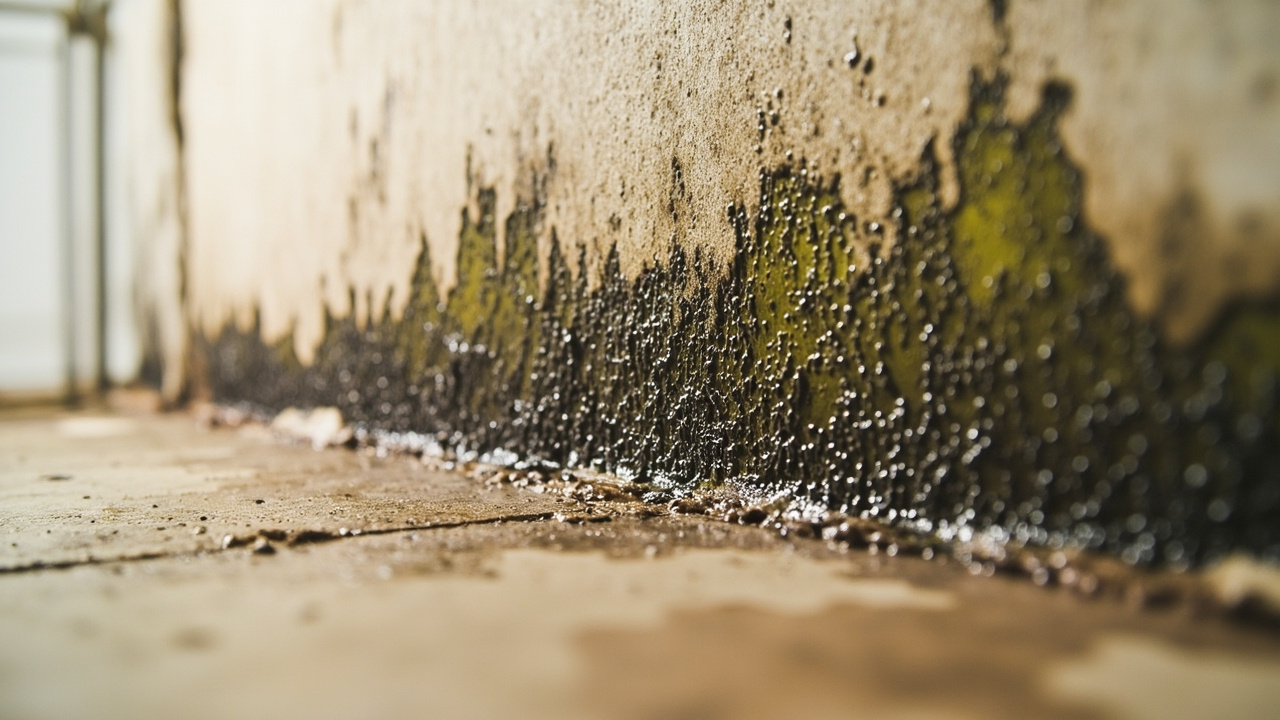
True black mold has a distinct appearance. It typically appears dark greenish-black or charcoal in color. The texture is slimy or wet-looking when active. It grows in irregular, spreading patterns and almost always appears in areas with sustained moisture, not just occasional condensation.
It does not look like the powdery white or gray surface you see on grout or concrete. That powdery residue is usually efflorescence, which is a mineral salt deposit from water moving through masonry. Efflorescence is a water intrusion signal worth addressing, but it is not a biological hazard on its own.
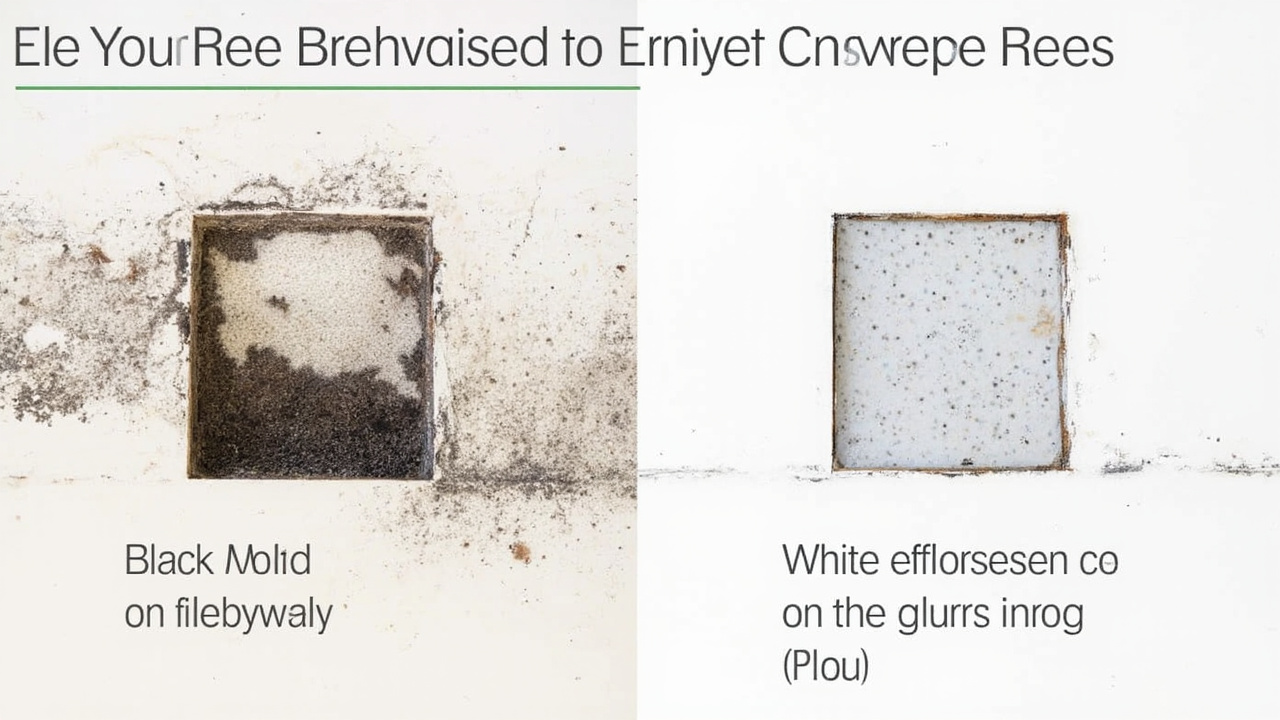
| Substance | Color | Texture | Location | Health Risk |
|---|---|---|---|---|
| Black Mold (Stachybotrys) | Dark green to black | Slimy, wet | Drywall, wood, behind walls | High (mycotoxins) |
| Mildew | Gray or white | Powdery, flat | Tile grout, shower surfaces | Low to moderate |
| Efflorescence | White or chalky | Crystalline, powdery | Concrete, brick, masonry | None (mineral deposit) |
| Cladosporium | Olive green to brown | Suede-like | Fabrics, HVAC ducts, wood | Moderate (allergen) |
| Rust Staining | Orange to dark brown | Hard, dry | Around pipes, floor drains | None |
Physical Health Symptoms That Signal Mold Exposure
Mycotoxins, the toxic compounds produced by Stachybotrys, affect people differently depending on exposure duration and individual sensitivity. Children, elderly residents, and anyone with asthma or a compromised immune system react faster and more severely.
Watch for these symptoms, especially if they improve when you leave the house for extended periods and return when you come back home.
- Chronic nasal congestion or runny nose that does not respond to allergy medication
- Persistent dry cough or throat irritation
- Unexplained skin rashes or eye irritation
- Fatigue and brain fog that worsen in the morning after sleeping at home
- Headaches concentrated around sinus areas
- Respiratory wheeze or shortness of breath, particularly in basement areas
- Worsening asthma symptoms without a clear trigger change
If multiple people in your household report similar symptoms, that pattern is significant. The CDC recommends treating visible mold growth and the conditions that caused it regardless of species identification, because lab testing alone does not determine remediation need when you can already see or smell the problem.
Where Mold Hides in Farmington Hills and Metro Detroit Homes
Black mold does not grow in obvious places. It colonizes behind things. That is part of why the smell hits you before the visual evidence does. Here are the highest-risk locations in Metro Detroit housing stock.
Basements and Crawl Spaces
This is the primary zone in Oakland County and Wayne County homes. Older construction in neighborhoods across Farmington Hills, Livonia, and Southfield relied on poured concrete or block foundations with minimal sealing. Ground water pressure during heavy rains and spring snowmelt pushes moisture through hairline cracks. Once it gets in, it stays. Check along the base of foundation walls, around floor drains, and underneath any basement carpeting or wood subfloor.
Under Bathroom and Kitchen Fixtures
Slow leaks under sinks, around toilet flanges, and behind shower walls are silent mold factories. A drip that goes undetected for weeks creates the sustained moisture Stachybotrys requires. Pull out under-sink cabinet items and inspect the cabinet floor. Soft or stained wood is a warning sign.
Attic Spaces
Condensation from inadequate attic ventilation causes mold on roof sheathing. This is common in homes throughout Metro Detroit after heavy winter snow loads, where warm air escapes from living spaces into the attic and hits cold roof decking. You may smell it before you ever see it because attic air circulates into the house through recessed lighting and ceiling cracks.
Behind Drywall After Water Events
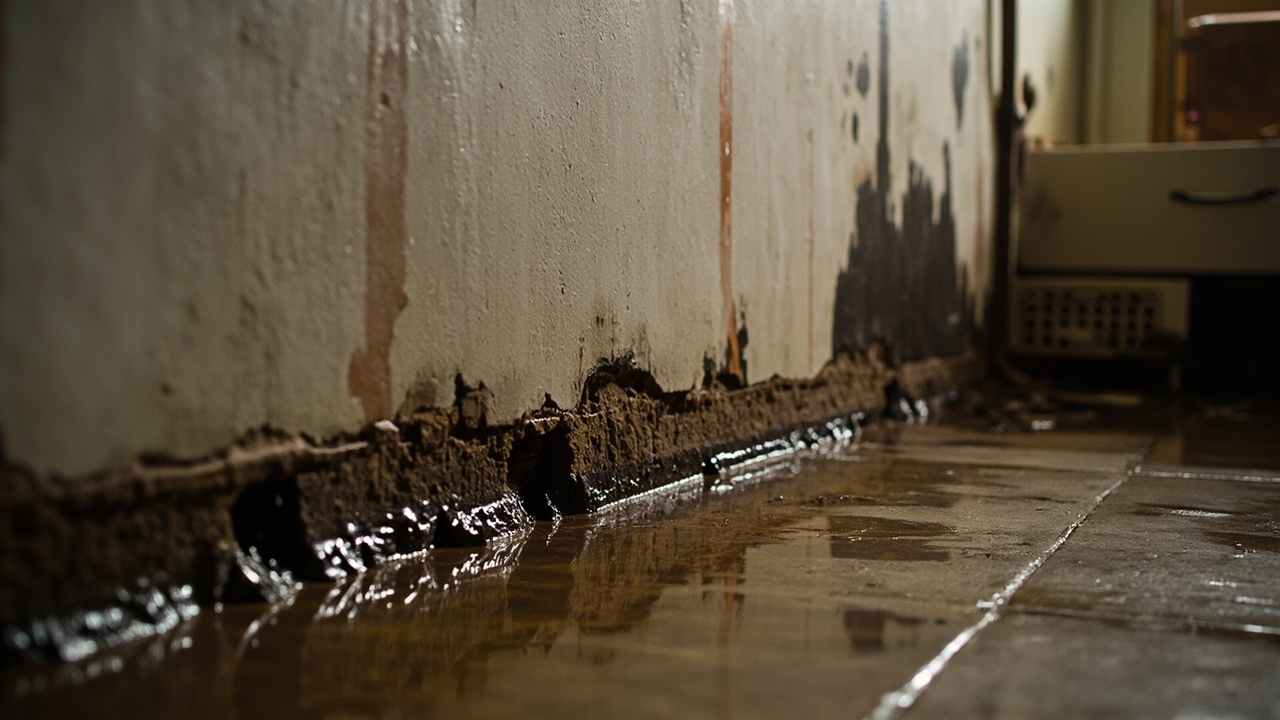
If your home experienced any pipe bursts, flooding, or appliance leaks in the past year and the drywall was not properly dried within 48 hours, assume mold growth occurred inside the wall cavity. Musty smell near a previously wet wall is near-confirmation. Remediation requires opening the wall to confirm and address the colony.
If you have had basement flooding recently, our team handles flooded basement cleanup throughout Metro Detroit with the structural drying protocols that prevent exactly this kind of secondary mold growth.
The Risk Zones in Your Home by Humidity Level
| Area of Home | Typical Relative Humidity | Mold Risk Level | Recommended Action |
|---|---|---|---|
| Unfinished basement | 60% to 80% | High | Dehumidifier, inspect walls, test air quality |
| Finished basement | 50% to 70% | Moderate to High | Check behind drywall at base, monitor sump |
| Bathroom (no fan) | 70% to 90% during use | High | Install exhaust fan, inspect grout and caulk |
| Attic (poor ventilation) | 55% to 75% | Moderate to High | Inspect sheathing, improve ridge venting |
| Living areas (main floor) | 35% to 50% | Low | Maintain HVAC filter, check around windows |
| Crawl space | 65% to 85% | Very High | Encapsulation and dehumidification needed |
DIY Mold Testing Kits vs. Professional Air Quality Testing
Home mold test kits sold at hardware stores have a real limitation. They tell you mold spores exist in the air, which is always true. Outdoor mold spores are present in virtually every air sample. Without a professional baseline comparison and spore count analysis, a positive DIY test tells you very little about whether you have an active indoor colony.
Professional air quality testing performed by an IICRC-certified technician uses spore trap samples sent to an accredited lab. The results show spore species, concentration levels, and a comparison against outdoor baseline counts. If indoor Stachybotrys counts are elevated relative to outdoor samples, you have active mold growth inside the structure. That is the diagnostic clarity a $30 kit cannot provide.
IICRC S520 standards govern the remediation protocol once mold is confirmed. These standards define containment requirements, personal protective equipment, negative air pressure setups, and post-remediation verification testing. Any restoration company you hire should follow this framework.
Why DIY Black Mold Removal Creates Bigger Problems
Bleach does not kill mold on porous surfaces. It removes surface staining while leaving the mycelium, the root structure of the colony, intact inside the material. The mold regrows within weeks. Meanwhile, scrubbing an active colony without proper containment releases millions of spores into the air, spreading microbial growth to previously clean areas of your home.
On a related subject, sewage backup situations carry a compounded risk because black water contamination accelerates mold colonization significantly. If you have dealt with a sewage event, learn more about proper handling in our guide on sewage backup cleanup in Detroit.
Proper remediation requires negative air pressure containment using 6-mil poly barriers to isolate the work zone. HEPA-filtered air scrubbers run continuously during removal. Contaminated porous materials like drywall and insulation must be double-bagged and disposed of per Michigan DEQ guidelines. The structure is then treated with an EPA-registered antimicrobial agent and allowed to dry to target moisture content before reconstruction begins.
How Detroit Area Winters and Springs Create Repeat Mold Conditions
Metro Detroit sees an average of over 30 inches of annual precipitation, with significant snowmelt events concentrated in March and April. Freeze-thaw cycling throughout the winter expands and contracts foundation walls, widening existing cracks and creating new water intrusion pathways. When that melt water enters a basement and does not evaporate quickly, you have a recurring mold trigger every spring.
Frozen pipe bursts are another major driver of mold problems in this region. Homes in northern Detroit neighborhoods and older suburbs throughout Wayne and Oakland counties with exterior wall plumbing runs are particularly vulnerable. A pipe that bursts inside a wall cavity may not be detected for days, and that hidden moisture absolutely produces mold growth. Our breakdown on what to do after a frozen pipe bursts in your Detroit home covers the water damage side of that scenario, including why rapid structural drying within the first 24 hours prevents secondary mold.
Mold Remediation in Nearby Communities Follows the Same Process
The mold problems we see in Farmington Hills mirror what we encounter across the Metro Detroit service area. If you are in Royal Oak and dealing with a suspected mold situation, the identification and remediation process is the same. We cover the Royal Oak specifics in detail in our guide on how to remove mold safely from your Royal Oak home. The same applies to communities like Dearborn, where aging housing stock and basement flooding create high mold risk. Our resource on professional flooded basement cleanup in Dearborn explains what the restoration process looks like from start to finish.
When the Smell Alone Is Enough to Call a Professional
You do not need to see mold to have a mold problem. If you smell a persistent musty odor in any part of your Farmington Hills home and you cannot trace it to an obvious source like a forgotten wet towel or a damp utility closet, that smell represents active microbial growth somewhere in your structure.
Call a professional when any of these conditions apply:
- The musty smell persists for more than a week despite cleaning and ventilation
- You had any water intrusion event in the past 12 months and did not use professional structural drying
- Multiple household members are experiencing unexplained respiratory symptoms
- You see visible growth larger than a 10-inch by 10-inch area, which exceeds what EPA guidelines consider manageable as a DIY project
- The affected area involves HVAC components, which can distribute spores throughout the entire home
- You are preparing to sell the home, because mold disclosure requirements in Michigan are strict and undisclosed mold is a significant legal liability
An IICRC-certified technician can perform air quality sampling, pinpoint the moisture source, and provide a written scope of remediation. That scope protects you whether you are addressing the problem for your own health or for a real estate transaction.
If the smell in your Farmington Hills home is keeping you up at night, the most productive next step is a professional inspection. Waiting gives the colony more time and more surface area. Contact our Detroit-based restoration team for a site assessment and air quality evaluation.
{
“@context”: “https://schema.org”,
“@type”: “BlogPosting”,
“headline”: “How to Tell if That Musty Smell in Your Farmington Hills Home Is Actually Black Mold”,
“description”: “That musty smell in your Farmington Hills home could be black mold. Learn the signs, health risks, and when to call a Detroit restoration pro.”,
“wordCount”: 1960,
“datePublished”: “2026-03-02T15:52:00.000Z”,
“dateModified”: “2026-03-02T15:52:00.000Z”,
“inLanguage”: “en-US”,
“mainEntityOfPage”: {
“@type”: “WebPage”,
“@id”: “https://ironwoodwaterdamagerestorationdetroit.com”
},
“publisher”: {
“@type”: “LocalBusiness”,
“name”: “Ironwood Water Damage Restoration Detroit”,
“url”: “https://ironwoodwaterdamagerestorationdetroit.com”
},
“author”: {
“@type”: “Organization”,
“name”: “Ironwood Water Damage Restoration Detroit”,
“url”: “https://ironwoodwaterdamagerestorationdetroit.com”
},
“image”: {
“@type”: “ImageObject”,
“url”: “https://ironwoodwaterdamagerestorationdetroit.com/wp-content/uploads/2026/03/how-to-tell-if-that-musty-smell-in-your-farmington-1.jpg”
}
}
{
“@context”: “https://schema.org”,
“@type”: “LocalBusiness”,
“name”: “Ironwood Water Damage Restoration Detroit”,
“url”: “https://ironwoodwaterdamagerestorationdetroit.com”,
“address”: {
“@type”: “PostalAddress”,
“addressLocality”: “Detroit”
},
“areaServed”: {
“@type”: “City”,
“name”: “Detroit”
}
}
{
“@context”: “https://schema.org”,
“@type”: “BreadcrumbList”,
“itemListElement”: [
{
“@type”: “ListItem”,
“position”: 1,
“name”: “Home”,
“item”: “https://ironwoodwaterdamagerestorationdetroit.com”
},
{
“@type”: “ListItem”,
“position”: 2,
“name”: “Blog”,
“item”: “https://ironwoodwaterdamagerestorationdetroit.com/blog”
},
{
“@type”: “ListItem”,
“position”: 3,
“name”: “How to Tell if That Musty Smell in Your Farmington Hills Home Is Actually Black Mold”
}
]
}
{
“@context”: “https://schema.org”,
“@type”: “Service”,
“serviceType”: “Water Damage Restoration”,
“provider”: {
“@type”: “LocalBusiness”,
“name”: “Ironwood Water Damage Restoration Detroit”,
“url”: “https://ironwoodwaterdamagerestorationdetroit.com”
},
“areaServed”: {
“@type”: “City”,
“name”: “Detroit”
},
“description”: “That musty smell in your Farmington Hills home could be black mold. Learn the signs, health risks, and when to call a Detroit restoration pro.”
}