
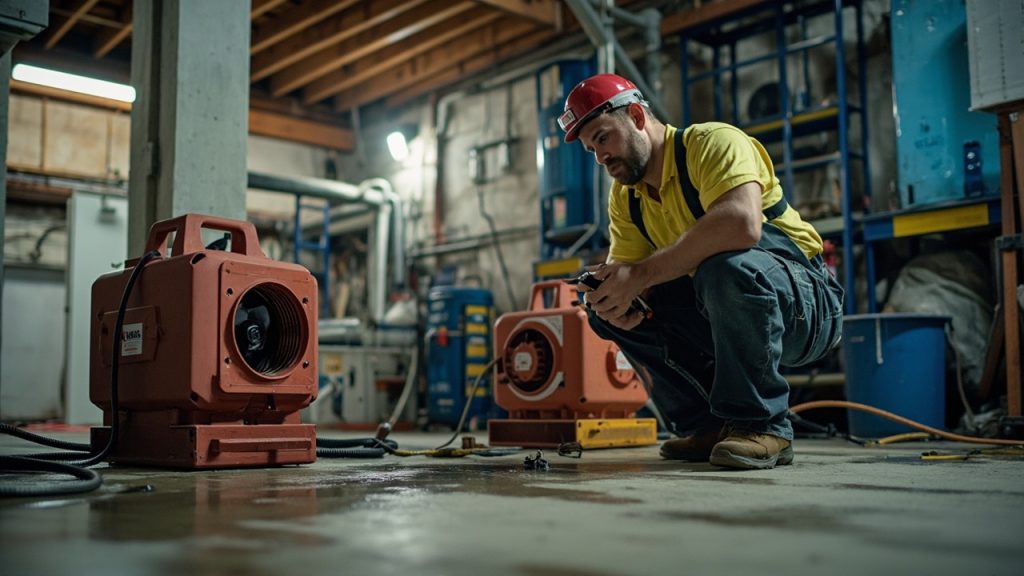
Professional Water Drying Equipment vs Household Fans and Why DIY Often Fails in Detroit Homes
Your basement flooded last night. You pulled out the box fan from the closet, aimed it at the wet carpet, and figured you’d let it run for a few days. It feels like the right move. It is not.
Household fans do not dry wet structures. They move air across surfaces. There is a significant difference, and that difference is what separates a successful restoration from a mold problem you discover six weeks later inside your wall cavity.
This article breaks down exactly why professional water drying equipment outperforms household fans, what the technical specs actually mean for your home, and why the Detroit climate makes this an especially important distinction.
The Technical Gap Between a Box Fan and a Professional Air Mover
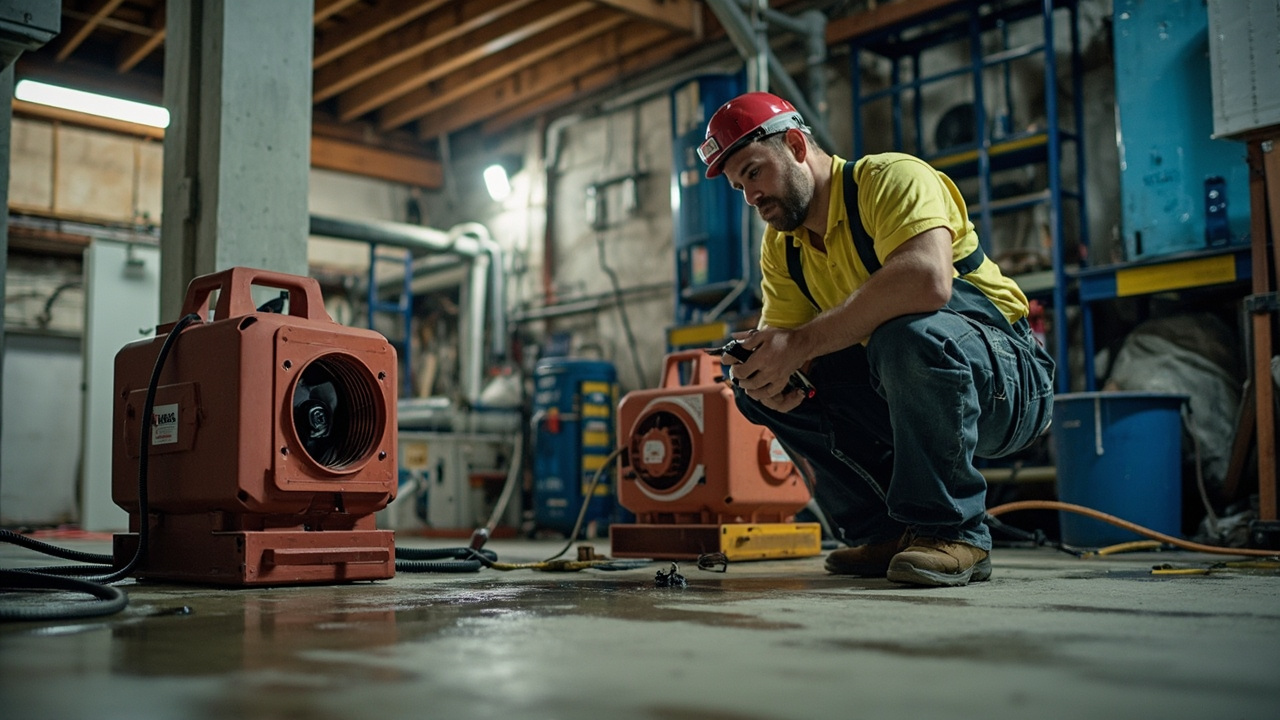
The core measurement for airflow is CFM, or Cubic Feet per Minute. A standard box fan or oscillating pedestal fan moves air, but at low velocity with no directional focus. A professional axial air mover operates at a completely different scale.
Static pressure is the other factor most homeowners never hear about. It measures how much force an air mover can push through resistance, meaning tight spaces, carpet padding, and building cavities. A box fan has near-zero static pressure. It cannot force air through a wet carpet pad, let alone the subfloor underneath it.
| Equipment Type | Typical CFM Output | Static Pressure | Focused Airflow | Effective Drying Depth |
|---|---|---|---|---|
| Standard Box Fan | 200 to 400 CFM | Minimal | No | Surface only |
| Pedestal Oscillating Fan | 300 to 500 CFM | Minimal | No | Surface only |
| Professional Axial Air Mover | 1,500 to 3,000 CFM | High | Yes (45-degree angle) | Carpet, pad, subfloor |
| Centrifugal Air Mover | 2,000 to 4,000 CFM | Very High | Yes (structural cavities) | Wall cavities, subfloor, slab |
Professional air movers are also positioned at specific angles, typically 45 degrees, to push air beneath flooring materials and along wall bases. That is not something you can replicate with a household fan sitting upright on a flat surface.
The IICRC S500 Standard for Professional Water Damage Restoration sets the technical benchmarks for drying equipment placement, airflow rates, and moisture measurement protocols. These are not suggestions. They are the professional baseline that separates a proper restoration from a guessing game.
Fans Move Air but They Do Not Remove Moisture
This is where most DIY drying attempts fail completely. Moving air across a wet surface speeds up evaporation at that surface. The moisture does not disappear. It transfers into the ambient air in the room.
If you run a box fan without a dehumidifier, you are raising the relative humidity in the space. High humidity slows evaporation. At a certain point, your fan stops drying anything at all because the air is already saturated.
Psychrometry is the science behind this process. It describes the relationship between air temperature, relative humidity, and vapor pressure. Professional restorers use this to calculate drying targets and equipment loads. A hygrometer measures real-time moisture levels in the air. Without one, you are guessing.
Professional-grade Low Grain Refrigerant dehumidifiers, commonly called LGR dehumidifiers, remove significantly more moisture per hour than consumer units. A standard hardware store dehumidifier might pull 30 to 70 pints of water per day under ideal conditions. An LGR dehumidifier used in restoration pulls 100 to 180 pints per day, even in cooler, lower-humidity conditions.
| Dehumidifier Type | Water Removal Per Day | Effective in Cool Temps | Grain Depression Capacity | Typical Use |
|---|---|---|---|---|
| Consumer Grade (Store Bought) | 30 to 70 pints | Reduced performance below 65°F | Low | General humidity control |
| Commercial Desiccant | Varies widely | Yes | Moderate | Low-temp environments |
| LGR Dehumidifier (Professional) | 100 to 180 pints | Yes, optimized for lower temps | High | Active water damage drying |
Grain depression refers to how many grains of moisture per pound of air the unit can remove. LGR units achieve much deeper grain depression, which means they keep working aggressively even when room conditions are less than ideal. In a Detroit basement in late fall, a consumer dehumidifier loses significant performance. An LGR unit does not.
Surface Drying vs Structural Drying and Why the Difference Matters
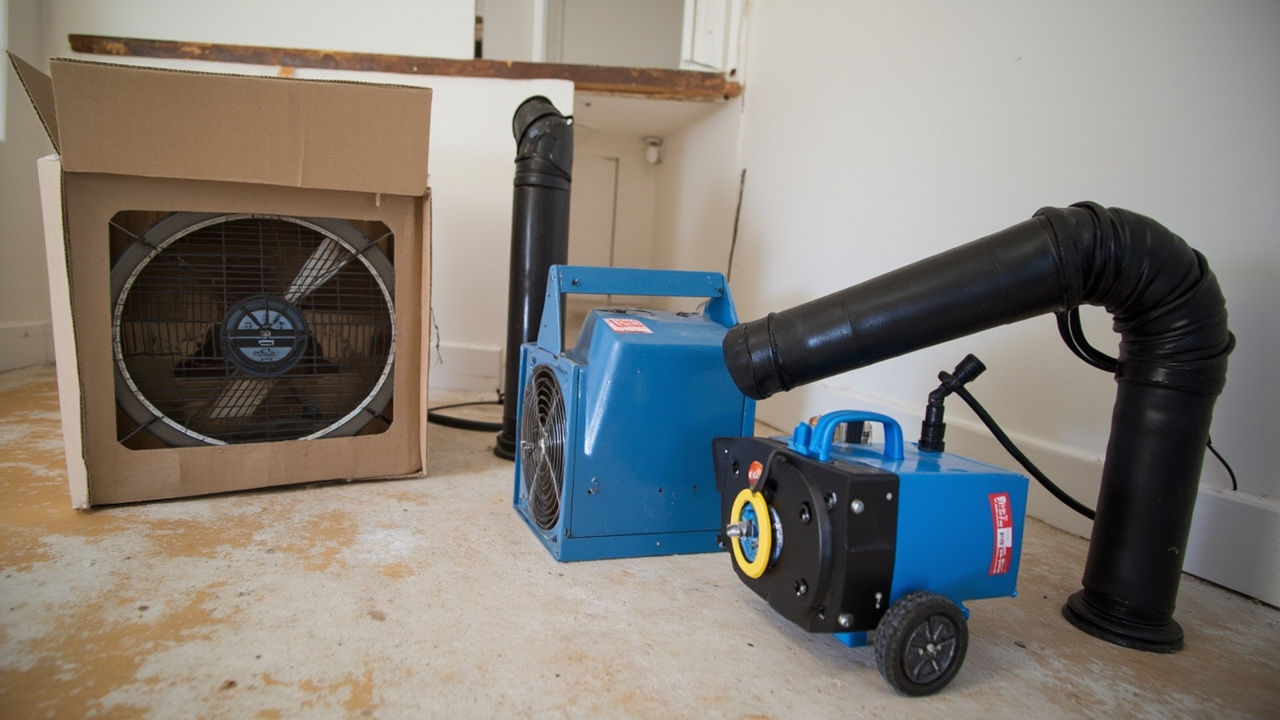
When you point a box fan at wet carpet, the carpet surface dries. What sits below that carpet is a different story entirely.
Carpet is bonded to padding. Padding sits on a subfloor, which is typically plywood or OSB. That subfloor connects to floor joists. Water travels through all of these layers fast, and it does not evaporate from the bottom up simply because warm air is moving across the top surface.
Drywall wicking is another major concern. When a wall base gets wet, the gypsum in the drywall pulls moisture upward through capillary action. Water can wick 12 to 24 inches above the visible waterline. The outside surface of the drywall may feel dry to the touch while the core is still wet. Household fans do nothing to address this.
Professional structural drying uses equipment positioned to force air into the cavity between the subfloor and the floor covering. Specialty drying mats can be placed directly against wet subfloors. Injection drying systems push air directly into wall cavities through small access holes, drying the stud bays from the inside without full wall demolition.
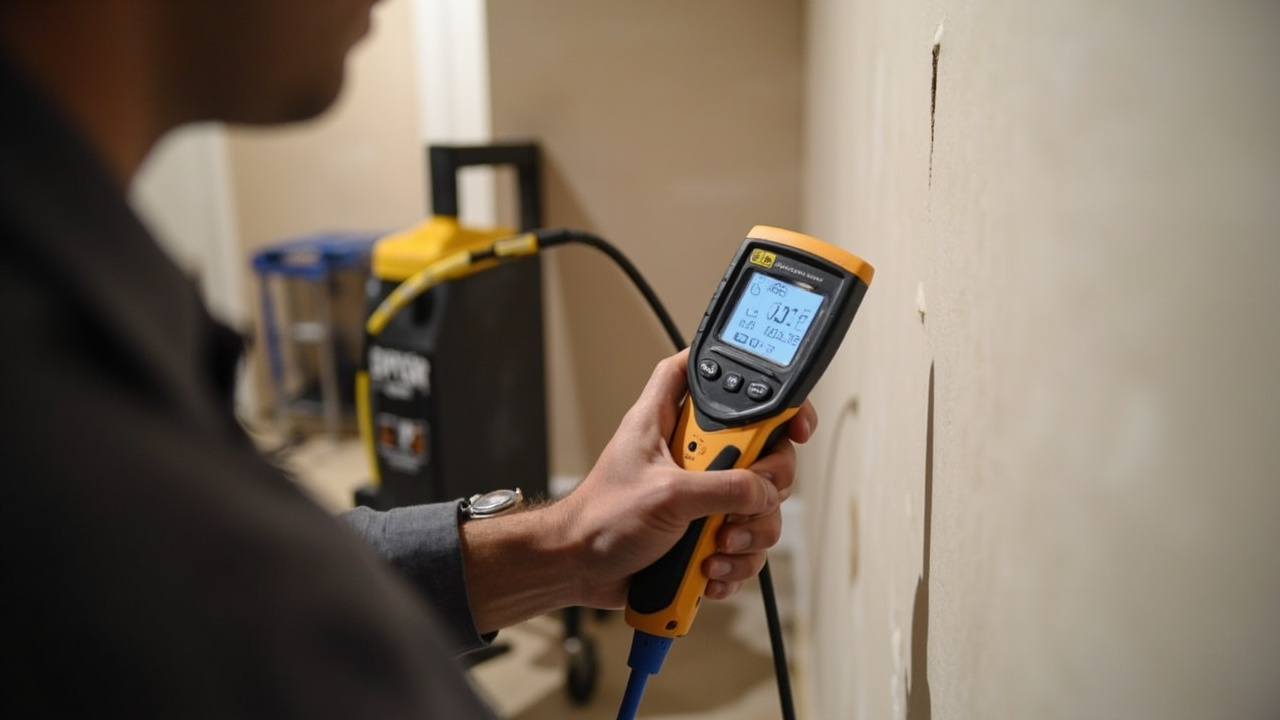
Moisture thermography, using infrared cameras, shows where moisture is hiding inside wall and floor assemblies before a single piece of drywall gets cut. This is not technology available at any hardware store rental counter.
If you have experienced a flooded basement, read more about flooded basement cleanup in Grosse Pointe to understand what a complete structural drying process looks like from start to finish.
The Detroit Factor and Why Southeast Michigan Creates Unique Drying Challenges
Detroit and the surrounding communities sit within close range of Lakes Erie, Huron, and the connecting waterways. Great Lakes humidity affects ambient moisture levels across Wayne County and the surrounding metro area in ways that complicate drying year-round.
Southeast Michigan also experiences heavy rainfall events, particularly in spring and late summer, combined with aging combined sewer infrastructure in many neighborhoods. Basements in areas like Indian Village, Palmer Park, and East English Village flood regularly. Many of these homes were built with finished basements that include carpeted floors and drywalled walls, which are the hardest materials to dry correctly.
The regional climate also creates cold basement environments for much of the year. Unheated or partially heated basements in the Detroit metro drop well below the optimal temperature range for consumer dehumidifiers. LGR equipment maintains performance in these conditions because of its enhanced refrigerant circuit design.
Homes in Grosse Pointe, Royal Oak, Dearborn, and other established communities across the metro area tend to have older construction with less vapor barrier protection under slabs and behind finished walls. Slab moisture migration is a real problem in many of these basements, and it continues even after the visible flood water is gone. No household fan touches that issue.
If your water issue involves sewage, the stakes are even higher. Contaminated water creates biological hazards that require specific remediation protocols well beyond simple drying. See our guide on sewage backup cleanup in Detroit for immediate steps to take.
What Incomplete Drying Actually Costs You Later
The argument for DIY drying usually comes down to cost. Professional restoration is an investment. But incomplete drying creates a deferred cost that almost always exceeds what professional restoration would have been.
Stachybotrys chartarum, commonly called black mold, begins colonizing wet organic materials within 24 to 72 hours under the right conditions. Wet drywall and wet wood framing are ideal environments. Once mold establishes, you are no longer dealing with a drying problem. You are dealing with a remediation problem that involves containment, removal, and testing.
Mold remediation of a single finished basement room in the Detroit area typically costs several times more than the water damage restoration would have been if handled immediately and correctly. That does not include the cost of replacing drywall, insulation, flooring, and potentially structural framing that has deteriorated.
For homeowners in Royal Oak who have discovered mold after water damage, our article on safely removing mold from your Royal Oak home covers what proper remediation actually involves.
Insurance is another factor. Most homeowner policies in Michigan cover sudden water damage events. However, insurers increasingly deny claims where damage resulted from delayed or improper response. If an adjuster finds that a DIY drying attempt failed and allowed mold growth or structural deterioration, coverage for those secondary damages may be denied.
When a Household Fan Is Acceptable and When It Is Not
To be straightforward, household fans are not useless. They serve a specific purpose in a restoration context, as supplemental air circulation to support equipment that is actually doing the work of drying.
Here is when a household fan is acceptable to use after water damage:
- A very small surface spill on a hard floor with no porous materials affected
- As supplemental circulation in a room where professional air movers and an LGR dehumidifier are already running
- Ventilating a room after all wet materials have been removed and surfaces are confirmed dry with a moisture meter
Here is when a household fan is not sufficient:
- Any water event affecting carpet, padding, or subfloor
- Any wall or baseboard contact with water
- Any basement flooding regardless of water volume
- Any water intrusion that has been present for more than a few hours
- Any situation involving warm weather or high outdoor humidity
- Any event involving sewage or contaminated water
Frozen pipe bursts are a common winter water damage event across Detroit and represent exactly the scenario where household fans fail most critically. Cold temperatures, wet framing, and the speed of water infiltration through multiple building layers make professional equipment mandatory. Our guide on handling a frozen pipe burst in your Detroit home walks through the full response process.
The Equipment Professionals Actually Use on a Detroit Job Site
When a restoration crew arrives at a water-damaged property in Wayne County, the equipment setup is systematic and based on the IICRC S500 drying standard. It is not random. Every piece of equipment serves a specific function within the drying system.
A typical residential response for a flooded basement in the Detroit area includes axial or centrifugal air movers positioned at calculated intervals along wet walls and floors, one or more LGR dehumidifiers sized to the square footage and moisture load, moisture meters and hygrometers left in place to track drying progress daily, and an infrared camera scan to identify hidden moisture pockets in wall cavities and under flooring.
Drying logs are documented throughout the process, tracking grain levels in the air, moisture readings in structural materials, and equipment settings. This documentation matters for insurance claims and for verifying that materials reached the dry standard before reconstruction begins.
For Dearborn homeowners dealing with repeated basement flooding, understanding what the full professional process looks like is important. Our page on professional flooded basement cleanup in Dearborn explains every stage from extraction through clearance testing.
The EPA guidance on mold and moisture control confirms that effective moisture removal within 24 to 48 hours is the critical factor in preventing mold growth after water damage. That timeline makes equipment performance, not good intentions, the deciding factor.
The Right Call After Water Damage in Detroit
Running a box fan after a flood feels proactive. It is not inaction, but it is the wrong action when structural materials are wet. The science of psychrometry does not care how long the fan runs. Without the CFM, the static pressure, and the dehumidification capacity to pull moisture from building assemblies, surface air movement is cosmetic.
Detroit homes, with their finished basements, older construction, and Great Lakes climate exposure, are particularly vulnerable to the secondary damage that incomplete drying creates. Mold in a wall cavity is a far more serious and expensive problem than the water event that started it.
If you have water in your home right now, the most useful thing you can do is call a restoration professional and get proper equipment on site fast. The gap between a fan and professional drying equipment is not a matter of degree. It is a different category of tool entirely.
{
“@context”: “https://schema.org”,
“@type”: “BlogPosting”,
“headline”: “Industrial Fans vs Household Fans and Which One Actually Dries a Wet Room”,
“description”: “Detroit homeowner? Learn why household fans fail at water damage drying and what professional equipment actually does to protect your home from mold.”,
“wordCount”: 2022,
“datePublished”: “2026-03-11T12:03:00.000Z”,
“dateModified”: “2026-03-11T12:03:00.000Z”,
“inLanguage”: “en-US”,
“mainEntityOfPage”: {
“@type”: “WebPage”,
“@id”: “https://ironwoodwaterdamagerestorationdetroit.com”
},
“publisher”: {
“@type”: “LocalBusiness”,
“name”: “Ironwood Water Damage Restoration Detroit”,
“url”: “https://ironwoodwaterdamagerestorationdetroit.com”
},
“author”: {
“@type”: “Organization”,
“name”: “Ironwood Water Damage Restoration Detroit”,
“url”: “https://ironwoodwaterdamagerestorationdetroit.com”
},
“image”: {
“@type”: “ImageObject”,
“url”: “https://ironwoodwaterdamagerestorationdetroit.com/wp-content/uploads/2026/03/industrial-fans-vs-household-fans-and-which-one-ac-1.jpg”
}
}
{
“@context”: “https://schema.org”,
“@type”: “LocalBusiness”,
“name”: “Ironwood Water Damage Restoration Detroit”,
“url”: “https://ironwoodwaterdamagerestorationdetroit.com”,
“address”: {
“@type”: “PostalAddress”,
“addressLocality”: “Detroit”
},
“areaServed”: {
“@type”: “City”,
“name”: “Detroit”
}
}
{
“@context”: “https://schema.org”,
“@type”: “BreadcrumbList”,
“itemListElement”: [
{
“@type”: “ListItem”,
“position”: 1,
“name”: “Home”,
“item”: “https://ironwoodwaterdamagerestorationdetroit.com”
},
{
“@type”: “ListItem”,
“position”: 2,
“name”: “Blog”,
“item”: “https://ironwoodwaterdamagerestorationdetroit.com/blog”
},
{
“@type”: “ListItem”,
“position”: 3,
“name”: “Industrial Fans vs Household Fans and Which One Actually Dries a Wet Room”
}
]
}
{
“@context”: “https://schema.org”,
“@type”: “Service”,
“serviceType”: “Water Damage Restoration”,
“provider”: {
“@type”: “LocalBusiness”,
“name”: “Ironwood Water Damage Restoration Detroit”,
“url”: “https://ironwoodwaterdamagerestorationdetroit.com”
},
“areaServed”: {
“@type”: “City”,
“name”: “Detroit”
},
“description”: “Detroit homeowner? Learn why household fans fail at water damage drying and what professional equipment actually does to protect your home from mold.”
}