
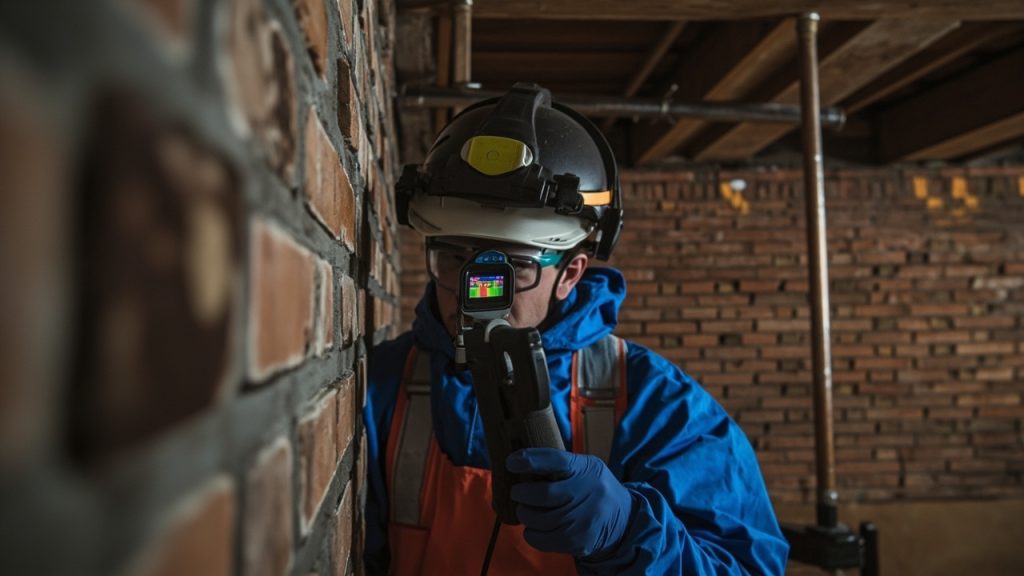
If you’ve spotted discoloration on your basement wall or caught a musty smell near the crawl space of your Ferndale bungalow, you’re already asking the right question. Do you need someone to test the air, or do you need someone to physically remove the mold? These are two very different services, and choosing the wrong one wastes time and money.
The short answer is this. A mold inspection tells you what you’re dealing with. Mold remediation fixes it. Most Ferndale homeowners need to understand both before they pick up the phone.
What a Mold Inspection Actually Does
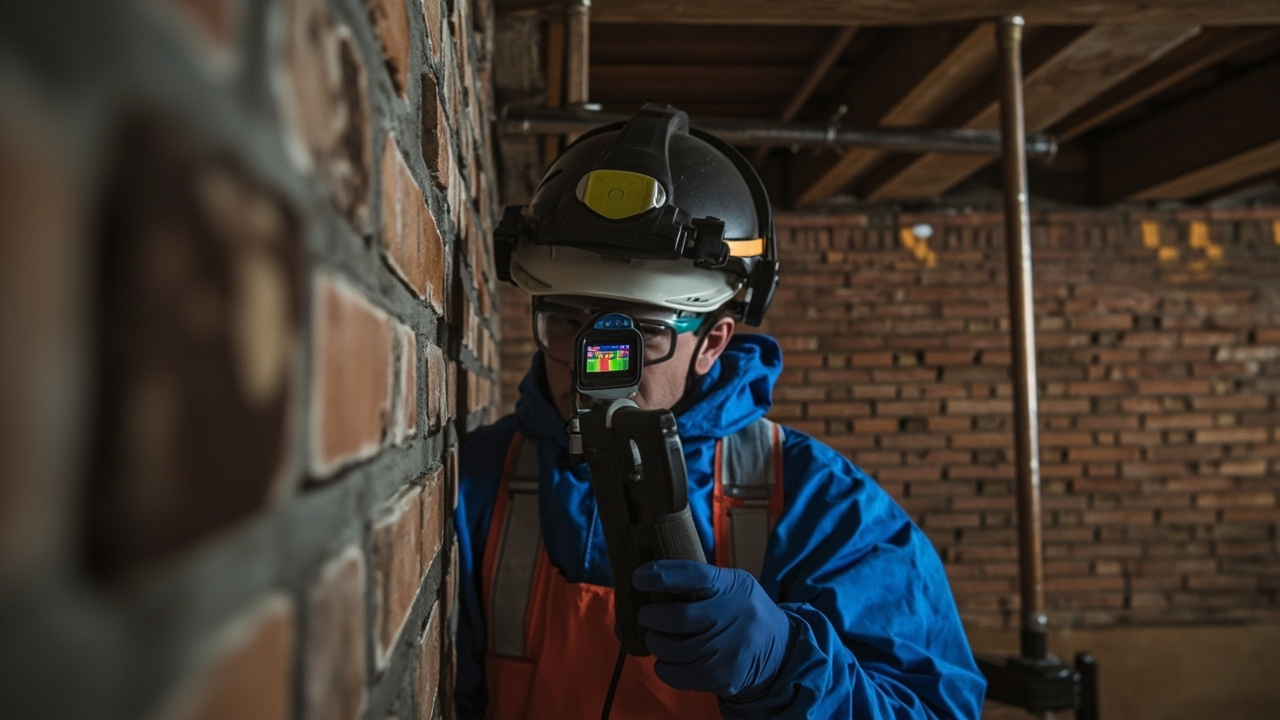
A mold inspection, performed by a Certified Mold Inspector or an Indoor Environmental Professional (IEP), identifies the presence, location, and species of mold growth in your home. It does not remove anything. Think of it as a diagnosis before treatment.
During a proper inspection, the IEP uses several tools and methods to find mold that may not be visible to the naked eye. Ferndale’s older housing stock, particularly the brick bungalows and Craftsman-style homes built before 1960 along corridors like Woodward Avenue and 9 Mile Road, tends to trap moisture in wall cavities and basement block foundations. That makes professional-grade detection tools especially critical here.
What Gets Checked During an Inspection
- Air quality testing to capture spore counts and identify species like Stachybotrys (commonly called black mold) or Cladosporium
- Surface sampling using tape lifts or swabs from suspicious areas
- Moisture mapping with a calibrated moisture meter to identify hidden wet zones inside walls and under floors
- Thermal imaging to detect temperature differentials that indicate moisture intrusion behind drywall or above ceilings
- A full visual survey of the attic, basement, HVAC system, and any water-damaged areas
- Detection of Microbial Volatile Organic Compounds (mVOCs), the gases released by active mold colonies that cause odors
The IEP produces a written report and, if mold is confirmed, a Mold Remediation Protocol. That protocol is a detailed scope of work that a remediation contractor follows to fix the problem correctly.
One important point that often gets ignored. The same company should not perform both the inspection and the remediation. This is a conflict of interest. An inspector who profits from recommending remediation has a financial incentive to find a problem. An ethical inspector operates independently. The EPA’s mold remediation guidance specifically addresses the importance of objective assessment in this process. Always hire your inspector and your remediation contractor separately.
What Mold Remediation Actually Involves
Remediation is the physical removal and treatment of mold-contaminated materials. It follows the IICRC S520 Standards, which is the industry benchmark for professional mold remediation. This is not cleaning with bleach. It is a structured, multi-step process.
A properly run remediation job in a Ferndale home includes containment barriers with negative air pressure to prevent cross-contamination to other rooms, HEPA filtration of all air during the work, removal of porous materials that cannot be salvaged (drywall, insulation, carpet padding), treatment and encapsulation of structural surfaces, and proper disposal of all contaminated debris.
The Steps in a Standard Remediation Job
First, the crew establishes containment. Plastic sheeting seals off the work area, and an air scrubber with HEPA filtration runs continuously to capture airborne spores. Nothing leaves that containment zone without being bagged and sealed.
Second, they remove contaminated materials. In a Ferndale basement with a chronic moisture problem, that often means pulling drywall, removing insulation batt, and sometimes cutting out sections of framing if the wood shows active growth and structural compromise.
Third, surfaces are treated. Remaining structural wood and concrete are scrubbed, sanded, and treated with an EPA-registered antimicrobial agent. HEPA vacuuming follows every step.
Fourth, air clearance testing is performed by an independent IEP. This is called Post-Remediation Verification (PRV). Spore counts must return to or below outdoor baseline levels before the job is considered complete. If your remediation contractor skips this step, that is a serious red flag.

Side by Side Comparison of Mold Inspection vs. Remediation
| Factor | Mold Inspection | Mold Remediation |
|---|---|---|
| Purpose | Identify and document mold presence and type | Physically remove mold and contaminated materials |
| Who performs it | Independent Indoor Environmental Professional (IEP) | IICRC-certified remediation contractor |
| Typical duration | 2 to 4 hours on-site, report within 48 hours | 1 to 5 days depending on scope |
| Relative cost | Lower upfront cost, varies by home size and tests ordered | Higher cost, varies significantly by contamination extent |
| Output | Written report and remediation protocol | Remediated space, followed by PRV clearance test |
| Required before other step? | Yes, ideally precedes remediation | Should follow inspection and written protocol |
| DIY possible? | Partial (home test kits are unreliable, not recommended) | Only for very small, isolated areas under 10 sq ft |
Why Ferndale Homes Are Especially Vulnerable
Ferndale sits in Oakland County, just north of the Detroit city line. The housing stock here is predominantly pre-1960 construction. Block foundations, minimal vapor barriers, older drain tile systems, and unfinished basements are the norm. Michigan’s climate swings between deep freezes and high summer humidity, and that cycle does real damage to older structures.
When snowmelt saturates the soil in March and April, hydrostatic pressure pushes water through block foundation walls. Basements near the 9 Mile Road and Woodward Avenue corridor see this pattern every spring. If that water is not dried out within 24 to 48 hours, mold colonization begins. By the time a homeowner notices a smell or visible growth, the colony has often been active for weeks.
Michigan humidity compounds this. The Detroit Metro Area experiences consistently high relative humidity from late spring through early fall. Without proper dehumidification in an older Ferndale basement, ambient moisture alone can sustain mold growth even when there is no visible water intrusion. This is why moisture mapping matters. You need to know if your wall cavity is reading 18% or 28% before you make any remediation decisions.
If your basement has flooded recently, the mold risk is immediate and real. Our guide on flooded basement cleanup in Grosse Pointe explains what proper drying protocol looks like, and the same standards apply throughout southeast Michigan. And if you’re dealing with a sewage backup on top of the moisture issue, read our breakdown of sewage backup cleanup in Detroit before you touch anything.
When You Need an Inspection First and When You Can Skip Straight to Remediation
This is the question Ferndale homeowners ask most often. Here is a practical framework.
| Your Situation | Recommended First Step | Reasoning |
|---|---|---|
| Musty smell but no visible mold | Inspection first | You need to confirm mold is present and locate it before remediating |
| Visible mold patch under 10 sq ft | Inspection recommended, small DIY possible | Even small patches can indicate larger hidden colonies in older homes |
| Visible mold patch over 10 sq ft | Inspection, then remediation | IICRC S520 standards classify this as a significant contamination event requiring a formal protocol |
| Recent water damage (pipe burst, flooding) | Water mitigation first, then inspection at 72 hours | Mold does not always appear immediately; baseline testing establishes what grew during the wet period |
| Known prior mold issue that was not professionally cleared | Inspection with PRV testing | You need clearance testing to confirm the old work was done correctly |
| Buying or selling a home in Ferndale | Independent inspection only | Gives you objective data for negotiations; remediation follows only if mold is confirmed |
| Occupant with respiratory illness or immune compromise | Inspection with air quality testing | Health-sensitive cases require species identification to assess actual risk level |
If you recently had a frozen pipe burst in your home, mold is a real secondary risk. Our article on fixing the mess after a frozen pipe bursts in your Detroit home covers what the drying process looks like and why getting moisture readings down fast prevents exactly this kind of mold scenario.
How the Two Services Work Together from Start to Finish
The sequence matters. Jumping straight to remediation without an inspection means your contractor has no written protocol to follow, no baseline spore data, and no way to confirm the job is done correctly at the end. Here is how a properly sequenced mold project runs.
Step one is the inspection and testing. An independent IEP visits your home, performs air sampling and surface testing, maps moisture readings, and takes thermal images. Lab results typically return within 24 to 48 hours.
Step two is the written remediation protocol. The IEP writes a scope of work document that specifies exactly what materials need to come out, what containment setup is required, what antimicrobial treatments apply, and what clearance criteria the job must meet to be considered successful. Your remediation contractor bids from this document.
Step three is remediation. The IICRC-certified contractor follows the protocol. Containment goes up, HEPA filtration runs throughout, contaminated materials are removed and disposed of properly, and structural surfaces are treated. The Michigan Department of Environment, Great Lakes, and Energy (EGLE) provides oversight on proper disposal of contaminated building materials at the state level.
Step four is Post-Remediation Verification. The same IEP or a different independent professional returns to collect air and surface samples. Results must show spore counts at or below the outdoor baseline to confirm clearance. The IEP issues a written clearance letter.
Step five is rebuilding and moisture control. This is where the underlying water intrusion problem gets fixed permanently. Whether that means a new sump pump, foundation waterproofing, improved drainage, or better attic ventilation, the structural fix has to happen or mold will return. For homes in Dearborn facing similar basement moisture challenges, our resource on professional flooded basement cleanup in Dearborn outlines the full rebuild process.

The Conflict of Interest Problem in Mold Testing
This issue causes real harm to homeowners and it deserves a direct conversation. Some contractors market themselves as offering both inspection and remediation services under one roof. The inspection in that arrangement is almost never objective. When a technician knows their company profits from finding mold, the incentive to recommend remediation is obvious.
A legitimate mold inspection is performed by an independent party with no financial stake in the remediation outcome. If a company quotes you for remediation during the same visit as your inspection, get a second opinion from a separate IEP before you approve any work.
If you want to understand how mold removal works at the hands of a properly credentialed local team, our detailed breakdown of mold removal in Royal Oak explains the process step by step with the same standards that apply in Ferndale.
What Drives the Cost Difference Between the Two Services
Inspections cost less than remediation in almost every case, but the range for both services varies significantly based on several factors. Understanding what drives the price helps you evaluate quotes accurately.
For inspections, cost factors include the number of rooms sampled, the number of air samples sent to the lab (each sample has a separate lab fee), whether bulk or tape-lift surface samples are taken, and whether thermal imaging equipment is used. Larger Ferndale homes with finished basements and multiple floors cost more to inspect thoroughly than a simple open-floor-plan ranch.
For remediation, the key cost drivers are the square footage of contaminated material, the type of material affected (drywall and insulation are more expensive to remediate than concrete block), the accessibility of the affected area (a low crawl space costs more to work in than an open basement), and whether structural framing has been compromised and requires removal or sistering.
Do not make your decision based on cost alone. A completed remediation job without a clearance test is an incomplete job. Ask any contractor you interview whether their quote includes the independent PRV or if that is a separate cost you need to plan for.
Questions Ferndale Homeowners Ask Before Choosing a Path
Can I use a store-bought mold test kit? Consumer mold test kits have significant limitations. They collect samples passively and cannot tell you spore counts, contamination levels, or species with meaningful accuracy. They are not a substitute for professional air quality testing and should not be used to make remediation decisions.
Does homeowner’s insurance cover mold? In most cases, Michigan homeowner’s insurance covers mold only when it results from a covered water damage event like a pipe burst. Mold from long-term humidity or maintenance neglect is typically excluded. Check your specific policy and document everything before work begins.
How long does remediation take in a typical Ferndale basement? A contained basement mold project affecting one wall section typically runs two to three days. A larger project involving multiple rooms or significant structural material removal can extend to five days or more. Your contractor should give you a written timeline before work starts.
Ready to Get Clarity on Your Ferndale Home’s Mold Situation
You do not have to guess at whether your home has a mold problem or how serious it is. Start with an independent inspection from a certified IEP. Get the written report. Then make your remediation decision from a position of real information rather than anxiety or a contractor’s sales pitch.
If you know water damage has already occurred in your home, do not wait to address it. Mold colonization begins within 24 to 72 hours of moisture exposure in the warm, humid conditions common to Michigan summers. The longer you wait, the more material gets compromised and the more expensive the remediation becomes.
Our team works throughout Ferndale and the Detroit Metro Area and can walk you through what your specific situation requires. Call us or fill out our contact form and we will respond the same day.
{
“@context”: “https://schema.org”,
“@type”: “BlogPosting”,
“headline”: “Mold Test or Full Remediation in Ferndale Which One Do You Actually Need”,
“description”: “Ferndale homeowners: learn when a mold inspection is enough and when you need full remediation. Local guidance from Detroit’s water damage experts.”,
“wordCount”: 2245,
“datePublished”: “2026-02-26T08:35:00.000Z”,
“dateModified”: “2026-02-26T08:35:00.000Z”,
“inLanguage”: “en-US”,
“mainEntityOfPage”: {
“@type”: “WebPage”,
“@id”: “https://ironwoodwaterdamagerestorationdetroit.com”
},
“publisher”: {
“@type”: “LocalBusiness”,
“name”: “Ironwood Water Damage Restoration Detroit”,
“url”: “https://ironwoodwaterdamagerestorationdetroit.com”
},
“author”: {
“@type”: “Organization”,
“name”: “Ironwood Water Damage Restoration Detroit”,
“url”: “https://ironwoodwaterdamagerestorationdetroit.com”
},
“image”: {
“@type”: “ImageObject”,
“url”: “https://ironwoodwaterdamagerestorationdetroit.com/wp-content/uploads/2026/03/how-to-choose-between-a-mold-test-and-full-remedia-1.jpg”
}
}
{
“@context”: “https://schema.org”,
“@type”: “LocalBusiness”,
“name”: “Ironwood Water Damage Restoration Detroit”,
“url”: “https://ironwoodwaterdamagerestorationdetroit.com”,
“address”: {
“@type”: “PostalAddress”,
“addressLocality”: “Detroit”
},
“areaServed”: {
“@type”: “City”,
“name”: “Detroit”
}
}
{
“@context”: “https://schema.org”,
“@type”: “BreadcrumbList”,
“itemListElement”: [
{
“@type”: “ListItem”,
“position”: 1,
“name”: “Home”,
“item”: “https://ironwoodwaterdamagerestorationdetroit.com”
},
{
“@type”: “ListItem”,
“position”: 2,
“name”: “Blog”,
“item”: “https://ironwoodwaterdamagerestorationdetroit.com/blog”
},
{
“@type”: “ListItem”,
“position”: 3,
“name”: “Mold Test or Full Remediation in Ferndale Which One Do You Actually Need”
}
]
}
{
“@context”: “https://schema.org”,
“@type”: “Service”,
“serviceType”: “Water Damage Restoration”,
“provider”: {
“@type”: “LocalBusiness”,
“name”: “Ironwood Water Damage Restoration Detroit”,
“url”: “https://ironwoodwaterdamagerestorationdetroit.com”
},
“areaServed”: {
“@type”: “City”,
“name”: “Detroit”
},
“description”: “Ferndale homeowners: learn when a mold inspection is enough and when you need full remediation. Local guidance from Detroit’s water damage experts.”
}