
The exact moment you should turn off your outdoor water in Royal Oak to avoid a burst pipe
Stop right now and check your outdoor faucets. If you haven’t turned them off yet, you’re gambling with a burst pipe that could flood your basement with thousands of gallons of water. In Royal Oak, the danger window opens when nighttime temperatures consistently drop below 32°F, typically between October 21 and November 10. This isn’t just about cold weather; it’s about the physics of water expanding by 9% when it freezes, creating pressures up to 40,000 PSI that can split copper pipes like a sledgehammer. Flooded Basement Cleanup in Grosse Pointe Done Fast and Done Right.
Why Royal Oak homes are uniquely vulnerable to frozen pipes
Royal Oak’s older housing stock, built primarily between 1920 and 1970, presents specific risks. Many homes feature uninsulated crawl spaces and original plumbing that runs along exterior walls. The city’s clay-heavy soil, common throughout Oakland County, holds moisture against foundation walls, creating a microclimate that stays 5-10°F colder than surrounding areas. When a cold snap hits, these pipes freeze faster than you’d expect.
The Golden Rule: When to winterize your outdoor faucets
Mark your calendar for the third week of October. That’s your official trigger date. But here’s the critical part: don’t wait for the first hard freeze. Once nighttime temperatures consistently hit 32°F for three consecutive nights, you’re already in the danger zone. The National Weather Service data for Detroit shows that October 28 is the median date for the first freeze, but Royal Oak’s slightly elevated position can push that date earlier. National Weather Service freeze safety guidelines.
- Remove all hoses
Disconnect garden hoses completely. Even frost-free sillcocks fail when water is trapped in the hose bib. The trapped water freezes and expands, splitting the pipe inside your wall where you can’t see the damage until spring. Water Damage Restoration Livonia.
- Locate your shut-off valve
Find the interior shut-off valve, typically in your basement or crawl space on the pipe leading to the outdoor faucet. In Royal Oak’s older homes, this valve might be behind drywall or in a utility closet. Turn it clockwise until fully closed.
- Drain the line completely
Go back outside and open the outdoor faucet. Then return to the shut-off valve and locate the bleeder cap—a small cap on the side of the valve. Place a bucket underneath and open the bleeder. Let all water drain out. Leave the bleeder open and the outdoor faucet slightly cracked all winter.
- Install faucet covers
Add insulated faucet covers as an extra layer of protection. These foam covers create an air barrier that slows heat loss. In Royal Oak’s variable climate, where temperatures can swing 30°F in 24 hours, this buffer matters.
Understanding your faucet type: Not all are created equal
Standard compression faucets have the shut-off valve outside the heated space, making them highly vulnerable. Frost-free sillcocks move the shut-off valve back inside the wall, but they still fail when hoses remain attached. Anti-siphon models include a built-in backflow preventer, required by Michigan plumbing code since 2006. If your home predates this requirement, consider upgrading.
| Faucet Type | Vulnerability Level | Key Protection Needed |
|---|---|---|
| Standard Compression | High | Complete shut-off and drain |
| Frost-Free Sillcock | Medium | Remove hose, leave slightly open |
| Anti-Siphon | Low-Medium | Same as frost-free plus check valve |
The science of ice expansion: What’s really happening inside your walls
When water freezes, it expands approximately 9% in volume. This expansion creates tremendous pressure—up to 40,000 PSI in confined spaces. For comparison, residential water pressure typically runs 40-80 PSI. That means ice generates forces 500-1,000 times greater than your normal water pressure. Copper pipes, which are common in Royal Oak homes built before 1970, have a burst pressure of around 1,000-1,500 PSI when new, dropping significantly with age and corrosion.
Common mistakes Royal Oak homeowners make
The biggest error is assuming frost-free means freeze-proof. These faucets still require proper winterization. Another mistake is partial draining—if you can’t get all the water out, residual moisture will freeze and crack the pipe. Many Royal Oak residents also forget about second-story hose bibs or outdoor kitchen lines, which are even more exposed to freezing temperatures.
Beyond the basics: Advanced protection for high-risk areas
For homes with crawl spaces or uninsulated basements, consider heat tape installation. UL-listed heat tape maintains pipe temperature above freezing using minimal electricity. Installation requires following NEC Article 426 for proper electrical connections. Another option is pipe insulation sleeves, but these only slow heat loss—they don’t prevent freezing if the surrounding air temperature drops low enough.
Detroit weather patterns that affect your timing
Detroit’s climate zone 6a experiences first freezes around October 21-31, but Royal Oak’s slightly higher elevation and distance from Lake St. Clair’s warming effect can push this earlier by 3-5 days. The city also experiences more dramatic temperature swings than areas closer to the lakeshore. A 40°F drop in 24 hours isn’t uncommon, which is why waiting until the last minute is dangerous.
The cost of waiting: What happens during a pipe burst
When a pipe bursts, water flows until someone notices or the main supply is shut off. In a typical Royal Oak basement with 8-foot ceilings, a 1/2-inch pipe can release 4-5 gallons per minute. That’s 240-300 gallons per hour flooding your basement. The average water damage restoration job in Oakland County runs $3,000-$8,000, while a simple faucet winterization costs under $50 in materials and 15 minutes of your time.
Detroit winter checklist for homeowners
- Complete outdoor faucet winterization by October 20
- Check and test your sump pump before November 1
- Clear gutters and downspouts to prevent ice dams
- Insulate exposed pipes in unheated areas
- Know the location of your main water shut-off valve
When to call a professional
If you can’t locate your shut-off valve, have multiple outdoor faucets, or discovered your pipes are already frozen, it’s time to call in help. Signs of frozen pipes include no water flow, frost on exposed pipes, or unusual sounds when you turn on a faucet. A professional can use pipe-thawing equipment and identify hidden damage before it becomes catastrophic. Professional Cleanup for Flooded Basements in Dearborn (What to Expect and Why It Matters).
Local resources for Royal Oak residents
The Royal Oak Department of Public Services maintains water infrastructure throughout the city, but they don’t handle private plumbing. For emergency situations, the Oakland County Homeland Security Division coordinates response to widespread water emergencies. The Michigan Department of Licensing and Regulatory Affairs (LARA) licenses plumbing contractors who can perform winterization services. EPA water conservation winterization tips.
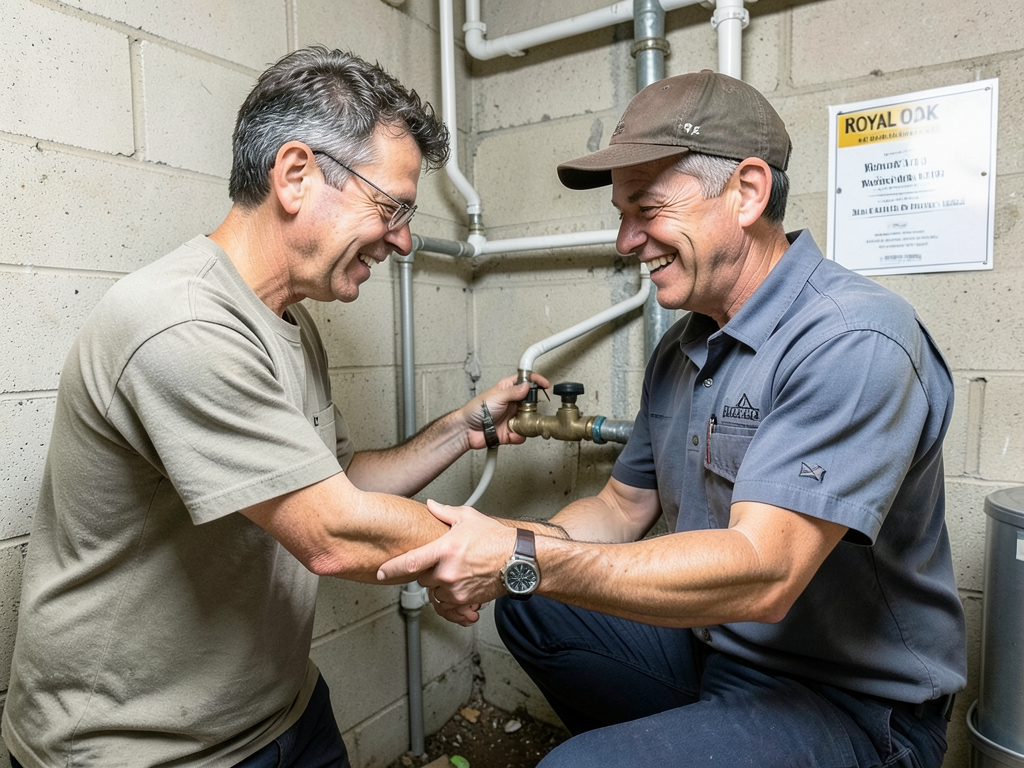
Image 1: Technician demonstrating proper outdoor faucet winterization technique, showing shut-off valve location and bleeder cap in a typical Royal Oak basement setup.
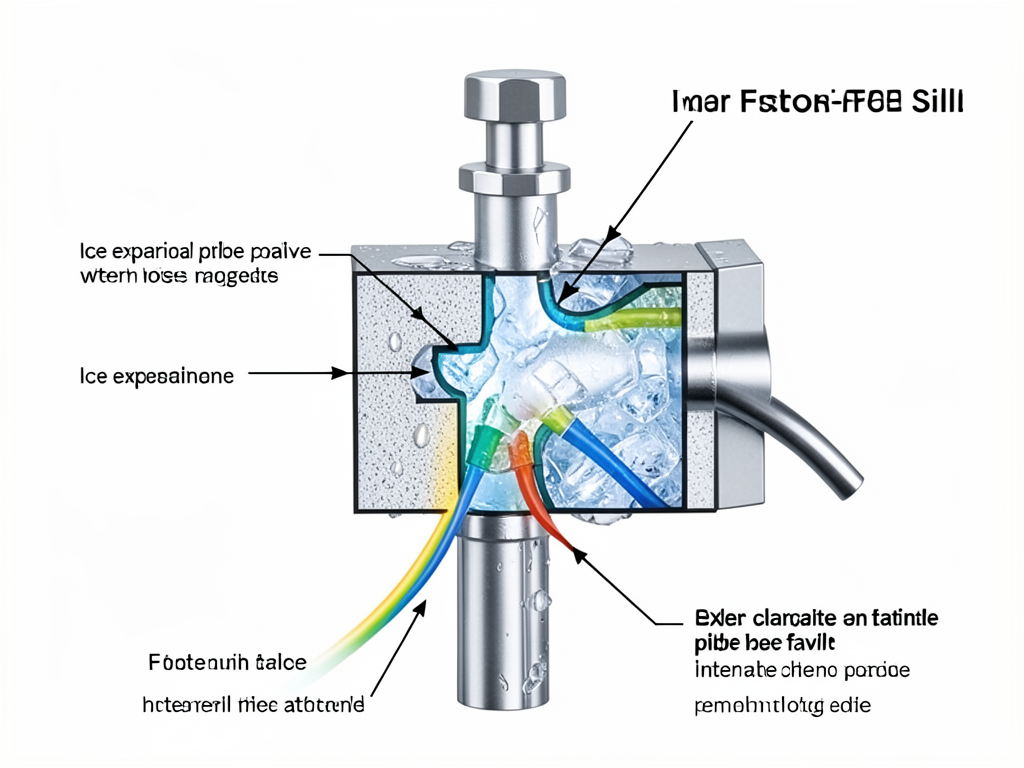
Image 2: Cross-section diagram of a frost-free sillcock showing how ice expansion causes internal pipe failure when hoses remain attached.
Image 3: Before and after comparison of properly insulated outdoor faucets with insulated covers installed on a Royal Oak home’s exterior plumbing.
Frequently Asked Questions
What’s the absolute latest date I can winterize my outdoor faucets in Royal Oak?
November 10 is your absolute deadline. After this date, historical weather data shows a 75% chance of sustained freezing temperatures. Waiting until after the first freeze is too late—the damage may already be done. Fixing the Mess After a Frozen Pipe Bursts in Your Detroit Home.
Can I just leave my outdoor faucet dripping instead of winterizing?
Dripping faucets only work for active prevention during brief cold snaps, not for seasonal protection. Once you’re away from home or lose power, the dripping stops and pipes freeze. Complete winterization is the only reliable method.
How do I know if my frost-free sillcock has already frozen?
Symptoms include reduced or no water flow, frost visible on the exterior pipe, or a bulging area on the pipe where ice has formed. If you suspect freezing, shut off the interior valve immediately and call a professional before attempting to thaw the pipe yourself.
Does pipe insulation alone prevent freezing?
Insulation slows heat loss but doesn’t generate heat. In sustained sub-freezing temperatures, insulated pipes will eventually freeze. Insulation works best when combined with heat tape or when pipes are in areas that maintain above-freezing temperatures.
What should I do if I discover a burst pipe?
Immediately shut off your main water supply, typically located where the water line enters your home. Then call a professional restoration company. Water damage spreads quickly, and mold can begin growing within 24-48 hours in Royal Oak’s climate.
Don’t wait until it’s too late. The third week of October is your deadline for Royal Oak homes. Mark your calendar, gather your supplies, and protect your home from the costly damage of frozen pipes. If you’re unsure about your home’s specific vulnerabilities or need professional winterization services, call (313) 572-5559 today. Our technicians understand Royal Oak’s unique challenges and can ensure your plumbing survives the winter safely. How to Remove Mold Safely from Your Royal Oak Home.
Pick up the phone and call (313) 572-5559 before the next cold snap hits. Your peace of mind is worth 15 minutes of prevention this October.