

Water is already destroying your home. The last thing you need is a contractor who makes it worse. Detroit homeowners face a serious problem when disaster strikes: the market fills up fast with unqualified operators, storm chasers, and uncertified handymen who know you are desperate and under pressure from your insurance company.
This guide gives you a clear filter for separating legitimate restoration professionals from the ones who will take your money and leave you with hidden mold, improper drying, and a denied insurance claim.

The Detroit Water Damage Market Has a Real Contractor Problem
Southeast Michigan sits at the intersection of aging infrastructure and brutal seasonal weather. The Detroit Water and Sewerage Department manages over 3,000 miles of sewer lines, many of them decades old. When heavy spring rains hit neighborhoods like Jefferson-Chalmers or Bagley, those lines back up fast. Basement flooding in Detroit is not a rare event. It is a recurring reality.
That frequency creates opportunity for bad actors. After any major rain event or pipe burst in the metro area, unlicensed contractors flood the market. They show up fast, offer low upfront prices, and often disappear before the job is finished. Knowing the warning signs protects your home and your wallet.
Five Critical Questions to Ask Any Detroit Restoration Specialist
Before you let anyone start extracting water or pulling drywall in your home, get answers to these questions. A legitimate contractor will answer all of them without hesitation.
- Are you IICRC certified? The Institute of Inspection Cleaning and Restoration Certification (IICRC) sets the professional standard for water damage work. Ask for the technician certification number, not just a company claim. The S500 Standard for Professional Water Damage Restoration is the industry benchmark every crew should follow.
- Can you be on-site within 60 minutes? Water damage is time-sensitive. Every hour of delay accelerates structural damage and mold growth. A contractor without a local Detroit crew cannot meet that standard.
- Are you licensed through Michigan LARA? The Michigan Department of Licensing and Regulatory Affairs requires contractor licensing. Ask for the license number and verify it directly through LARA’s online lookup.
- Do you carry liability and workers’ comp insurance? If a technician is injured in your flooded basement without workers’ comp coverage, you could be held liable. Ask for a certificate of insurance before work begins.
- Do you use psychrometric data to guide drying? This is the detail that separates professionals from handymen. Psychrometry is the science of measuring humidity, temperature, and dew point to make drying decisions. If a contractor looks confused by the word, walk away.
Red Flags That Should Stop You From Signing Anything
These are specific behaviors and patterns that experienced restoration professionals in Detroit see repeatedly. Each one has cost homeowners real money.
Demanding Full Payment Upfront
A legitimate contractor will work directly with your insurance adjuster and bill accordingly. A contractor demanding full cash payment before work begins has no accountability once the check clears. Standard practice is a deposit at most, with the remainder billed upon job completion or in phases tied to verifiable milestones.
No Written Scope of Work
Every restoration job needs a written scope that documents the category of water damage, the affected materials, the drying plan, and the equipment being used. Category 1 water (clean supply line break) requires a different response than Category 3 water (sewage backup). If a contractor shows up and starts ripping out materials without a written plan, that is a problem. For a deeper look at what sewage backup cleanup should involve, read what to do right now for sewage backup cleanup in Detroit.
No Moisture Mapping or Thermal Imaging
Professionals use thermal imaging cameras and calibrated moisture meters to map the full extent of water intrusion. Without this step, drying decisions are guesswork. Hidden moisture behind walls in older Detroit bungalows or century-old brick homes in Corktown leads to mold growth within 24 to 72 hours. If a contractor brings no instruments to the job site, the drying will be incomplete.
Pressuring You to Sign an Assignment of Benefits
An Assignment of Benefits (AOB) document transfers your insurance rights directly to the contractor. This removes you from the process entirely and gives the contractor full control over your claim. In Michigan, this arrangement has been misused repeatedly. Read any document carefully before signing and consult your insurance agent if you are unsure.
Vague or No Local Address
Storm chasers operate from out of state or out of region. They show up after major weather events, complete minimal work, and move on. A legitimate Detroit restoration company has a verifiable local address with a 313 area code, consistent reviews on Google tied to specific Detroit neighborhoods, and a real presence in the community.
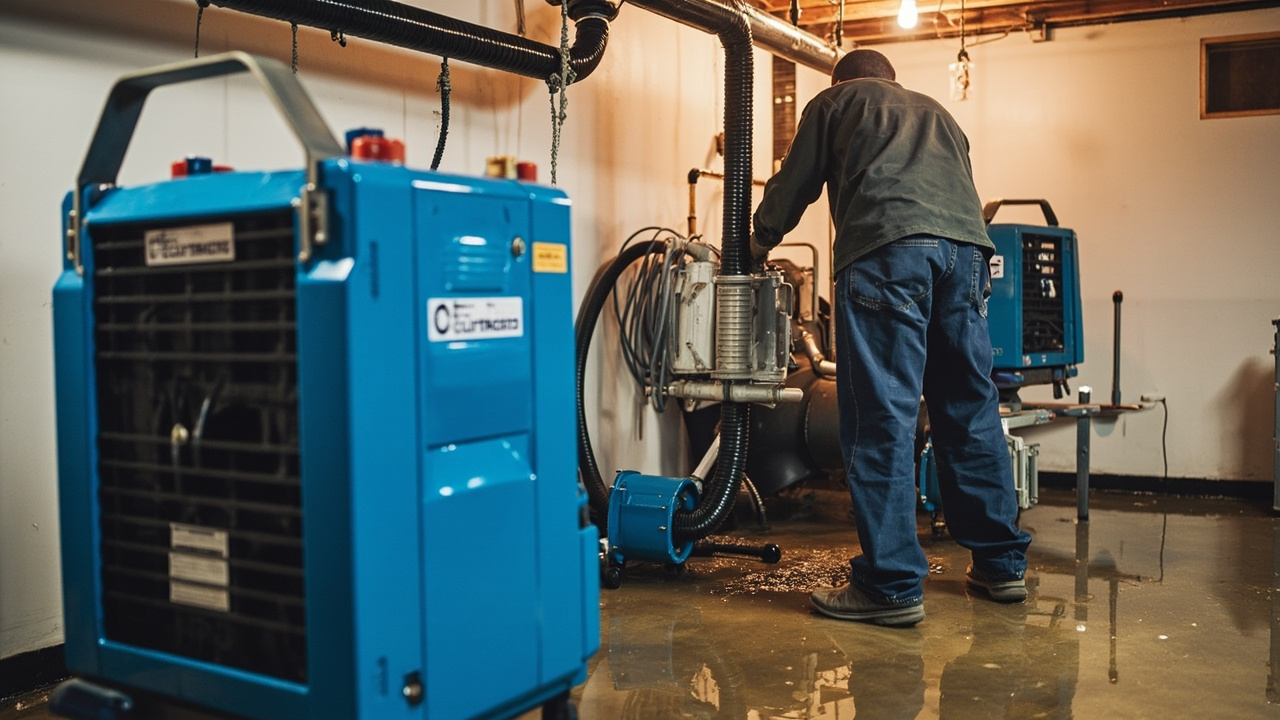
Understanding the Restoration Process From Inspection to Build-Back
Knowing the correct process helps you identify when a contractor is cutting corners. A proper water damage restoration job follows a defined sequence.
| Phase | What It Involves | Typical Timeframe |
|---|---|---|
| Emergency Response | Arrival, safety assessment, water extraction, content protection | Within 1 to 2 hours of call |
| Moisture Mapping | Thermal imaging, moisture meter readings, documentation | First 4 hours on-site |
| Structural Drying | Industrial dehumidifiers, air movers, daily psychrometric logs | 3 to 5 days depending on severity |
| Demolition (if needed) | Removal of unsalvageable drywall, flooring, insulation | Day 1 to 2 after mapping |
| Mold Prevention Treatment | Antimicrobial application to affected structural cavities | After drying is confirmed complete |
| Build-Back | Reconstruction of removed materials, paint, finishing | 1 to 3 weeks depending on scope |
If a contractor tells you the job will be done in a day, that is a red flag. Structural drying alone takes 3 to 5 days when done correctly, and that timeline gets longer in Detroit winters when outdoor humidity and temperature affect indoor drying rates.
If you are dealing with a flooded basement specifically, the process in Dearborn or Grosse Pointe follows the same sequence. You can read more about flooded basement cleanup in Grosse Pointe or check our detailed breakdown on professional cleanup for flooded basements in Dearborn to see what a proper job looks like from start to finish.
Navigating Insurance Claims in Southeast Michigan
Detroit homeowners deal with a range of insurance carriers: AAA Michigan, State Farm, Allstate, Farmers, and others all have their own claims processes. A qualified restoration contractor knows how to work within those systems, not against them.
Here is what a legitimate contractor does on the insurance side of the job.
- Documents damage with photos and moisture readings before any work begins
- Provides detailed line-item estimates that align with Xactimate or similar industry software
- Communicates directly with your adjuster while keeping you in the loop
- Does not inflate scope to maximize payout
- Does not start demolition before the adjuster has approved the scope
If a contractor tells you they will “handle everything” and asks you to stay out of the process, be cautious. You have the right to be involved in every stage of your own claim.
Detroit Weather and Infrastructure Create Specific Risks
Detroit’s climate creates a set of water damage scenarios that are specific to this region. Understanding them helps you evaluate whether a contractor actually knows your situation or is just reading from a generic script.
Basement Flooding After Heavy Rain
Detroit’s combined sewer system handles both stormwater and sanitary waste in many older neighborhoods, including parts of Midtown and East English Village. When rainfall exceeds system capacity, sewage and stormwater mix and back up into basements. This is Category 3 water, the most contaminated classification. Cleanup requires full PPE, antimicrobial treatment, and disposal of porous materials that cannot be adequately sanitized.
Sump Pump Failure in Spring
Late winter and early spring are peak season for sump pump failure in metro Detroit. Rapid snowmelt combined with heavy rainfall overwhelms sump systems in homes across Macomb County and the northwest Detroit neighborhoods near Palmer Park. A failed float switch or a power outage during a storm can put two feet of water in a finished basement overnight.
Frozen and Burst Pipes in Michigan Winters
Detroit averages temperatures well below freezing for extended stretches. Pipes in exterior walls, crawl spaces, and unheated areas are at risk when temperatures drop sharply. A burst pipe can release hundreds of gallons before the water is shut off. For a full breakdown of what recovery looks like, read about fixing the mess after a frozen pipe bursts in your Detroit home.
Comparing Certified vs. Uncertified Contractors Side by Side
This table breaks down the practical differences you will see on the job when comparing a certified restoration company against an unlicensed operator.
| Factor | Certified IICRC Contractor | Uncertified Operator |
|---|---|---|
| Equipment | Commercial-grade LGR dehumidifiers, air movers, HEPA air scrubbers | Consumer-grade box fans, small box store dehumidifiers |
| Moisture Documentation | Daily psychrometric logs with readings at every affected zone | Visual inspection only, no data |
| Water Category Assessment | Identifies Category 1, 2, or 3 and adjusts protocol accordingly | Treats all water the same regardless of contamination level |
| Insurance Coordination | Xactimate estimates, direct adjuster communication, detailed documentation | Handwritten estimates, no adjuster coordination |
| Mold Risk After Job | Low, when drying is confirmed complete through instrument verification | High, due to incomplete drying and no post-job verification |
| Michigan LARA License | Verifiable, on record | Often none or unverifiable |
Mold Is the Hidden Cost of a Bad Restoration Job
Incomplete drying is the single biggest cause of post-restoration mold growth in Detroit homes. When structural cavities are not brought to acceptable moisture content levels (generally below 16% for wood framing), mold colonization begins within days. You may not see it for weeks or months, but by then it is behind your walls and under your floors.
Mold remediation is a separate, expensive process on top of whatever you already paid for the restoration job. Choosing an unqualified contractor to save money upfront often means spending more overall. If you suspect mold has already started, our guide on how to remove mold safely from your Royal Oak home walks through what that process involves.
What a Legitimate Detroit Restoration Company Actually Looks Like
A real restoration contractor serving the Detroit metro area will have the following in place before they show up at your door.
- IICRC Water Damage Restoration Technician (WRT) certification for all crew members
- A verifiable Michigan LARA contractor license
- General liability and workers’ compensation insurance with a certificate available on request
- A local Detroit address and phone number with area code 313
- Google Business Profile reviews that reference specific Detroit neighborhoods, not just the city name
- Commercial drying equipment including LGR dehumidifiers and high-velocity air movers
- A written scope of work provided before any extraction or demolition begins
- Familiarity with the S500 Standard and the ability to explain their drying protocol in plain terms
None of these requirements are unusual. They are baseline standards for a professional restoration company. If a contractor cannot meet all of them, keep looking.
Take Your Time Even in an Emergency
Water damage feels like you need to decide in the next five minutes. That pressure is real, but signing with the wrong contractor because you felt rushed is one of the most common and costly mistakes Detroit homeowners make.
You have time to ask three or four quick questions before saying yes. You have time to request a certificate of insurance. You have time to look up a LARA license number. Those five minutes protect you from weeks of problems on the back end.
If you are dealing with active flooding right now in Detroit or the surrounding communities, call a certified local restoration company that can be on-site within the hour. Ask the questions. Check the credentials. Then let the professionals work.
{
“@context”: “https://schema.org”,
“@type”: “BlogPosting”,
“headline”: “Warning Signs to Watch for When Hiring a Detroit Water Damage Restoration Contractor”,
“description”: “Hiring a Detroit restoration contractor? Learn the red flags that expose unqualified contractors before they make your water damage worse.”,
“wordCount”: 1941,
“datePublished”: “2026-03-06T15:19:00.000Z”,
“dateModified”: “2026-03-06T15:19:00.000Z”,
“inLanguage”: “en-US”,
“mainEntityOfPage”: {
“@type”: “WebPage”,
“@id”: “https://ironwoodwaterdamagerestorationdetroit.com”
},
“publisher”: {
“@type”: “LocalBusiness”,
“name”: “Ironwood Water Damage Restoration Detroit”,
“url”: “https://ironwoodwaterdamagerestorationdetroit.com”
},
“author”: {
“@type”: “Organization”,
“name”: “Ironwood Water Damage Restoration Detroit”,
“url”: “https://ironwoodwaterdamagerestorationdetroit.com”
},
“image”: {
“@type”: “ImageObject”,
“url”: “https://ironwoodwaterdamagerestorationdetroit.com/wp-content/uploads/2026/03/common-red-flags-to-watch-for-when-hiring-a-detroi-1.jpg”
}
}
{
“@context”: “https://schema.org”,
“@type”: “LocalBusiness”,
“name”: “Ironwood Water Damage Restoration Detroit”,
“url”: “https://ironwoodwaterdamagerestorationdetroit.com”,
“address”: {
“@type”: “PostalAddress”,
“addressLocality”: “Detroit”
},
“areaServed”: {
“@type”: “City”,
“name”: “Detroit”
}
}
{
“@context”: “https://schema.org”,
“@type”: “BreadcrumbList”,
“itemListElement”: [
{
“@type”: “ListItem”,
“position”: 1,
“name”: “Home”,
“item”: “https://ironwoodwaterdamagerestorationdetroit.com”
},
{
“@type”: “ListItem”,
“position”: 2,
“name”: “Blog”,
“item”: “https://ironwoodwaterdamagerestorationdetroit.com/blog”
},
{
“@type”: “ListItem”,
“position”: 3,
“name”: “Warning Signs to Watch for When Hiring a Detroit Water Damage Restoration Contractor”
}
]
}
{
“@context”: “https://schema.org”,
“@type”: “Service”,
“serviceType”: “Water Damage Restoration”,
“provider”: {
“@type”: “LocalBusiness”,
“name”: “Ironwood Water Damage Restoration Detroit”,
“url”: “https://ironwoodwaterdamagerestorationdetroit.com”
},
“areaServed”: {
“@type”: “City”,
“name”: “Detroit”
},
“description”: “Hiring a Detroit restoration contractor? Learn the red flags that expose unqualified contractors before they make your water damage worse.”
}