
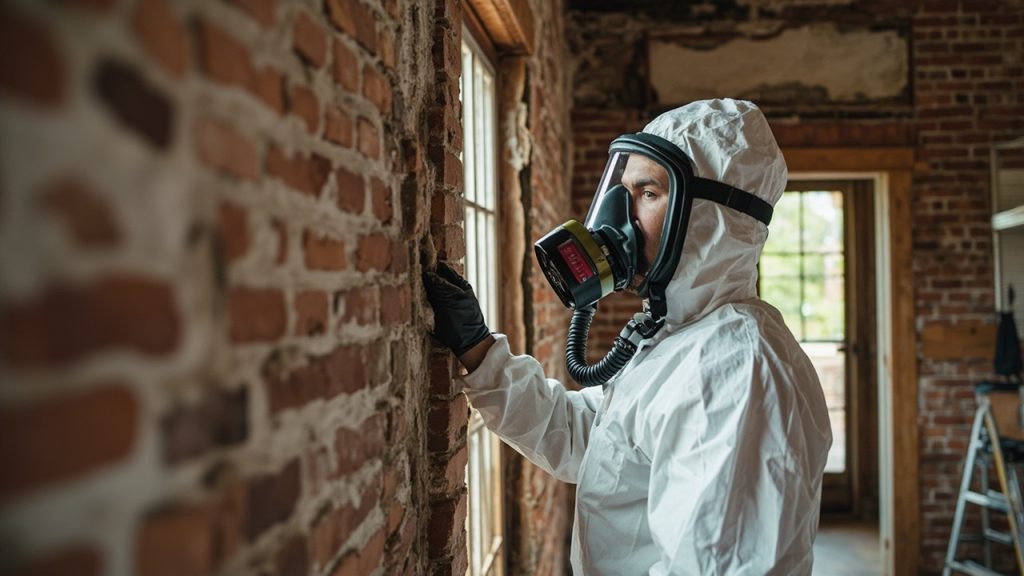
If your Boston-Edison home just took on water, your first instinct is to rip out the wet drywall and get the fans running. Stop. Before anyone touches that wall, you need to understand what could be hiding inside it — and what disturbing it without proper testing could mean for your family’s health.
Homes in the Boston-Edison Historic District, Indian Village, Woodbridge, and surrounding Detroit neighborhoods were built during an era when asbestos-containing materials (ACM) were standard practice in residential construction. Water doesn’t just damage these materials. It makes them dangerous in a way that dry conditions never would.
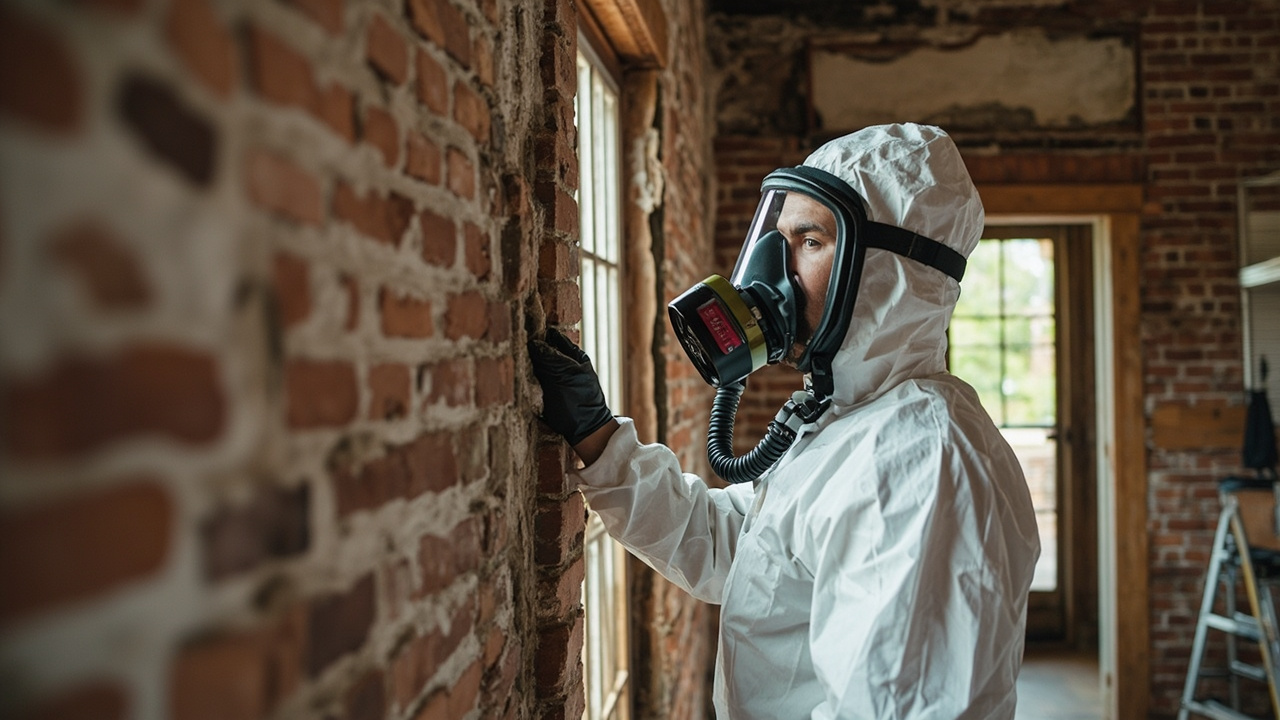
Why Wet Drywall in Older Detroit Homes Is a Hazard Category of Its Own
The drywall board itself (the gypsum panel) rarely contains asbestos. The danger lives in the joint compound, often called “mud,” that was used to tape seams and finish surfaces. In homes built before 1980, this compound frequently contained chrysotile asbestos as a binding and strengthening agent.
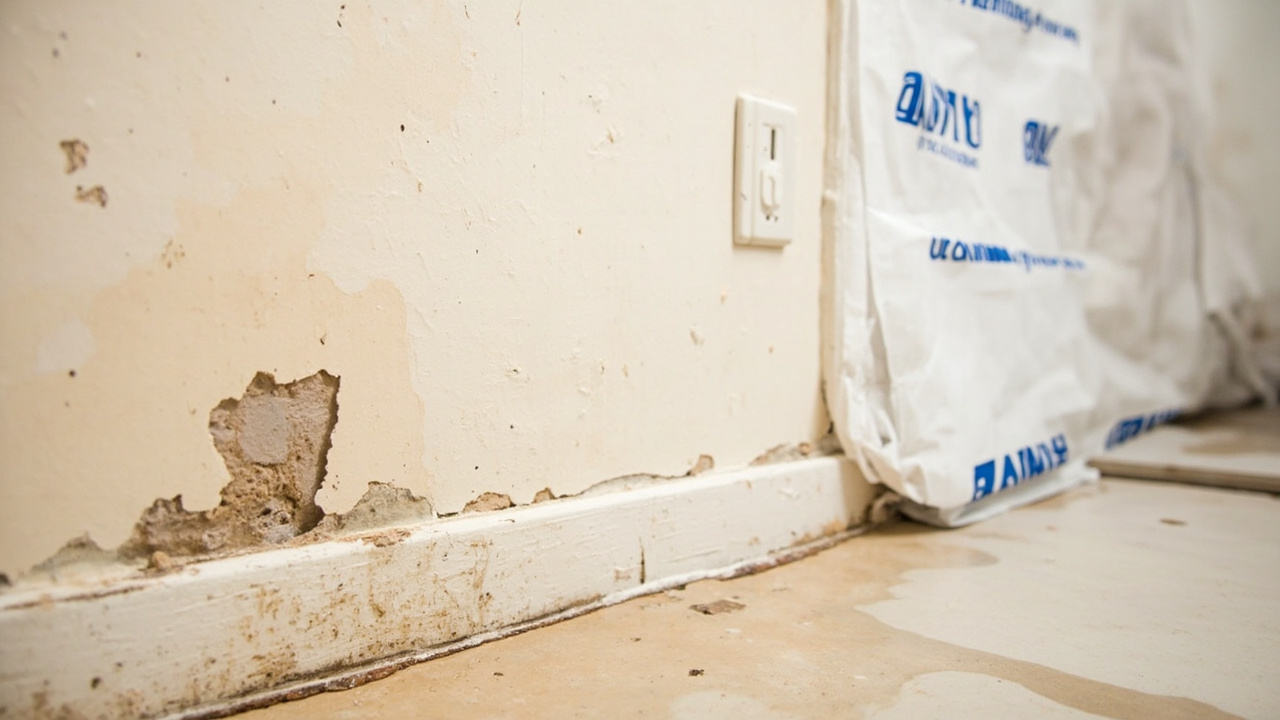
When joint compound is dry and intact, the asbestos fibers are locked in place. That’s called non-friable — the material can’t release fibers under normal conditions. Water changes everything. Wet joint compound becomes soft, crumbles easily, and crosses into friable territory. Friable materials can release microscopic asbestos fibers into the air with almost no effort.
A shop vac, a box fan pushing air out a window, or someone tearing off wet drywall with their hands — all of these can aerosolize fibers that, once inhaled, don’t leave your lungs. The link between chrysotile asbestos exposure and mesothelioma is well-established. There is no safe short-term exposure level that has been identified.
What Makes the Boston-Edison District Especially High Risk
Boston-Edison is one of the most architecturally significant neighborhoods in the Midwest. The homes are large, historically protected, and built primarily between 1905 and 1940. That building era means layers of original finish materials — joint compound, floor tile adhesive, pipe insulation, textured ceiling coatings — all of which were common ACM products of that period.
Many of these homes have never had a full renovation, which means original materials are still in place throughout the structure. A pipe burst in the kitchen or a roof leak into the dining room isn’t just a water mitigation job. It’s a potential ACM disturbance event that requires a different response protocol entirely.
How to Tell if Your Detroit Home Carries Asbestos Risk
Age is the primary indicator. If your home was built before 1980, asbestos in the joint compound, floor tiles, ceiling texture, or pipe insulation is a realistic possibility — not a remote one. The table below gives you a working framework based on construction era and material type.
| Construction Era | High-Risk Materials | Risk Level | Action Required Before Demo |
|---|---|---|---|
| Pre-1940 | Pipe insulation, plaster, joint compound, floor tile | Very High | Mandatory EGLE-compliant testing |
| 1940 to 1960 | Joint compound, acoustic tile, floor tile adhesive | High | Mandatory EGLE-compliant testing |
| 1960 to 1980 | Textured ceiling (popcorn), joint compound, vinyl flooring | Moderate to High | Testing strongly recommended |
| Post-1980 | Some imported floor tiles, legacy materials in unrenovated sections | Low to Moderate | Testing recommended if renovation-grade work is planned |
The Boston-Edison Historic District contains hundreds of homes in the pre-1940 and 1940 to 1960 categories. If you are in that district, treat ACM testing as a non-negotiable first step — not an optional add-on.
Lead-based paint compounds the problem. Michigan’s pre-1978 housing stock, which includes essentially all of Boston-Edison, carries a high probability of lead-based paint on interior and exterior surfaces. When water saturates walls and you begin removal, lead dust becomes airborne alongside any asbestos fibers present. You can face dual-hazard conditions in a single tear-out event.
Michigan Law and What It Requires Before You Tear Anything Out
Michigan’s asbestos abatement program is administered by the Michigan Department of Environment, Great Lakes, and Energy (EGLE). Under the Michigan Asbestos Abatement Act (Public Act 135 of 1986, as updated), regulated asbestos-containing materials must be identified, tested, and abated by licensed contractors before any renovation or demolition activity that would disturb those materials.
This applies to residential properties as well as commercial buildings. Many homeowners believe the law only covers large commercial projects. That’s incorrect. A water damage tear-out in a single-family home that disturbs ACM triggers the same regulatory framework.
Specifically, the law requires that any contractor performing asbestos abatement in Michigan hold a valid EGLE asbestos abatement license. The individual workers performing abatement must hold individual worker certifications. Testing must be performed by a third-party, accredited laboratory — not the same company doing the removal.
The Detroit Building, Safety Engineering and Environmental Department (BSEED) oversees local permitting and enforcement. For projects in the Boston-Edison Historic District specifically, BSEED and the Historic District Commission may both have review authority over how and where work is performed. Calling BSEED before any demolition work begins is the right move.
What Happens If You Skip Testing
Contractors who disturb ACM without proper testing or abatement face EGLE enforcement actions, which can include stop-work orders, civil fines, and required remediation at the contractor’s expense. As a homeowner, you can face liability if you directed the work or if unpermitted demolition created a health hazard. Your insurance carrier may also deny claims related to improper ACM disturbance during a restoration project.
Why DIY Water Cleanup in These Homes Is Genuinely Dangerous
Standard water damage mitigation equipment is not designed for ACM environments. A shop vac with a standard filter will actually disperse asbestos fibers back into the air rather than capturing them. HEPA filtration is the minimum standard for any vacuum used near potentially friable ACM, and even then, vacuuming disturbed ACM is not an abatement procedure.
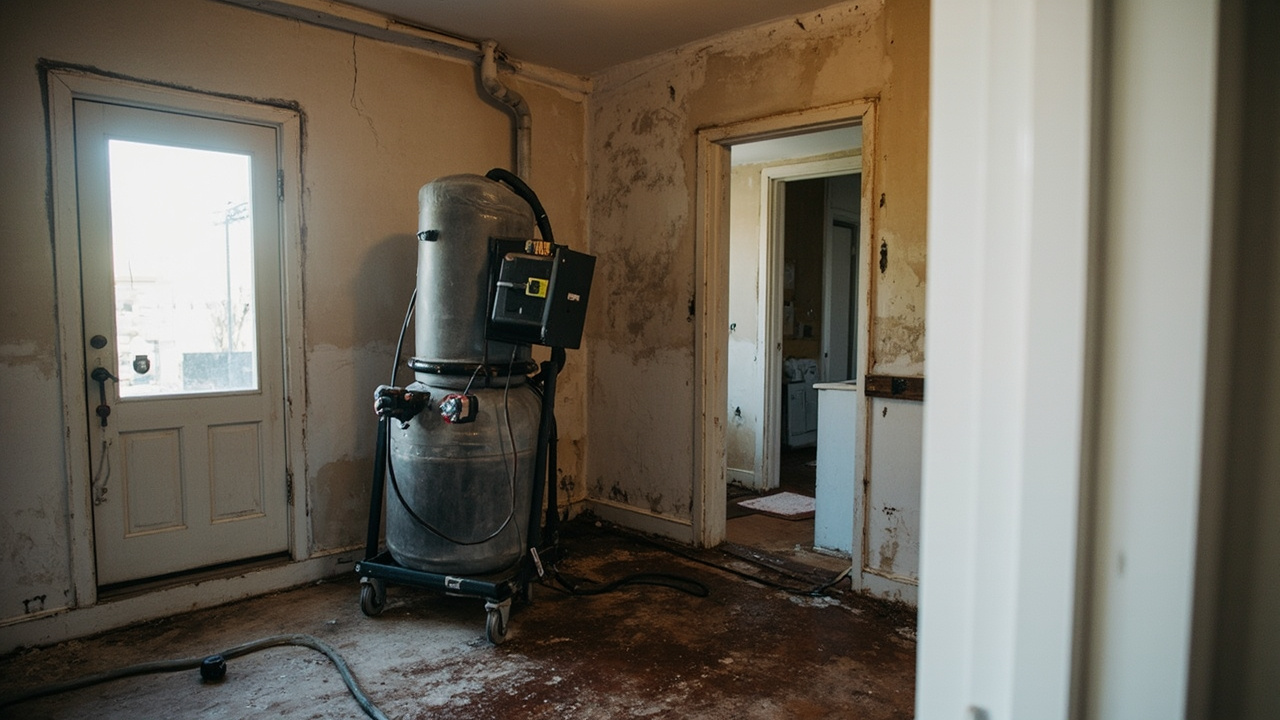
Box fans and standard air movers, the kind you rent from a hardware store, will push contaminated air into unaffected areas of the home. Professionals use negative air pressure containment — a system where the work area is sealed with poly sheeting and air is pulled outward through HEPA air scrubbers, preventing fiber migration into other rooms.
The IICRC S500 Standard for Professional Water Damage Restoration specifically addresses the intersection of water mitigation and hazardous material conditions. Certified restorers operating under this standard know to pause mitigation activity when ACM is suspected and to establish containment before any tear-out begins. If the company you call doesn’t mention asbestos testing before they start pulling drywall in a pre-1980 Boston-Edison home, that’s a problem.
For context on how quickly improper cleanup can escalate into a full remediation scenario, read our guide on removing mold safely from older homes — the cross-contamination dynamics are similar.
The Correct Professional Restoration Process for ACM-Risk Homes
A properly sequenced restoration in a Boston-Edison home follows a specific order of operations. Skipping steps or combining them creates both safety and legal exposure.
- Initial assessment and material identification. A certified restorer walks the affected areas and identifies all materials that could be disturbed during mitigation. This includes drywall finish layers, ceiling texture, floor tile and adhesive beneath wet flooring, and any pipe insulation in the loss area.
- Emergency water extraction without disturbance. Standing water is extracted using equipment positioned to avoid disturbing suspect materials. Wet-vac and pump work can proceed while ACM testing is arranged.
- Third-party ACM sampling. Bulk samples of suspect materials are collected by a licensed inspector and submitted to an accredited lab. Current turnaround for standard analysis is typically 24 to 72 hours. Rush options are available.
- Containment setup while awaiting results. The work area is sealed with poly sheeting. Negative air pressure machines with HEPA filtration run continuously to control airborne particulates during the waiting period.
- Licensed abatement if ACM is confirmed. A Michigan EGLE-licensed abatement contractor removes the confirmed ACM under full containment, with air monitoring and clearance testing performed before containment is removed.
- Safe disposal per Wayne County regulations. ACM waste is double-bagged, labeled, and transported to a Wayne County-approved disposal facility. A manifest documenting the chain of custody is maintained.
- Water mitigation and drying resume. Once clearance air sampling confirms fiber levels are within acceptable limits, the restoration team re-enters and completes drying, dehumidification, and structural repair.
This process adds time to a restoration project. There is no way around that. But it also protects your family, your home’s value, and your legal standing with your insurance carrier and the city of Detroit.
How Asbestos Risk Compares Across Common Water Damage Scenarios in Detroit
| Water Damage Event | Materials Typically Disturbed | ACM Risk in Pre-1980 Home | Lead Risk | Recommended First Call |
|---|---|---|---|---|
| Burst pipe in interior wall | Drywall, joint compound, wall cavity insulation | High (joint compound) | High (paint on wall surfaces) | Certified restorer with ACM protocol |
| Flooded basement | Floor tile, adhesive, pipe insulation, drywall | Very High (multiple ACM types) | Moderate to High | Certified restorer, ACM testing before any demo |
| Roof leak into attic or ceiling | Plaster, ceiling texture, insulation batts | High (plaster and texture coatings) | Moderate | ACM assessment before ceiling removal |
| Sewage backup | Floor tile, baseboard, lower wall sections | High (floor tile and adhesive) | High (painted baseboards) | Biohazard and ACM protocol required simultaneously |
| Appliance leak (contained) | Flooring, subfloor, cabinet base | Moderate (vinyl flooring, adhesive) | Low to Moderate | Testing if flooring removal is planned |
If you are dealing with a flooded basement in your Detroit home, the stakes around ACM are particularly high given the concentration of original tile and pipe insulation typically found at that level. Our breakdown of what professional flooded basement cleanup actually involves covers the sequencing in more detail.
Sewage backup situations carry an additional layer of urgency because the biological contamination creates pressure to act fast while the ACM risk demands you slow down for testing. Our guide on what to do right now after sewage backup in Detroit addresses how to manage both concerns at the same time.
The Mold Timeline Adds Pressure to an Already Complicated Situation
Here’s the part that makes ACM situations genuinely stressful for homeowners. Mold begins colonizing wet structural materials within 24 to 48 hours. You’re being told to wait for ACM test results before tearing out wet drywall, but every hour that passes increases the mold risk in your walls.
The correct approach is to aggressively dehumidify and dry the air in the affected area while testing is pending. Air movers positioned to reduce ambient humidity (not blow directly on suspect surfaces) and industrial dehumidifiers can slow mold growth without disturbing ACM. This buys time for the test results without compounding the damage.
In Boston-Edison homes specifically, the plaster and lathe construction common in many of these properties actually dries more slowly than modern drywall — which means you need more aggressive dehumidification capacity, not just fans.
Frozen pipe events in Detroit winters create a similar time pressure. If you’ve dealt with a burst pipe, the process of cleaning up after a frozen pipe burst in Detroit requires the same ACM awareness — especially in homes where the pipes run through older plaster walls.
Questions Boston-Edison Homeowners Actually Ask
Can I stay in the home during ACM abatement?
Usually no, at least not in the affected areas. Licensed abatement contractors are required to maintain containment and negative air pressure. Depending on the size of the abatement zone, occupancy of adjacent areas may also be restricted during the work. Your contractor will give you a specific timeline based on the scope.
Does my homeowner’s insurance cover asbestos abatement tied to a water loss?
This varies by policy. Some policies cover ACM abatement when it is directly triggered by a covered water loss event (like a burst pipe). Others exclude it entirely. You should report the loss to your insurer immediately and ask specifically about ACM abatement coverage before the testing phase. Document everything with photos before any materials are touched.
How long does the full process take in a typical Boston-Edison home?
A straightforward interior wall burst with confirmed ACM in the joint compound typically runs 5 to 10 business days from initial response to cleared abatement and resumed drying. Larger losses involving multiple rooms or basement ACM can extend to 3 to 4 weeks. These timelines include testing, abatement, clearance sampling, and resumed mitigation.
What You Should Do Right Now If You Have Active Water Damage
If you have standing water, extract it. That’s safe to do with water-only extraction equipment. Don’t touch the walls, ceiling, or floor tiles beyond what’s necessary to move furniture and valuables. Don’t run a shop vac along baseboards or around wet drywall seams. Don’t pull up wet flooring yourself.
Call a restoration company that specifically asks about your home’s age before quoting the job. If the first question isn’t about your home’s construction date, find a different company. In the Boston-Edison district, Indian Village, and other historic Detroit neighborhoods, any competent restoration contractor should immediately flag ACM risk as part of the intake conversation.
The Michigan EGLE asbestos program maintains a searchable database of licensed abatement contractors and certified inspectors in Wayne County. Use it to verify any company you’re considering before they start work on your home.
Water damage in a historic Detroit home doesn’t have to become a health crisis. It requires a slower, more deliberate process than a standard mitigation job — but that process exists, it works, and it protects your family and your property. Get the right team in, get the testing done, and let the process run correctly from the start.
{
“@context”: “https://schema.org”,
“@type”: “BlogPosting”,
“headline”: “What Boston-Edison Homeowners Need to Know About Lead and Asbestos During Water Damage Cleanup”,
“description”: “Asbestos in water damaged drywall is a real risk in Detroit’s Boston-Edison district. Learn what to test, what not to touch, and who to call.”,
“wordCount”: 2223,
“datePublished”: “2026-03-14T15:00:00.000Z”,
“dateModified”: “2026-03-14T15:00:00.000Z”,
“inLanguage”: “en-US”,
“mainEntityOfPage”: {
“@type”: “WebPage”,
“@id”: “https://ironwoodwaterdamagerestorationdetroit.com”
},
“publisher”: {
“@type”: “LocalBusiness”,
“name”: “Ironwood Water Damage Restoration Detroit”,
“url”: “https://ironwoodwaterdamagerestorationdetroit.com”
},
“author”: {
“@type”: “Organization”,
“name”: “Ironwood Water Damage Restoration Detroit”,
“url”: “https://ironwoodwaterdamagerestorationdetroit.com”
},
“image”: {
“@type”: “ImageObject”,
“url”: “https://ironwoodwaterdamagerestorationdetroit.com/wp-content/uploads/2026/03/hidden-lead-and-asbestos-risks-during-boston-ediso-1.jpg”
}
}
{
“@context”: “https://schema.org”,
“@type”: “LocalBusiness”,
“name”: “Ironwood Water Damage Restoration Detroit”,
“url”: “https://ironwoodwaterdamagerestorationdetroit.com”,
“address”: {
“@type”: “PostalAddress”,
“addressLocality”: “Detroit”
},
“areaServed”: {
“@type”: “City”,
“name”: “Detroit”
}
}
{
“@context”: “https://schema.org”,
“@type”: “FAQPage”,
“mainEntity”: [
{
“@type”: “Question”,
“name”: “Can I stay in the home during ACM abatement?”,
“acceptedAnswer”: {
“@type”: “Answer”,
“text”: “Usually no, at least not in the affected areas. Licensed abatement contractors are required to maintain containment and negative air pressure. Depending on the size of the abatement zone, occupancy of adjacent areas may also be restricted during the work. Your contractor will give you a specific timeline based on the scope.”
}
},
{
“@type”: “Question”,
“name”: “Does my homeowner’s insurance cover asbestos abatement tied to a water loss?”,
“acceptedAnswer”: {
“@type”: “Answer”,
“text”: “This varies by policy. Some policies cover ACM abatement when it is directly triggered by a covered water loss event (like a burst pipe). Others exclude it entirely. You should report the loss to your insurer immediately and ask specifically about ACM abatement coverage before the testing phase. Document everything with photos before any materials are touched.”
}
},
{
“@type”: “Question”,
“name”: “How long does the full process take in a typical Boston-Edison home?”,
“acceptedAnswer”: {
“@type”: “Answer”,
“text”: “A straightforward interior wall burst with confirmed ACM in the joint compound typically runs 5 to 10 business days from initial response to cleared abatement and resumed drying. Larger losses involving multiple rooms or basement ACM can extend to 3 to 4 weeks. These timelines include testing, abatement, clearance sampling, and resumed mitigation.”
}
}
]
}
{
“@context”: “https://schema.org”,
“@type”: “BreadcrumbList”,
“itemListElement”: [
{
“@type”: “ListItem”,
“position”: 1,
“name”: “Home”,
“item”: “https://ironwoodwaterdamagerestorationdetroit.com”
},
{
“@type”: “ListItem”,
“position”: 2,
“name”: “Blog”,
“item”: “https://ironwoodwaterdamagerestorationdetroit.com/blog”
},
{
“@type”: “ListItem”,
“position”: 3,
“name”: “What Boston-Edison Homeowners Need to Know About Lead and Asbestos During Water Damage Cleanup”
}
]
}
{
“@context”: “https://schema.org”,
“@type”: “Service”,
“serviceType”: “Water Damage Restoration”,
“provider”: {
“@type”: “LocalBusiness”,
“name”: “Ironwood Water Damage Restoration Detroit”,
“url”: “https://ironwoodwaterdamagerestorationdetroit.com”
},
“areaServed”: {
“@type”: “City”,
“name”: “Detroit”
},
“description”: “Asbestos in water damaged drywall is a real risk in Detroit’s Boston-Edison district. Learn what to test, what not to touch, and who to call.”
}