

Start Your Storm Damage Assessment Before the Restoration Crew Arrives
A severe storm rolls through Birmingham and Bloomfield Hills overnight. By morning, you are standing in your driveway looking at a mess. Maybe a tree limb clipped your roof. Maybe your basement has two inches of standing water. Either way, you need to know what you are dealing with before you make a single phone call.
A proper storm damage assessment is not just a quick walk around the yard. It is a systematic inspection of your home’s structural integrity, moisture exposure, and potential hazards. The steps you take in the first 60 to 90 minutes after a storm can directly affect your insurance payout and the total cost of repairs.
This guide covers exactly what to look for, what to document, and when to stop and call a professional.

The First 30 Minutes After a Storm in Oakland County
Do not run outside the moment the storm passes. Give yourself a few minutes to confirm the weather has cleared. Then follow this sequence.
- Check for any downed power lines near your property and stay at least 30 feet away from them.
- Walk the perimeter of your home on foot before going inside.
- Look at your roofline from the ground. Use binoculars if you have them. Missing shingles, lifted flashing, or visible decking are immediate red flags.
- Check your foundation and window wells for pooling water.
- Go into your basement and look at the floor, walls, and sump pump pit.
- Take photos and video of everything before you touch or move anything.
- Turn off utilities if you see any water near your electrical panel.
Birmingham homes, especially the older colonials and Tudors along Lincoln and Henrietta Streets, tend to have finished basements with egress windows. Those window wells are a common water entry point after heavy rainfall. Check them first.
Identifying Common Storm Damage in Oakland County Homes
Wind and Roof Damage Evaluation
Michigan thunderstorms frequently generate sustained winds between 50 and 70 mph. At those speeds, asphalt shingles experience wind uplift at the edges and ridgeline first. You will often see shingles lifted, cracked, or missing entirely from the gable ends and ridge cap before anywhere else.
Flashing failure is just as common and far more dangerous. Flashing seals the joints around your chimney, skylights, and roof valleys. A single cracked or separated flashing seam can allow gallons of water per hour into your attic during a storm. From there, water travels down rafters and into wall cavities, causing damage that does not show up on your ceiling for days.
Emergency tarping is the first line of defense after any confirmed roof breach. A properly installed tarp, secured at the ridge and weighted at the edges, stops further water infiltration until full repairs can begin. Restoration professionals trained by the IICRC (Institute of Inspection Cleaning and Restoration Certification) understand how to tarp without causing additional damage to an already-compromised roof structure.
Basement Flood and Sump Pump Failure Assessment
Sump pump failure is the leading cause of basement flooding in the Birmingham and Beverly Hills areas. During a major storm, your pump runs almost continuously. When the power goes out or the float switch fails, water enters fast.
If you find standing water in your basement, do not walk in without checking for electrical hazards first. Once you confirm it is safe, note the water level on the walls and photograph it from multiple angles. This documentation is critical for your homeowners insurance claim.
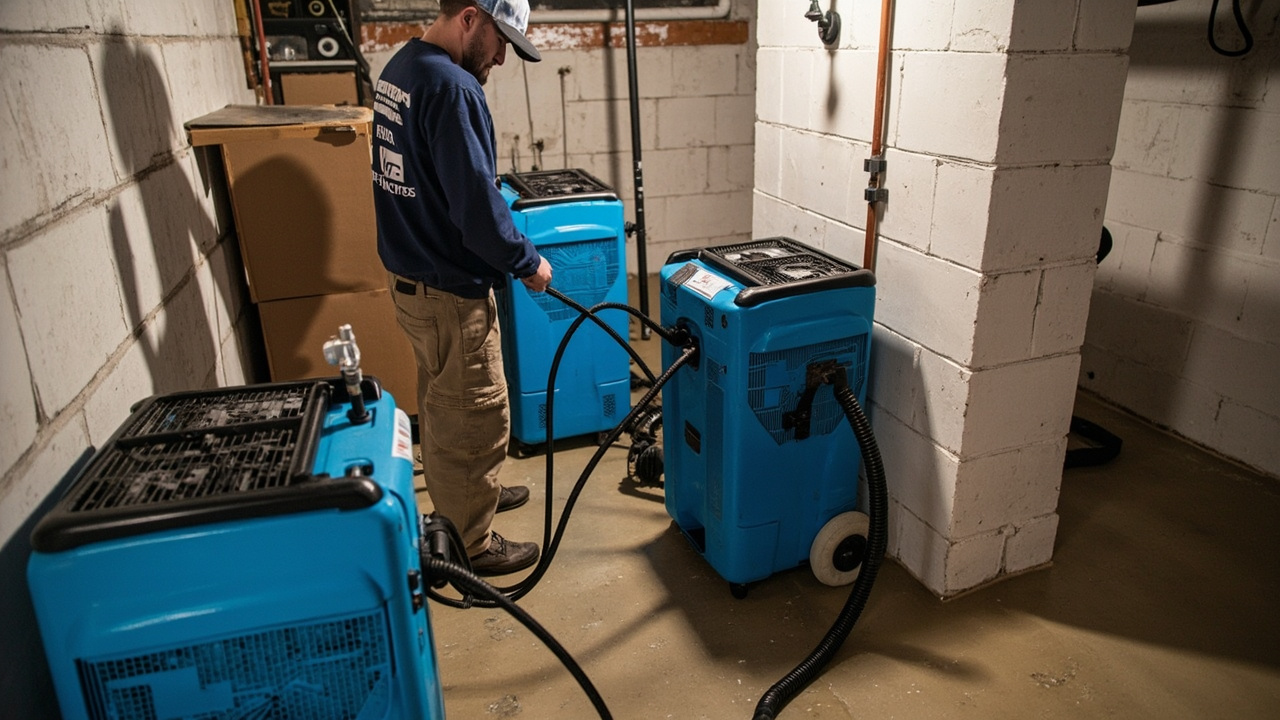
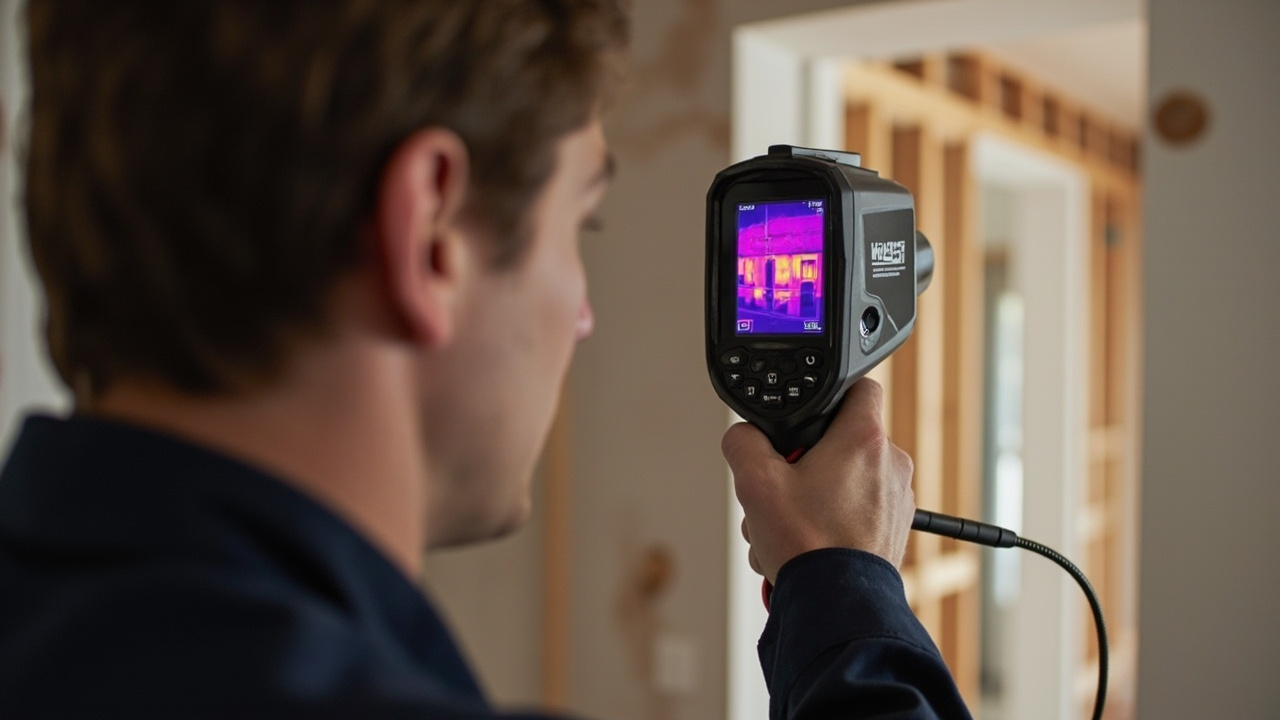
After the water is removed, the real work begins. Concrete block foundation walls are highly porous. Water that saturates the block wicks moisture into the framing above, into drywall, and into any insulation inside the wall cavity. You cannot see this moisture with the naked eye. A trained technician uses moisture thermography and calibrated meters to map the full extent of intrusion before any drying equipment is placed.
If you have experienced basement flooding before, our detailed guide on flooded basement cleanup in Grosse Pointe walks through the full extraction and drying process with the same approach we use in Birmingham.
What a Professional Storm Damage Assessment Actually Covers
When a restoration crew arrives on-site, they do not just look at what is wet. They assess your home in zones, starting with the most structurally critical areas and working outward.
| Inspection Zone | What We Check | Tools Used |
|---|---|---|
| Attic and Roof Deck | Sheathing saturation, rafter damage, flashing gaps, active leaks | Moisture meter, infrared camera, visual inspection |
| Exterior Walls | Siding impact, window seal failure, water behind trim boards | Moisture meter, probe testing at seams |
| Interior Ceilings and Walls | Water staining, soft drywall, hidden cavity moisture | Infrared thermography, pin and pinless meters |
| Basement and Foundation | Hydrostatic pressure cracks, efflorescence, standing water, sump function | Moisture mapping, visual inspection, pump test |
| HVAC and Ductwork | Water entry into air handler, saturated duct insulation, contamination risk | Visual inspection, moisture readings at registers |
Moisture thermography is one of the most valuable diagnostic tools in storm damage work. An infrared camera detects temperature differentials caused by evaporative cooling. Wet materials cool faster than dry ones, so a skilled technician can see moisture trapped inside a wall cavity without cutting a single hole. This saves time, money, and unnecessary demolition.
The 72-Hour Window That Determines Your Mold Risk
Mold growth in a storm-damaged home is not a question of if. It is a question of when. In the warm months, mold colonies can begin forming on wet drywall and wood framing within 48 to 72 hours of initial exposure.
Birmingham’s summer humidity averages between 65 and 80 percent. After a storm, an unventilated wet basement becomes an ideal growth environment. The faster you get professional drying equipment in place, the more likely you avoid a mold remediation scope on top of your storm damage claim.
If mold is already present when you find the damage, do not attempt to clean it yourself with bleach. Bleach does not penetrate porous materials. It kills surface mold on tile or glass but does nothing inside drywall or wood studs. Our team covers this in detail in the guide on how to remove mold safely from your Royal Oak home, which applies equally to Birmingham-area properties.
Navigating Your Insurance Claim After a Birmingham Storm
Documenting storm damage correctly is the single biggest factor in getting a fair insurance settlement. Insurance adjusters assigned to Oakland County claims are experienced professionals. They know what real storm damage looks like, and they also know what deferred maintenance looks like. Your documentation needs to be thorough and timestamped.
Here is how the insurance documentation process works when you bring in a restoration company before the adjuster arrives.
| Step | Who Does It | Why It Matters |
|---|---|---|
| Photo and Video Documentation | Homeowner and restoration crew | Timestamps establish pre-remediation condition |
| Moisture Mapping Report | Certified restoration technician | Gives adjuster a data-backed scope of damage |
| Damage Inventory | Restoration project manager | Line-item breakdown supports claim accuracy |
| Emergency Mitigation Receipts | Restoration company | Covered under most standard homeowners policies |
| Adjuster Walk-Through | Insurance adjuster with restoration PM present | Ensures nothing is missed or understated |
| Supplement Filing | Restoration company on your behalf | Addresses hidden damage found during drying phase |
The Birmingham Building Department may require a permit for structural repairs after significant storm damage, particularly for roof replacements or foundation work. Your restoration contractor should pull those permits before any work begins. Unpermitted repairs can create title problems when you sell and may give your insurance carrier grounds to deny future claims related to the same area of the home.
The Michigan Department of Insurance and Financial Services publishes consumer guides on your rights during the claims process. Know them before your adjuster arrives.
Why Local Expertise Changes the Outcome for Birmingham Homeowners
A restoration company that primarily works in Downriver communities is not necessarily equipped to handle the specific building stock in Birmingham. Many homes in the Quarton Lake area and along Maple Road were built between the 1920s and 1950s. They often have balloon-frame construction, older clay tile roof systems, and fieldstone foundations.
Balloon-frame walls have open cavities that run from the basement sill plate to the attic. Water that enters through a roof breach can travel the entire height of a wall before it becomes visible. A crew that understands this structural style knows to check the bottom plate and subfloor even when the visible damage appears to be confined to the upper levels.
Storm-related sewage backups are also common in Birmingham after heavy rain events. When the city’s combined sewer system surcharges, raw sewage can back up through floor drains and lower-level fixtures. This is a Category 3 contamination event, which requires a completely different response protocol than clean water flooding. If you are dealing with sewage backup, stop all water use immediately and read through the information on what to do right now for sewage backup cleanup in Detroit while you wait for the crew.
Frozen pipes are a separate but related concern for Birmingham homes after winter storm events. Ice storms and rapid freeze-thaw cycles in Oakland County can cause pipe failures that go undetected until the thaw. The damage pattern looks different from storm water intrusion but the drying and documentation process shares many of the same steps. Our guide on fixing the mess after a frozen pipe bursts in your Detroit home covers that scenario in detail.
How Response Time Affects Your Total Repair Cost
Every hour that wet materials sit without drying equipment running, the damage spreads. Drywall absorbs moisture rapidly. Wood framing begins to swell and deform. Insulation loses its thermal and structural value once it becomes saturated.
A restoration company that arrives on-site within 60 minutes of your call and places commercial-grade drying equipment the same day will dramatically reduce the overall scope of the project compared to a crew that cannot respond until the following morning. Ask any company you consider what their average on-site response time is in Oakland County specifically, not just their general service area.
For reference, commercial drying equipment operates at a different scale than anything you can rent from a hardware store. Industrial dehumidifiers and air movers pull moisture from wall cavities and subfloor assemblies in ways that consumer-grade fans simply cannot match. The difference between proper drying and inadequate drying is often the difference between replacing drywall and replacing drywall plus framing plus flooring.
If your home in Dearborn has also been affected by storm-related flooding in the past, the process outlined in our guide on professional cleanup for flooded basements in Dearborn shows what a thorough restoration scope looks like from start to finish.
When to Call a Professional and When You Can Wait
Not every storm leaves behind emergency-level damage. Sometimes a minor roof leak leaves a small water stain on a ceiling. Sometimes a window seal fails and lets in a cup of water. Know the difference between what warrants a same-day call and what can wait for a scheduled assessment.
Call a restoration company immediately if you see any of the following:
- Standing water anywhere inside the home, including the basement
- Active dripping or flowing water through the ceiling or walls
- A musty odor in a previously dry space
- Visible structural sagging in a ceiling or floor
- Water near your electrical panel, outlets, or junction boxes
- Any sewage odor or backflow through floor drains
Schedule a non-emergency assessment within 24 hours if you see:
- Small water stains on drywall with no active moisture
- Missing shingles but no visible interior water entry
- Clogged gutters that caused minor overflow onto siding
- Window condensation or minor seal failure without pooling
Even situations that look minor on the surface can hide significant hidden moisture. A professional assessment with moisture meters and thermal imaging gives you certainty either way. That certainty is worth more than the cost of the inspection call.
Birmingham homeowners have seen major storm events roll through Oakland County with little warning. The best thing you can do after a storm is act fast, document everything, and work with a restoration team that knows these neighborhoods and the homes in them. Your property is worth protecting with the same level of precision you put into maintaining it.
{
“@context”: “https://schema.org”,
“@type”: “BlogPosting”,
“headline”: “What to Look for After a Major Storm Hits Your Birmingham Neighborhood”,
“description”: “Storm damage assessment in Birmingham, MI after a major storm. Know what to inspect, document, and report before calling your insurance adjuster.”,
“wordCount”: 2033,
“datePublished”: “2026-02-23T06:10:00.000Z”,
“dateModified”: “2026-02-23T06:10:00.000Z”,
“inLanguage”: “en-US”,
“mainEntityOfPage”: {
“@type”: “WebPage”,
“@id”: “https://ironwoodwaterdamagerestorationdetroit.com”
},
“publisher”: {
“@type”: “LocalBusiness”,
“name”: “Ironwood Water Damage Restoration Detroit”,
“url”: “https://ironwoodwaterdamagerestorationdetroit.com”
},
“author”: {
“@type”: “Organization”,
“name”: “Ironwood Water Damage Restoration Detroit”,
“url”: “https://ironwoodwaterdamagerestorationdetroit.com”
},
“image”: {
“@type”: “ImageObject”,
“url”: “https://ironwoodwaterdamagerestorationdetroit.com/wp-content/uploads/2026/03/what-to-look-for-after-a-major-storm-hits-your-bir-1.jpg”
}
}
{
“@context”: “https://schema.org”,
“@type”: “LocalBusiness”,
“name”: “Ironwood Water Damage Restoration Detroit”,
“url”: “https://ironwoodwaterdamagerestorationdetroit.com”,
“address”: {
“@type”: “PostalAddress”,
“addressLocality”: “Detroit”
},
“areaServed”: {
“@type”: “City”,
“name”: “Detroit”
}
}
{
“@context”: “https://schema.org”,
“@type”: “BreadcrumbList”,
“itemListElement”: [
{
“@type”: “ListItem”,
“position”: 1,
“name”: “Home”,
“item”: “https://ironwoodwaterdamagerestorationdetroit.com”
},
{
“@type”: “ListItem”,
“position”: 2,
“name”: “Blog”,
“item”: “https://ironwoodwaterdamagerestorationdetroit.com/blog”
},
{
“@type”: “ListItem”,
“position”: 3,
“name”: “What to Look for After a Major Storm Hits Your Birmingham Neighborhood”
}
]
}
{
“@context”: “https://schema.org”,
“@type”: “Service”,
“serviceType”: “Water Damage Restoration”,
“provider”: {
“@type”: “LocalBusiness”,
“name”: “Ironwood Water Damage Restoration Detroit”,
“url”: “https://ironwoodwaterdamagerestorationdetroit.com”
},
“areaServed”: {
“@type”: “City”,
“name”: “Detroit”
},
“description”: “Storm damage assessment in Birmingham, MI after a major storm. Know what to inspect, document, and report before calling your insurance adjuster.”
}