
Slow Leaks Do More Damage Than Floods in Bloomfield Hills Kitchens
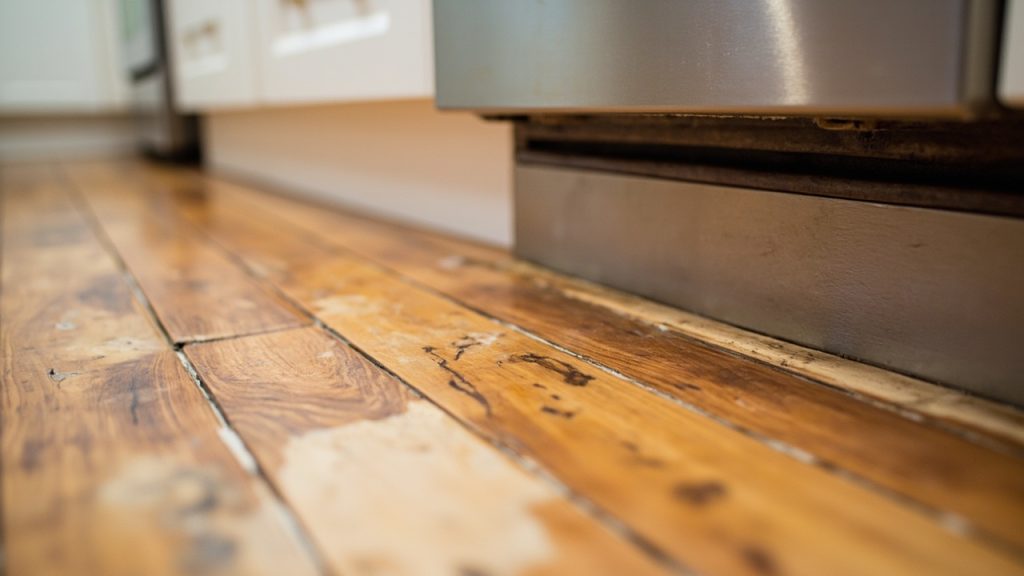
A burst pipe gets your attention fast. A slow dishwasher leak does not. It drips a few ounces at a time, soaks into the subfloor beneath your tile or hardwood, and quietly rots the structural layer that holds your kitchen together. By the time you smell something wrong, the damage is often weeks or months old.
In Bloomfield Hills and the wider Oakland County area, we see this pattern constantly. High-end kitchens with premium finishes. Dishwashers that run daily. And a slow seep from the discharge pump or door gasket that nobody catches until the floor starts to flex underfoot.
This guide walks you through every warning sign of appliance leak water damage, explains why each one happens, and tells you what to do before the repair bill multiplies.
The Visual Signs You Can Confirm Without Any Tools
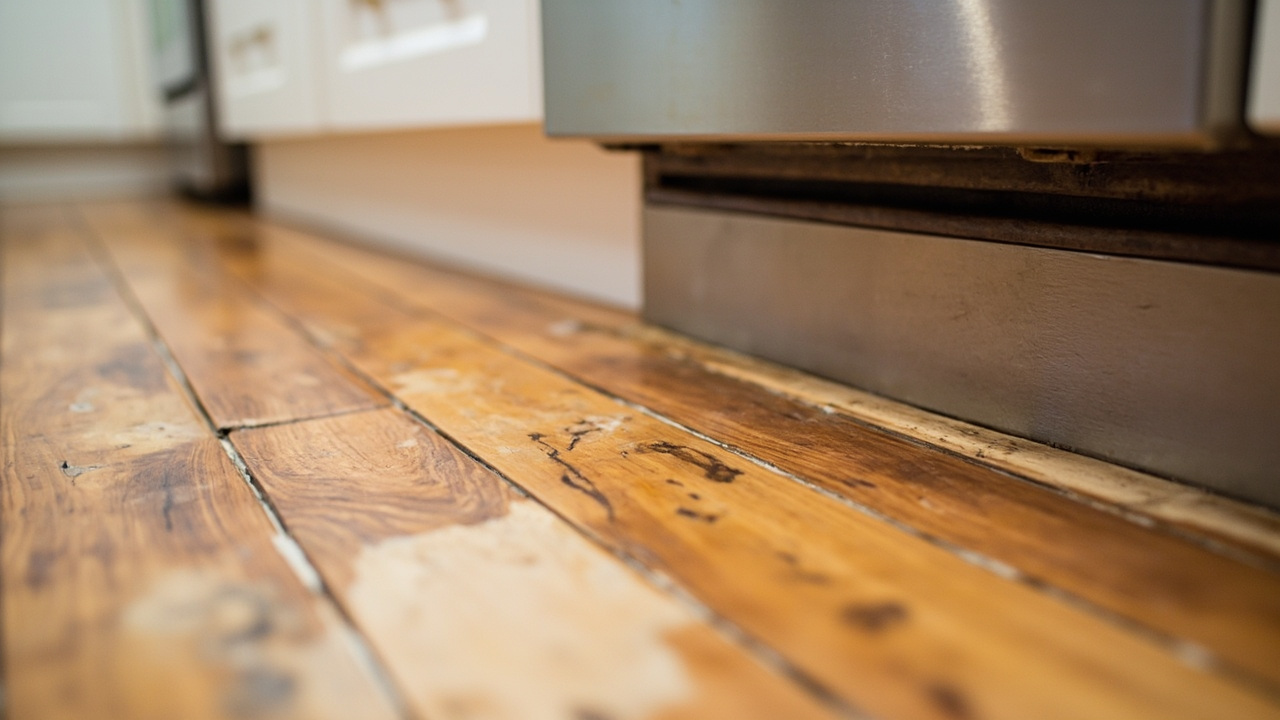
Warped or Buckled Flooring Near the Dishwasher
Hardwood floors cup when the edges absorb more moisture than the center. Laminate floors swell and bubble at the seams. Both reactions happen because the subfloor underneath has been holding moisture long enough to transfer it upward into the finished surface.
Run your hand flat across the floor directly in front of and beside your dishwasher. Any ridge, soft spot, or springy feel under your foot is a red flag. Tile floors mask this sign longer because ceramic does not absorb water, but grout lines will eventually crack or pop as the subfloor beneath shifts.
Discoloration on Cabinets Below the Countertop
Open the cabinet next to your dishwasher. Look at the interior walls, especially the side panel that faces the appliance. Water staining shows up as a yellowish or brownish ring pattern. Paint or finish will bubble and peel. In homes with MDF cabinet boxes, you will see the material swelling at the bottom corners where it sits on the subfloor.
This discoloration happens because dishwasher plumbing, including the water supply line and the drain hose, runs through that shared cabinet space. Any drip from a fitting or a pinhole in a rubber hose wets those surfaces repeatedly over time.
Subfloor Delamination and What It Means for Structural Integrity
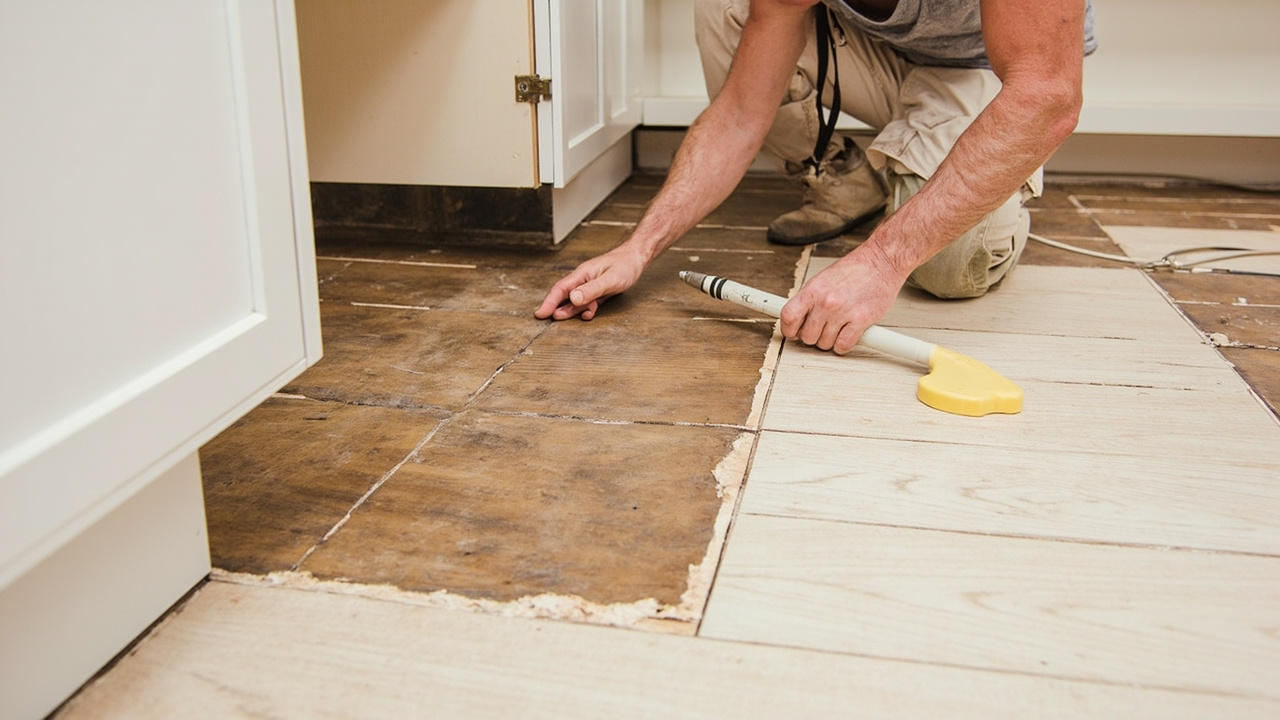
Most subfloors in Metro Detroit homes built after the mid-twentieth century use plywood or oriented strand board (OSB). Both are engineered panels that hold their shape when dry. When they stay wet for extended periods, the layers within the panel separate. This is called delamination.
A delaminated subfloor feels spongy. It may creak in ways it never did before. In severe cases, the panel compresses under foot traffic and creates a visible low spot in the finished floor above it. Replacing delaminated subfloor panels requires pulling up the finished flooring, cutting out the damaged sections, and installing new material before any refinishing happens. It is a significant job that gets more expensive the longer you wait.
Signs You Detect With Your Nose and Ears
Musty Odors That Spike After You Run the Dishwasher
Mold growth produces a distinct earthy, musty smell. If you notice that odor appearing or intensifying within an hour of running a wash cycle, the appliance is the likely source. The heat and steam from a cycle can push that smell up through gaps in the flooring or cabinet toe-kick.
Black mold (Stachybotrys chartarum) is a genuine concern in these situations. It needs a continuously damp, cellulose-rich material to colonize. Wet plywood subfloor is exactly that. The EPA’s mold guidance for homeowners notes that mold can begin colonizing a wet surface within 24 to 48 hours under the right conditions. If your subfloor has been holding moisture for weeks, mold is almost certainly already present.
If you suspect mold growth has begun, read through our detailed resource on how to remove mold safely from your Royal Oak home for guidance on what to do before conditions get worse.
The Sound of Water When the Appliance Is Off
A slow drip from a dishwasher discharge pump or a loose hose clamp may produce a faint ticking or dripping sound inside the cabinet. You may only hear it in a quiet kitchen late at night. Get down close to the toe-kick and listen after a cycle completes. Any water sound when the machine is idle means water is moving somewhere it should not be.
Appliance-Specific Warning Signs for Your Kitchen
Dishwasher Failure Points That Lead to Subfloor Damage
The dishwasher has several points where leaks commonly develop. The door gasket dries out and cracks over time, allowing small amounts of water to escape during a wash cycle. The drain hose connection at the pump can loosen, particularly if the appliance was recently serviced or moved. The water supply line fitting under the sink can develop a slow drip that runs down the cabinet interior to the floor below.
Braided stainless steel supply lines resist failure far longer than standard rubber hoses. If your dishwasher is connected with a rubber hose that has not been replaced in several years, that hose is a liability. Rubber degrades, especially in a Michigan climate where temperature swings between seasons stress every material in a home.
Refrigerator Ice Maker Lines and Their Hidden Risk
In open-concept kitchens common in Bloomfield Hills and the Tri-County Area, the refrigerator often sits close to the dishwasher. The quarter-inch plastic or copper tubing that feeds the ice maker is one of the most commonly overlooked leak sources. A fitting that is finger-tight rather than properly seated will drip slowly for months before the cabinet floor visibly deteriorates.
Pull the refrigerator away from the wall and inspect the connection point at the wall valve and at the back of the appliance. Any mineral deposit or rust-colored staining around a fitting confirms a slow leak has been present.
Using Simple Tools to Confirm What Your Eyes Cannot See
Moisture Meter Readings Around the Appliance Zone
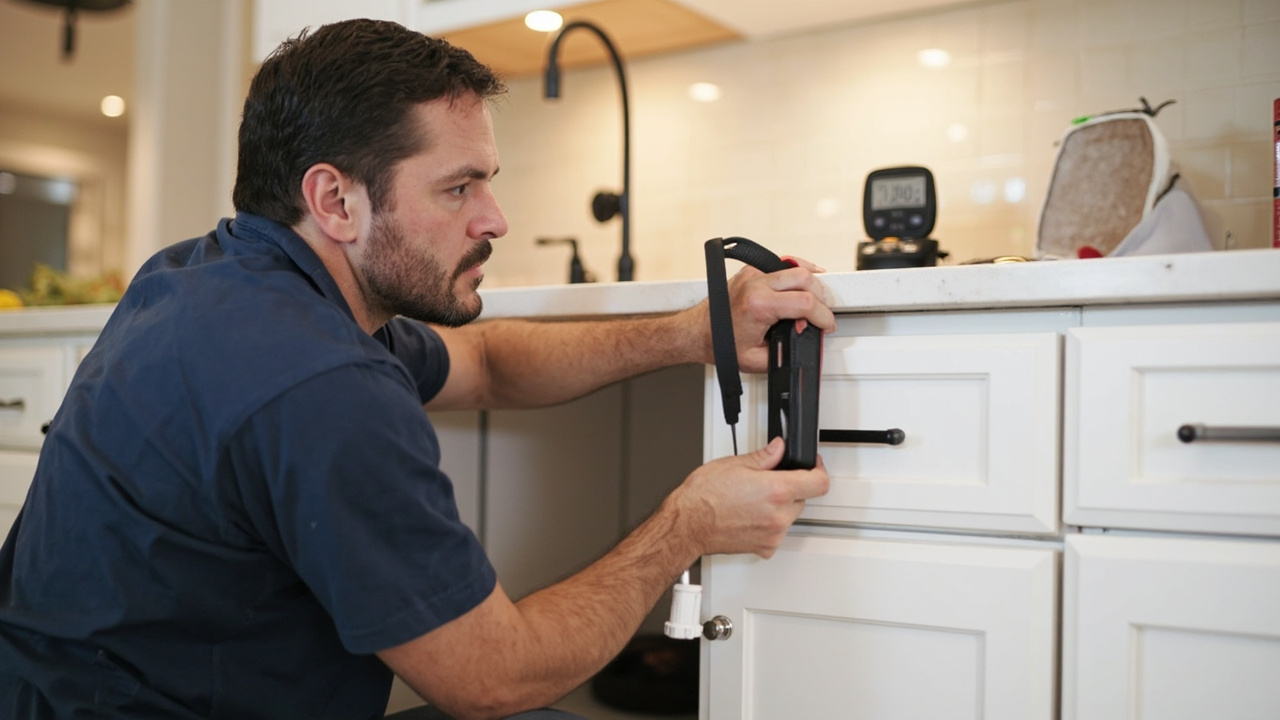
A pin-type moisture meter pressed into a wood subfloor gives you a percentage reading. Dry wood reads below 15 percent. Readings above 19 percent indicate elevated moisture that can support mold growth. Readings above 25 percent indicate active water damage that has already begun to compromise the material.
You can purchase a basic moisture meter at a hardware store for a modest cost, or an IICRC-certified technician will bring a calibrated professional unit during an inspection. The professional reading gives you defensible documentation if you need to file a homeowner’s insurance claim.
Hygrometer Readings in the Kitchen
A hygrometer measures relative humidity in the air. Place one inside the cabinet under the dishwasher for 24 hours, including through at least one full wash cycle. Relative humidity inside that enclosed space should not exceed 55 percent during normal operation. Readings consistently above 65 percent indicate moisture is evaporating from a wet surface inside that cabinet, which means there is a wet surface present.
Comparing Dishwasher Leak Damage Severity Levels
| Damage Level | Visual Signs | Subfloor Condition | Typical Drying Time (Professional Equipment) |
|---|---|---|---|
| Category 1 / Minor | No visible floor damage, slight cabinet staining | Moisture present, no delamination | 3 to 5 days |
| Category 1 / Moderate | Cupped hardwood, soft spot in floor, cabinet swell | Early delamination, no mold visible | 5 to 7 days with subfloor drying mats |
| Category 2 / Significant | Visible warping, grout cracking, strong odor | Active delamination, surface mold likely | 7 to 10 days, subfloor panels likely need replacement |
| Category 3 / Severe | Floor flexes underfoot, visible mold, rot present | Full panel replacement required, joists may be affected | Demolition and rebuild required, timeline varies |
Supply Line Comparison for Dishwasher and Appliance Connections
| Supply Line Type | Typical Lifespan | Failure Risk | Recommended Replacement Interval |
|---|---|---|---|
| Standard rubber hose | 5 to 8 years | High, prone to cracking and pinhole leaks | Every 5 years |
| Reinforced rubber with mesh | 7 to 10 years | Moderate | Every 7 years |
| Braided stainless steel | 10 to 15 years | Low, fittings are the weak point | Inspect fittings every 5 years |
| Copper tubing (ice maker) | 15 to 20 years | Low if properly flared, high at compression fittings | Inspect compression joints every 5 years |
Steps to Take Right Now if You Suspect a Leak
- Pull the dishwasher out from its opening and inspect the floor surface beneath it. Discoloration, softness, or any wet material confirms the problem.
- Check the drain hose connection at the pump housing and at the garbage disposal or drain stub-out. Tighten any loose clamps by hand and note whether water appears immediately.
- Turn off the water supply valve under the kitchen sink. This cuts water to the dishwasher supply line without affecting the rest of the house.
- Dry any standing water you can reach using towels or a wet/dry vacuum. Do not leave standing water on a wood subfloor overnight.
- Call a water damage restoration professional who follows IICRC S500 standards for a moisture assessment. A certified technician will use a thermal imaging camera and a calibrated moisture meter to map the full extent of the damage, including areas you cannot see.
- Document everything with photographs before any cleanup begins. Date and time-stamp your photos for insurance purposes.
Why Bloomfield Hills Homes Face a Specific Risk From Appliance Leaks
Bloomfield Hills and the surrounding communities in Oakland County have a high concentration of homes built between the nineteen sixties and nineteen nineties. Many of those homes have original or first-replacement plumbing fittings that are now at or past the end of their service life. The floor plans in those homes also tend to feature large, open kitchens where a single dishwasher is used heavily every day.
Michigan winters add stress to every system in a home. Pipes contract in cold weather. Fittings that are already loose can open slightly when temperatures drop and may not reseat when temperatures return to normal. This is the same mechanism behind the frozen pipe bursts that affect Detroit homes each winter, and it matters for appliance supply lines too.
Homes in the Tri-County Area also tend to have Michigan basements, which are partially below grade and prone to humidity accumulation. If a kitchen sits above a damp basement, moisture from both below and above the subfloor can create conditions that accelerate rot and mold growth simultaneously.
When the Damage Has Spread Beyond the Kitchen
A dishwasher leak that has been running for several months may not stay contained to the kitchen subfloor. Water follows the path of least resistance through gaps in the subfloor, along joists, and into the ceiling of the space below. If your kitchen is above a finished basement or a main-floor living area, you may find water staining on the ceiling below the kitchen long before you notice anything in the kitchen itself.
If you are dealing with water damage in a basement space, the restoration process follows a different protocol. Read through our resource on professional cleanup for flooded basements in Dearborn to understand what a full remediation process looks like from start to finish.
In homes across Wayne County and the Grosse Pointe communities, we have responded to calls where a dishwasher leak in the kitchen had saturated ceiling drywall in the room below. The flooded basement cleanup process in Grosse Pointe often begins with identifying the source floor above, not the basement itself.
Health Risks From Prolonged Moisture Under a Kitchen Floor
Stachybotrys chartarum, the mold species commonly called black mold, thrives on cellulose materials like plywood and drywall that stay wet for extended periods. A dishwasher leak creates exactly those conditions. Early-stage mold growth has no visible surface presence but produces mycotoxins that circulate in the air of the living space above it.
Children and elderly residents are most sensitive to these exposures. Symptoms include persistent respiratory irritation, headaches, and worsening allergy responses. Because the mold is under the floor, most homeowners do not connect these symptoms to their kitchen appliance until a professional inspection reveals the source.
If sewage water is involved at any point, the category of contamination changes from Category 1 clean water to Category 3 black water, which carries pathogens and requires a different remediation protocol entirely. Our guide on sewage backup cleanup in Detroit explains when you are dealing with that elevated level of contamination and what steps are mandatory.
Getting an Honest Assessment From a Detroit-Area Restoration Professional
The goal of a professional moisture inspection is not to sell you a restoration job. It is to give you accurate data so you can make an informed decision. A technician using a thermal imaging camera can identify temperature differentials in the subfloor and wall cavities that indicate moisture presence without cutting any material. A moisture meter confirms the readings at specific test points.
An IICRC-certified inspector will also classify the water category and provide a scope of work that reflects the actual damage extent. That scope becomes your documentation for the insurance adjuster. Policies in Michigan vary widely on appliance leak coverage, but documented evidence of the source, the damage category, and the material affected gives you the strongest possible starting point for a claim.
If you are in Bloomfield Hills, Birmingham, Troy, or anywhere across the Metro Detroit area and you are noticing any of the signs described here, do not wait for the problem to become undeniable. The window between a repairable subfloor and a full kitchen demolition is narrow, and it closes faster than most homeowners expect.
Call a certified water damage restoration professional in the Detroit area for a moisture inspection. Bring in someone with a physical presence in the 313 or 248 area codes, IICRC credentials, and experience with the specific housing stock of Oakland and Wayne County. That combination of local experience and technical certification is what separates a thorough assessment from a guesswork appointment.
{
“@context”: “https://schema.org”,
“@type”: “BlogPosting”,
“headline”: “What Your Dishwasher Is Quietly Doing to the Subfloor in Your Bloomfield Hills Kitchen”,
“description”: “Slow dishwasher leaks destroy subfloors before you notice. Learn the hidden signs of appliance leak water damage in Bloomfield Hills and Metro Detroit homes.”,
“wordCount”: 2279,
“datePublished”: “2026-02-25T06:30:00.000Z”,
“dateModified”: “2026-02-25T06:30:00.000Z”,
“inLanguage”: “en-US”,
“mainEntityOfPage”: {
“@type”: “WebPage”,
“@id”: “https://ironwoodwaterdamagerestorationdetroit.com”
},
“publisher”: {
“@type”: “LocalBusiness”,
“name”: “Ironwood Water Damage Restoration Detroit”,
“url”: “https://ironwoodwaterdamagerestorationdetroit.com”
},
“author”: {
“@type”: “Organization”,
“name”: “Ironwood Water Damage Restoration Detroit”,
“url”: “https://ironwoodwaterdamagerestorationdetroit.com”
},
“image”: {
“@type”: “ImageObject”,
“url”: “https://ironwoodwaterdamagerestorationdetroit.com/wp-content/uploads/2026/03/hidden-signs-your-kitchen-dishwasher-is-ruining-th-1.jpg”
}
}
{
“@context”: “https://schema.org”,
“@type”: “LocalBusiness”,
“name”: “Ironwood Water Damage Restoration Detroit”,
“url”: “https://ironwoodwaterdamagerestorationdetroit.com”,
“address”: {
“@type”: “PostalAddress”,
“addressLocality”: “Detroit”
},
“areaServed”: {
“@type”: “City”,
“name”: “Detroit”
}
}
{
“@context”: “https://schema.org”,
“@type”: “BreadcrumbList”,
“itemListElement”: [
{
“@type”: “ListItem”,
“position”: 1,
“name”: “Home”,
“item”: “https://ironwoodwaterdamagerestorationdetroit.com”
},
{
“@type”: “ListItem”,
“position”: 2,
“name”: “Blog”,
“item”: “https://ironwoodwaterdamagerestorationdetroit.com/blog”
},
{
“@type”: “ListItem”,
“position”: 3,
“name”: “What Your Dishwasher Is Quietly Doing to the Subfloor in Your Bloomfield Hills Kitchen”
}
]
}
{
“@context”: “https://schema.org”,
“@type”: “Service”,
“serviceType”: “Water Damage Restoration”,
“provider”: {
“@type”: “LocalBusiness”,
“name”: “Ironwood Water Damage Restoration Detroit”,
“url”: “https://ironwoodwaterdamagerestorationdetroit.com”
},
“areaServed”: {
“@type”: “City”,
“name”: “Detroit”
},
“description”: “Slow dishwasher leaks destroy subfloors before you notice. Learn the hidden signs of appliance leak water damage in Bloomfield Hills and Metro Detroit homes.”
}