
When Your Basement Dehumidifier Actually Causes a Flood in Your Royal Oak Home
Finding water pooling around your basement dehumidifier in Royal Oak can be confusing. You installed it to solve moisture problems, not create new ones. But when that appliance starts leaking, you could face serious water damage to your floors, walls, and belongings before you realize what’s happening. Flooded Basement Cleanup in Grosse Pointe Done Fast and Done Right.
A leaking dehumidifier often signals a mechanical failure that turns a helpful device into a flooding hazard. The problem typically develops slowly, with small drips that go unnoticed until you discover a large puddle or soaked carpet. By then, moisture may have already wicked into your subfloor, creating the perfect conditions for mold growth within 24-48 hours.
Royal Oak homes face unique challenges with basement humidity due to Michigan’s climate. Our area experiences high summer humidity levels averaging 70-80%, which puts extra strain on dehumidification systems. When these systems fail, the resulting water damage can be extensive, especially in older Royal Oak homes with finished basements. Water Damage Restoration Livonia.
Immediate Steps: What to Do When You Find a Leak
The moment you discover water around your dehumidifier, time becomes your biggest enemy. Every minute allows water to spread deeper into porous materials like carpet padding, drywall, and wood framing.
First, unplug the unit immediately to prevent electrical hazards. Never touch the appliance while standing in water. If the leak is substantial, shut off power to the entire basement at your circuit breaker.
Next, contain the water using towels, mops, or a wet vacuum if you have one. Focus on stopping the spread rather than complete cleanup at this stage. Water travels quickly along floor seams and under baseboards. Professional Cleanup for Flooded Basements in Dearborn (What to Expect and Why It Matters).
Check the source of the leak. Is water coming from the collection tank, a drain hose, or pooling underneath the unit? This information helps determine whether you’re dealing with a simple fix or a system failure requiring professional attention.
Move any valuables, furniture, or electronics away from the affected area. Water damage to personal items can be more costly than structural repairs, especially for irreplaceable items like family photos or documents. EPA mold information.
Finally, assess the extent of the damage. If you’re seeing water beyond a small puddle, or if water has reached walls or adjacent rooms, you need professional restoration services. The moisture trapped in building materials requires specialized equipment to detect and remove. How to Remove Mold Safely from Your Royal Oak Home.
5 Common Reasons Your Dehumidifier is Leaking
Understanding why your dehumidifier is leaking helps you determine whether you need a simple repair or complete system replacement. Here are the five most common failure points we see in Royal Oak basements.
1. Blocked or Improperly Installed Drain Hose
Most dehumidifiers offer two drainage options: manual emptying of a collection tank or continuous drainage through a hose. When homeowners choose continuous drainage but fail to install the hose correctly, water backs up and overflows.
Check if your drain hose is kinked, crushed, or positioned higher than the dehumidifier’s drain port. Water cannot flow uphill, so elevation issues cause immediate backup. Also verify the hose isn’t clogged with sediment or debris.
In Royal Oak’s older homes, basement drain systems may have sediment buildup that restricts water flow. A seemingly clear hose might still cause overflow if the drain line has restrictions.
2. Malfunctioning Condensate Pump
If your dehumidifier drains to a location above its base, such as an overhead drain or exterior outlet, it requires a condensate pump. These small pumps activate when water reaches a certain level in the collection reservoir.
When condensate pumps fail, water continues to collect with nowhere to go. The reservoir eventually overflows, creating the flooding you’re experiencing. Common pump failures include burned-out motors, stuck float switches, or clogged discharge lines.
Test your pump by pouring a small amount of water into the reservoir. If you don’t hear the pump activate within 30 seconds, it likely needs replacement.
3. Frozen Evaporator Coils
Evaporator coils in dehumidifiers can freeze when operating in cold basement conditions or when airflow is restricted. As ice builds up, it eventually melts and creates unexpected water accumulation.
Signs of frozen coils include reduced dehumidification performance, ice visible on the back of the unit, or water appearing only after the unit has been running for several hours. Fixing the Mess After a Frozen Pipe Bursts in Your Detroit Home.
Royal Oak basements often stay cooler than recommended operating temperatures, especially in spring and fall when outdoor temperatures fluctuate dramatically.
4. Cracked Water Collection Tank
Plastic collection tanks can develop hairline cracks from age, impact damage, or stress from repeated filling and emptying. These cracks may be invisible when the tank is dry but open up when filled with water.
Check your tank thoroughly for cracks, paying special attention to corners and areas around the handle. Even a small crack can release gallons of water over time.
Tanks in older dehumidifiers become brittle from UV exposure if the unit sits near basement windows, a common setup in Royal Oak homes.
5. High Humidity Overloading the System
When Royal Oak experiences sustained high humidity periods, your dehumidifier may run continuously, filling its collection tank faster than you can empty it or faster than the drain system can handle.
During Michigan’s humid summer months, a properly sized dehumidifier might collect 15-20 gallons of water per day. If your drainage system isn’t designed for this volume, overflow becomes inevitable.
Consider whether your unit’s capacity matches your basement’s square footage and moisture load. Undersized equipment works overtime and fails prematurely.
The Hidden Dangers: When a Leak Becomes Water Damage
A leaking dehumidifier creates more than a cleanup inconvenience. The water intrusion triggers a cascade of damage that escalates quickly in Michigan’s climate.
Within the first 24 hours, water begins absorbing into porous materials. Carpet padding can hold several times its weight in water. Wood subfloors start to swell and warp. Drywall wicks moisture upward at a rate of about one inch per hour.
By 48 hours, conditions become ideal for mold growth. The IICRC S500 standard for professional water damage restoration states that mold can begin germinating on damp surfaces within this timeframe. Once established, mold colonies spread rapidly through HVAC systems and air currents. IICRC S500 water damage restoration standard.
Secondary damage includes delamination of laminate flooring, rust formation on metal fixtures, and degradation of adhesives in carpet seams. These effects often go unnoticed until they become severe and expensive to repair.
In Royal Oak’s older homes, water damage can compromise structural elements. Many homes built before 1970 used construction methods and materials that don’t tolerate moisture well. Water can cause plaster to separate from lath, weaken floor joists, and create conditions for wood rot.
The most dangerous aspect is what you cannot see. Moisture meters often reveal water has traveled far beyond the visible wet area, seeping into wall cavities, under cabinets, and through floor registers. Without professional detection equipment, you’re likely to miss critical moisture pockets.
Professional Water Restoration in Detroit: Protecting Your Subfloor and Foundation
When dehumidifier leaks create significant water damage, professional restoration becomes essential. The process goes far beyond mopping up visible water.
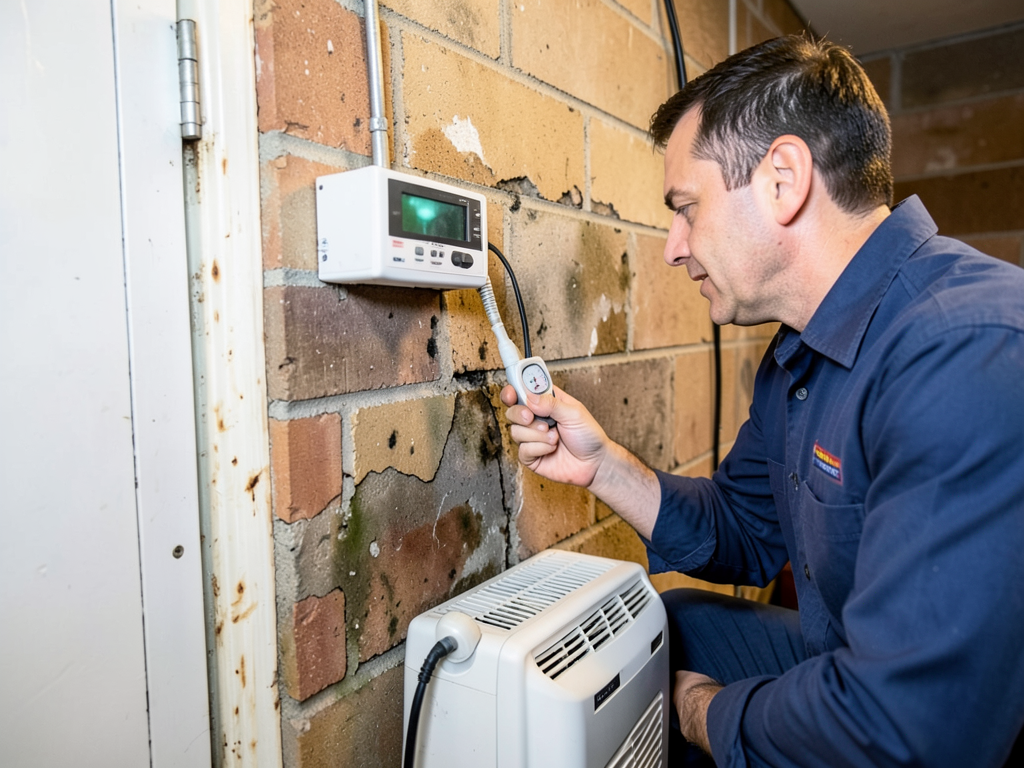
Professional restoration technicians use moisture meters to map the extent of water migration. These tools detect moisture in materials that appear dry to the touch, revealing hidden damage in walls, under flooring, and in ceiling cavities below the affected area.
Water removal involves commercial-grade extraction equipment that removes water from carpet, padding, and hard surfaces far more effectively than consumer-grade shop vacs. This step alone can remove 90% of the water content from affected materials.
Drying requires industrial air movers and dehumidifiers that create conditions to evaporate trapped moisture. These machines work together, with air movers directing high-velocity airflow across wet surfaces while dehumidifiers remove the resulting water vapor from the air.
Monitoring continues throughout the drying process. Technicians take moisture readings daily to track progress and adjust equipment placement. This ensures materials return to normal moisture content levels, typically below 16% for wood framing.
In cases where water has affected finished basement areas, restoration may involve removing and replacing damaged materials. This includes cutting out water-damaged drywall, removing affected insulation, and addressing any mold growth that has developed.
Royal Oak’s clay soil composition affects how water behaves in basements. Our area’s high clay content creates poor drainage conditions, meaning water from leaks tends to spread laterally along the path of least resistance rather than draining quickly through soil.
Professional restoration also addresses the source of the problem. If your dehumidifier failure was due to inadequate capacity for your space, technicians can recommend properly sized replacement equipment and improved drainage solutions.
Frequently Asked Questions
How much does professional water damage restoration cost in Royal Oak?
Costs vary based on damage extent, but most dehumidifier-related water damage incidents in Royal Oak range from $1,500 to $5,000 for complete restoration. Factors affecting price include square footage affected, materials damaged, and whether mold remediation is required.
Will my homeowner’s insurance cover dehumidifier-related water damage?
Most standard policies cover sudden and accidental water damage, including appliance failures. However, damage from lack of maintenance or gradual leaks may be excluded. Check your specific policy or contact your insurance provider for details about your coverage.
How long does the restoration process take?
Typical dehumidifier leak restoration takes 3-5 days. The first 24 hours focus on water removal and damage assessment. Drying typically requires 2-3 days with equipment running continuously. Final repairs and reconstruction may extend the timeline depending on material availability and repair scope.
Can I handle small dehumidifier leaks myself?
For very small spills that you catch immediately and can thoroughly dry within 24 hours, DIY cleanup may be sufficient. However, if water has spread beyond a few square feet, or if you cannot complete drying within 24 hours, professional help prevents mold growth and secondary damage.
What should I look for when replacing my dehumidifier?
Choose a unit with capacity appropriate for your basement’s square footage and moisture conditions. For Royal Oak basements, units rated for 50-70 pints per day typically handle our humidity levels effectively. Consider models with built-in condensate pumps and continuous drainage options for trouble-free operation.
Protecting Your Royal Oak Home from Future Water Damage
Prevention starts with proper equipment selection and maintenance. Choose dehumidifiers sized for your space, not just your budget. A unit too small for your basement will run constantly, wearing out components prematurely.
Regular maintenance includes cleaning or replacing air filters monthly during heavy use periods. Check drain hoses quarterly for kinks, clogs, or deterioration. Test condensate pumps by pouring water into the reservoir and verifying activation.
Consider installing water sensors near your dehumidifier and in other basement areas prone to leaks. These inexpensive devices alert you to moisture before significant damage occurs.
For finished basements, install water-resistant materials when possible. Use moisture-resistant drywall in basement applications, elevate wood framing above concrete floors, and choose flooring materials that tolerate occasional moisture exposure.
Finally, know when to call professionals. If you discover water damage beyond your ability to address quickly, or if you suspect mold growth, professional restoration prevents small problems from becoming major structural issues.
Water damage from appliance failures is common in Royal Oak homes, but it doesn’t have to become a disaster. Quick action and professional help when needed can save thousands in repair costs and protect your home’s value.
Call (313) 572-5559 today to schedule your inspection. Our Royal Oak-based team responds within hours to stop water damage before it spreads through your home’s structure. Don’t wait until that small leak becomes a major restoration project.
[IMAGE_PLACEHOLDER_3>