
A slow drip under your shower tile is doing more damage than a burst pipe in many Pleasant Ridge homes right now. The reason is simple. A burst pipe is visible and urgent. A failing shower pan liner is invisible and gradual. By the time you notice the soft spot in your bathroom floor or the ceiling stain in the room below, the water has already been working through your subfloor and joists for months.
This is the story we see repeatedly in the older Craftsman bungalows and Tudor revivals that line the streets of Pleasant Ridge, Ferndale, and Berkley. These homes were built with real craftsmanship, but their shower assemblies age out. The PVC or CPE pan liners degrade. The weep holes clog. The mud bed saturates. And then the rot begins.
What a Shower Pan Actually Does (And Why It Fails)
Most homeowners picture a shower as just tile and grout. The reality is that a properly built shower floor is a layered system. From bottom to top, you have your subfloor, a sloped mortar bed (often called the mud bed), a waterproof liner (typically PVC or CPE sheeting), another mortar bed, and then your tile set in thinset. Grout fills the joints on top.
The liner is the critical layer. It catches any water that penetrates the tile and grout and channels it toward the drain. The drain itself has two levels: the upper strainer that you see, and lower weep holes positioned just above the liner. Those weep holes allow trapped water to escape into the drain body.
When the liner cracks, pulls away from the curb, or gets punctured during a renovation, water bypasses the entire system. When the weep holes clog with soap scum and debris, water has nowhere to go and backs up into the mud bed. A saturated mud bed acts like a sponge sitting directly on your subfloor. That sustained moisture is what destroys joists.
Five Shower Pan Leak Symptoms You Can See Right Now
Catching these signs early is what separates a manageable repair from a full structural remediation. Go check your bathroom after reading this section.
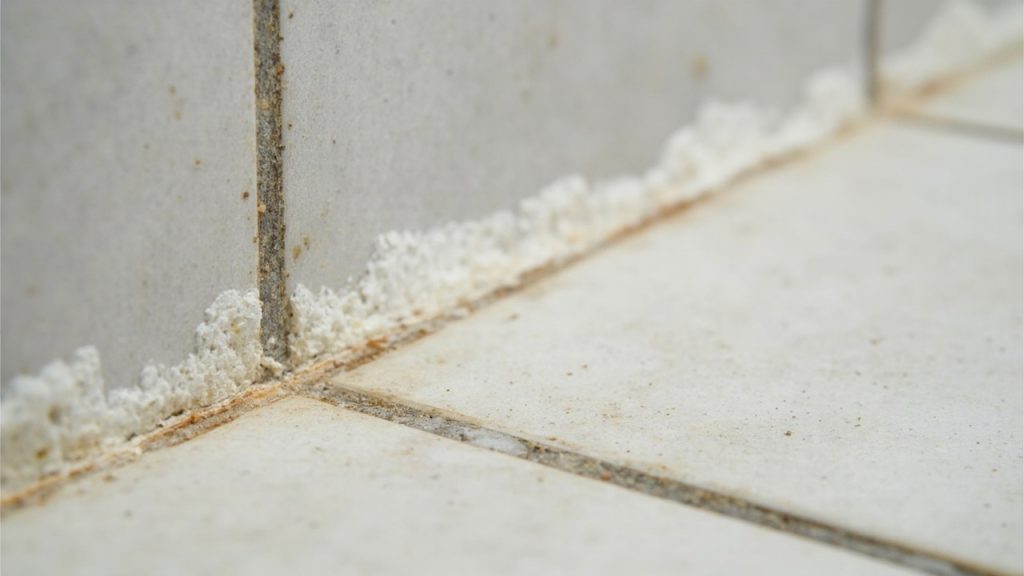
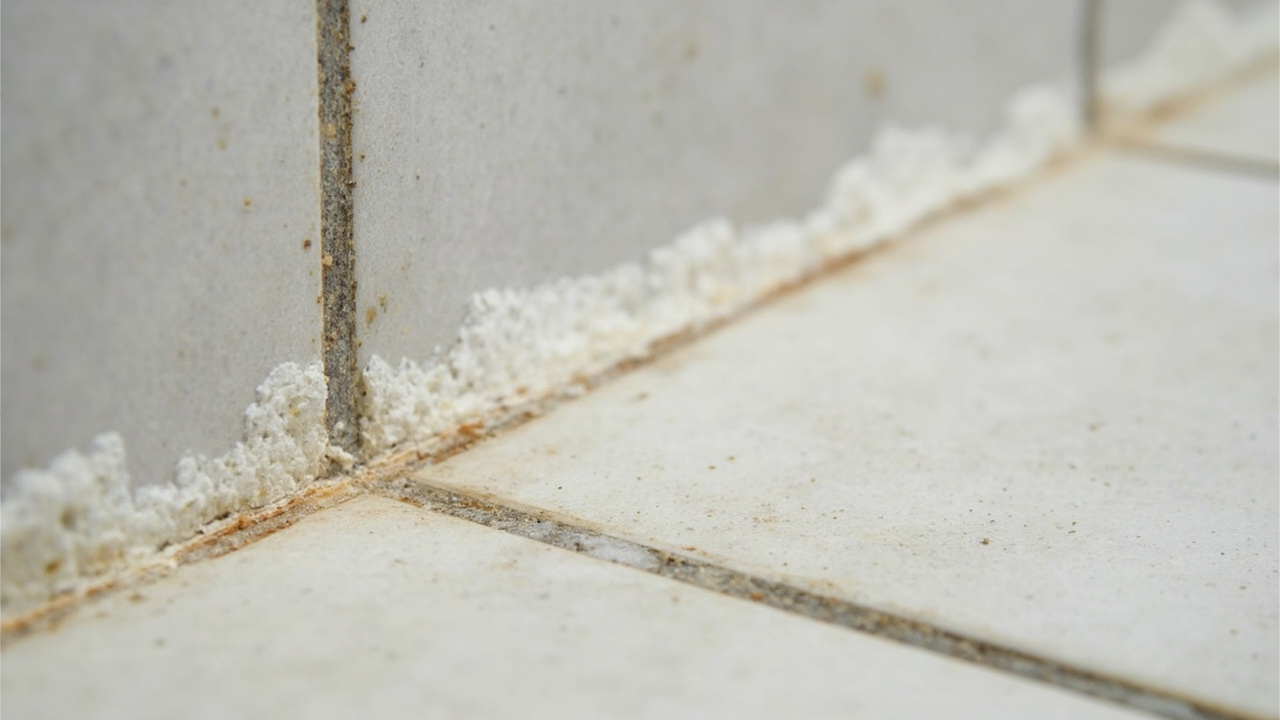
- Efflorescence on tile or grout lines. Those chalky white deposits are mineral salts left behind as water moves through porous material and evaporates. If you see them near your shower floor or base, water is migrating through your tile assembly.
- Darkened or soft grout lines. Grout that appears perpetually wet or darker than surrounding areas is absorbing moisture from below, not just from shower spray.
- Floor flex or soft spots near the drain. Press firmly on the tile around your drain. Any give or bounce indicates a compromised mud bed or subfloor underneath. Solid tile over a healthy mud bed should feel like pressing on concrete.
- Ceiling stains directly below the bathroom. If your shower sits above a finished basement or main-floor room, brown water stains on that ceiling are a near-certain indicator of a failed pan liner. These stains appear long after the water has already damaged the framing.
- A persistent musty odor in or near the bathroom. Stagnant water smell differs from sewer gas. Sewer gas has a sulfur or rotten egg quality. Musty or earthy odors point to mold colonization, which begins within 24 to 48 hours of sustained moisture exposure according to EPA mold guidance for building professionals.
How Detroit’s Climate Makes Shower Pan Failures Worse
Pleasant Ridge sits in Wayne County and Macomb County borderlands, which means your home goes through serious freeze-thaw cycles every winter. Those temperature swings expand and contract the grout and thinset in your shower assembly. Over time, even a well-installed shower develops micro-fractures in the grout lines. Water finds those fractures.
Detroit’s average winter temperatures push well below freezing for extended stretches. The resulting thermal movement in older tile work is significant. Homes built before the current Michigan Residential Code updates used thinner liner material and less flexible thinset compounds. That combination means more cracking, more infiltration, and more subfloor exposure.
The higher-than-average basement humidity levels common in Southeast Michigan also matter. Even moisture that evaporates from a saturated subfloor has to go somewhere. In a tight, older home with limited ventilation, that vapor stays in the building envelope and feeds mold growth throughout the floor assembly.

The Bucket Test for Isolating a Shower Pan Leak
Before calling anyone, you can run a simple isolation test to confirm whether the leak is coming from the pan liner or from the supply plumbing. This test works in the vast majority of cases and helps restoration professionals scope the job correctly from the start.
First, dry the shower floor completely and plug the drain with a rubber test plug. Fill the shower pan with water to just below the curb, leaving the walls dry. Mark the water level with a grease pencil or tape. Do not use the shower for 24 hours. Do not run water in the shower during this period.
After 24 hours, check the water level. A drop of more than one-quarter inch in 24 hours indicates a liner failure. If the level holds steady, the problem is more likely in the plumbing supply or drain connection, not the pan itself. IICRC-certified restoration technicians use moisture meters to map the saturation zone before deciding where to open the floor.
| Bucket Test Result | Likely Cause | Next Step |
|---|---|---|
| Water level drops more than 0.25 inches in 24 hours | Failed shower pan liner or compromised drain seating | IICRC moisture mapping, liner inspection, subfloor assessment |
| Water level holds steady for 24 hours | Supply line or P-trap connection leak | Licensed plumber to inspect supply and waste connections |
| Leak only occurs during active showering | Grout or tile joint failure allowing wall water to penetrate | Full tile assembly inspection, grout integrity testing |
| Leak occurs regardless of shower use | Hydrostatic pressure from below (basement water intrusion) | Basement inspection, waterproofing assessment |
What Professionals Find Inside the Floor Assembly
When our crews open up a bathroom floor in Pleasant Ridge or the adjacent neighborhoods of Huntington Woods or Oak Park, the findings follow a consistent pattern in homes of this age. The mud bed is fully saturated and often crumbling. The PVC liner has a puncture, a pull-away at the curb corner, or has delaminated at the drain assembly clamping ring. The subfloor below shows black discoloration from fungal growth.
Moisture meter readings tell the story fast. Dry subflooring in a healthy bathroom reads between 6% and 11% moisture content by weight. Anything above 19% is considered at risk for decay fungi. We routinely find readings between 35% and 60% in floors that look normal from the surface. The tile and grout act as a sealed lid that keeps moisture trapped and concentrated.
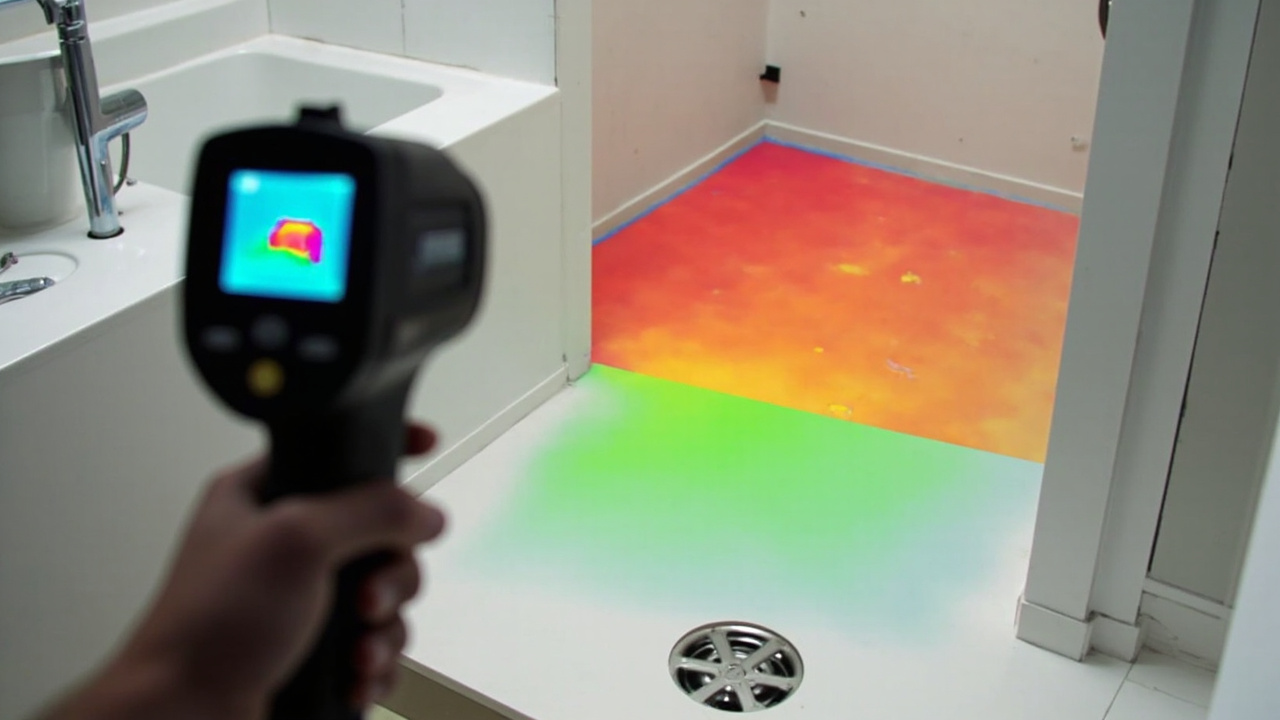
Thermal imaging cameras confirm the saturation zone without destructive opening. Cool spots on the thermal image correspond to areas of evaporative cooling from wet material. A trained technician can map the full damage footprint before a single tile comes up. This matters for Wayne County permit work and insurance documentation.
If you suspect mold is already present, read through how to remove mold safely from your Royal Oak home to understand the remediation process before work begins. The same principles apply throughout the metro area.
The Hidden Danger of Stachybotrys in Wet Subfloors
Black mold, formally Stachybotrys chartarum, is one of several mold species that colonize chronically wet wood and cellulose materials. It is not the only mold you find in a wet subfloor, but it is the species that homeowners and insurers take most seriously because of its mycotoxin production.
Stachybotrys needs a sustained moisture source. It does not grow on a surface that dried out after a single splash. It grows where water has been present continuously for weeks. A shower pan that leaks a little every day for six months creates exactly the right conditions. By the time homeowners notice floor flex, the mold colony can extend well beyond the visible damage area through capillary action along wood grain.
Mold remediation costs scale quickly with the affected area. A localized subfloor replacement under a single shower is manageable. Mold that has spread into wall cavities, across multiple joist bays, or into the ceiling of a finished basement below becomes a significantly larger remediation project. Time is the multiplier here.
If you are also dealing with water intrusion from below, the information in professional cleanup for flooded basements in Dearborn gives you a realistic picture of what multi-level water damage restoration involves.
Why DIY Caulk and Grout Repairs Fail Every Time
The temptation to recaulk the shower base and call it fixed is understandable. Caulk is cheap. A shower liner replacement is not. But recaulking addresses the surface and ignores the system. If your liner has failed, the water is already bypassing the surface layer entirely. Adding caulk on top of the tile does nothing to stop moisture that has already penetrated below the tile and is saturating the mud bed.
We have opened floors in Ferndale and Pleasant Ridge homes where three or four layers of caulk are visible on the tile, applied over years by homeowners trying to stop a leak they could not locate. The subfloor beneath those floors was often in significantly worse condition than properties where the homeowner did nothing and called a professional sooner.
The only real fix for a failed shower pan liner is to remove the tile, remove the mud bed, cut out and replace the liner, and rebuild the shower floor from scratch. Wayne County Building Codes require a pan liner flood test before the final inspection on any shower rebuild. That test mirrors the bucket test described above and must pass to receive a certificate of occupancy for the repaired space.
Comparing Damage Levels Based on How Long the Leak Has Been Active
| Estimated Leak Duration | Typical Subfloor Moisture Reading | Common Findings | Remediation Scope |
|---|---|---|---|
| Under 30 days | 12% to 25% | Wet mud bed, soft subfloor edges, no visible mold | Liner replacement, subfloor drying, possible spot replacement |
| 30 to 90 days | 25% to 45% | Saturated subfloor, early fungal staining, soft joist top edges | Liner replacement, subfloor section replacement, mold treatment |
| 90 to 180 days | 45% to 60% | Active mold colonies, structurally soft joists, ceiling staining below | Full subfloor replacement, joist sistering or replacement, mold remediation |
| Over 180 days | Above 60%, often pegged out on meter | Joist failure, wall cavity mold spread, possible structural compromise | Structural repair, full remediation, possible wall opening, extended drying |
What Professional Water Damage Restoration Looks Like in Practice
When an IICRC-certified crew responds to a shower pan leak in Pleasant Ridge, the process follows the S500 Standard for Professional Water Damage Restoration. That standard dictates drying goals, documentation requirements, and equipment placement. It is not optional and it is what your insurance carrier will reference when reviewing your claim.
The first step is moisture mapping. Technicians use calibrated moisture meters and thermal imaging cameras to define the wet zone before anything is opened. This protects you and the contractor from disputes about what was and was not damaged before work began.
Once the scope is confirmed, tile removal and demo begins. The mud bed comes out. The liner is inspected and photographed. If the subfloor requires replacement, structural lumber is assessed to Wayne County code requirements. Drying equipment, typically commercial-grade desiccant or refrigerant dehumidifiers paired with air movers, runs until the structural materials reach dry standard, usually between 6% and 11% moisture content.
For situations where the leak has reached the basement ceiling below, restoration work may extend downward. The process we describe for flooded basement cleanup in Grosse Pointe shares many of the same drying and documentation steps that apply when a shower leak penetrates into a lower level.
After drying is confirmed, the liner and shower assembly are rebuilt to current code. A water test is performed and documented before the tile is set. Final moisture readings are logged and provided to the homeowner for insurance purposes.
Catching Frozen Pipe Damage Before It Compounds a Shower Problem
In Pleasant Ridge and surrounding communities, winter brings another risk that overlaps with shower pan damage. Frozen supply lines in exterior bathroom walls can crack and introduce water into the same floor cavity that a slow shower pan leak has already softened. The combination of both moisture sources accelerates rot and mold growth dramatically.
If you have dealt with a frozen pipe this season and noticed soft flooring afterward, the possibility of compounding damage is real. The frozen pipe burst cleanup process in Detroit explains how technicians assess overlapping water sources and prioritize drying when multiple leak events have occurred in the same area.
What to Do If You Recognize Any of These Signs
Stop using the shower. Every additional shower you take drives more water through a compromised liner and into a subfloor that is already damaged. This is the single most important step you can take before a professional arrives.
Document what you can see. Take photos of efflorescence, soft spots, ceiling stains, and any visible mold. Date the photos. Your insurance adjuster will ask when you first noticed the damage.
Call a water damage restoration company certified to the IICRC S500 standard before calling a tile contractor. The restoration scope must be completed and documented before rebuild work begins. Doing it in the wrong order creates gaps in documentation that can affect your claim and can leave hidden moisture behind finished surfaces.
A slow shower pan leak in a Pleasant Ridge home is not a cosmetic issue. It is a structural issue that compounds daily. The sooner the moisture source is stopped and the wet materials are dried to standard, the smaller and more manageable the repair scope becomes. If you have seen any of the signs described above, the time to act is before you see any more of them.
{
“@context”: “https://schema.org”,
“@type”: “BlogPosting”,
“headline”: “Why a Faulty Shower Pan in Your Pleasant Ridge Bathroom Could Be Rotting Your Joists Right Now”,
“description”: “Shower pan leak symptoms in Pleasant Ridge homes are easy to miss until joists rot. Learn how to spot damage early and what Detroit homeowners must do next.”,
“wordCount”: 2310,
“datePublished”: “2026-03-29T08:52:00.000Z”,
“dateModified”: “2026-03-29T08:52:00.000Z”,
“inLanguage”: “en-US”,
“mainEntityOfPage”: {
“@type”: “WebPage”,
“@id”: “https://ironwoodwaterdamagerestorationdetroit.com”
},
“publisher”: {
“@type”: “LocalBusiness”,
“name”: “Ironwood Water Damage Restoration Detroit”,
“url”: “https://ironwoodwaterdamagerestorationdetroit.com”
},
“author”: {
“@type”: “Organization”,
“name”: “Ironwood Water Damage Restoration Detroit”,
“url”: “https://ironwoodwaterdamagerestorationdetroit.com”
},
“image”: {
“@type”: “ImageObject”,
“url”: “https://ironwoodwaterdamagerestorationdetroit.com/wp-content/uploads/2026/03/how-a-faulty-shower-pan-in-your-pleasant-ridge-bat-1.jpg”
}
}
{
“@context”: “https://schema.org”,
“@type”: “LocalBusiness”,
“name”: “Ironwood Water Damage Restoration Detroit”,
“url”: “https://ironwoodwaterdamagerestorationdetroit.com”,
“address”: {
“@type”: “PostalAddress”,
“addressLocality”: “Detroit”
},
“areaServed”: {
“@type”: “City”,
“name”: “Detroit”
}
}
{
“@context”: “https://schema.org”,
“@type”: “BreadcrumbList”,
“itemListElement”: [
{
“@type”: “ListItem”,
“position”: 1,
“name”: “Home”,
“item”: “https://ironwoodwaterdamagerestorationdetroit.com”
},
{
“@type”: “ListItem”,
“position”: 2,
“name”: “Blog”,
“item”: “https://ironwoodwaterdamagerestorationdetroit.com/blog”
},
{
“@type”: “ListItem”,
“position”: 3,
“name”: “Why a Faulty Shower Pan in Your Pleasant Ridge Bathroom Could Be Rotting Your Joists Right Now”
}
]
}
{
“@context”: “https://schema.org”,
“@type”: “Service”,
“serviceType”: “Water Damage Restoration”,
“provider”: {
“@type”: “LocalBusiness”,
“name”: “Ironwood Water Damage Restoration Detroit”,
“url”: “https://ironwoodwaterdamagerestorationdetroit.com”
},
“areaServed”: {
“@type”: “City”,
“name”: “Detroit”
},
“description”: “Shower pan leak symptoms in Pleasant Ridge homes are easy to miss until joists rot. Learn how to spot damage early and what Detroit homeowners must do next.”
}