
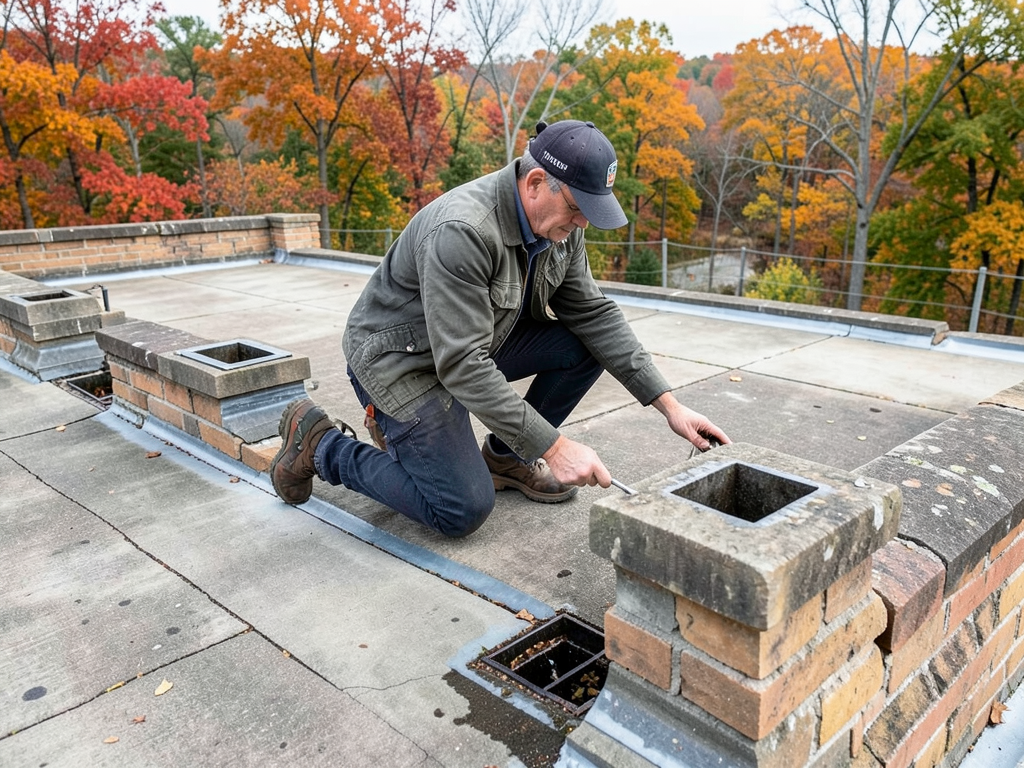
Why Hamtramck Flat Roofs Often Leak After a Heavy Fall Leaf Drop
Hamtramck’s historic flat roofs face a predictable seasonal threat when fall leaves clog drainage systems. The combination of dense Polish Flats, aging parapet walls, and Detroit’s freeze-thaw cycles creates a perfect storm for water damage. Understanding this specific vulnerability helps you prevent costly interior damage before winter arrives.
The Hidden Danger of Fall Leaf Accumulation
Flat roofs in Hamtramck’s 48212 zip code sit beneath mature maple and oak trees that drop thousands of leaves each October. These leaves don’t just sit on the surface. They wash into scuppers and drains, creating dams that trap water against the roof membrane.
When water pools on a flat roof, several problems accelerate. The added weight stresses aging structures. Standing water finds the path of least resistance through deteriorated flashing. Most critically, trapped moisture creates the perfect environment for freeze-thaw damage when temperatures fluctuate.
Detroit’s climate adds another layer of complexity. The city experiences approximately 30 freeze-thaw cycles each winter, according to the National Weather Service. Water that enters tiny cracks during warm spells expands when frozen, widening those openings with each cycle.
Common Drainage Failures in Hamtramck Homes
The architectural style common in Hamtramck contributes to drainage problems. Polish Flats and worker cottages built between 1910 and 1930 feature parapet walls that enclose the roof edge. While these walls create a finished appearance, they also hide drainage issues until water appears inside.
Scuppers cut through parapet walls become the primary drainage path. These openings, typically 4 to 6 inches wide, clog quickly with leaves, twigs, and debris. Once blocked, water has nowhere to go except over the roof edge or through the building envelope.
Downspout connections present another failure point. Many Hamtramck homes connect roof drains directly to underground storm sewers. When leaves block these connections, water backs up into the roof drain system and overflows at the lowest point.
The Michigan Residential Code Section R903.4 requires adequate roof drainage to prevent water accumulation. However, many historic Hamtramck buildings predate these requirements, leaving them vulnerable to modern weather patterns.
Early Warning Signs of Roof Drainage Problems
Water damage from roof drainage failures often appears inside before homeowners notice exterior problems. Ceiling stains near exterior walls indicate water traveling along roof joists. Bubbling paint or peeling wallpaper suggests moisture trapped between wall surfaces.
Musty odors in upper floor rooms often signal hidden mold growth from chronic moisture exposure. The smell becomes more noticeable when humidity rises or when heating systems circulate air through affected spaces.
Exterior signs include water stains on parapet walls, deteriorated mortar joints, and rusted scupper openings. You might notice water pouring over roof edges during moderate rain, indicating blocked drainage pathways.
A simple screwdriver test reveals roof deck condition. Press gently on ceiling areas near exterior walls. Soft spots or movement suggest water-damaged sheathing that could collapse under additional weight.
Why Hamtramck’s Age Makes It Vulnerable
The median age of Hamtramck housing stock exceeds 90 years, according to Wayne County property records. These aging structures face challenges modern buildings avoid. Original roofing materials deteriorate beyond their intended lifespan. Mortar joints in parapet walls become porous. Metal flashing corrodes through.
Many homes underwent amateur repairs over decades. Layers of roofing material trap moisture. Improper flashing installation creates water entry points. Some properties have multiple roofing systems stacked atop each other, each with different drainage characteristics. EPA mold guidelines.
The narrow lot sizes common in Hamtramck, typically 30 to 35 feet wide, concentrate leaf fall from multiple properties onto single roof surfaces. This density increases the volume of debris compared to suburban homes with larger setbacks.
City infrastructure adds another factor. Combined sewer systems in older Hamtramck neighborhoods can back up during heavy rains, forcing water back through roof drains and onto ceiling surfaces.
Professional Water Damage Restoration Process
When roof drainage failures cause interior damage, proper restoration requires systematic approach. The Institute of Inspection Cleaning and Restoration Certification (IICRC) S500 standard guides professional water damage restoration, ensuring consistent quality and safety. IICRC S500 standard.
Initial inspection determines water category and extent of damage. Category 1 water from clean sources becomes contaminated when mixed with debris. Category 3 water containing sewage or chemicals requires specialized handling and disposal. What to Do Right Now for Sewage Backup Cleanup in Detroit.
Water extraction removes standing moisture using truck-mounted extraction units capable of removing 20 to 30 gallons per minute. This step prevents further absorption into building materials and reduces drying time. How to Remove Mold Safely from Your Royal Oak Home.
Structural drying employs industrial air movers and dehumidifiers. Air movers create evaporation across wet surfaces while dehumidifiers remove moisture from the air. This combination typically dries most materials within 72 to 96 hours.
Mold prevention becomes critical when water exposure exceeds 48 hours. EPA guidelines require antimicrobial treatment of affected areas and continuous monitoring of humidity levels to prevent fungal growth.
Preventing Future Drainage Failures
Professional roof maintenance prevents most drainage-related water damage. Annual cleaning before leaf season removes debris from scuppers and drains. Installing leaf guards over scupper openings reduces clogging frequency. Professional Cleanup for Flooded Basements in Dearborn (What to Expect and Why It Matters).
Roof slope assessment identifies areas where water pools. Even minor depressions of 1/4 inch per foot can trap water against the membrane. Building up these low spots with compatible roofing material improves drainage.
Flashing inspection reveals potential water entry points. Deteriorated sealant around vents, chimneys, and roof penetrations allows water infiltration during heavy rains or when ice dams form along roof edges.
Interior monitoring helps detect problems early. Water alarms placed near ceiling areas prone to leaks provide early warning. Smart home systems can send alerts to your phone when moisture is detected.
Cost Comparison: Prevention vs. Restoration
| Service Type | Typical Cost Range | Frequency | Long-term Value |
|---|---|---|---|
| Annual Roof Inspection | $150 – $300 | Once yearly | High – prevents major damage |
| Professional Cleaning | $200 – $500 | Before fall season | High – maintains drainage |
| Minor Repairs | $500 – $1,500 | As needed | Medium – extends roof life |
| Water Damage Restoration | $3,000 – $15,000+ | Emergency only | Low – reactive approach |
Local Building Code Considerations
The Michigan Residential Code adopted by Hamtramck requires roof drainage systems to discharge at least 5 feet from foundation walls. This prevents water from saturating soil around foundations and causing basement seepage. Flooded Basement Cleanup in Grosse Pointe Done Fast and Done Right.
Parapet walls over 30 inches high must include approved coping materials to prevent water infiltration through the top surface. Many Hamtramck buildings lack this protection, creating chronic moisture problems.
Roof-mounted equipment installations must maintain minimum clearances for maintenance access. Blocked access prevents regular cleaning of drainage components, leading to preventable failures.
Wayne County health department regulations require proper containment and disposal of water-damaged materials contaminated with mold or sewage. Professional restoration companies maintain documentation proving compliance with these requirements.
Case Study: Hamtramck Flat Roof Recovery
A 1925 Polish Flat on Evaline Street experienced severe interior damage when fall leaves blocked scuppers for three weeks. Water pooled on the roof deck, finding entry through deteriorated flashing around a chimney.
The homeowner noticed water stains on the second-floor ceiling after heavy rains. By the time professional inspection occurred, mold had begun growing in wall cavities. The restoration required complete ceiling removal, structural drying, and mold remediation. Fixing the Mess After a Frozen Pipe Bursts in Your Detroit Home.
Post-restoration modifications included installing oversized scuppers, adding roof crickets to divert water around the chimney, and implementing quarterly maintenance schedule. Total project cost exceeded $12,000, compared to $400 annual maintenance that could have prevented the damage.
When to Call for Emergency Service
Certain situations require immediate professional response. Active water intrusion through ceilings demands 24/7 emergency service to prevent structural damage and mold growth. Water pouring from light fixtures creates electrical hazards requiring immediate attention.
Standing water on ceilings indicates imminent collapse risk. The weight of saturated materials can cause sudden failure, creating injury hazards and extensive property damage.
Musty odors combined with visible water stains suggest active mold growth. Professional remediation becomes necessary when contamination exceeds 10 square feet, according to EPA guidelines.
Insurance considerations affect response timing. Most policies require prompt mitigation to prevent additional damage. Delayed response can result in claim denial for secondary damage that could have been prevented.
Frequently Asked Questions
How often should I clean my flat roof drains?
Professional cleaning should occur at least twice yearly, before fall leaf season and after spring flowering. Properties with heavy tree coverage may require quarterly cleaning to prevent clogging.
Can I clean roof drains myself?
Basic debris removal from ground level is safe, but roof access requires proper safety equipment and training. Professional cleaning includes inspection for damage that homeowners might miss.
What causes roof leaks if there are no visible holes?
Water often enters through deteriorated flashing, clogged drains causing water backup, or ice dams forcing water under roofing materials. The entry point may be far from where water appears inside.
How long does water damage restoration take?
Most residential projects complete within 3 to 7 days, depending on damage extent and material types affected. Drying alone typically requires 72 to 96 hours under optimal conditions.
Will my insurance cover water damage from roof leaks?
Most homeowners policies cover sudden accidental damage but may exclude damage from lack of maintenance. Documentation of regular maintenance improves claim approval chances.
Protect Your Hamtramck Home This Fall
Don’t wait for water stains to appear on your ceiling. The combination of Hamtramck’s aging housing stock, dense tree canopy, and Detroit’s variable weather creates predictable seasonal risks. Professional inspection and maintenance cost far less than emergency restoration.
Ironwood Water Damage Restoration Detroit provides 24/7 emergency response throughout Hamtramck and surrounding areas. Our technicians understand the specific challenges of historic flat roofs and local building patterns. We arrive within hours to prevent additional damage and begin the restoration process immediately.
Call (313) 572-5559 today to schedule your fall roof inspection before leaves begin falling. A small investment now prevents thousands in emergency restoration costs later. Don’t let this fall’s leaf drop become next winter’s water damage nightmare.