
Professional Drying of Historic Plaster Walls in Detroit — A Preservationist Approach
If you own a historic home in Brush Park, you already know your walls are not like everyone else’s. They are thick. They are dense. And when water gets into them, they behave in ways that catch most restoration contractors off guard. Standard drying equipment and aggressive airflow — the go-to tools for modern drywall — can permanently destroy a three-coat plaster wall that has survived over a century. That is not a risk worth taking.
This guide breaks down exactly why historic plaster walls demand a different approach, what that approach looks like in practice, and what every Brush Park homeowner should know before a restoration crew sets foot in their home.
Understanding the Anatomy of Detroit’s Historic Plaster Walls
Most homes in Brush Park, the Boston-Edison Historic District, and Indian Village were built between the 1870s and the 1930s. Their walls are not a single material. They are a system — and understanding that system is the first step in drying it correctly.
Wood Lath and the Three-Coat System
Historic plaster walls in Detroit typically consist of wood lath strips nailed horizontally across wall studs. Over that lath, plasterers applied three coats by hand. The scratch coat was a thick, rough base mixed from lime, sand, and animal hair fiber. The brown coat came next, adding density and a flatter surface. The finish coat — sometimes pure lime putty — created the hard, smooth surface you see today.
Total wall thickness often runs from one inch to nearly two inches, not counting the wood lath or the air gap behind it. Compare that to a half-inch sheet of modern drywall, and you begin to understand why the same drying protocol cannot apply to both.
Wire Lath and Gypsum Plaster Variations
Some Detroit homes built after 1910 transitioned to expanded metal wire lath or used gypsum-based plasters alongside lime. Wire lath systems behave slightly differently under moisture stress because the metal can corrode and expand, pushing the plaster away from the substrate. In Brush Park specifically, you will find a mix of both wood lath and wire lath construction, sometimes in the same building, depending on when additions or renovations were done.
Why Standard Drying Techniques Fail Historic Plaster
When a water loss hits a modern home, the standard protocol under IICRC S500 Standards calls for high-velocity air movers placed at specific angles to accelerate evaporation from drywall surfaces. This works well for drywall because it is a thin, homogeneous material with predictable vapor permeability. Historic plaster does not share any of those characteristics.
Delamination and the Risk of Aggressive Airflow
Lime plaster is a hygroscopic material. It naturally absorbs and releases moisture based on the surrounding environment. When you blast high-velocity air directly at a wet plaster surface, you force the outer finish coat to dry significantly faster than the brown coat or scratch coat beneath it. The moisture gradient between layers creates internal stress. The finish coat separates — delaminates — from the brown coat, often in large sections. What looks like a salvageable wall becomes debris.
This is not a theoretical risk. It is something we see on job sites throughout Detroit’s historic districts when the wrong contractor takes over a water loss. Replacing historic three-coat plaster is expensive, time-consuming, and often impossible to match with modern materials. Preservation is always the better path.
Capillary Action and Deep Moisture Migration
Thick masonry and plaster walls move water through capillary action, not just surface absorption. Water wicks into the scratch coat and can travel laterally and upward within the wall assembly before it ever registers on the surface. A moisture meter reading on the finish coat may show dry while the scratch coat and lath behind it remain saturated. Misreading these conditions leads to premature equipment removal and mold growth — sometimes within 48 to 72 hours in Detroit’s humid Great Lakes climate.
If you have experienced a frozen pipe burst in your Detroit home, you already know how fast water spreads through old wall cavities. The distribution pattern in a historic plaster wall is even less predictable than in modern construction.
The Science of Indirect Drying and Desiccant Dehumidification
The correct drying method for historic plaster walls prioritizes controlled moisture removal from the air rather than direct airflow across the plaster surface. This is the core principle that separates preservation-aware restoration from standard water damage work.
Desiccant Dehumidifiers vs. LGR Refrigerant Units
Standard low-grain refrigerant (LGR) dehumidifiers perform well in typical residential water losses. They pull moisture from the air efficiently when ambient temperatures and grain levels are within their operating range. Historic plaster jobs often require desiccant dehumidifiers instead, for several reasons.
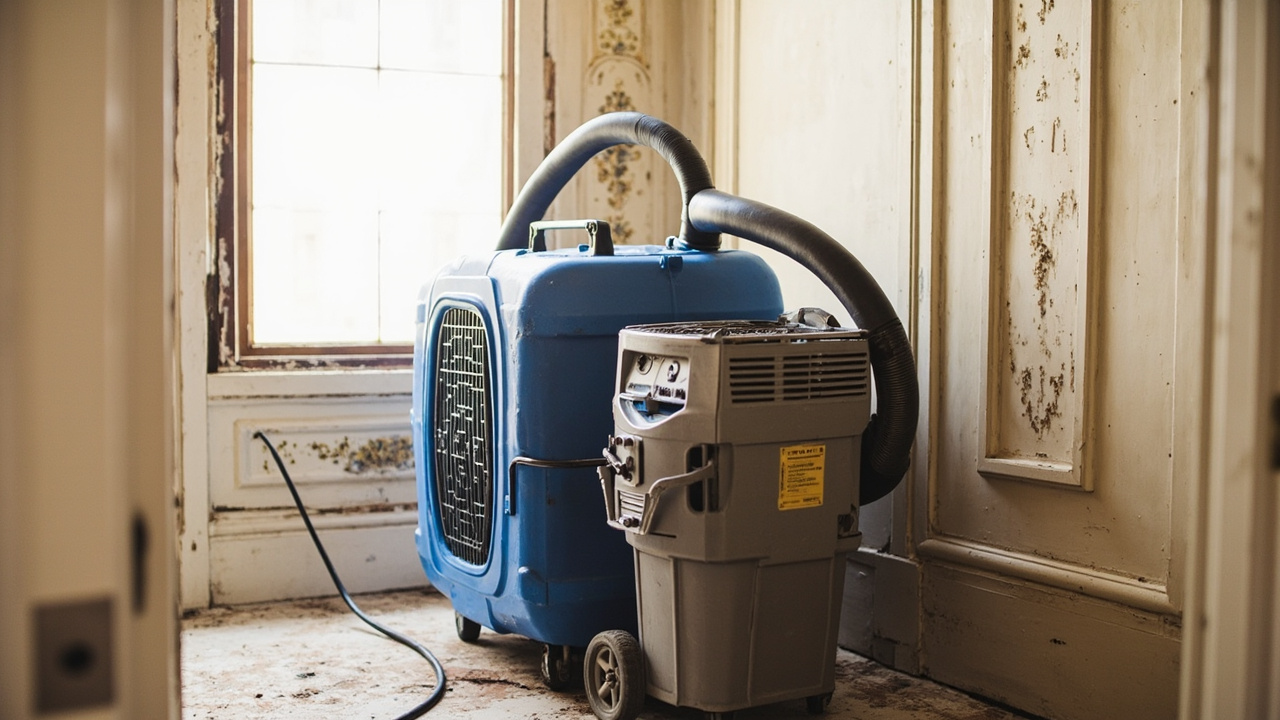
Desiccant units use a silica gel rotor to absorb moisture and do not depend on refrigerant coil temperatures to function. They achieve lower grains per pound (GPP) levels in the drying chamber, which creates a stronger vapor pressure gradient between the wet plaster assembly and the room air. That gradient pulls moisture out of the wall slowly and steadily without shocking the surface. The result is controlled drying that respects the moisture equilibrium of a thick, layered system.
| Equipment Type | Best For | Limitation in Historic Plaster | GPP Range Achievable |
|---|---|---|---|
| High-Velocity Air Mover | Modern drywall surface drying | Causes delamination on finish coat | N/A (airflow device) |
| LGR Refrigerant Dehumidifier | Standard residential water loss | Less effective at very low GPP levels needed for deep plaster drying | Approximately 30 to 50 GPP |
| Desiccant Dehumidifier | Historic plaster, masonry, low-temp environments | Higher operating cost, requires more monitoring | Below 20 GPP achievable |
| Indirect Heat Drying System | Controlled temperature elevation in enclosed space | Requires strict temperature limits (under 80°F) to prevent plaster cracking | Used in combination with desiccant |
Moisture Mapping with Infrared Thermography
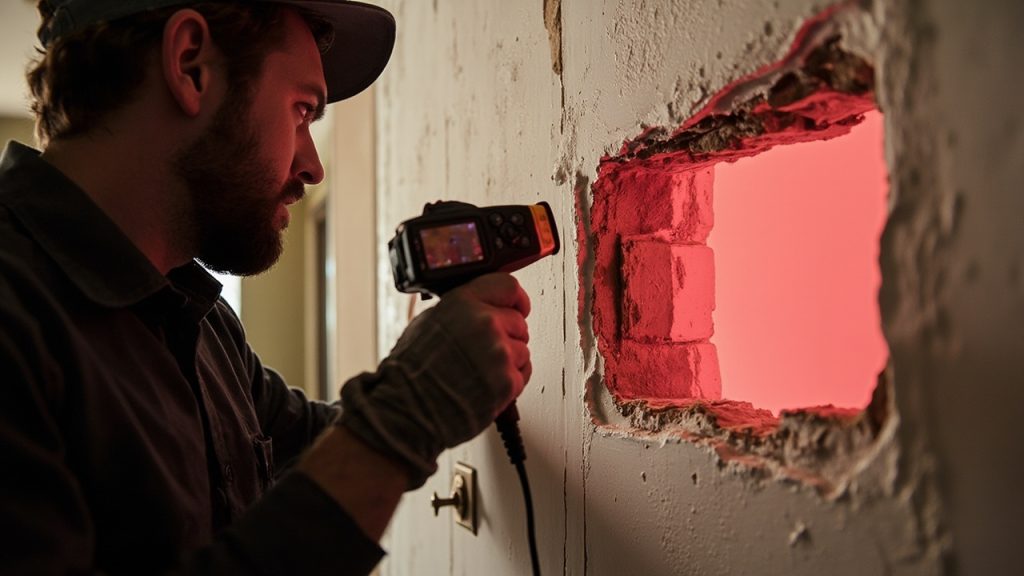
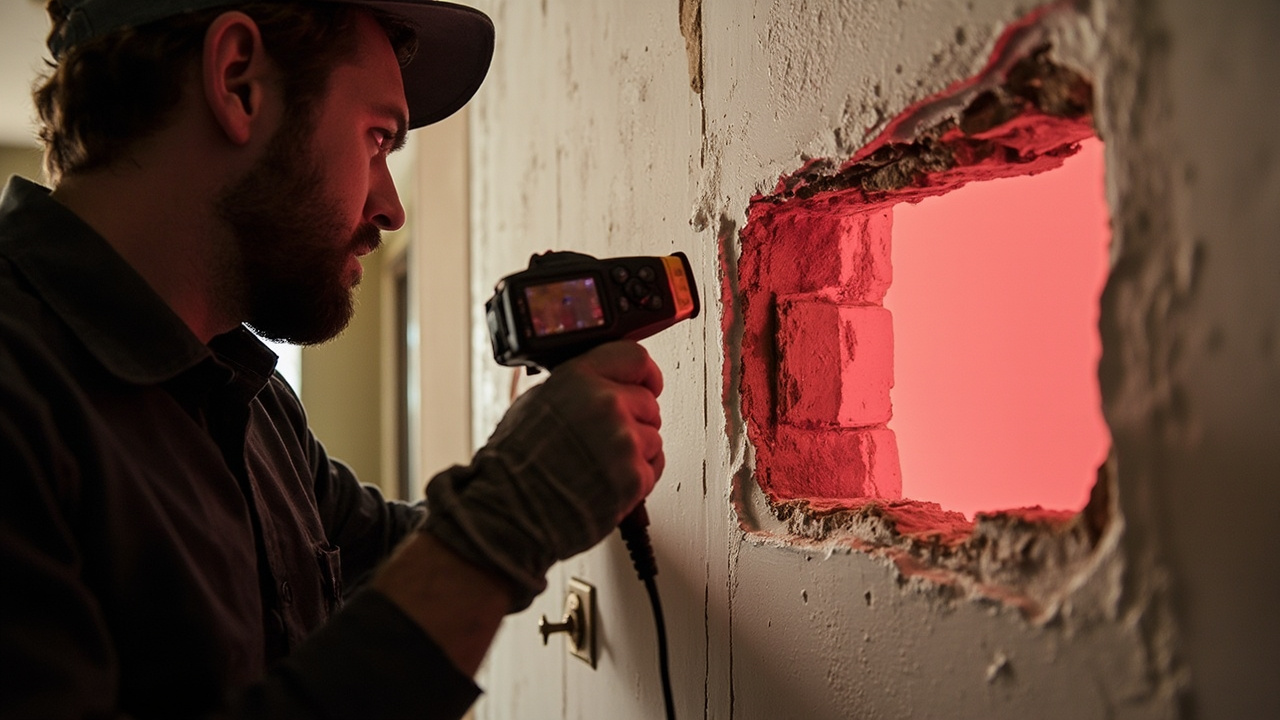
Accurate moisture mapping is non-negotiable in a historic plaster job. Infrared thermography (IR cameras) allows a technician to see temperature differentials across a wall surface that correspond to wet areas. Cold spots on an IR scan indicate evaporative cooling — moisture migrating toward the surface. Combining IR thermography with pin and pinless moisture meters gives a three-dimensional picture of where moisture sits within the wall assembly.
Without this mapping, you are guessing. And guessing on a historic plaster wall means either pulling equipment too early or running it too long, both of which cause damage.
Timeline for Drying a Three-Coat Plaster System
Drying a fully saturated three-coat plaster wall takes longer than drying drywall. Here is a realistic timeline based on field experience in Detroit’s historic districts.
| Plaster Saturation Level | Drying Timeline (Controlled Desiccant Method) | Moisture Content Target | Monitoring Frequency |
|---|---|---|---|
| Surface wet, scratch coat dry | 3 to 5 days | Below 15% wood moisture equivalent | Every 24 hours |
| Brown coat and scratch coat saturated | 7 to 10 days | Below 15% at all three coat depths | Every 12 to 24 hours |
| Full assembly including lath and stud bay saturated | 10 to 21 days | Below 15% at all depths, wood lath below 19% | Every 12 hours minimum |
| Masonry backing wall also saturated (common in Brush Park rowhouses) | 21 to 45 days | Masonry equilibrium moisture content for structure type | Daily with IR and moisture mapping |
Detroit Regulatory Compliance for Historic Home Water Damage
Historic homes in Detroit carry specific regulatory obligations that go beyond standard drying protocols. Two issues come up on almost every job in Brush Park and surrounding historic neighborhoods.
Lead-Based Paint and the RRP Rule
Homes built before 1978 are presumed to contain lead-based paint under the EPA’s Lead-Based Paint Renovation, Repair and Painting (RRP) Rule. Any water damage restoration work that disturbs painted surfaces in these homes requires specific work practices, containment, and documentation. In Michigan, the Michigan EGLE Lead-Based Paint program enforces these requirements. Virtually every home in Brush Park qualifies, and the consequences of non-compliance are serious.
A restoration contractor working in a Brush Park home must be EPA RRP certified and follow containment protocols that prevent lead dust migration during drying and any associated demolition. This is not optional, and it adds time and complexity to every job.
Asbestos in Plaster and Textured Surfaces
Asbestos was used in some plaster mixes and textured wall finishes in Detroit homes built between the 1940s and the early 1980s. Even in older homes, renovation work that added texture coatings at a later date may have introduced asbestos materials. Before any plaster is disturbed for demolition or invasive drying (such as drilling holes for wall cavity drying), testing is required. The Detroit Historic District Commission also expects restoration work to meet preservation standards that minimize unnecessary material removal.
The Step-by-Step Restoration Process for Brush Park Plaster Walls
Here is what a properly executed drying project looks like on a historic plaster home in Detroit.
- Initial Assessment and Source Control. Stop the water source first. Then photograph and document all affected areas before any equipment placement. In Brush Park rowhouses and attached homes, water from one unit can migrate to adjacent units through shared masonry walls.
- Infrared Thermography and Moisture Mapping. Use IR cameras to identify the full extent of moisture migration. Map moisture readings at multiple depths using pin meters and non-invasive meters. Create a baseline document that drives all subsequent decisions.
- Lead and Asbestos Assessment. Identify all areas where painted or textured surfaces may be disturbed. Test if any demolition or invasive drying is planned. Set up containment per RRP protocol before work begins.
- Controlled Environment Setup. Seal the drying zone. Place desiccant dehumidifiers to lower the GPP of the room air. Position air movers — if used at all — to move air across the room, not directly at plaster surfaces. Target room temperature between 70°F and 80°F. Temperatures above 85°F risk thermal cracking in old lime plaster.
- Key Stabilization on Hollow or Delaminating Areas. Before drying accelerates any existing delamination, probe the wall for hollow areas using a gentle tap test. Loose sections can be stabilized with injection adhesive through small drilled holes. This is standard preservation practice and prevents salvageable material from becoming a demolition situation.
- Daily Monitoring and GPP Tracking. Log GPP levels, moisture readings, and temperature at every visit. Adjust equipment placement based on where moisture is migrating. Do not remove equipment until all readings hit target thresholds at every depth.
- Final Documentation and Reporting. Provide a complete moisture log for insurance documentation and for the Detroit Historic District Commission if the property is in a designated area. This protects the homeowner during any insurance dispute and documents that preservation standards were followed.
What Happens When Historic Plaster Is Dried Incorrectly
The downstream consequences of improper drying in a historic home are significant. Mold growth in the wall cavity is the most common outcome. Lime plaster is somewhat resistant to mold compared to modern drywall paper, but the wood lath behind it is not. Saturated wood lath in an enclosed wall cavity will grow mold within days in Detroit’s summer humidity. If your home also has a history of water issues in lower levels, the mold remediation process for historic materials carries its own set of requirements.
Efflorescence — the white salt deposits that appear on masonry and plaster surfaces after water evaporates — is another indicator that moisture moved through the wall improperly. It is not just cosmetic. It signals ongoing moisture cycling that will continue to damage the plaster from within if the source is not resolved and the assembly is not dried correctly.
For homeowners in neighborhoods like Palmer Woods or the Boston-Edison Historic District who have experienced flooding in lower levels, proper basement cleanup protocols matter just as much as what happens on the upper floors. Water in a basement affects the moisture content of every wall assembly above it.
Choosing the Right Restoration Contractor for a Historic Detroit Home
Not every water damage contractor has experience with historic plaster. Ask specific questions before you sign anything.
- Does the crew hold IICRC Water Restoration Technician (WRT) and Applied Structural Drying (ASD) certifications?
- Do they use desiccant dehumidifiers or only LGR units?
- Do they perform infrared thermography on every job, or only on request?
- Are they EPA RRP certified for lead-safe work practices?
- Have they worked in the Brush Park neighborhood or other Detroit historic districts specifically?
- Can they provide a moisture log and drying report for insurance documentation?
A contractor who cannot answer these questions confidently is not the right fit for a historic plaster home. The stakes are too high. Replacing original three-coat lime plaster is expensive and the results rarely match what was there before. Preservation is the priority, and it requires a different skill set than standard residential water damage work.
If your home has experienced a sewage backup in addition to water damage, the contamination protocols for historic materials are even more demanding. Read more about sewage backup cleanup in Detroit to understand what Category 3 water loss means for your home’s materials. And if the damage extends to the basement, review what to expect from professional flooded basement cleanup so you can hold any contractor to the right standard.
Your Brush Park home survived over a century of Detroit winters, freeze-thaw cycles, and Great Lakes humidity. With the right drying approach, it can survive this water loss too. Call a contractor who knows the difference between a plaster wall and a drywall panel before any equipment gets placed.
{
“@context”: “https://schema.org”,
“@type”: “BlogPosting”,
“headline”: “Why Historic Plaster Walls in Brush Park Need Different Drying Methods Than Modern Drywall”,
“description”: “Historic plaster walls in Brush Park fail with standard drying methods. Learn why desiccant dehumidification and indirect drying protect your Detroit home.”,
“wordCount”: 2227,
“datePublished”: “2026-03-28T11:08:00.000Z”,
“dateModified”: “2026-03-28T11:08:00.000Z”,
“inLanguage”: “en-US”,
“mainEntityOfPage”: {
“@type”: “WebPage”,
“@id”: “https://ironwoodwaterdamagerestorationdetroit.com”
},
“publisher”: {
“@type”: “LocalBusiness”,
“name”: “Ironwood Water Damage Restoration Detroit”,
“url”: “https://ironwoodwaterdamagerestorationdetroit.com”
},
“author”: {
“@type”: “Organization”,
“name”: “Ironwood Water Damage Restoration Detroit”,
“url”: “https://ironwoodwaterdamagerestorationdetroit.com”
},
“image”: {
“@type”: “ImageObject”,
“url”: “https://ironwoodwaterdamagerestorationdetroit.com/wp-content/uploads/2026/03/why-historic-plaster-walls-in-brush-park-need-diff-1.jpg”
}
}
{
“@context”: “https://schema.org”,
“@type”: “LocalBusiness”,
“name”: “Ironwood Water Damage Restoration Detroit”,
“url”: “https://ironwoodwaterdamagerestorationdetroit.com”,
“address”: {
“@type”: “PostalAddress”,
“addressLocality”: “Detroit”
},
“areaServed”: {
“@type”: “City”,
“name”: “Detroit”
}
}
{
“@context”: “https://schema.org”,
“@type”: “BreadcrumbList”,
“itemListElement”: [
{
“@type”: “ListItem”,
“position”: 1,
“name”: “Home”,
“item”: “https://ironwoodwaterdamagerestorationdetroit.com”
},
{
“@type”: “ListItem”,
“position”: 2,
“name”: “Blog”,
“item”: “https://ironwoodwaterdamagerestorationdetroit.com/blog”
},
{
“@type”: “ListItem”,
“position”: 3,
“name”: “Why Historic Plaster Walls in Brush Park Need Different Drying Methods Than Modern Drywall”
}
]
}
{
“@context”: “https://schema.org”,
“@type”: “Service”,
“serviceType”: “Water Damage Restoration”,
“provider”: {
“@type”: “LocalBusiness”,
“name”: “Ironwood Water Damage Restoration Detroit”,
“url”: “https://ironwoodwaterdamagerestorationdetroit.com”
},
“areaServed”: {
“@type”: “City”,
“name”: “Detroit”
},
“description”: “Historic plaster walls in Brush Park fail with standard drying methods. Learn why desiccant dehumidification and indirect drying protect your Detroit home.”
}