
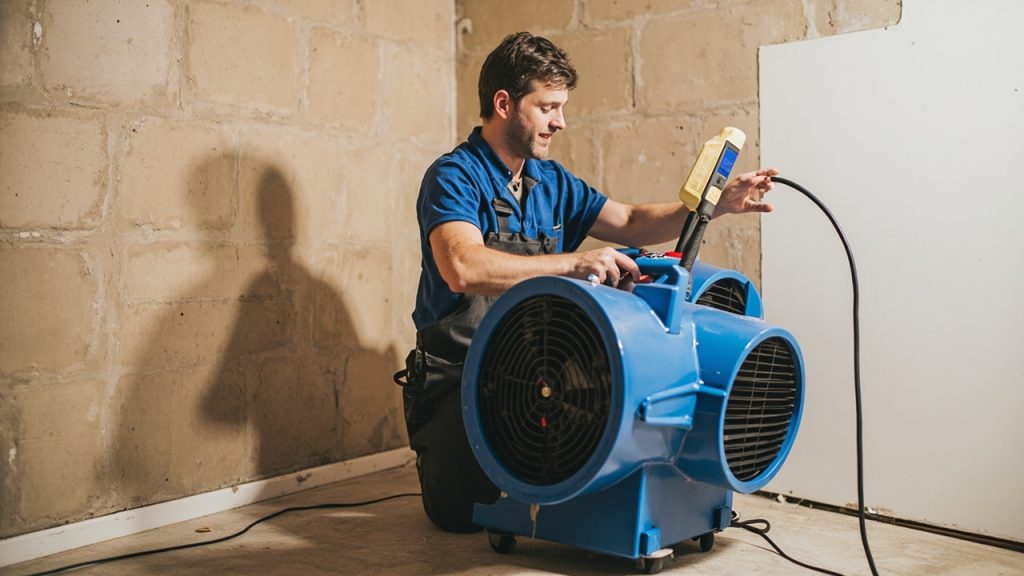
You had a pipe burst or an appliance leak. You grabbed every box fan in the house, pointed them at the wet wall, and told yourself the problem was handled. It is not handled. That drywall is still absorbing water, the moisture is migrating into the subfloor framing, and within 48 to 72 hours, mold spores that were always present in your home’s air supply have everything they need to start colonizing.
Rochester Hills homeowners tend to be thorough and proactive. That works in your favor when you call a professional fast. It works against you when the DIY instinct kicks in and delays the clock on proper structural drying.
Professional Air Movers vs. Household Fans — More Than Just Wind Speed
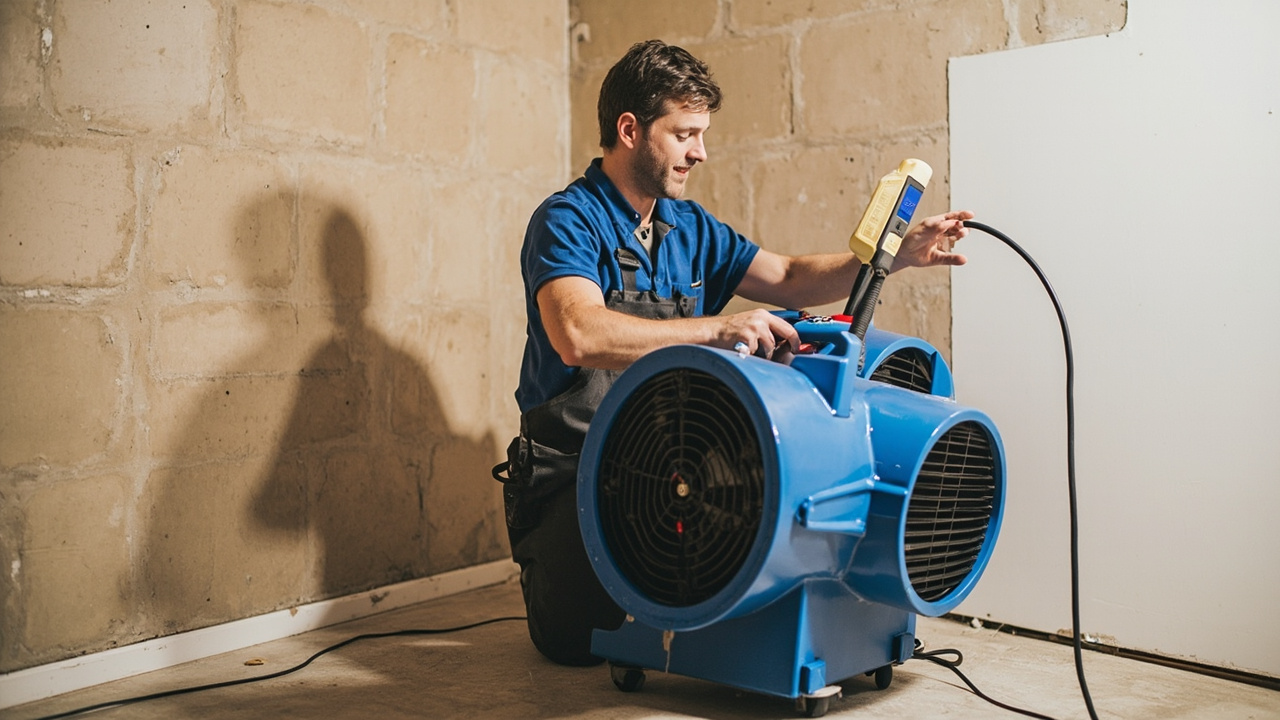
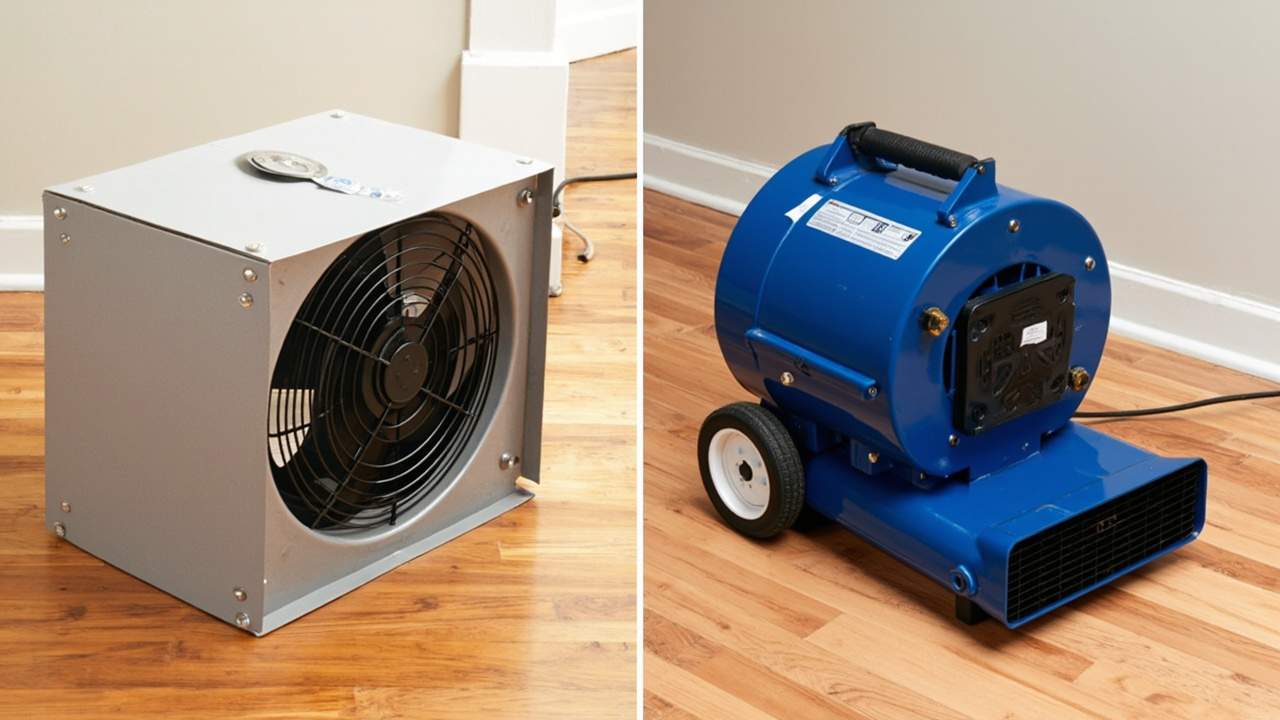
A standard box fan or oscillating pedestal fan moves air. A professional axial air mover or centrifugal drying fan does something fundamentally different. It targets the boundary layer of saturated air that clings to a wet surface and disrupts it with focused, high-velocity airflow.
That distinction matters more than most homeowners realize. The boundary layer is a thin film of humid air sitting directly against your wet drywall, subfloor, or carpet padding. Household fans cannot break through it efficiently. They circulate room air, which is already heavily moisture-laden after a leak, and push that same humid air past the wet surface without actually accelerating evaporation.
Professional restoration equipment operates according to IICRC S500 standards, the industry benchmark for professional water damage restoration. Those standards exist because decades of research into psychrometrics — the science of the thermodynamic properties of moist air — prove that effective structural drying requires precise control over three variables: airflow, temperature, and humidity. A box fan addresses exactly one of those, partially, and poorly.
The CFM and Static Pressure Gap That Changes Everything
CFM stands for cubic feet per minute. It measures how much air volume a fan moves in a given time. Static pressure measures a fan’s ability to push air against resistance, like through saturated material or into a tight wall cavity.
Here is where household equipment fails structurally.
| Equipment Type | Typical CFM Output | Static Pressure Capability | Effective Drying Depth |
|---|---|---|---|
| Standard Box Fan | 1,000 – 2,000 CFM | Near zero | Surface only |
| Oscillating Pedestal Fan | 500 – 1,200 CFM | Minimal | Surface only |
| Professional Axial Air Mover | 1,500 – 3,000 CFM focused | Moderate to high | Drywall cavity and subfloor |
| Professional Centrifugal Air Mover | 2,500 – 5,000+ CFM | Very high | Deep structural penetration |
A centrifugal air mover creates a focused, pressurized airstream at a low angle to the floor or wall surface. That angle is not random. It is engineered to maximize surface contact and disrupt the boundary layer continuously. No box fan you own replicates that physics regardless of how many you stack in a row.
Axial air movers handle open floor and wall drying efficiently. Centrifugal units are the tool of choice when moisture has penetrated into wall cavities, behind baseboards, or into subfloor assemblies under hardwood — a situation common in the two-story Colonial and ranch-style homes throughout Oakland County.
How Moisture Actually Moves Through Drywall and Framing
Drywall is hydrophilic by design. The gypsum core absorbs water and transfers it laterally through the paper facing. When water hits the bottom of a wall panel, it does not just stay there. Capillary action pulls it upward. On a Rochester Hills home with a finished basement, that means moisture from a sump pump failure or supply line leak travels up the drywall, into the framing, and can reach a floor joist assembly before a surface reading shows anything alarming.
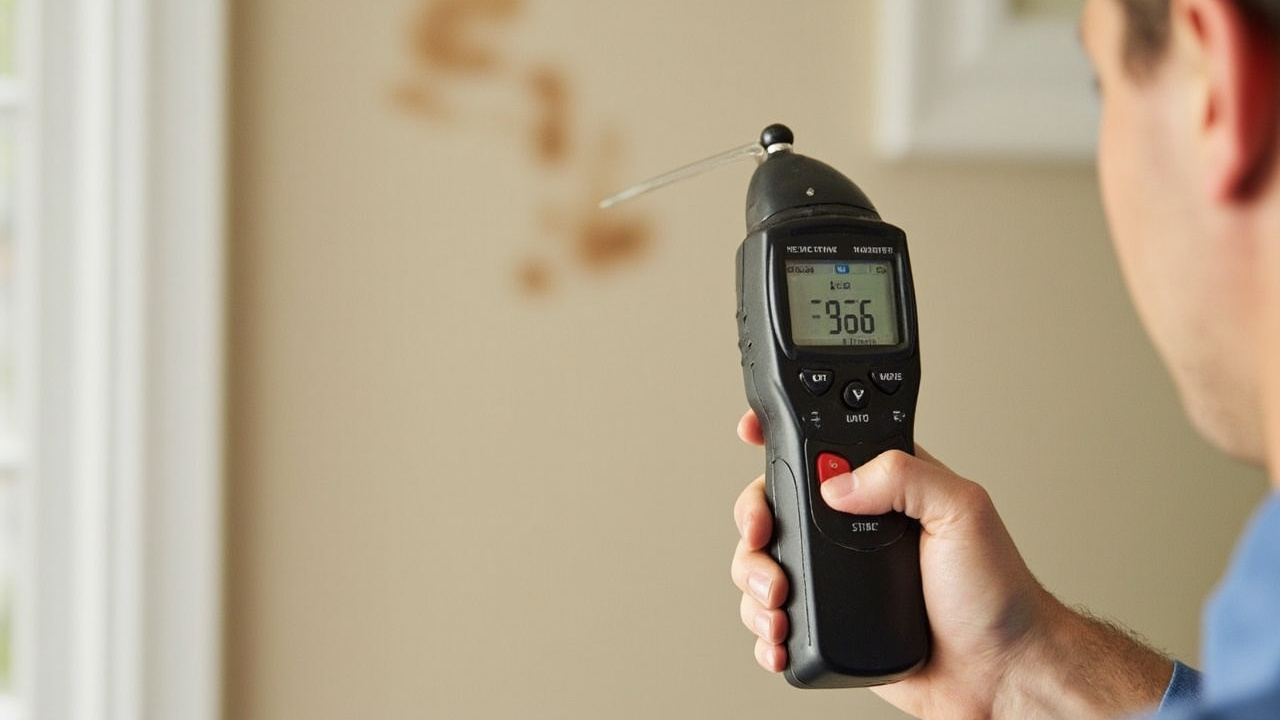
Certified restoration professionals use moisture meters and thermal hygrometers to map exactly how far moisture has migrated. A moisture meter reads the actual water content inside a material, not just the surface. A thermal hygrometer reads the temperature and relative humidity of the room air. Together, they tell a technician where the drying system needs to be positioned and for how long.
Your box fan has no way to gather that data. You are guessing. Professionals are measuring.
The Hidden Risk of Surfaces That Feel Dry
This is the part that costs Rochester Hills homeowners the most money. A household fan will dry the outer paper face of drywall within a day or two. That surface feels dry to the touch. The moisture meter reading inside the gypsum core and the wood framing behind it tells a completely different story.
You stop the fans. You assume the job is done. Three weeks later, you notice a musty odor in the room. You paint over it. A month after that, you see discoloration along the baseboard and a soft spot in the drywall face. By that point, mold has been actively colonizing the interior paper layer and the wood framing stud for weeks. The cost of mold remediation in a finished room of a Rochester Hills home far exceeds the cost of proper professional drying from the start.
If you are already dealing with secondary growth in another part of your home, the process outlined at how to remove mold safely from your Royal Oak home gives a realistic picture of what remediation involves.
Dehumidification Is Not Optional — It Is Half the System
Household fans move moisture from surfaces into the room air. Without industrial dehumidification running simultaneously, that moisture has nowhere to go. Relative humidity in the room climbs. The air becomes saturated. Evaporation slows to a crawl or stops entirely.
Professional structural drying operates as a closed system. Air movers accelerate evaporation from wet materials. LGR (low-grain refrigerant) dehumidifiers pull that airborne moisture out of the room continuously. Psychrometric logging tracks the grain content of the air to confirm that the system is producing a net reduction in structural moisture over time.
Michigan summers add a significant complication to any drying project. The Detroit metro and Oakland County areas regularly see outdoor relative humidity levels above 70 percent from late spring through August. When a restoration crew operates in a Rochester Hills home during that window, they cannot rely on ventilating to the outside. They need sealed, controlled drying with equipment sized to the actual moisture load — not ambient air from the backyard.
Detroit-Area Conditions Make This Problem Worse Than Average
The Detroit Water and Sewerage Department manages an infrastructure network that serves communities from Grosse Pointe to Southfield. Aging sewer mains throughout the metro area contribute to backflow events and basement flooding that are not always tied to a visible pipe failure inside the home. Homeowners who experience a sewer backup or lateral line issue face contaminated water in addition to the drying challenge — and using household fans in a space with standing gray or black water creates an electrical hazard that most restoration professionals refuse to work around until the power is shut off.
If you have already dealt with basement flooding, the breakdown at flooded basement cleanup in Grosse Pointe done fast and done right details why the response sequence matters as much as the equipment. For sewage-specific events, the protocols at what to do right now for sewage backup cleanup in Detroit cover the safety and remediation steps that household fans cannot address at all.
Rochester Hills homes, particularly those built in the 1970s through early 1990s along the Hamlin Road and Tienken Road corridors, often have partially finished basements with wood-framed partition walls sitting on concrete slab. That framing sits in direct contact with a surface that holds moisture for extended periods. A household fan pointed at the bottom of a wood-framed basement wall after a sump failure is not drying the bottom plate or the concrete. It is drying the air two feet in front of the fan.
When Frozen Pipes Add to the Calculation
Oakland County winters are not gentle. Rochester Hills averages enough sustained freeze events each January and February to create a regular volume of burst pipe calls. When a frozen pipe lets go inside a wall cavity, the water often saturates insulation batts before it ever reaches the floor. Wet fiberglass or spray foam insulation holds moisture for weeks and creates a perfect environment behind drywall that no household fan can reach.
The full picture of what frozen pipe recovery looks like in a Detroit-area home is covered at fixing the mess after a frozen pipe bursts in your Detroit home. The short version is that wall cavity drying requires either flood cuts with air movers directed into the open cavity or injection drying systems that deliver targeted airflow behind intact drywall — neither of which is possible with equipment from a hardware store.
What the Numbers Actually Look Like Side by Side
| Drying Approach | Average Drying Time for Wet Drywall | Moisture Verification Method | Mold Risk Window |
|---|---|---|---|
| Household fans only | 7 to 14+ days (surface only) | None (touch test) | High. Structural moisture persists past 48-hour mold threshold |
| Household fans plus consumer dehumidifier | 5 to 10 days | Minimal | Moderate to high. Unverified interior moisture |
| Professional air movers plus LGR dehumidifier plus moisture monitoring | 3 to 5 days (verified) | Daily moisture meter and psychrometric logging | Low. Drying completed within mold prevention window |
Signs That Your DIY Drying Attempt Has Already Failed
- A musty smell in the room that was not there before the leak
- Drywall paper that feels dry but shows slight discoloration or soft spots
- Baseboards that have separated or buckled at the base of the wall
- Hardwood flooring with cupping or crowning near the water event area
- A moisture meter reading above 16 percent on wood framing or above 1 percent on gypsum after five or more days of fan use
- Visible mold growth at the wall-floor junction or behind baseboards you pulled to check
Any one of these signs means the drying effort did not reach the structural material. The longer this goes unaddressed, the more remediation expands from a targeted drywall replacement to a framing repair project that also requires mold treatment.
For Dearborn homeowners dealing with similar situations in finished basement spaces, the expectation-setting at professional cleanup for flooded basements in Dearborn explains the scope of what proper remediation covers.
When to Call a Professional and Not Wait Another Day
Call a certified restoration company if any of the following are true at your Rochester Hills property.
- The water event happened more than 24 hours ago and no professional drying equipment is running
- The source of the water was a sewage line, toilet overflow, or exterior flooding
- Water reached any wall cavity, subfloor, or ceiling assembly
- You cannot confirm the water source is fully repaired and sealed
- The affected area is larger than a single floor tile or a small section of baseboard
The 48-hour mark is not arbitrary. IICRC S500 documentation defines it as the critical threshold after which mold colonization becomes statistically probable given normal indoor conditions. Michigan’s ambient humidity levels make that window tighter, not longer.
Household fans are useful tools for circulating air in a dry room. They are not drying systems. The difference between those two things, measured in CFM, static pressure, psychrometric control, and verified moisture readings, is the difference between a clean restoration and a mold remediation project that guts your finished basement.
If you have had a water event at your Rochester Hills home and you are not certain the structural materials have dried to safe moisture levels, get a free professional moisture inspection before that window closes. A technician with a moisture meter can tell you in 20 minutes what weeks of guesswork cannot.
{
“@context”: “https://schema.org”,
“@type”: “BlogPosting”,
“headline”: “Why Household Fans Will Not Save Your Rochester Hills Drywall After a Water Leak”,
“description”: “Household fans won’t dry Rochester Hills drywall after a leak. Learn the science behind professional drying and when DIY methods cause lasting structural damage.”,
“wordCount”: 1918,
“datePublished”: “2026-03-18T09:57:00.000Z”,
“dateModified”: “2026-03-18T09:57:00.000Z”,
“inLanguage”: “en-US”,
“mainEntityOfPage”: {
“@type”: “WebPage”,
“@id”: “https://ironwoodwaterdamagerestorationdetroit.com”
},
“publisher”: {
“@type”: “LocalBusiness”,
“name”: “Ironwood Water Damage Restoration Detroit”,
“url”: “https://ironwoodwaterdamagerestorationdetroit.com”
},
“author”: {
“@type”: “Organization”,
“name”: “Ironwood Water Damage Restoration Detroit”,
“url”: “https://ironwoodwaterdamagerestorationdetroit.com”
},
“image”: {
“@type”: “ImageObject”,
“url”: “https://ironwoodwaterdamagerestorationdetroit.com/wp-content/uploads/2026/03/why-using-household-fans-won-t-save-your-rochester-1.jpg”
}
}
{
“@context”: “https://schema.org”,
“@type”: “LocalBusiness”,
“name”: “Ironwood Water Damage Restoration Detroit”,
“url”: “https://ironwoodwaterdamagerestorationdetroit.com”,
“address”: {
“@type”: “PostalAddress”,
“addressLocality”: “Detroit”
},
“areaServed”: {
“@type”: “City”,
“name”: “Detroit”
}
}
{
“@context”: “https://schema.org”,
“@type”: “BreadcrumbList”,
“itemListElement”: [
{
“@type”: “ListItem”,
“position”: 1,
“name”: “Home”,
“item”: “https://ironwoodwaterdamagerestorationdetroit.com”
},
{
“@type”: “ListItem”,
“position”: 2,
“name”: “Blog”,
“item”: “https://ironwoodwaterdamagerestorationdetroit.com/blog”
},
{
“@type”: “ListItem”,
“position”: 3,
“name”: “Why Household Fans Will Not Save Your Rochester Hills Drywall After a Water Leak”
}
]
}
{
“@context”: “https://schema.org”,
“@type”: “Service”,
“serviceType”: “Water Damage Restoration”,
“provider”: {
“@type”: “LocalBusiness”,
“name”: “Ironwood Water Damage Restoration Detroit”,
“url”: “https://ironwoodwaterdamagerestorationdetroit.com”
},
“areaServed”: {
“@type”: “City”,
“name”: “Detroit”
},
“description”: “Household fans won’t dry Rochester Hills drywall after a leak. Learn the science behind professional drying and when DIY methods cause lasting structural damage.”
}