
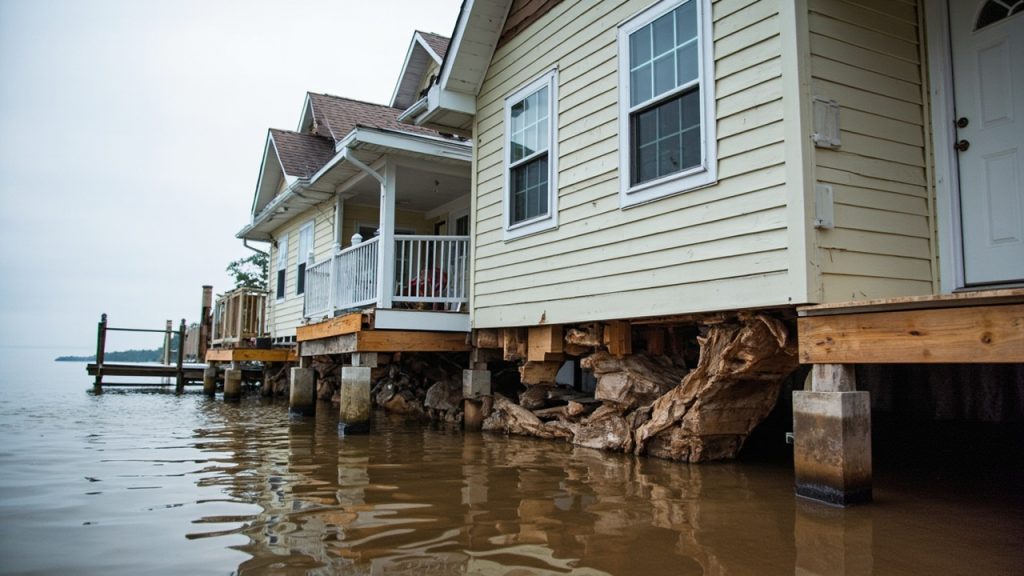
Living on the water in St. Clair Shores or along Jefferson Avenue comes with real advantages. It also comes with water damage risks that inland properties in Detroit simply do not face. When water gets into a lakefront home, the cleanup process is more complicated, more expensive, and more time-sensitive than a standard interior flood.
If you are dealing with water intrusion right now, the information below will help you understand what you are up against and what needs to happen to protect your home and your health.
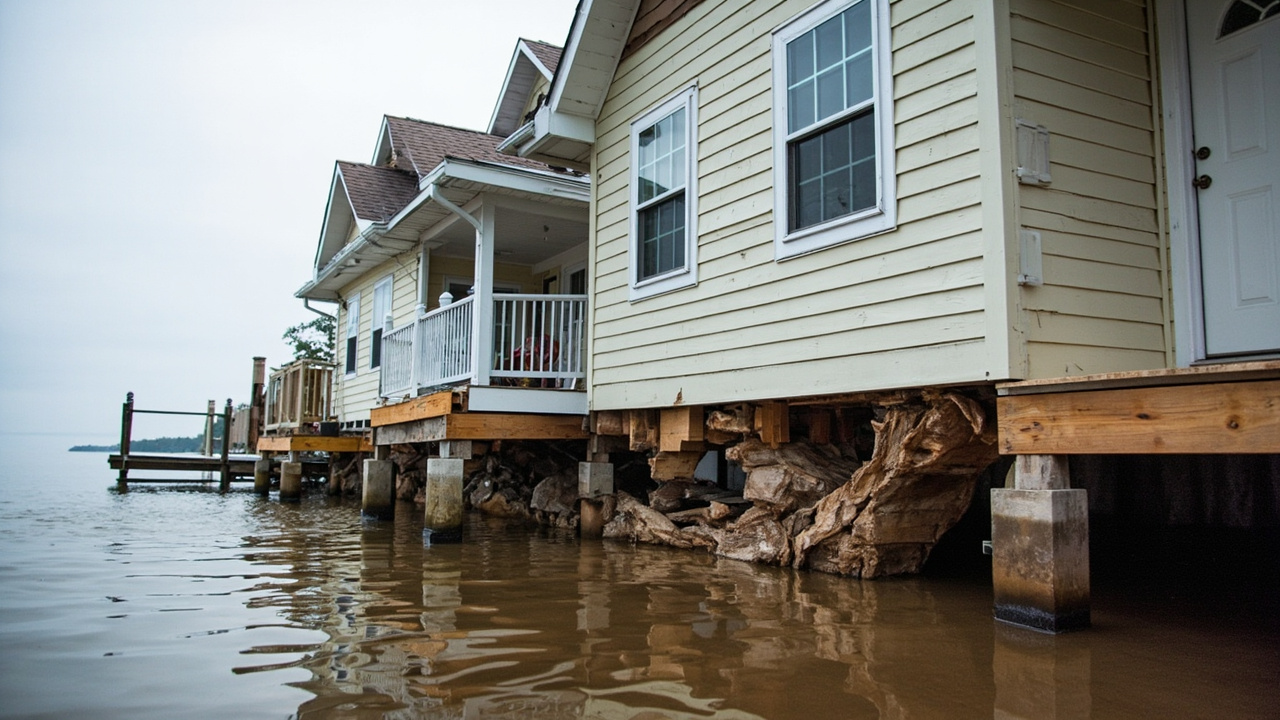
The Geography That Changes Everything
St. Clair Shores sits directly on the western shore of Lake St. Clair. The Detroit River feeds into it from the south. The water table in this zone sits extremely close to the surface, sometimes just a few feet below grade. That single geographic fact changes how water damage behaves inside a lakefront structure.
When lake levels rise, as they have done repeatedly in recent seasons due to Great Lakes hydrology cycles, groundwater pressure builds against basement walls and floor slabs. This is called hydrostatic pressure. It forces water through hairline cracks in poured concrete, through cove joints, and through block wall mortar. You can dry out everything visible inside, and water will keep seeping back in as long as the pressure exists outside.
In neighborhoods like Grosse Pointe Woods and Harrison Township, this same dynamic plays out. But St. Clair Shores properties right along the lakefront experience it most intensely because the soil saturation is almost constant. There is very little buffer between the lake and your foundation.
What Makes Interior Water Cleanup Harder on the Shoreline
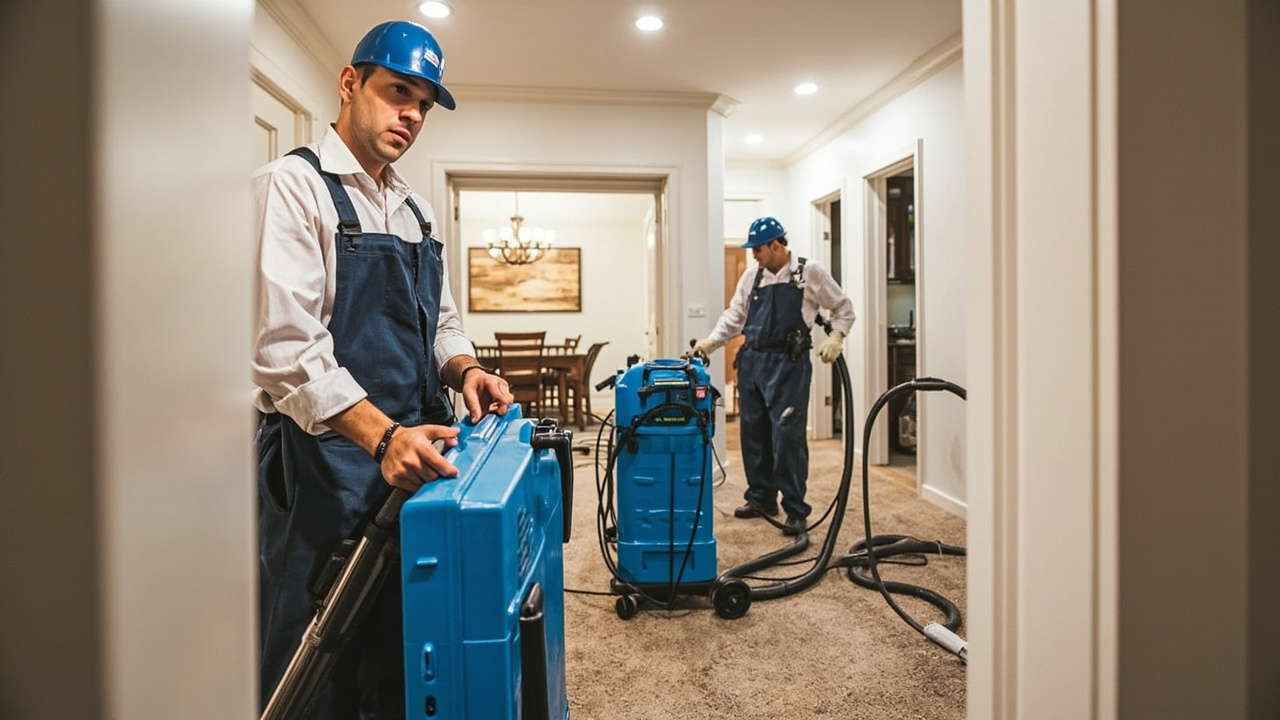
Standard water damage restoration follows a predictable process. Technicians extract standing water, set drying equipment, monitor moisture readings, and reconstruct damaged materials. That process works well in a landlocked suburb. On a lakefront property, several factors complicate every one of those steps.
Ambient Humidity That Fights Your Equipment
Industrial desiccant dehumidifiers and LGR (low-grain refrigerant) units remove moisture from air. They work against the moisture content inside a structure. On Lake St. Clair, the baseline outdoor relative humidity runs consistently higher than in Detroit proper. When restoration crews open doors and windows to ventilate, they are pulling in high-humidity air that actively slows drying.
Experienced crews working shoreline properties keep the structure tightly sealed during drying and run more equipment at higher capacity for longer periods. A drying job that might take three days in a Dearborn ranch home can take five or six days in a lakefront property if the crew does not account for ambient humidity. For a closer look at what professional drying timelines look like in similar Southeastern Michigan conditions, see our breakdown on professional cleanup for flooded basements in Dearborn.
Ice Damming and Winter Intrusion
Michigan winters create ice dams along rooflines. When lake-effect snow accumulates and then partially melts, water backs up under shingles and works into the roof deck, insulation, and ceiling assemblies. Lakefront homes face heavier and more frequent lake-effect snow than homes even a few miles inland. The result is that winter water damage on the shoreline often involves soaked insulation, saturated ceiling cavities, and damaged drywall that homeowners mistake for a roof leak when it is actually a dammed ice event.
If a frozen pipe has also burst during a cold snap, you are dealing with two simultaneous water intrusion sources. That situation requires precise thermal imaging to locate all moisture pockets before any reconstruction begins. For specific guidance on burst pipe events in Michigan winters, our article on fixing the mess after a frozen pipe bursts in your Detroit home covers what to prioritize first.
Sump Pump Failures During Great Lakes Storms
Most lakefront basements rely on sump pumps to manage groundwater. During a strong storm tracking across Lake St. Clair, power outages are common. When the power goes out, a standard sump pump stops. Groundwater that was being managed suddenly has no outlet. Within hours, a finished basement can take on several inches of water.
Every lakefront homeowner needs a sump pump battery backup system as a baseline. Ideally, a water-powered backup provides a second failsafe. This is not an optional upgrade on a shoreline property. It is a basic protective measure. Even with backups in place, pump failures happen. When they do, a rapid response extraction team needs to be on site within the first few hours to prevent secondary damage.
High-Value Finishes Require a Different Restoration Approach
Lakefront homes along the Nautical Mile corridor and near the Grosse Pointe Yacht Club area frequently feature materials that require specialized handling during water damage restoration. Generic restoration protocols designed for standard builder-grade materials will cause additional damage when applied to custom finishes.
Hardwood Flooring and Cupping
Wide-plank hardwood floors absorb moisture and begin to cup, where the edges rise higher than the center of each board, within 24 to 48 hours of water exposure. Aggressive heat drying will warp boards permanently. Proper protocol for high-end hardwood involves controlled drying at lower temperatures over a longer period, combined with moisture readings at multiple depths using a pin-type moisture meter. In many cases, boards that appear ruined can be saved with this method.
Custom Cabinetry and Millwork
Lacquered or painted MDF cabinetry swells and delaminates quickly. Solid wood cabinetry survives water exposure far better if drying begins within the first 24 hours. Restoration crews need to carefully document the original condition and evaluate each piece individually rather than pulling everything out by default. Replacement costs for custom cabinetry in lakefront estates run significantly higher than standard market rates.
Stone Countertops and Tile Substrates
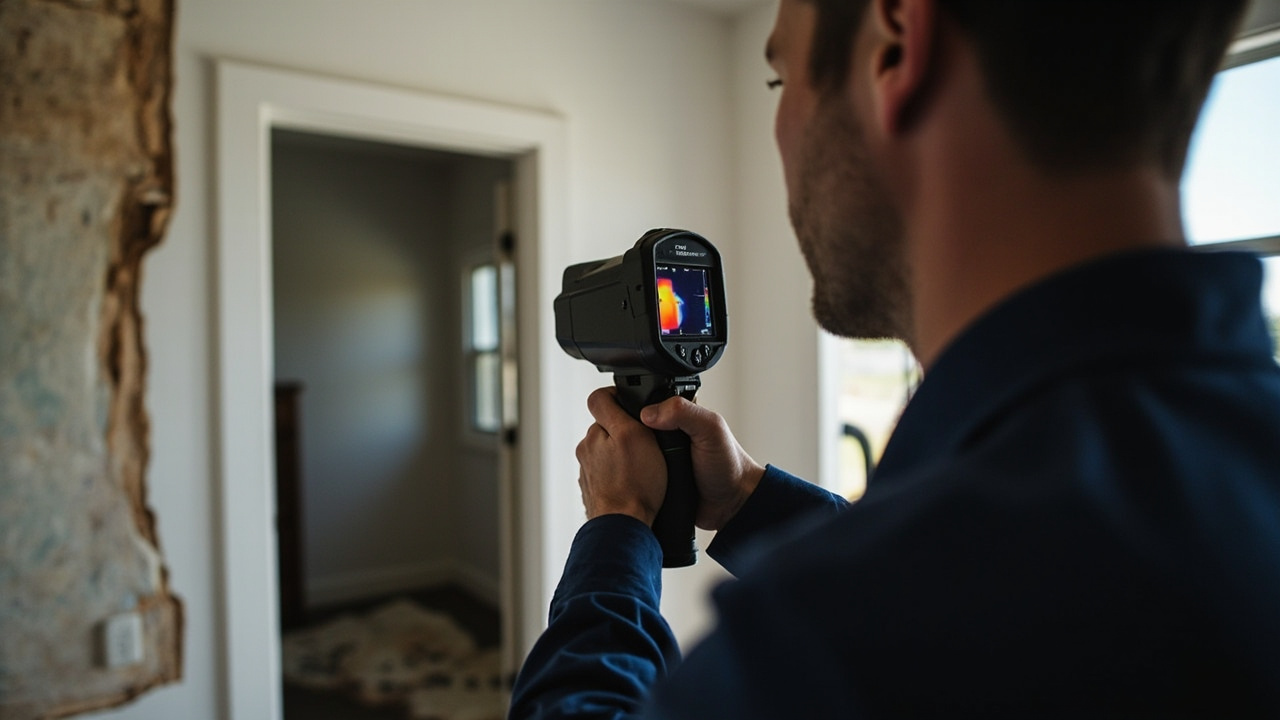
Granite and marble surfaces themselves do not absorb water easily. But the substrate underneath tile floors, and the mortar beds beneath stone, hold moisture for extended periods. Thermal imaging reveals these hidden wet zones that would otherwise lead to mold growth under surfaces that look completely dry. This is where an IICRC-certified technician earns their credentials. The Institute of Inspection, Cleaning and Restoration Certification (IICRC) sets the industry standard for moisture detection and structural drying protocols that protect exactly these kinds of materials.
The Mold Risk Is Accelerated Near the Water
Mold can begin to colonize within 24 to 72 hours of a water intrusion event. On a lakefront property, the elevated baseline humidity accelerates that timeline. A structure that sits at 60 percent relative humidity before the flood event reaches mold-favorable conditions faster than an inland home at 45 percent.
Mold in finished basements near the water is not just a cosmetic issue. Certain mold species produce mycotoxins that affect respiratory health. If your water intrusion involved any backflow from a drain or sanitary line, the contamination classification rises from Category 1 (clean water) to Category 3 (grossly contaminated), which requires full PPE protocols and antimicrobial treatment of all affected surfaces.
For situations involving sewage or drain backup as part of the water event, the remediation approach changes entirely. Our resource on what to do right now for sewage backup cleanup in Detroit outlines the immediate steps you need to take. And if mold is already visible or suspected, understanding proper containment is critical. Our guide on how to remove mold safely walks through what the remediation process actually involves.
Restoration Timeline Comparison for Lakefront vs. Inland Properties
| Phase | Inland Property (Detroit Metro) | Lakefront Property (St. Clair Shores) |
|---|---|---|
| Initial Extraction | 2 to 4 hours | 2 to 4 hours |
| Structural Drying | 3 to 5 days | 5 to 8 days |
| Moisture Verification | 1 day | 2 days (includes thermal scan) |
| Mold Prevention Treatment | Situational | Strongly recommended as standard |
| Reconstruction Start | Day 6 to 8 | Day 9 to 12 |
| Total Project Duration | 2 to 4 weeks | 3 to 6 weeks |
FEMA Flood Zones and What They Mean for Your Claim
Many properties along the St. Clair Shores lakefront sit within FEMA-designated Special Flood Hazard Areas. If your property is in a Zone AE or Zone X designation, your insurance requirements and your claim process differ significantly from a standard homeowners claim.
Standard homeowners insurance does not cover flooding. It covers sudden and accidental water damage from internal sources like a burst pipe. Groundwater intrusion driven by hydrostatic pressure, storm surge, or rising lake levels requires a separate flood insurance policy through the National Flood Insurance Program (NFIP) or a private flood insurer.
Many lakefront homeowners carry both policies but still face coverage gaps when a water event involves both internal and external water sources simultaneously. A restoration company with experience in lakefront claims can help you document the damage in a way that accurately distinguishes each loss source for the adjuster.
Insurance Coverage Breakdown for Lakefront Water Events
| Damage Type | Covered by Homeowners Policy | Covered by Flood Insurance | Notes |
|---|---|---|---|
| Burst pipe | Yes | No | Must be sudden and accidental |
| Sump pump failure | With rider/endorsement | No | Requires water backup endorsement |
| Groundwater seepage | No | Yes (NFIP) | Must meet NFIP flood definition |
| Storm surge from Lake St. Clair | No | Yes | Requires active flood policy |
| Ice dam water intrusion | Typically Yes | No | Coverage depends on policy language |
| Sewage backup | With endorsement | No | Requires sewer backup endorsement |
The Inspection Steps That Cannot Be Skipped on a Lakefront Property
A thorough inspection on a shoreline property goes beyond what a standard walk-through covers. Technicians working lakefront homes in the St. Clair Shores area need to perform each of the following before any drying equipment is placed.
- Thermal imaging scan of all exterior-facing walls and the entire basement envelope to detect hidden moisture pockets
- Moisture meter readings at multiple depths in wood framing, subfloor layers, and drywall assemblies
- Air quality sampling if any visible mold, musty odor, or Category 2 or 3 water source is suspected
- Foundation inspection for active hydrostatic seepage points to determine if groundwater is still entering
- Sump pit inspection to assess pump function, battery backup status, and discharge line integrity
- Crawl space inspection (if applicable) for insulation saturation and vapor barrier integrity
- Electrical panel assessment to confirm it is safe to operate restoration equipment in the structure
Skipping any of these steps creates incomplete drying conditions that lead to mold growth behind finished surfaces weeks after the job appears complete. That outcome costs far more to remediate than getting the inspection right the first time.
What to Do in the First Hour After Water Enters Your Home
If water is actively entering your lakefront home right now, take these steps immediately while you wait for a restoration crew to arrive.
First, confirm the electrical safety of the space before entering a flooded area. If water is near or above outlet level, do not enter without cutting power at the breaker. Second, stop the source if possible. Close the main water shutoff if the intrusion is from a pipe. You cannot stop lake-driven groundwater, but you can reduce how fast it accumulates by keeping sump pumps running on backup power if available.
Third, move valuables, documents, and electronics to elevated positions. Fourth, photograph everything before any cleanup begins. Your insurance claim depends on documented evidence of the damage in its original state. Fifth, do not run residential fans or your HVAC system to try to dry the space. Residential fans spread contamination and do not generate the airflow volume needed for structural drying. Call a professional extraction crew and wait.
If the flooded area is a finished basement similar to conditions described in flooded properties across Southeast Michigan, see our full guide on flooded basement cleanup in Grosse Pointe for a detailed breakdown of what a professional crew does and why the sequence of steps matters.
Why Fast Response Matters More on a Lakefront Property
The 24-hour mark after a water intrusion event is where good outcomes and bad outcomes diverge. On a standard inland property, the margin for error is somewhat wider. On a lakefront home where ambient humidity is higher and groundwater pressure continues to push moisture through the structure, every hour of delay extends the drying timeline and increases the risk of mold colonization in wall cavities and under flooring.
A crew that arrives within two to four hours of your call can typically save materials that would need to be demoed and replaced if the response stretches past the 12-hour mark. For high-value custom finishes, that difference translates directly into significant cost and disruption savings. Getting a restoration company on the phone that has specific experience with lakefront properties in the St. Clair Shores, Grosse Pointe, and Harrison Township corridor is not optional. It changes the outcome of your job.
If water has entered your lakefront home and you need a professional assessment today, contact our team for a 24/7 emergency inspection. We work with your insurance adjuster, document everything from the start, and use IICRC-compliant drying protocols built for the specific conditions along Lake St. Clair and the Detroit River shoreline.
{
“@context”: “https://schema.org”,
“@type”: “BlogPosting”,
“headline”: “Why St. Clair Shores Lakefront Homes Face Unique Risks During Interior Water Cleanup”,
“description”: “Lakefront homes in St. Clair Shores face water damage risks most homes never deal with. Learn what makes cleanup harder and how to protect your property.”,
“wordCount”: 2133,
“datePublished”: “2026-03-04T10:42:00.000Z”,
“dateModified”: “2026-03-04T10:42:00.000Z”,
“inLanguage”: “en-US”,
“mainEntityOfPage”: {
“@type”: “WebPage”,
“@id”: “https://ironwoodwaterdamagerestorationdetroit.com”
},
“publisher”: {
“@type”: “LocalBusiness”,
“name”: “Ironwood Water Damage Restoration Detroit”,
“url”: “https://ironwoodwaterdamagerestorationdetroit.com”
},
“author”: {
“@type”: “Organization”,
“name”: “Ironwood Water Damage Restoration Detroit”,
“url”: “https://ironwoodwaterdamagerestorationdetroit.com”
},
“image”: {
“@type”: “ImageObject”,
“url”: “https://ironwoodwaterdamagerestorationdetroit.com/wp-content/uploads/2026/03/why-st-clair-shores-lakefront-homes-face-unique-ri-1.jpg”
}
}
{
“@context”: “https://schema.org”,
“@type”: “LocalBusiness”,
“name”: “Ironwood Water Damage Restoration Detroit”,
“url”: “https://ironwoodwaterdamagerestorationdetroit.com”,
“address”: {
“@type”: “PostalAddress”,
“addressLocality”: “Detroit”
},
“areaServed”: {
“@type”: “City”,
“name”: “Detroit”
}
}
{
“@context”: “https://schema.org”,
“@type”: “BreadcrumbList”,
“itemListElement”: [
{
“@type”: “ListItem”,
“position”: 1,
“name”: “Home”,
“item”: “https://ironwoodwaterdamagerestorationdetroit.com”
},
{
“@type”: “ListItem”,
“position”: 2,
“name”: “Blog”,
“item”: “https://ironwoodwaterdamagerestorationdetroit.com/blog”
},
{
“@type”: “ListItem”,
“position”: 3,
“name”: “Why St. Clair Shores Lakefront Homes Face Unique Risks During Interior Water Cleanup”
}
]
}
{
“@context”: “https://schema.org”,
“@type”: “Service”,
“serviceType”: “Water Damage Restoration”,
“provider”: {
“@type”: “LocalBusiness”,
“name”: “Ironwood Water Damage Restoration Detroit”,
“url”: “https://ironwoodwaterdamagerestorationdetroit.com”
},
“areaServed”: {
“@type”: “City”,
“name”: “Detroit”
},
“description”: “Lakefront homes in St. Clair Shores face water damage risks most homes never deal with. Learn what makes cleanup harder and how to protect your property.”
}