

That brown ring on your ceiling is not just an eyesore. It is a warning sign. And grabbing a can of paint to cover it is one of the most common mistakes homeowners in Highland Park and the surrounding Detroit metro make. We have seen it hundreds of times. The stain disappears for a few weeks, then it bleeds right back through. Or worse, the drywall quietly deteriorates behind fresh paint while mold takes hold in the cavity above.
If you have a water stain on your ceiling, here is what you need to know before you touch a paintbrush.
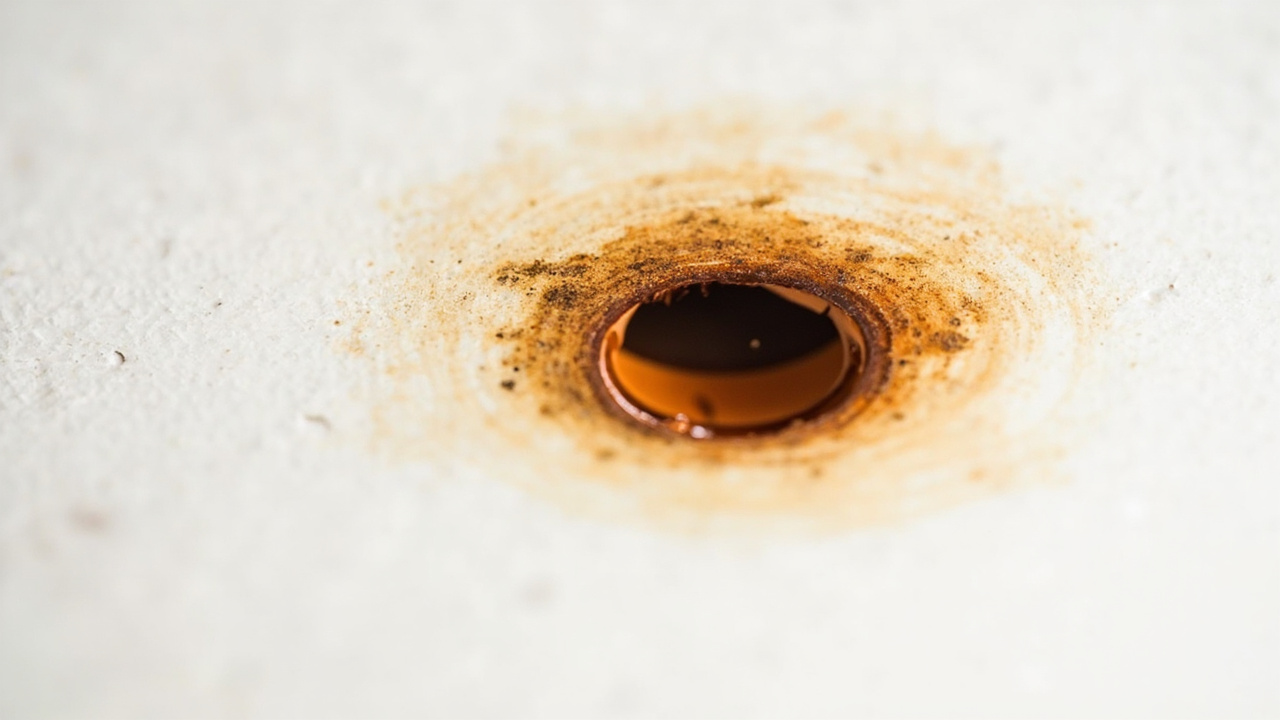
The Stain Is a Symptom, Not the Problem
Water stains form when moisture soaks through drywall or plaster and carries dissolved minerals, tannins, and organic material to the surface. When the water evaporates, those particles are left behind in that familiar brown or yellowish ring. What the stain tells you is that water was there. What it does not tell you is whether water is still there right now.
This is the critical distinction most DIY guides skip. Painting over an old, dry stain from a one-time leak is a different situation than painting over an active moisture problem. Highland Park homes, many of them built between the 1920s and 1950s, present both scenarios regularly. Aging plumbing, deteriorating roof decking, and flashing failures around chimneys and dormers are common culprits in this area.
Before you do anything cosmetic, you need to answer two questions. Is the source of the leak fixed? And is the affected material actually dry?
How to Tell If the Leak Is Still Active
A simple visual check is not enough. A moisture meter is the only reliable tool for confirming drywall and framing are truly dry. Professional restorers follow IICRC Standards for moisture content thresholds. Drywall should read below 17 percent relative moisture before any cosmetic repair begins. Wood framing should be at or below 19 percent. Anything above those numbers means moisture is still present, and painting over it traps that moisture inside the building assembly.
In Wayne County, we deal with specific seasonal patterns that create predictable leak sources. Michigan winters cause ice dams along roof eaves when heat escapes through poorly insulated attic spaces. The ice dams force meltwater under shingles and into the ceiling cavity. If your stain appeared in late winter or early spring, ice dams are a likely cause. If the stain is centrally located or directly below an upstairs bathroom, supply lines or drain connections are the more probable culprits.
If you had a frozen pipe burst in your Detroit home, ceiling stains below the affected area are common even when the primary damage was addressed. The water travels through the building structure before it becomes visible.
The Hidden Risk Inside the Ceiling Cavity
Here is what you cannot see from below. When water saturates drywall, it does not stop at the paper facing. It soaks into the gypsum core, the framing members, insulation batts, and any dust or organic debris sitting on top of the ceiling. That organic material, combined with sustained moisture above roughly 60 percent relative humidity, creates ideal conditions for mold colonization.
Mold can begin growing within 24 to 72 hours of a moisture event under the right temperature conditions. Highland Park homes with minimal attic ventilation or older cellulose insulation are especially vulnerable. Painting over the stain seals the surface but does nothing to address the mold colony actively growing in the cavity above. Over time that colony can spread to adjacent framing and insulation, dramatically increasing remediation scope and cost.
If you suspect mold growth in the ceiling cavity, learn how mold removal is handled safely before attempting any DIY work. Disturbing mold without proper containment releases spores into living areas.

Why Paint Fails Over Water Stains Even When the Area Is Dry
Even after confirming the source is repaired and the drywall is dry, standard latex paint will not permanently cover a water stain. The tannins and minerals left in the drywall surface are water-soluble. When you apply a water-based paint or primer, you are essentially re-wetting those compounds, which then bleed through the new finish coat. This is called tannin bleeding, and it is why that brown stain reappears within days of painting.
The fix is an oil-based or shellac-based stain-blocking primer. Products like KILZ Restoration or Zinsser BIN shellac primer are specifically formulated to encapsulate tannins and mineral deposits. They create a vapor barrier over the stain that water-based topcoats cannot penetrate. No other primer consistently delivers the same results for ceiling stains.
Primer Comparison for Ceiling Water Stains
| Primer Type | Stain Blocking | Dry Time | Odor Level | Best For |
|---|---|---|---|---|
| Standard Latex Primer | Poor | 1 hour | Low | New drywall only |
| Oil-Based Primer (KILZ Original) | Good | 1 to 2 hours | High | Moderate stains, older homes |
| KILZ Restoration (Water-Based) | Very Good | 30 to 60 minutes | Low to Moderate | Severe stains, smoke, odor |
| Zinsser BIN (Shellac-Based) | Excellent | 45 minutes | Very High | Worst-case stains, tannin bleed |
The Right Way to Address a Ceiling Water Stain
If you have confirmed the leak source is fixed, the material is dry, and there is no mold present, here is the correct repair sequence.
- Test moisture levels with a pin-type or pinless moisture meter across the stained area and surrounding ceiling. Do not proceed until readings are within acceptable ranges.
- Clean the stained surface with a Trisodium Phosphate (TSP) solution mixed per package directions. TSP removes grease, biological residue, and surface contamination that blocks primer adhesion. Rinse the area with clean water and let it dry completely.
- Check the structural integrity of the drywall by pressing gently on the stained area. Soft spots, crumbling texture, or sagging indicate the gypsum core has been compromised and the drywall panel needs replacement, not painting.
- Apply an oil-based or shellac-based stain-blocking primer to the entire stained area with a minimum 2-inch overlap beyond the visible stain boundary. One coat is usually sufficient, but severely stained areas may require two coats.
- Skim coat if necessary with drywall compound to restore any texture inconsistencies from the moisture damage. Sand smooth after drying.
- Apply a latex topcoat in a flat or matte finish to match the surrounding ceiling. Flat finishes hide texture variations better than eggshell or satin on ceilings.
- Feather the paint edge to blend with the surrounding ceiling. Cutting in sharply creates a visible patch line even with perfectly matched paint.
Structural Damage Thresholds That Change the Repair Scope
Not every stain is a simple cosmetic repair. If the water intrusion was significant or prolonged, you may be dealing with structural deterioration that paint cannot address. The table below shows how damage severity affects the scope of work.
| Damage Indicator | DIY Repair Appropriate? | Recommended Action |
|---|---|---|
| Dry stain, no soft spots, no odor | Yes | Clean, prime with shellac-based primer, paint |
| Soft or crumbling drywall | Partial | Replace drywall panel, then prime and paint |
| Visible mold growth or musty odor | No | Professional mold remediation before any cosmetic work |
| Sagging or bowing ceiling | No | Professional assessment of framing and sheathing integrity |
| Active moisture reading above 17% | No | Locate and repair leak source, dry structure, then reassess |
| Efflorescence or mineral deposits on masonry | Partial | Address hydrostatic pressure source, treat surface before painting |

Water Stain Causes Specific to Detroit and Highland Park Homes
Detroit’s older housing stock presents leak patterns that are different from newer suburban construction. Highland Park, Hamtramck, and the surrounding neighborhoods have a high concentration of homes with flat or low-slope roofs, Michigan basements with above-grade exposure, and cast iron or galvanized supply lines that are approaching the end of their service life.
Roof Ice Dams
Michigan’s freeze-thaw cycles are aggressive. When attic heat melts rooftop snow, the meltwater runs down to the cold eave overhang and refreezes. The ice dam that forms forces water under shingles and into the ceiling assembly through capillary action. Ceiling stains near exterior walls or below roof eaves during late winter are the most common presentation in Wayne County homes.
Aging Plumbing in Multi-Story Homes
Many Highland Park two-flats and single-family homes still have original galvanized supply lines or older copper with failing solder joints. Slow drips from supply connections at upstairs fixtures can saturate ceiling drywall for weeks before becoming visible. By the time the stain appears, the damage to the drywall core and framing is often more extensive than the stain suggests.
HVAC Condensate Line Failures
Central air conditioning units produce significant condensate. When the primary drain line clogs, overflow pans fill and can spill into the ceiling cavity. This is a consistent source of ceiling stains in homes with attic-mounted air handlers across the metro Detroit area.
Basement and Foundation Moisture
While basement moisture does not typically cause ceiling stains directly, hydrostatic pressure and foundation seepage in older Detroit homes can drive moisture up through framing members through capillary action. If your stain is on a first-floor ceiling near an exterior wall and your basement has a history of water intrusion, the two issues may be connected. Addressing flooded basement cleanup properly is a prerequisite to resolving ceiling moisture in these situations.
Sewage backup events also produce ceiling moisture in multi-story buildings when contaminated water finds pathways through floor assemblies. If you have had a backup event, review what proper sewage backup cleanup in Detroit involves before assuming the ceiling damage is cosmetic only.
The Real Cost of Delaying Professional Assessment
A cosmetic paint job on an active moisture problem does not stop the damage. It hides it. Framing that stays wet above acceptable moisture thresholds begins to lose structural integrity over time. Mold that is sealed behind drywall can spread laterally through insulation and across framing bays. What might have been a straightforward drying and minor drywall repair can turn into full ceiling section replacement and mold remediation if the problem is masked for months.
The EPA’s guidance on mold remediation is clear that porous materials like drywall and insulation that have sustained prolonged moisture exposure should be removed rather than treated in place. Painting over the surface does not satisfy that standard, and it does not protect your household from ongoing mold spore exposure.
If you have documented the water stain as part of an insurance claim, covering it with paint before a claims adjuster inspects the damage can also complicate your claim. Document everything before touching the surface.
What a Professional Moisture Inspection Covers
A restoration assessment is not just a look at the stain. A qualified technician uses thermal imaging cameras to detect moisture plumes that extend beyond the visible stain boundary. Moisture meters map the drywall and framing throughout the affected area. Relative humidity measurements in the ceiling cavity and attic space help determine whether the environment is still contributing to active drying or re-wetting cycles.
If mold is suspected, surface swab testing or air sampling can confirm presence and identify species. That information guides the remediation scope and determines whether the ceiling assembly needs partial or full removal. For homeowners in Dearborn and the greater Detroit metro, a professional assessment protects both your health and your investment in the repair.
When to Pick Up the Phone Instead of a Paintbrush
There are situations where you should stop and call a restoration professional before doing anything else.
- The stain has grown in size or darkened since you first noticed it
- There is a musty odor in the room, even without visible mold
- The drywall feels soft or gives when pressed
- You have not identified and repaired the source of the moisture
- The stain appeared after a significant weather event, pipe burst, or appliance failure
- There are multiple stains in different locations suggesting widespread moisture intrusion
- The ceiling is sagging or showing signs of separation from framing
If any of those apply to your situation in Highland Park, Hamtramck, or anywhere across the Detroit metro, a free moisture inspection from a certified restoration contractor costs you nothing and can prevent a much larger problem from developing behind finished surfaces.
Reach out to our team for a no-obligation assessment. We use professional-grade moisture mapping equipment and provide a clear, straightforward report on what you are actually dealing with before you commit to any repair path.
{
“@context”: “https://schema.org”,
“@type”: “BlogPosting”,
“headline”: “Why You Should Never Just Paint Over a Water Stain on Your Highland Park Ceiling”,
“description”: “Painting over a ceiling water stain in Highland Park won’t fix the real problem. Learn what’s hiding behind that stain and when to call a Detroit restoration pro.”,
“wordCount”: 2033,
“datePublished”: “2026-04-05T12:43:00.000Z”,
“dateModified”: “2026-04-05T12:43:00.000Z”,
“inLanguage”: “en-US”,
“mainEntityOfPage”: {
“@type”: “WebPage”,
“@id”: “https://ironwoodwaterdamagerestorationdetroit.com”
},
“publisher”: {
“@type”: “LocalBusiness”,
“name”: “Ironwood Water Damage Restoration Detroit”,
“url”: “https://ironwoodwaterdamagerestorationdetroit.com”
},
“author”: {
“@type”: “Organization”,
“name”: “Ironwood Water Damage Restoration Detroit”,
“url”: “https://ironwoodwaterdamagerestorationdetroit.com”
},
“image”: {
“@type”: “ImageObject”,
“url”: “https://ironwoodwaterdamagerestorationdetroit.com/wp-content/uploads/2026/03/why-you-should-never-just-paint-over-a-water-stain-1.jpg”
}
}
{
“@context”: “https://schema.org”,
“@type”: “LocalBusiness”,
“name”: “Ironwood Water Damage Restoration Detroit”,
“url”: “https://ironwoodwaterdamagerestorationdetroit.com”,
“address”: {
“@type”: “PostalAddress”,
“addressLocality”: “Detroit”
},
“areaServed”: {
“@type”: “City”,
“name”: “Detroit”
}
}
{
“@context”: “https://schema.org”,
“@type”: “BreadcrumbList”,
“itemListElement”: [
{
“@type”: “ListItem”,
“position”: 1,
“name”: “Home”,
“item”: “https://ironwoodwaterdamagerestorationdetroit.com”
},
{
“@type”: “ListItem”,
“position”: 2,
“name”: “Blog”,
“item”: “https://ironwoodwaterdamagerestorationdetroit.com/blog”
},
{
“@type”: “ListItem”,
“position”: 3,
“name”: “Why You Should Never Just Paint Over a Water Stain on Your Highland Park Ceiling”
}
]
}
{
“@context”: “https://schema.org”,
“@type”: “Service”,
“serviceType”: “Water Damage Restoration”,
“provider”: {
“@type”: “LocalBusiness”,
“name”: “Ironwood Water Damage Restoration Detroit”,
“url”: “https://ironwoodwaterdamagerestorationdetroit.com”
},
“areaServed”: {
“@type”: “City”,
“name”: “Detroit”
},
“description”: “Painting over a ceiling water stain in Highland Park won’t fix the real problem. Learn what’s hiding behind that stain and when to call a Detroit restoration pro.”
}