
Why Your AC Unit Is Leaking Through the Ceiling of Your Novi Home
Written by the IICRC-certified water damage restoration team at Ironwood, serving Novi, Oakland County, and the greater Detroit metro.
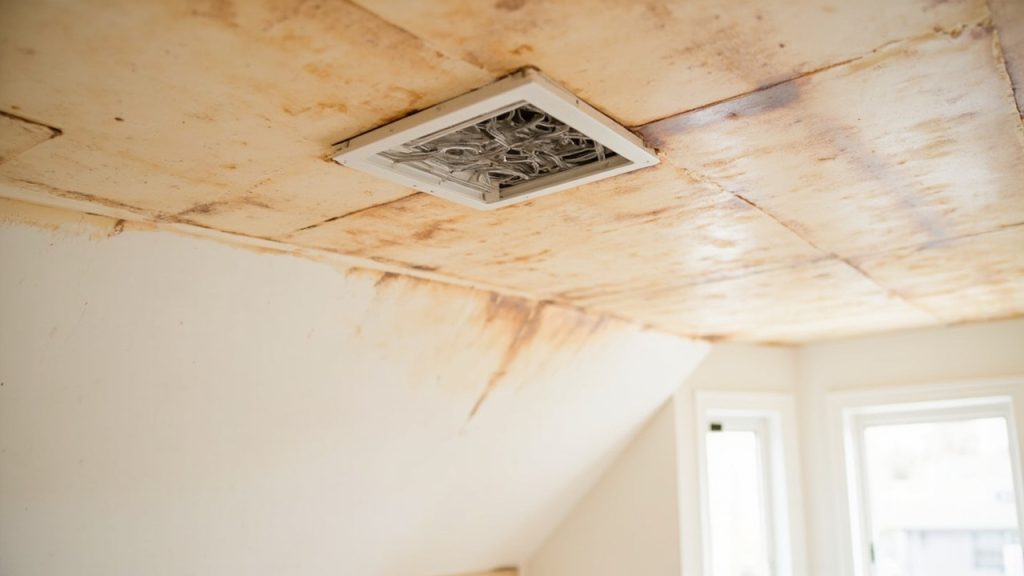
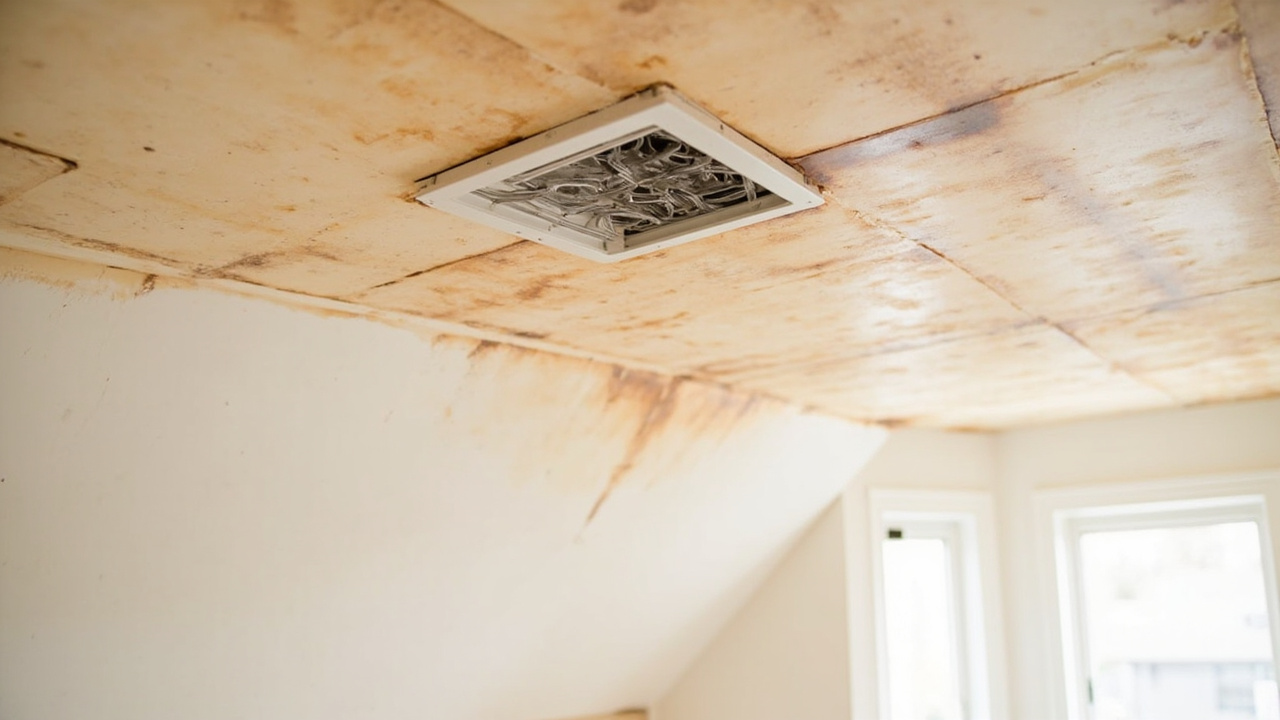
If you are seeing a water stain on your ceiling directly below your attic AC unit, that stain is not a cosmetic problem. It is a warning that water has already moved through building materials it was never meant to touch. In Novi and across Oakland County, attic-mounted central air systems are one of the leading causes of ceiling collapse and mold outbreaks during the summer months. Catching it early and calling the right people keeps the damage manageable. Waiting turns a restoration job into a reconstruction job.
Why Your AC Unit Is Leaking Through the Ceiling
Your central air conditioner does two things at once. It cools air and it removes humidity from your home. As warm, humid air passes over the evaporator coil, water vapor condenses into liquid and drips into a drain pan located beneath the coil. That water flows out through a condensate drain line, typically a PVC pipe routed through your exterior wall or into a floor drain.
When that system works correctly, you never think about it. When it fails, you get water pouring through your ceiling, soaking your drywall, and creating conditions for mold growth within 24 to 48 hours.
The three most common failure points are a clogged condensate drain line, a cracked or overflowing drain pan, and a frozen evaporator coil that thaws suddenly and dumps a large volume of water all at once. Each one produces the same result. Water ends up where it should never be.
Why Novi and Oakland County Homes Face Higher Risk
Novi sits in a zone where summer humidity is a genuine engineering challenge. Metro Detroit regularly sees dew points above 70 degrees Fahrenheit during July and August. When outdoor relative humidity climbs into the 80 to 90 percent range, your AC system is pulling enormous volumes of moisture out of your indoor air. Your condensate drain line and drain pan are working harder than they were designed to handle.
Novi’s housing stock adds another layer of risk. Much of the city developed rapidly, producing large two-story colonials and split-level homes where the HVAC air handler is installed in the attic. This configuration is common throughout subdivisions in Novi, South Lyon, and Northville Township. When the condensate system fails in an attic unit, gravity does the rest. Water moves down through ceiling drywall, into insulation, and travels along framing members before appearing somewhere unexpected.
Older neighborhoods closer to downtown Detroit, including Midtown, East English Village, and Corktown, face a related but different problem. Many of those homes have aging ductwork and HVAC equipment that was retrofitted rather than purpose-built. Condensate pans in those systems are often corroded and undersized, and the drain lines are routed in ways that are prone to clogging.
Immediate Steps When You See Water Coming Through the Ceiling
The first 30 minutes matter more than most homeowners realize. Act in this order.
- Turn off your AC system at the thermostat immediately. Do not set it to fan-only. Power it completely off.
- Switch off the circuit breaker for the air handler if water is near any electrical components or light fixtures in the ceiling. Water near live wiring is a life-safety emergency.
- Place buckets or towels to capture active dripping, but do not press on the ceiling to check how wet it is. A saturated drywall ceiling can fail suddenly under applied pressure.
- Document everything with your phone before touching anything else. Wide shots, close-ups, and video. Your insurance adjuster will need this.
- Call a water damage restoration company, not just an HVAC technician. The HVAC tech fixes the source. The restoration company addresses the damage that has already occurred.
Do not run fans on your own. Circulating air in a space with wet building materials and potential mold growth without containment can spread spores throughout your home. Drying needs to be done correctly, using psychrometrics-based calculations, not intuition.
The Hidden Dangers Inside Your Ceiling After an AC Leak
Mold Growth Starts Faster Than You Think
According to the U.S. Environmental Protection Agency, mold can begin colonizing wet building materials within 24 to 48 hours under the right conditions. Michigan summers provide exactly those conditions. Warm temperatures, trapped humidity inside wall cavities, and organic building materials like drywall paper and wood framing give mold everything it needs.
The species of most concern in cases of prolonged moisture intrusion is Stachybotrys chartarum, commonly called black mold. It is slow to establish but thrives in chronically wet gypsum board and subfloor sheathing. Homeowners in Novi who dismiss a small ceiling stain and wait a week before calling anyone often discover a far larger mold colony once the drywall is opened.
Structural Rot in Ceiling Joists and Attic Framing
If your attic air handler sits above a wood-framed platform, a significant condensate overflow can saturate the plywood decking and floor joists beneath the unit. Once wood reaches sustained moisture content above 20 percent, conditions for wood rot are present. In a worst-case scenario, the structural members supporting the air handler itself become compromised, creating a serious safety hazard.
Water that soaks into ceiling drywall also travels along framing members horizontally before it drips down. You may see a stain appear several feet from the actual leak source. That lateral travel means the affected area is almost always larger than it looks from below.
Electrical Hazards You Cannot See from the Floor
Many homes in Novi and broader Oakland County have recessed lighting and ceiling fans installed on the same floor level as the attic air handler. Water tracking along a ceiling joist can reach an electrical junction box or a recessed can light and create a shock hazard or fire risk. If you see water dripping from or near a light fixture, treat it as an emergency and cut power to that circuit at the breaker panel before doing anything else.
What Ceiling Restoration Actually Costs
One of the most common questions restoration teams in the Novi area hear is what this type of damage is going to cost before the work begins. The honest answer depends on how long the leak has been active, how far the water traveled, and whether mold remediation is required on top of structural drying.
For a typical AC condensate leak in an attic-mounted system above a first or second-floor ceiling, restoration work including controlled demolition of wet drywall, industrial structural drying, and ceiling reconstruction generally ranges from $1,500 to $6,000. Cases that involve mold remediation, replacement of saturated insulation, or damage to multiple rooms sit at the higher end of that range. Cases caught within the first 24 hours with limited material saturation sit at the lower end.
Most homeowner policies in Michigan cover sudden and accidental water damage. A condensate overflow caused by a clogged drain line typically qualifies. A drain pan that has been visibly rusted and leaking for months without being addressed may be denied on the basis of neglect. The distinction matters, and documentation is everything. A moisture report from an IICRC-certified restoration technician carries significant weight with adjusters because it provides objective data rather than subjective estimates. Get that report before any demolition or drying begins so the full scope of damage is on record.
The Restoration Process Step by Step
Calling a restoration company is not just about drying out your ceiling. It is about documenting the damage, containing it, and returning your home to a safe condition using processes defined by the IICRC S500 Standard for Professional Water Damage Restoration.
Moisture Mapping and Thermal Imaging
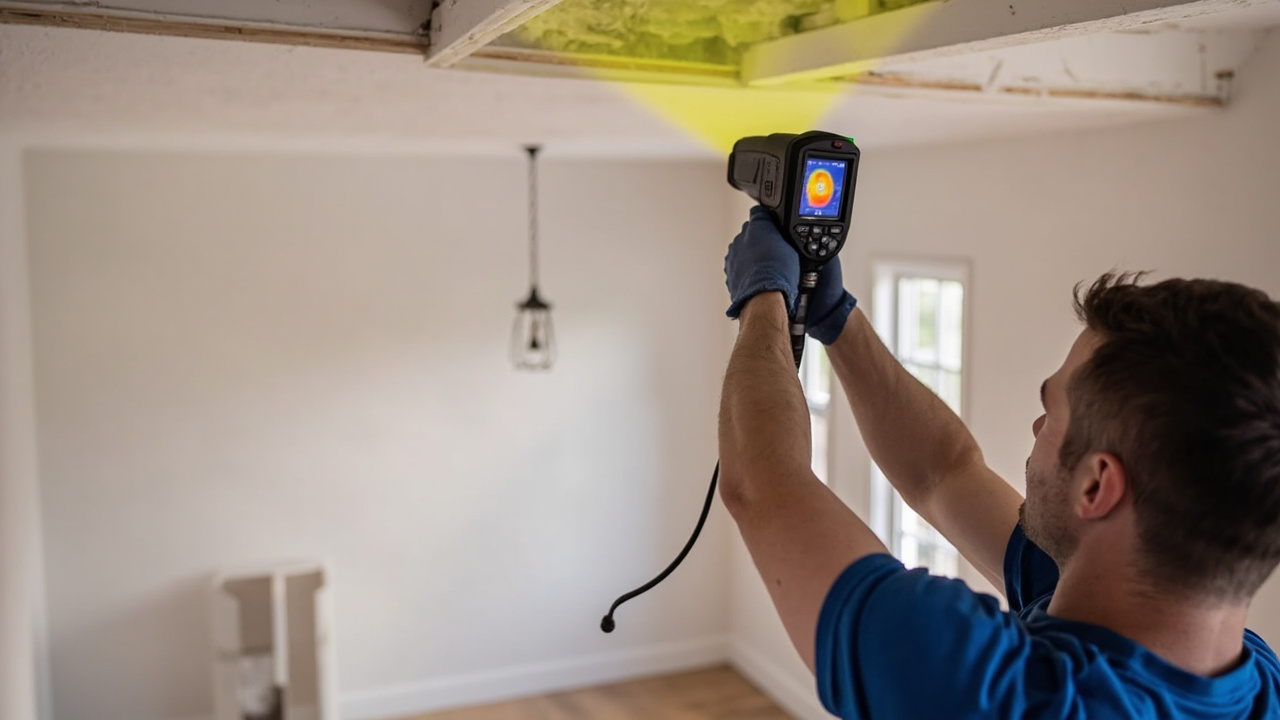
A certified technician uses a thermal imaging camera to identify the full extent of moisture migration behind walls and above ceilings. Thermal imaging reveals cold spots where evaporative cooling is occurring inside wall cavities, showing exactly how far water has traveled. This step determines the scope of work and creates the documentation your insurance carrier needs.
Controlled Demolition and Material Removal
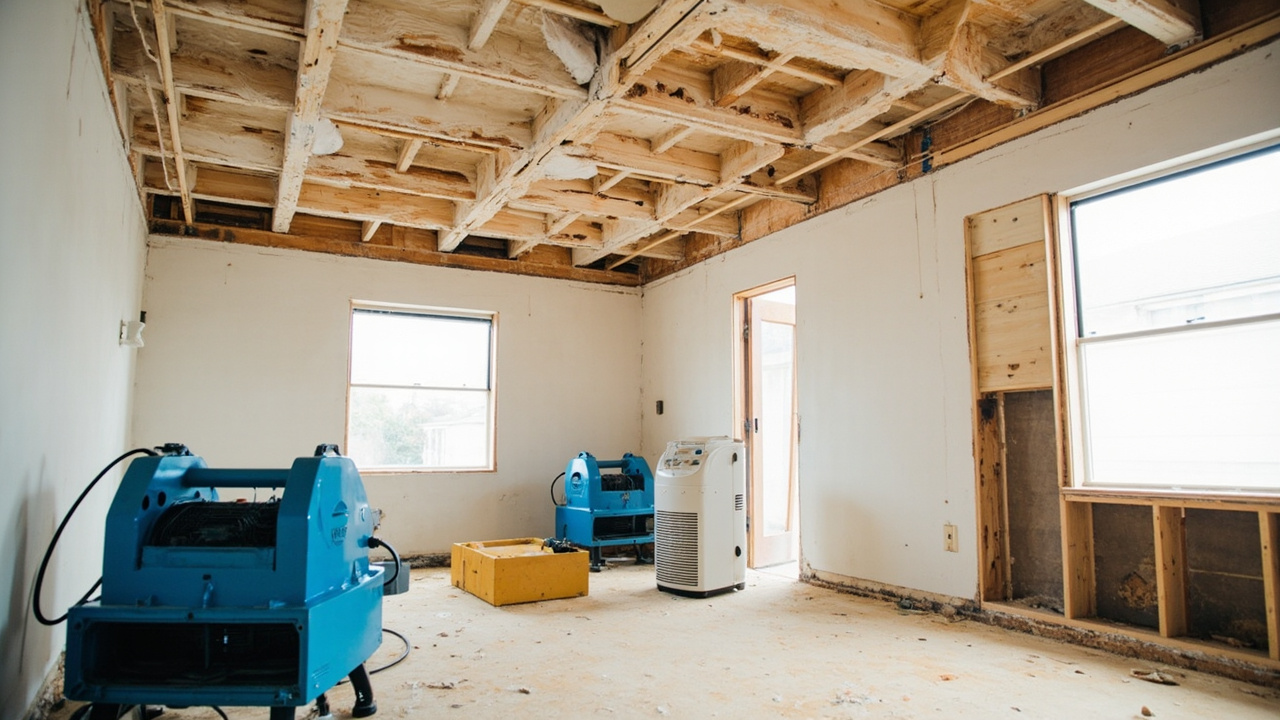
Wet drywall cannot be dried in place. It has to come out. The restoration crew performs controlled cuts to remove saturated sections of ceiling and sometimes wall drywall to allow air movement to reach the framing behind it. This is not additional damage. It is necessary to prevent mold and to allow structural drying equipment to do its job.
Industrial Dehumidification and Structural Drying
Residential dehumidifiers from the hardware store are not the right tool here. Commercial-grade desiccant or refrigerant dehumidifiers, combined with air movers positioned using psychrometrics calculations, create a controlled drying environment. The goal is to bring wood framing and structural materials down below 16 percent moisture content before reconstruction begins. Drying typically takes three to five days depending on the extent of saturation.
Antimicrobial Treatment and Clearance Testing
After structural drying is confirmed with moisture meter readings, affected framing and subfloor surfaces receive an antimicrobial treatment to inhibit mold colonization. If mold growth is already present, full mold remediation following IICRC S520 protocols is required before reconstruction. For related guidance on mold issues in the Detroit metro area, see our resource on how to remove mold safely from your Royal Oak home.
How AC Condensate Damage Compares to Other Water Damage Types
| Damage Source | Typical Affected Area | Mold Risk Timeline | Water Category | Avg. Drying Time |
|---|---|---|---|---|
| AC Condensate Overflow | Ceiling, attic framing, upper walls | 24 to 48 hours | Category 1 (Clean) | 3 to 5 days |
| Burst Pipe | Walls, floors, multiple rooms | 24 to 48 hours | Category 1 to 2 | 4 to 7 days |
| Roof Leak | Attic, ceiling, insulation | 24 to 72 hours | Category 1 to 2 | 3 to 6 days |
| Sewage Backup | Basement, lower level floors | Immediate | Category 3 (Hazardous) | 5 to 10 days |
| Flooded Basement | Basement, foundation walls | 24 to 48 hours | Category 1 to 3 | 4 to 8 days |
AC condensate water is classified as Category 1, meaning it originates from a sanitary source. That classification matters for insurance purposes and for determining the level of protective equipment and remediation protocol required. If standing water has been present for more than 48 to 72 hours, the classification can escalate to Category 2 due to microbial activity.
For homeowners dealing with basement flooding in addition to ceiling leaks, our team also handles flooded basement cleanup in Dearborn and surrounding communities throughout Wayne and Oakland County.
AC Condensate Leak Warning Signs by Severity
| Warning Sign | Severity Level | Likely Cause | Recommended Action |
|---|---|---|---|
| Small yellow or brown ceiling stain, dry to touch | Low | Past condensate drip, may be resolved | Inspect HVAC drain pan and line immediately |
| Stain is wet and expanding | Moderate | Active condensate overflow or drain clog | Shut off AC, call restoration company same day |
| Ceiling is bulging or sagging | High | Heavy water accumulation above ceiling drywall | Evacuate area, cut power, call immediately |
| Musty odor near vent or ceiling | Moderate to High | Active mold growth in wall cavity or ceiling | Mold inspection required before HVAC restart |
| Water dripping from light fixture | Emergency | Water reached electrical junction box | Cut breaker, call restoration company now |
AC Condensate Leak Prevention Before Next Summer
Once your home is restored, the goal is to make sure this does not happen again. Several straightforward maintenance steps dramatically reduce your risk.
Have your HVAC technician flush the condensate drain line with compressed air or a wet-dry vacuum at the start of every cooling season. Algae and mineral deposits are the most common cause of clogs, and they build up throughout fall and winter when the line sits dormant. A condensate overflow switch, also called a float switch, cuts power to your air handler automatically when water in the drain pan reaches a dangerous level. Many Novi homes do not have one installed. Ask your HVAC tech to add one.
Check the drain pan itself for cracks and rust at the beginning of each season. Drain pans in attic-mounted units are exposed to wide temperature swings during Michigan winters, and plastic or metal can fatigue over time. A cracked pan will fail on the hottest day of July when your system is running hardest.
If you are in Grosse Pointe or another waterfront community where humidity is especially persistent, consider a whole-home dehumidifier integrated with your HVAC system. It reduces the moisture load on your condensate system during peak summer weeks. Our team also handles flooded basement cleanup in Grosse Pointe year-round for homeowners in those communities.
When the AC Is Fixed but the Ceiling Is Not
This is the most common mistake Novi homeowners make. The HVAC tech comes out, clears the drain line, confirms the system is running, and leaves. The homeowner assumes the problem is solved. But the wet drywall is still wet. The saturated insulation is still saturated. The mold clock started the moment the leak began, and it has not stopped.
Fixing the HVAC source is step one. Restoring the building materials that absorbed the water is a completely separate process requiring different expertise, different equipment, and often a separate insurance claim line item. An HVAC technician is not trained or equipped to perform structural drying or mold remediation. You need both professionals working in sequence.
A ceiling stain from an AC leak does not stay a ceiling stain. Left alone, it becomes a mold problem. Left longer, it becomes a structural problem. The restoration process exists to interrupt that progression at the earliest possible point. For homeowners dealing with frozen pipe water damage in addition to summer AC leaks, our guide on fixing the mess after a frozen pipe bursts in your Detroit home walks through the same documentation and drying process.
Contact a Novi Water Damage Restoration Professional Today
If you see a wet ceiling stain and your AC has been running hard, do not wait for the stain to dry and hope the problem resolved itself. It did not. Moisture is still inside your framing, your insulation, and potentially your wall cavities right now.
Contact an IICRC-certified water damage restoration professional serving Novi and Oakland County today. Get your moisture mapping done, get your scope of damage documented before your insurance adjuster arrives, and get your home back to a safe, dry condition. The sooner structural drying begins, the lower the total cost and the lower the risk of mold establishing itself behind your walls.
Call our Novi area restoration team now. We handle moisture mapping, structural drying, mold remediation, and full reconstruction coordination so you are not managing multiple contractors on your own during an already stressful situation.
{
“@context”: “https://schema.org”,
“@type”: “BlogPosting”,
“headline”: “Why Your AC Unit Is Leaking Through the Ceiling of Your Novi Home”,
“description”: “Find out why your AC unit is leaking through the ceiling of your Novi home and what to do before mold and structural damage make it far worse.”,
“wordCount”: 2430,
“datePublished”: “2026-03-19T06:37:00.000Z”,
“dateModified”: “2026-03-19T06:37:00.000Z”,
“inLanguage”: “en-US”,
“mainEntityOfPage”: {
“@type”: “WebPage”,
“@id”: “https://ironwoodwaterdamagerestorationdetroit.com”
},
“publisher”: {
“@type”: “LocalBusiness”,
“name”: “Ironwood Water Damage Restoration Detroit”,
“url”: “https://ironwoodwaterdamagerestorationdetroit.com”
},
“author”: {
“@type”: “Organization”,
“name”: “Ironwood Water Damage Restoration Detroit”,
“url”: “https://ironwoodwaterdamagerestorationdetroit.com”
},
“image”: {
“@type”: “ImageObject”,
“url”: “https://ironwoodwaterdamagerestorationdetroit.com/wp-content/uploads/2026/03/why-your-ac-unit-is-leaking-through-the-ceiling-of-1.jpg”
}
}
{
“@context”: “https://schema.org”,
“@type”: “LocalBusiness”,
“name”: “Ironwood Water Damage Restoration Detroit”,
“url”: “https://ironwoodwaterdamagerestorationdetroit.com”,
“address”: {
“@type”: “PostalAddress”,
“addressLocality”: “Detroit”
},
“areaServed”: {
“@type”: “City”,
“name”: “Detroit”
}
}
{
“@context”: “https://schema.org”,
“@type”: “BreadcrumbList”,
“itemListElement”: [
{
“@type”: “ListItem”,
“position”: 1,
“name”: “Home”,
“item”: “https://ironwoodwaterdamagerestorationdetroit.com”
},
{
“@type”: “ListItem”,
“position”: 2,
“name”: “Blog”,
“item”: “https://ironwoodwaterdamagerestorationdetroit.com/blog”
},
{
“@type”: “ListItem”,
“position”: 3,
“name”: “Why Your AC Unit Is Leaking Through the Ceiling of Your Novi Home”
}
]
}
{
“@context”: “https://schema.org”,
“@type”: “Service”,
“serviceType”: “Water Damage Restoration”,
“provider”: {
“@type”: “LocalBusiness”,
“name”: “Ironwood Water Damage Restoration Detroit”,
“url”: “https://ironwoodwaterdamagerestorationdetroit.com”
},
“areaServed”: {
“@type”: “City”,
“name”: “Detroit”
},
“description”: “Find out why your AC unit is leaking through the ceiling of your Novi home and what to do before mold and structural damage make it far worse.”
}